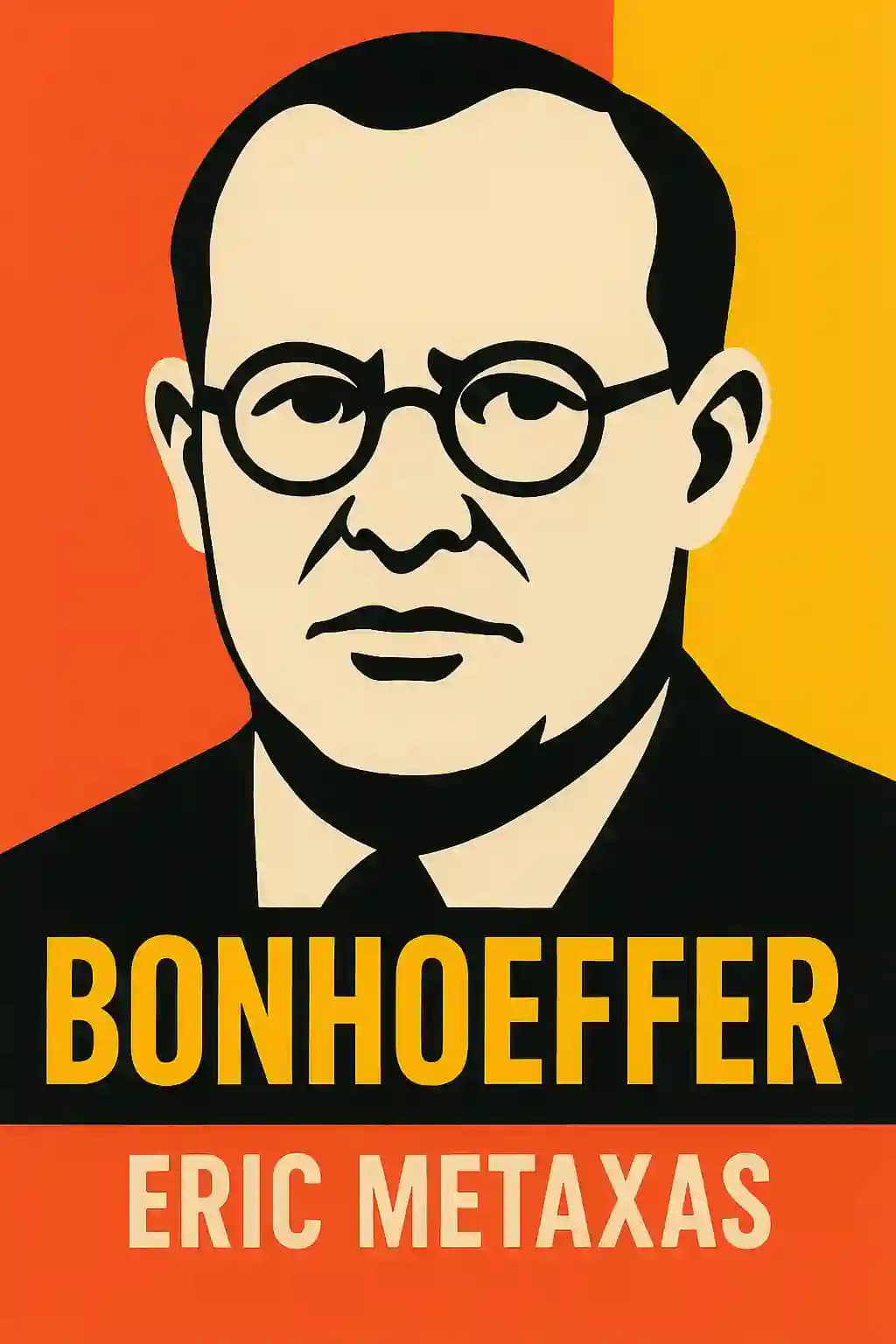
Discover the theologian who became a spy against Hitler. Bonhoeffer's dual life captivated the New York Times bestseller list and inspired Archbishop Chaput's passionate endorsement. What drove this pastor to join the assassination plot that would cost him everything?
Eric Metaxas, New York Times bestselling author of Bonhoeffer: Pastor, Martyr, Prophet, Spy, is a prominent voice in historical biography and Christian thought. His critically acclaimed work on Dietrich Bonhoeffer explores themes of moral courage, faith, and resistance against tyranny, reflecting Metaxas’s expertise in profiling transformative religious figures.
A Yale graduate and former cultural commentator for The Wall Street Journal and The New Yorker, he hosts The Eric Metaxas Show, a nationally syndicated radio program featuring discussions on faith and society.
Known for biographical works like Amazing Grace (William Wilberforce) and Martin Luther, Metaxas bridges historical narrative with contemporary relevance. His books have been translated into 25+ languages, with Bonhoeffer alone selling over 800,000 copies and becoming a staple in theological and historical circles. A sought-after speaker, he has addressed audiences at the National Prayer Breakfast and appeared on CNN, Fox News, and MSNBC.
Bonhoeffer: Pastor, Martyr, Prophet, Spy chronicles the life of Dietrich Bonhoeffer, a German theologian who resisted Nazi tyranny through faith-based activism, espionage, and involvement in plots to assassinate Hitler. The biography highlights his moral courage, theological insights, and ultimate execution in a concentration camp, emphasizing his belief that Christians must confront evil through radical obedience to God.
This book suits readers interested in WWII history, Christian theology, or moral leadership. It appeals to those exploring faith-based resistance to oppression, students of ethics, and audiences seeking inspiration from Bonhoeffer’s integration of spirituality and real-world action.
Yes. Eric Metaxas’s biography is praised for its gripping narrative, detailed research, and exploration of Bonhoeffer’s theological evolution. Reviewers call it “the best-written biography” for its balance of historical context, personal letters, and insights into Bonhoeffer’s opposition to Nazi ideology.
Bonhoeffer advocated for a faith deeply engaged with societal issues, arguing that Christians must “stand up for the Jews” and resist systemic evil. He rejected passive religiosity, insisting that obedience to God often requires radical, countercultural action—even if it risks personal safety.
His 1939 stay at Harlem’s Abyssinian Baptist Church exposed him to racial injustice, deepening his commitment to social justice. This experience influenced his later opposition to Nazi antisemitism and his belief that the church must actively confront oppression.
Operation 7 was a covert effort to smuggle Jews into Switzerland. Bonhoeffer used his ecumenical networks to secure visas and funding, demonstrating his willingness to violate Nazi laws to protect the vulnerable.
Scholars argue Metaxas oversimplifies Bonhoeffer’s theology to fit conservative evangelical narratives. Critics, including Bonhoeffer’s relatives, condemn comparisons between modern politics and Nazi Germany, calling it a misuse of his legacy.
Metaxas reveals Bonhoeffer’s engagement to Maria von Wedemeyer through unpublished letters, showing his humanity amid turmoil. Their relationship, cut short by his imprisonment, adds emotional depth to his story.
This concept argues for a faith stripped of institutional dogma, focusing instead on Christ-like action in secular contexts. Metaxas links it to Bonhoeffer’s prison writings, though scholars dispute this interpretation’s alignment with modern political messaging.
Metaxas details Bonhoeffer’s moral struggle to justify assassinating Hitler, framing it as a tragic necessity. The book uses coded messages and trial records to reconstruct his role in the conspiracy.
Some conservatives invoke his resistance to Nazism to justify modern political stances, while scholars warn against misappropriating his legacy. His critique of complacent Christianity remains debated across theological spectrums.
Key takeaways include:
저자의 목소리로 책을 느껴보세요
지식을 흥미롭고 예시가 풍부한 인사이트로 전환
핵심 아이디어를 빠르게 캡처하여 신속하게 학습
재미있고 매력적인 방식으로 책을 즐기세요
We are not to simply bandage the wounds of victims beneath the wheels of injustice, we are to drive a spoke into the wheel itself.
Cheap grace is the deadly enemy of our Church. We are fighting today for costly grace.
Action springs not from thought, but from a readiness for responsibility.
If the church is feeble, then I shall have to reform it!
Bonhoeffer의 핵심 아이디어를 이해하기 쉬운 포인트로 분해하여 혁신적인 팀이 어떻게 창조하고, 협력하고, 성장하는지 이해합니다.
Bonhoeffer을 빠른 기억 단서로 압축하여 솔직함, 팀워크, 창의적 회복력의 핵심 원칙을 강조합니다.

생생한 스토리텔링을 통해 Bonhoeffer을 경험하고, 혁신 교훈을 기억에 남고 적용할 수 있는 순간으로 바꿉니다.
무엇이든 물어보고, 목소리를 선택하고, 진정으로 공감되는 인사이트를 함께 만들어보세요.

샌프란시스코에서 컬럼비아 대학교 동문들이 만들었습니다
"Instead of endless scrolling, I just hit play on BeFreed. It saves me so much time."
"I never knew where to start with nonfiction—BeFreed’s book lists turned into podcasts gave me a clear path."
"Perfect balance between learning and entertainment. Finished ‘Thinking, Fast and Slow’ on my commute this week."
"Crazy how much I learned while walking the dog. BeFreed = small habits → big gains."
"Reading used to feel like a chore. Now it’s just part of my lifestyle."
"Feels effortless compared to reading. I’ve finished 6 books this month already."
"BeFreed turned my guilty doomscrolling into something that feels productive and inspiring."
"BeFreed turned my commute into learning time. 20-min podcasts are perfect for finishing books I never had time for."
"BeFreed replaced my podcast queue. Imagine Spotify for books — that’s it. 🙌"
"It is great for me to learn something from the book without reading it."
"The themed book list podcasts help me connect ideas across authors—like a guided audio journey."
"Makes me feel smarter every time before going to work"
샌프란시스코에서 컬럼비아 대학교 동문들이 만들었습니다

Bonhoeffer 요약을 무료 PDF 또는 EPUB으로 받으세요. 인쇄하거나 오프라인에서 언제든 읽을 수 있습니다.
Imagine standing alone against the tide of an entire nation. This was Dietrich Bonhoeffer's reality in Nazi Germany, where his theological convictions led him from the safety of academia to the dangerous world of resistance. Born in 1906 to a distinguished German family, Bonhoeffer's journey represents one of history's most profound moral evolutions-from brilliant theologian to conspirator against Hitler. What makes a man of peace join a plot to assassinate a dictator? This question lies at the heart of Bonhoeffer's extraordinary story. His life challenges our comfortable assumptions about faith and moral courage. When he declared that "silence in the face of evil is itself evil," he wasn't offering a pithy quote for social media-he was articulating the conviction that would ultimately cost him his life. In our age where moral compromise often masquerades as pragmatism, Bonhoeffer's radical commitment stands as both inspiration and uncomfortable challenge. Would we risk everything for what we believe?