1장
The Art of Storytelling: One Bird at a Time
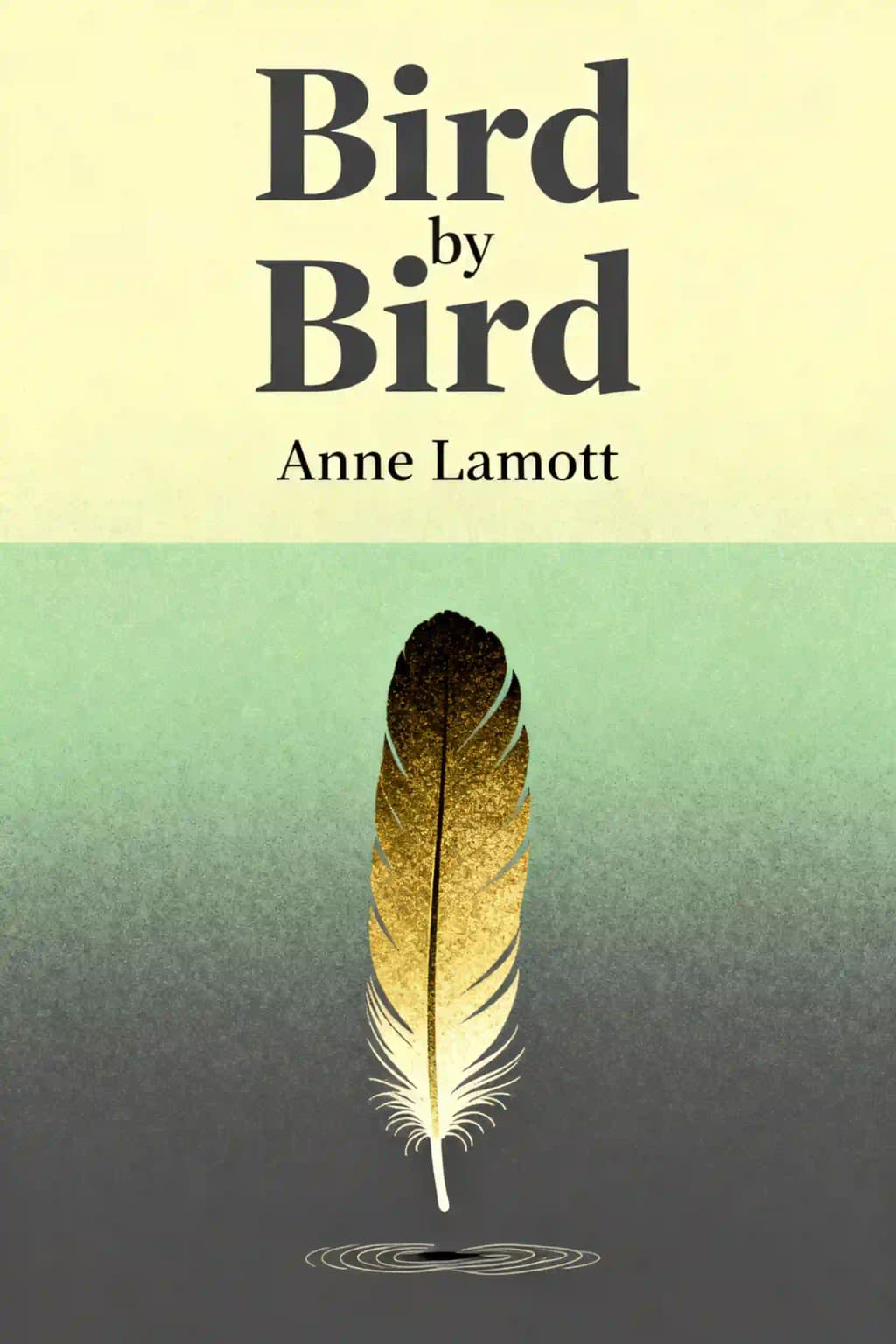
Anne Lamott's "Bird by Bird" has become a literary North Star for aspiring writers since its publication in 1994. This beloved manual has sold over a million copies and remains a staple on writing course syllabi across universities worldwide. Celebrated by authors like Elizabeth Gilbert and Cheryl Strayed as their creative bible, the book's enduring popularity stems from Lamott's rare combination of brutal honesty and compassionate humor about the writing process. Unlike other craft books that promise formulas for success, "Bird by Bird" embraces the messy reality of creation. When Oprah featured it in her magazine, she noted it was "the book that finally made me feel I wasn't alone in my writing struggles." With its perfect balance of practical advice and spiritual encouragement, Lamott's work continues to rescue writers from the brink of creative despair nearly three decades after its initial publication.
2장
The Writing Life: A Beautiful Struggle
Growing up in a house where reading was sacred, Anne Lamott absorbed the writer's life through her father, who rose at 5:30 every morning to write before making breakfast. Unlike fathers with conventional jobs, he lived on his own terms, writing books and articles about places and people he'd known. Though he died in his mid-fifties, he taught her writing's greatest gifts: an excuse to explore the world and a reason to pay close attention to life.
As a shy, strange-looking child who weighed forty pounds and walked with shoulders up to her ears "like Nixon," Lamott developed humor as a defense against taunts about her appearance. Her first recognized poem about John Glenn won a state competition, giving her that primal verification: you exist outside yourself. Writers, unlike musicians or athletes, could get public attention while staying safely home.
In her household, books were revered and writers admired above all others. Through high school and college, she discovered her gift for storytelling - making experiences vivid, funny, and meaningful. Books became her refuge; she read obsessively, lost in the worlds they created. She was drawn to oddballs, ethnic people, theater people, poets, radicals, gays and lesbians - anyone living outside conventional boundaries.
When her father was diagnosed with brain cancer, he told her to pay attention and take notes: "You tell your version, and I am going to tell mine." She began writing connected stories about his experience, which became her first published book a year after his death. The publication wasn't the romantic affirmation she'd expected - the months before release were filled with anxiety, and her first reviews called the book "boring, sentimental, self-indulgent spider puke."
Yet she still encourages anyone compelled to write to do so. Publication isn't what it's cracked up to be, but writing is. The act of writing itself becomes the reward, like discovering you needed the tea ceremony more than the caffeine. Some days writing feels pointless; other days it's the only thing that makes sense, like Wendell Berry's wild rose "suddenly flaring in sight" where yesterday was only shade.
3장
Starting Small: The One-Inch Picture Frame
The first useful concept Lamott offers is the one-inch picture frame. When you sit down to write, your mind envisions grand projects - autobiographical novels, plays about immigrants, comprehensive histories. But this is like scaling a glacier with bloody fingertips. Soon your mental illnesses arrive at your desk like secretive relatives, pulling up chairs with their weird coppery breath, leering behind your back.
When panic mounts and she realizes her well has run dry, Lamott stops. She breathes slowly, letting her mind wander through orthodontia considerations, makeup lessons, boyfriend possibilities, people she should call back, financial problems. This mental wrestling only takes a minute or two before she notices the one-inch picture frame on her desk.
This frame reminds her that all she needs to do is write what she can see through a one-inch picture frame - just one paragraph about her hometown in the late fifties when trains still ran, or describing a character when she first walks onto her porch. As E.L. Doctorow said, "writing a novel is like driving a car at night. You can see only as far as your headlights, but you can make the whole trip that way."
When overwhelmed, she remembers her brother thirty years ago, trying to write a bird report due the next day after three months of procrastination. Her father sat beside him and said, "Bird by bird, buddy. Just take it bird by bird." This story usually dents her students' sense of being overwhelmed.
The one-inch frame concept pairs perfectly with short assignments. Instead of trying to write your magnum opus in one sitting, focus on describing a single memory, character trait, or scene. This approach makes the insurmountable manageable. Writing addresses our deepest needs - to be visible, heard, to make sense of our lives, to wake up and belong. We sometimes take ourselves too seriously, like Francis in "Stripes" who threatens to kill anyone who calls him Francis or touches him, until Warren Oates says, "Hey - tighten up, Francis." This isn't a bad line to tape to your office wall.
4장
Embracing the Mess: Shitty First Drafts
Even better than short assignments is the concept of shitty first drafts. All good writers write them - it's how they end up with good second drafts and terrific thirds. People imagine successful writers sitting down feeling like a million dollars, confidently typing fully formed passages. Pure fantasy! Even very great writers don't feel wildly enthusiastic or confident, nor do they write elegant first drafts.
Very few writers know what they're doing until they've done it. They don't bound along like huskies across snow. Writing feels like pulling teeth even for those whose prose seems most natural. The right words don't pour out like ticker tape.
For Lamott and most writers she knows, the only way to write is to produce really shitty first drafts. The first draft is the child's draft - let it all pour out and romp everywhere. If a character wants to say "Well, so what, Mr. Poopy Pants?" let her. If the writing gets sentimental or weepy, let it. Just get everything down because something great might emerge in those six crazy pages that rational means would never discover.
When she wrote food reviews for California magazine, panic always set in despite years of experience. She'd write dreadful sentences, cross them out, feel despair settling on her chest like an x-ray apron. She'd think it was over, the magic wouldn't work this time. Eventually she'd return to her desk, sigh for ten minutes, then pick up her one-inch picture frame and realize all she needed was a really shitty first draft that no one would see.
Almost all good writing begins with terrible first efforts. Her friend says the first draft is the "down draft" - just get it down. The second is the "up draft" - fix it up. The third is the "dental draft" - check every tooth for problems.
The challenge is quieting the voices in your head - the primly judgmental Reader Lady, the Orwellian German male documenting your thought crimes, your agonizing parents, William Burroughs nodding off because you're as articulate as a houseplant, and the dogs in their pen that writing keeps contained. Quieting these voices is half the daily battle, down from 87 percent.
5장
The Enemy Within: Perfectionism and Inner Critics
Perfectionism is the enemy of creativity - the oppressor's voice that keeps you cramped and insane. It's the main obstacle between you and your shitty first draft, based on the obsessive belief that careful stepping-stone navigation will somehow help you avoid death. But you'll die anyway, and those not watching their feet will do better and have more fun.
Perfectionism ruins writing by blocking inventiveness and life force. It's the desperate attempt to avoid mess. But clutter shows that life is being lived - it's fertile ground for discovery, cleaning up, editing. Tidiness suggests stagnation, while writing needs to breathe and move.
When Lamott had her tonsils removed at twenty-one, the nurse told her to chew gum despite her pain. She explained that muscles cramp around wounds for protection, and she needed to use those muscles for them to relax. Similarly, our psychic muscles cramp around emotional wounds, preventing healing and limiting our movement and writing.
Breaking through perfectionism is easier with God, though God never just waves a magic wand. He might give you courage to write terrible first drafts, helping you learn that imperfect messes have value. Without God, remember Geneen Roth's wisdom: awareness is learning to keep yourself company. Be compassionate company, as you would with a friend.
Lamott also warns about radio station KFKD (K-Fucked) - perhaps the greatest obstacle to creative flow. If you're not careful, it plays nonstop in stereo inside your head. From the right speaker comes endless self-aggrandizement - recitations of your specialness, brilliance, and misunderstood genius. From the left speaker blares self-loathing - lists of mistakes, doubts, assertions that everything you touch turns to shit, that you're a fraud with no talent. This mental noise is as distracting as having heavy-metal music piped through headphones while trying to work.
You need quiet in your head to hear your characters. The best way to quiet KFKD is first to notice it's playing. Lamott says a small prayer: "Please help me get out of the way so I can write what wants to be written." We need to align ourselves with the river of the story, the river of the unconscious, of memory and sensibility, of our characters' lives, which can then pour through us, the straw.
6장
Building From the Ground Up: Characters and Plot
Characters develop like Polaroids - they take time to know. Each person has their own emotional "acre" they tend in specific ways. Your job is to discover what each character's acre looks like, what they're growing, and in what condition they keep their land.
Learn their physical details - how they stand, what they carry, how their faces change when thinking or afraid. Discover their values - who they'd vote for, what they'd do with six months to live, whether they'd keep flossing. You'll love some characters because they reflect you, and hate others for the same reason. But you must let bad things happen to characters you love, or your story becomes pointless.
Most important is creating a likable narrator. As Ethan Canin said, "Nothing holds a story together better." A character's flaws make them interesting - preoccupation with self, procrastination, jealousy, addictiveness. Perfect characters are "shallow and unreal and fatally uninteresting." They should have hope (at least in American novels), or be funny about their hopelessness.
Plot grows organically from character rather than the other way around. Don't worry about plot - worry about who your people are and what they'll "up and do in spite of everything." If you focus on developing relationships between characters, the plot will emerge naturally.
Characters should never be pawns for a pre-planned plot (which will feel forced and mechanical). Instead, discover what each character cares most about - that's what's at stake. Without stakes, there's no tension and readers won't turn pages. Think of a hockey player needing a puck - without it, he looks ridiculous.
Lamott's writing process involves rereading yesterday's work, then wool-gathering about her characters until a movie begins playing in her head. She's both the lantern-holder and the typist while "the kid" does the digging for details, clues, fresh ideas and intuitive understanding of people.
Your story must create a "vivid and continuous dream" for readers. The climax should feel inevitable yet surprising - a killing (literal or spiritual), healing, or domination that profoundly changes at least one character.
7장
The Writer's Toolkit: Dialogue, Setting, and Research
Good dialogue creates a pleasurable change of pace from description and exposition. It lets us clip along, voyeuristically listening to characters who don't know we're there. But bad dialogue breaks the mood of otherwise terrific writing - suddenly everything sounds emotionally tone-deaf. Like an actor hitting false notes, unconvincing dialogue can shatter the delicate illusion of reality that fiction strives to create.
To write effective dialogue, always read your words aloud. Practice repeatedly, paying attention to rhythm, pacing, and natural speech patterns. When out in the world, listen to how people really talk - notice their interruptions, half-finished sentences, distinctive vocabularies, and verbal tics. Mentally edit their speech into concise versions without losing anything essential. This is how writers spend their days - "listening, observing, storing things away, making your isolation pay off." Study how different social groups speak differently - teenagers versus elderly, professionals versus laborers, urban versus rural residents.
Each character must sound different from the others, with their own distinct voice and speech patterns. Their dialogue should reveal who they are through word choice, sentence structure, and cultural references. A professor might speak in complete paragraphs while a street-smart teenager uses clipped sentences and current slang. Their speech mannerisms can show what they're wearing ("adjusting his bow tie as he lectured"), driving ("gunning her Harley's engine mid-sentence"), or thinking ("pausing to calculate the odds"). Trust yourself to hear what they're saying over what you're saying. Sometimes placing two characters who desperately want to avoid each other in a confined space - an elevator, a cramped office, a delayed flight - creates the perfect tension for revealing dialogue.
Setting design requires similar attention to detail. Let your characters wait in the wings while you create the stage where their story will unfold. Imagine yourself as a set designer, considering not just the visual elements but the sensory details that bring a space to life - the musty smell of old books, the creak of floorboards, the quality of light through dusty windows. Every room reveals layers of information about its occupants - their values shown through artwork choices, personalities reflected in furniture arrangement, memories displayed in photographs, quirks evident in collections, hopes visible in exercise equipment or musical instruments, sorrows suggested by empty spaces where something once stood.
When creating settings beyond your personal experience, thorough research becomes crucial. For wealthy homes, study architectural magazines and real estate listings. For elaborate gardens, consult with master gardeners about seasonal blooms and maintenance routines. Call friends or experts who know these worlds intimately. Ask specific questions about carpets (Persian or Turkish? Hand-knotted or machine-made?), lighting (chandeliers, sconces, or recessed?), ambient sounds (grandfather clocks, central air, street noise?). For specialized knowledge - legal procedures, medical diagnoses, scientific processes - contact professionals in those fields. Most people enjoy sharing their expertise and appreciate writers who strive for accuracy. Your readers will believe you know these worlds intimately, even when you're just "winging it" with help from others who truly understand them. The key is to gather enough authentic details to create a convincing backdrop without overwhelming the story with unnecessary information.
8장
The Inner Compass: Intuition and Moral Vision
There's an old Mel Brooks routine where a psychiatrist tells his patient, "Listen to your broccoli, and your broccoli will tell you how to eat it." This seemingly absurd advice contains profound wisdom for writers. When you're stuck, when you don't know what your character would do, get quiet and listen to that still small voice inside. It will tell you what to do.
The problem is that many of us lost access to our intuition as children. When we expressed our perceptions or questioned adult lies, we were often corrected, ridiculed, or punished. We learned to doubt the voice telling us what was really happening. Now you must reclaim that voice to write well.
Without your intuitive broccoli, you'll have only your rational mind to guide your writing. On bad days, you'll crash within half an hour and give up, making tomorrow even harder to face. But if you stick it out, an image or situation might come that opens the door for a character, who might say something important that makes your plot fall into place.
You get your confidence and intuition back by trusting yourself, by being militantly on your own side. During first drafts especially, let your imagination and memories roam freely. Don't look at your feet to see if you're doing it right - just dance.
If you habitually abandon stories midway, perhaps nothing at their center truly matters to you. You need to place yourself and your deepest beliefs at the core of your writing. These ethical concepts that feel like eternal truths are your only real material. You can't express them in bumper stickers - truth requires unfolding, layers, a whole book perhaps, as we navigate between the known and unknown.
Beginning writers often fill pages with witticisms to showcase their uniqueness. But with regular practice, you naturally begin wanting your characters to act out the drama of humankind, which is fundamentally ethical. Through living, we discover what helps and what hurts, and our characters dramatize this moral material. Readers connect with characters who demonstrate that a moral compass still exists, that goodness can triumph over evil - not in the simplistic way of formula fiction, but in showing that ordinary, flawed people can still access courage and goodness within themselves.
9장
Beyond Publication: The Real Rewards of Writing
Publication won't change your life, solve your problems, make you more beautiful, or likely make you richer. The buildup is long, the festivities brief. But there are other rewarding reasons to write that can genuinely transform your life and sense of self.
Twice Lamott wrote books that began as presents for loved ones who were dying. When her father was diagnosed with brain cancer, she started recording their family's new reality - her brothers trying to help, all of them maintaining humor while seeking meaning. She shaped these moments into stories and showed them to her father, who appreciated seeing their pain transformed into a narrative of love and survival.
Similarly, when her friend Pammy was diagnosed with breast cancer, she compiled journal entries about her and her son Sam, whom Pammy was helping raise. She finished it four months before Pammy died - another love letter that would become part of her immortality and a gift to other single mothers.
Finding your authentic voice means giving up borrowed styles and props that aren't truly yours. Like worldly possessions we must eventually return to "the great propmaster in the sky," stylistic imitation is just a temporary loan. What drives most writers is the refusal to be silenced again. Many were good children who saw awful things but were punished for speaking up. Now they want to examine life without being "sent to their rooms."
You can't write authentically with your parents reading over your shoulder - those voices saying "don't tell that secret" or "that's a bad word." You must write as if your parents are dead. Truth demands expression; unacknowledged truth saps energy and keeps you and your characters "wired and delusional." When you open that closet door, liberation follows.
Annie Dillard says we must give our best stuff daily to our work, not saving for later projects - a radical proposition that runs contrary to our hoarding nature. Only when we decide to "shoot our literary wad" daily do we experience full presence. Writing demands giving from your deepest self, with the giving becoming its own reward.
10장
The Final Word: Why Writing Matters
In her final class, Lamott urges her students repeatedly to write about their childhoods - that time when their powers of observation were most acute and feelings most intense. Understanding your childhood develops empathy, which helps you write with intelligence, insight, and compassion.
She tells her students not to feel sorry for themselves. You chose to write, so write. You're lucky to be someone who builds sand castles with words. We create these places with memories, believing somehow the ocean won't wash them away. This is what separates artists from ordinary people.
Many students come to class hoping for publication, fame, and fortune. But she tells them to write with everything they have, daily if possible, for the rest of their lives. The literary life is the loveliest one possible - spiritually invigorating, intellectually quickening. It offers challenge, delight, agony, and commitment.
Writing changes you as a reader too. You read with deeper appreciation, noticing how writers artfully create characters and worlds. There are moments while writing that feel like such intense pleasure Lamott thinks she'd be burned at the stake for feeling so good.
In this dark and wounded society, writing gives you a place to belong. After years of floundering, you'll finally know what you're doing - facing your wounds. This is painful and stops many people who got into writing for money and fame.
Don't underestimate the gift of finding your place in the writing world. Even if only your writing group reads your work, to have written your version is an honorable thing. Your words might help others in ways you can't imagine. Like lighthouses, writers don't run around looking for boats to save; they just stand there shining.
You can approach writing as a laborer or an artist - as a chore or with the care of a Japanese tea ceremony. The question is: how alive are you willing to be?
When her students ask why writing matters, Lamott tells them: because of the spirit, because of the heart. Writing decreases our isolation and feeds the soul. It's like singing during a terrible storm at sea - you can't stop the storm, but singing changes the hearts of the people on that ship.