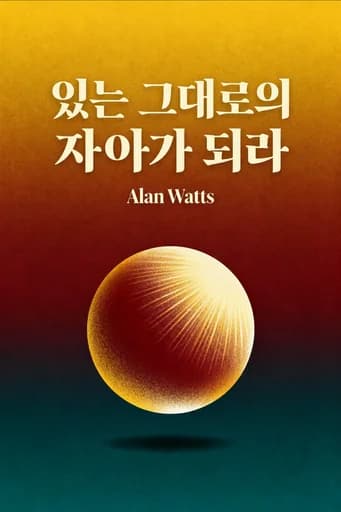
In "Become What You Are," Alan Watts bridges Eastern and Western philosophies, inviting you to embrace your authentic self. Called the "godfather of Zen in America," Watts challenges conventional identity - what if true freedom lies in accepting who you already are?
Alan Wilson Watts (1915–1973) was a groundbreaking British-American philosopher and bestselling author whose Become What You Are distills Zen Buddhism and Taoist principles into accessible insights on self-realization.
A seminal figure in bridging Eastern and Western thought, Watts penned over 25 works, including The Way of Zen and Psychotherapy East and West, which remain foundational texts in spiritual and philosophical studies.
Ordained as an Anglican priest before devoting himself to Zen, he co-founded the American Academy of Asian Studies and gained renown through his KPFA radio lectures, later popularized via public broadcasts and modern platforms like YouTube.
Known for his witty, conversational style, Watts’s talks and books influenced 1960s counterculture and continue to resonate globally. His works have been translated into dozens of languages, with The Way of Zen alone selling millions of copies since its 1957 release.
Become What You Are explores Alan Watts' interpretation of Eastern philosophies like Zen Buddhism and Taoism, emphasizing self-realization through non-striving and embracing one’s true nature. The book challenges Western notions of achievement, arguing that fulfillment comes from aligning with life’s spontaneous flow rather than forced self-improvement. Key themes include mindfulness, ego dissolution, and the paradox of effortless living.
This book suits seekers of spiritual growth, fans of Eastern philosophy, and readers questioning societal pressures to “become someone.” It’s ideal for those grappling with existential dissatisfaction or seeking alternatives to goal-oriented self-help. Watts’ accessible style also appeals to newcomers exploring Zen or Taoist principles.
Yes, for its timeless insights into overcoming anxiety through acceptance. Watts’ blend of wit and wisdom demystifies complex ideas, making it a standout in spiritual literature. Critics praise its practicality for modern stress, though some find its anti-ambition stance extreme.
While both explain Zen, Become What You Are focuses on practical self-realization, whereas The Way of Zen delves into historical context. The former uses fewer technical terms, making it more accessible for beginners.
Both emphasize non-dualistic thinking.
Watts argues anxiety stems from resisting life’s impermanence. By accepting thoughts/emotions without judgment—practicing “being” over “doing”—readers reduce mental friction. This aligns with modern mindfulness techniques.
Some critics argue Watts oversimplifies Eastern traditions for Western audiences. Others note his rejection of ambition clashes with capitalist values, though defenders counter that he advocates purposeful, not passive, living.
Watts redefines success as aligning work with innate passions rather than external validation. He encourages intuitive decision-making over rigid planning—a concept echoed in today’s “anti-hustle” movement.
Amid AI disruption and burnout culture, its message of authenticity over productivity resonates. The book’s anti-dogmatic approach also appeals to Gen Z’s spiritual-but-not-religious trend.
These illustrate non-attachment.
Yes, narrated by Watts himself, capturing his iconic cadence. New editions include commentary by modern mindfulness teachers, enhancing accessibility.
저자의 목소리로 책을 느껴보세요
지식을 흥미롭고 예시가 풍부한 인사이트로 전환
핵심 아이디어를 빠르게 캡처하여 신속하게 학습
재미있고 매력적인 방식으로 책을 즐기세요
This, then, is the human problem: there is a price to be paid for every increase in consciousness.
To have faith is to trust yourself to the water. When you swim you don't grab hold of the water, because if you do you will sink and drown. Instead you relax, and float.
When you find out that there was never anything in the dark side to be afraid of... Nothing is left but to love.
So become what you are-not through effort but through recognition of what has always been true.
Become What You Are의 핵심 아이디어를 이해하기 쉬운 포인트로 분해하여 혁신적인 팀이 어떻게 창조하고, 협력하고, 성장하는지 이해합니다.
Become What You Are을 빠른 기억 단서로 압축하여 솔직함, 팀워크, 창의적 회복력의 핵심 원칙을 강조합니다.

생생한 스토리텔링을 통해 Become What You Are을 경험하고, 혁신 교훈을 기억에 남고 적용할 수 있는 순간으로 바꿉니다.
무엇이든 물어보고, 목소리를 선택하고, 진정으로 공감되는 인사이트를 함께 만들어보세요.

샌프란시스코에서 컬럼비아 대학교 동문들이 만들었습니다
"Instead of endless scrolling, I just hit play on BeFreed. It saves me so much time."
"I never knew where to start with nonfiction—BeFreed’s book lists turned into podcasts gave me a clear path."
"Perfect balance between learning and entertainment. Finished ‘Thinking, Fast and Slow’ on my commute this week."
"Crazy how much I learned while walking the dog. BeFreed = small habits → big gains."
"Reading used to feel like a chore. Now it’s just part of my lifestyle."
"Feels effortless compared to reading. I’ve finished 6 books this month already."
"BeFreed turned my guilty doomscrolling into something that feels productive and inspiring."
"BeFreed turned my commute into learning time. 20-min podcasts are perfect for finishing books I never had time for."
"BeFreed replaced my podcast queue. Imagine Spotify for books — that’s it. 🙌"
"It is great for me to learn something from the book without reading it."
"The themed book list podcasts help me connect ideas across authors—like a guided audio journey."
"Makes me feel smarter every time before going to work"
샌프란시스코에서 컬럼비아 대학교 동문들이 만들었습니다

Become What You Are 요약을 무료 PDF 또는 EPUB으로 받으세요. 인쇄하거나 오프라인에서 언제든 읽을 수 있습니다.
Have you ever noticed how we spend our lives trying to become something we suspect we already are? This contradiction forms the heart of Alan Watts' philosophical masterpiece. The wisdom traditions have long pointed to this peculiar human dilemma: "He that loseth his soul shall find it." But this isn't some moral prescription-it's a profound psychological insight into the mechanics of transformation. The problem emerges when we attempt self-improvement through self-renunciation. How can the self that needs changing also be the agent of change? It's as impossible as "a needle pricking its own point." Spiritual teachings that emphasize self-denial function as upaya (skillful means)-roundabout methods leading to the humiliating discovery that self-improvement is impossible. This very realization constitutes the death to self from which new life emerges. In Zen terms, transformation happens when "the iron hide of the bull finally and absolutely rejects the mosquito's frail proboscis." Those who have genuinely died to themselves make no claims to spiritual achievement. They see themselves as merely lazy and lucky, recognizing a universal truth available to anyone. When we finally surrender to what we cannot resist-like our terror of mortality-it transforms alchemically into freedom. This happens precisely when we discover we cannot surrender ourselves, when all striving ceases like "a naked man trying to lose his shirt."