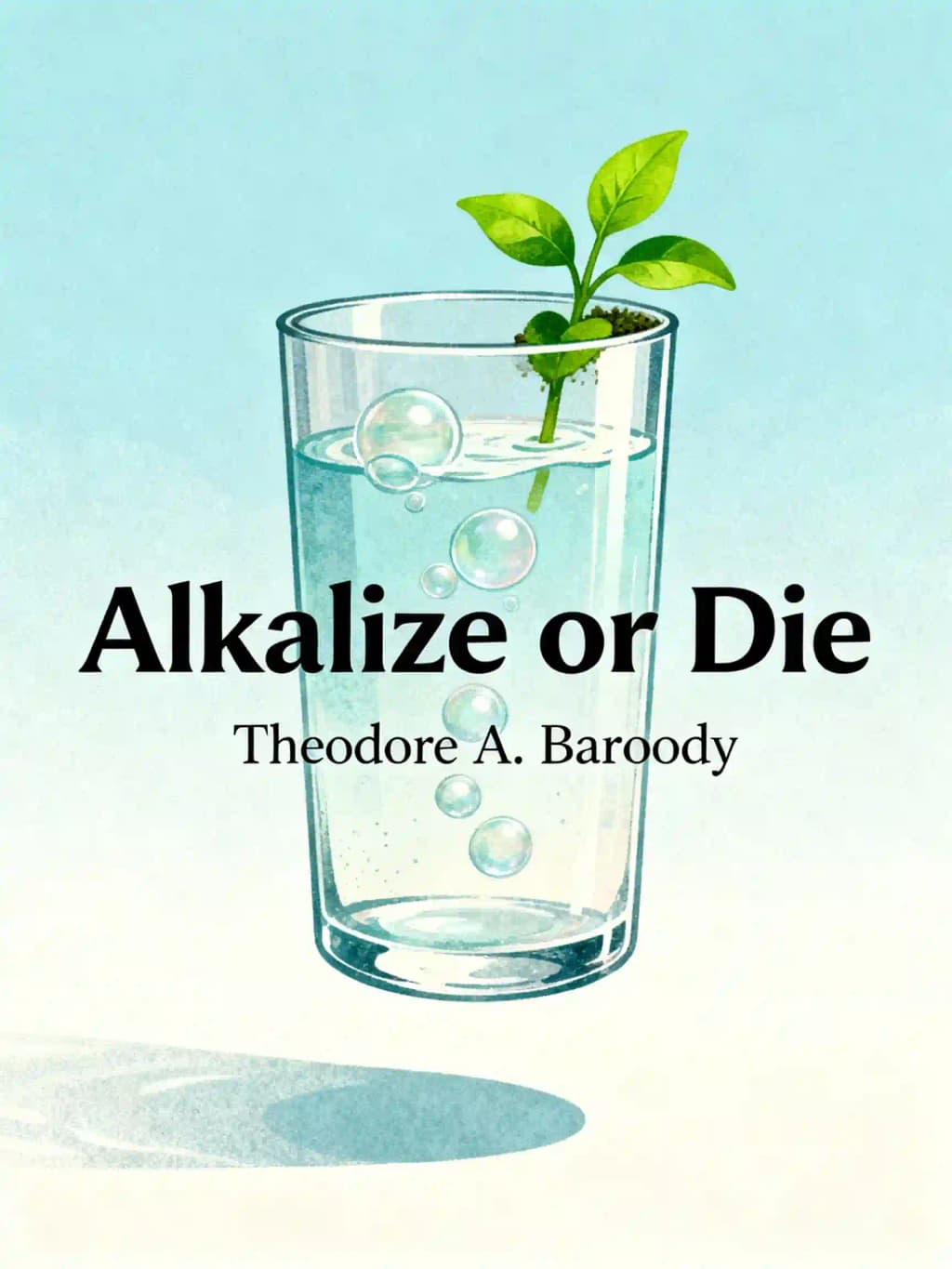
Discover why your body's pH balance could be the hidden key to vibrant health. Dr. Baroody's revolutionary guide has transformed countless lives, becoming a cornerstone of the alkaline diet movement. What if nearly all diseases share one surprising, fixable root cause?
Theodore Alexander Baroody, DC, ND, Ph.D., was a chiropractor, naturopath, and nutrition researcher best known for his alternative health book Alkalize or Die: Superior Health Through Proper Alkaline-Acid Balance. A pioneer in holistic health integration, Baroody blended nutritional science, acupuncture, and energy medicine through his Holographic Health® system developed over 40 years of global study.
His work emphasizes acid-alkaline balance as foundational to wellness, reflecting his triple doctoral credentials in chiropractic care, naturopathy, and nutrition from Life Chiropractic College, Clayton School of Naturopathy, and American Holistic College.
Baroody authored multiple books including the four-volume Holographic Health® series and Hiatal Hernia Syndrome, while training practitioners through international seminars. As founder of Holographic Health, Inc., he established a lasting legacy in integrative medicine now continued by his protégés. Alkalize or Die remains a polarizing yet influential text in alternative health circles, maintaining a 3.83/5 average from nearly 1,000 Goodreads ratings for its bold claims about dietary pH's role in disease prevention.
Alkalize or Die argues that maintaining an alkaline body pH is essential for optimal health, linking chronic acidity to diseases like bone loss and immune dysfunction. Dr. Baroody advocates avoiding acid-forming foods (e.g., processed meats, sugars) and prioritizing alkaline options (e.g., leafy greens, fruits), alongside stress management and supplementation. The book includes a 21-day meal plan, 55 recipes, and a food chart ranking 350+ items by their pH impact.
This book targets individuals exploring alternative health strategies, particularly those dealing with fatigue, digestive issues, or chronic inflammation. It’s also relevant for nutrition enthusiasts seeking structured dietary frameworks or critics analyzing holistic health claims. Spiritual readers may appreciate Baroody’s integration of religious principles with nutritional science.
Yes, for its actionable advice on diet and stress reduction, including meal plans and pH-balancing techniques. However, its heavy promotion of supplements and limited peer-reviewed evidence have drawn criticism. The book remains influential in naturopathic circles but should be paired with conventional medical guidance for serious health conditions.
Baroody blames acidity on processed foods, environmental toxins, and stress. Physical stressors (e.g., poor sleep), emotional strain, and even “spiritual disharmony” are said to trigger acid production. Animal products, caffeine, and alcohol are highlighted as dietary culprits, while fruits, vegetables, and specific supplements are recommended to restore balance.
The book recommends urine or saliva pH tests using litmus paper, ideally done weekly. Baroody advises testing upon waking and before meals, aiming for slightly alkaline readings (pH 7.0–7.5). Persistent acidity signals the need for dietary adjustments or detox protocols outlined in the book.
Key recommendations include:
A 21-day meal plan and recipes (e.g., alkaline salads, smoothies) provide structured guidance.
This fold-out chart categorizes 350+ foods by their pH impact, helping readers prioritize alkaline options. For example:
| Alkaline | Neutral | Acidic | |--------------|-------------|------------| | Spinach | Quinoa | Beef | | Lemons | Olive oil | Soda | | Broccoli | Lentils | Coffee |
The chart simplifies meal planning and aligns with Baroody’s 80/20 dietary rule.
Baroody claims stress—physical, emotional, or spiritual—triggers cortisol spikes, increasing metabolic acid waste. Chronic stress purportedly overwhelms the kidneys and lungs, leading to pH imbalance. Solutions include meditation, deep breathing, and avoiding “negative energy”.
Critics argue:
These lines summarize Baroody’s core premise that pH correction unlocks holistic health.
Yes, Baroody ties acidity to accelerated aging, citing cellular inflammation and bone density loss. He claims alkaline diets reduce wrinkles, arthritis, and cognitive decline, advocating leafy greens and targeted supplements (e.g., magnesium, chlorophyll) for longevity.
The book criticizes symptom-focused Western medicine, arguing it ignores root causes like pH imbalance. Baroody encourages integrating his nutritional framework with holistic practices but cautions against over-reliance on pharmaceuticals.
저자의 목소리로 책을 느껴보세요
지식을 흥미롭고 예시가 풍부한 인사이트로 전환
핵심 아이디어를 빠르게 캡처하여 신속하게 학습
재미있고 매력적인 방식으로 책을 즐기세요
Virtually all illness stems from excessive tissue acid waste.
Our blood must maintain a slightly alkaline pH of 7.35-7.45 to sustain life.
Acid-forming reactions decrease system energy.
Eat 80% alkaline-forming foods and 20% acid-forming foods.
The heart, one of our most alkaline-dependent organs, relies heavily on proper pH balance.
Alkalize or die의 핵심 아이디어를 이해하기 쉬운 포인트로 분해하여 혁신적인 팀이 어떻게 창조하고, 협력하고, 성장하는지 이해합니다.
Alkalize or die을 빠른 기억 단서로 압축하여 솔직함, 팀워크, 창의적 회복력의 핵심 원칙을 강조합니다.

생생한 스토리텔링을 통해 Alkalize or die을 경험하고, 혁신 교훈을 기억에 남고 적용할 수 있는 순간으로 바꿉니다.
무엇이든 물어보고, 목소리를 선택하고, 진정으로 공감되는 인사이트를 함께 만들어보세요.

샌프란시스코에서 컬럼비아 대학교 동문들이 만들었습니다
"Instead of endless scrolling, I just hit play on BeFreed. It saves me so much time."
"I never knew where to start with nonfiction—BeFreed’s book lists turned into podcasts gave me a clear path."
"Perfect balance between learning and entertainment. Finished ‘Thinking, Fast and Slow’ on my commute this week."
"Crazy how much I learned while walking the dog. BeFreed = small habits → big gains."
"Reading used to feel like a chore. Now it’s just part of my lifestyle."
"Feels effortless compared to reading. I’ve finished 6 books this month already."
"BeFreed turned my guilty doomscrolling into something that feels productive and inspiring."
"BeFreed turned my commute into learning time. 20-min podcasts are perfect for finishing books I never had time for."
"BeFreed replaced my podcast queue. Imagine Spotify for books — that’s it. 🙌"
"It is great for me to learn something from the book without reading it."
"The themed book list podcasts help me connect ideas across authors—like a guided audio journey."
"Makes me feel smarter every time before going to work"
샌프란시스코에서 컬럼비아 대학교 동문들이 만들었습니다

Alkalize or die 요약을 무료 PDF 또는 EPUB으로 받으세요. 인쇄하거나 오프라인에서 언제든 읽을 수 있습니다.
Imagine waking up each morning with boundless energy, mental clarity, and physical vitality - not just occasionally, but consistently. According to Dr. Theodore Baroody's groundbreaking work, this isn't a fantasy but a biochemical reality available to anyone willing to understand one fundamental principle: virtually all illness stems from the same root cause - excessive tissue acid waste in the body. This concept bridges ancient wisdom from traditional healing systems with modern biochemistry, creating an integrated framework that addresses not just what we eat, but how we think, feel, and live. The alkaline-acid balance represents the biochemical foundation of our health, with every substance we consume, emotion we feel, and environment we inhabit affecting this delicate equilibrium. Our blood must maintain a slightly alkaline pH of 7.35-7.45 to sustain life - even minor deviations can have severe consequences. When we consume acid-forming foods or experience stress, our body works tirelessly to neutralize these acids by drawing on what Baroody calls "the great alkaline reserve" - a bank account of minerals stored in our tissues. Alkaline-forming minerals include calcium, magnesium, sodium, and potassium, which bind acid toxins and leave an alkaline ash in the urine. When we overindulge in acid-forming foods, the body attempts to rebalance, but when the alkaline reserve becomes depleted, serious health problems follow. To maintain healthy alkaline reserves, Baroody recommends following the Rule of 80/20 - eating 80% alkaline-forming foods and 20% acid-forming foods.