1장
When Parents Become Predators: The Invisible Wounds of Parental Alienation
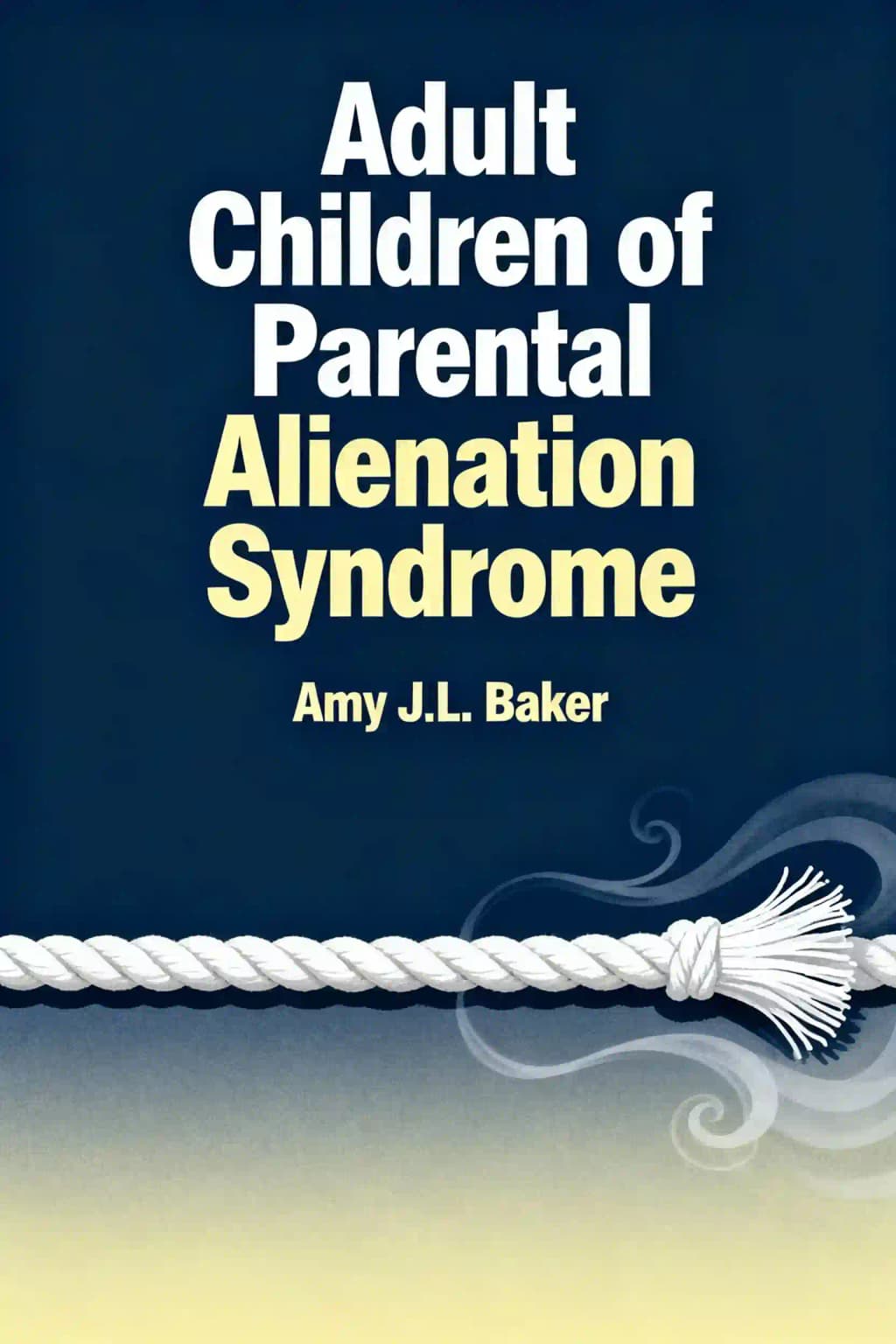
Imagine a child being systematically taught to hate a parent they once loved. Not because of abuse or neglect, but because one parent has decided the other must be erased from the child's life. This psychological manipulation, known as Parental Alienation Syndrome (PAS), affects millions of families yet remains largely invisible in mainstream discourse. Amy J.L. Baker's groundbreaking work has become required reading in many family court systems since its publication, with celebrities like Alec Baldwin publicly discussing their own experiences with parental alienation. The book's cultural impact stems from its unprecedented approach: rather than theorizing about alienation, Baker interviewed 40 adult survivors who lived through it, revealing the lasting damage of this insidious form of emotional abuse.
2장
The Hidden Epidemic of Parental Alienation
Parental alienation syndrome (PAS) manifests when one parent methodically undermines and destroys a child's relationship with the other parent through sophisticated manipulation, persistent denigration, and systematic interference. While initially documented primarily in contentious divorce proceedings, Baker's groundbreaking research has uncovered a more nuanced and disturbing reality: PAS transcends marital status, occurs regardless of gender, and frequently intersects with other forms of psychological and emotional abuse.
The magnitude of this crisis is deeply concerning. Current research indicates that approximately 25% of divorces remain highly conflictual even after twelve months, with one-third of children from divorced families trapped in the crossfire of ongoing parental hostility. The statistics are alarming: an estimated 20 million children in the United States currently experience alienating behaviors, while projections suggest another 25 million will encounter similar trauma before reaching adulthood. These numbers likely underestimate the true scope, as many cases go unreported or unrecognized.
Through comprehensive interviews with adult survivors, Baker identified three distinct patterns of alienation, each with its own characteristics and dynamics. The most prevalent pattern involves narcissistic mothers in post-divorce scenarios who systematically destroy the relationship between children and their noncustodial fathers. These mothers typically present as superficially charming and socially adept while harboring deep-seated self-absorption. They create unhealthy, emotionally enmeshed relationships with their children while methodically undermining the father-child bond through various tactics, including scheduling conflicts, false allegations, and constant criticism. Their motivations form a complex web of revenge against former spouses, anger at children's natural desire to maintain paternal relationships, and profound inability to cope with perceived abandonment during father-child visitation periods.
The second pattern emerges within intact families, where narcissistic mothers alienate children from fathers despite living under the same roof. Their primary strategy involves inappropriate emotional confidences about the father's supposed failings and weaknesses, creating an artificial intimacy with the mother while systematically eroding respect for the father. Unlike divorce-related alienation, these mothers often act out of perceived emotional rejection within the marriage or find greater satisfaction in their children's unconditional adoration than in adult relationships requiring mutual compromise and understanding.
The third pattern represents a significant deviation: alienating parents who employ physical violence, verbal abuse, or sexual exploitation. Unlike the previous patterns, these parents don't maintain superficially close relationships with their children but instead achieve alienation through terror and intimidation. Children align with these abusive parents through a psychological mechanism known as "identification with the aggressor" - a survival strategy where victims cope with powerlessness by internalizing and mimicking the characteristics of their tormentors.
Across all three patterns, alienation strategies systematically disrupt natural parent-child attachment bonds. Adult survivors documented 32 distinct tactics that effectively destroyed these relationships, ranging from constant disparagement and restriction of contact to more subtle forms of manipulation, such as withdrawing affection when children expressed positive feelings toward the targeted parent. Many described being forced to participate in orchestrated displays of hatred, including public rejections and scripted denouncements of the targeted parent, creating deep-seated psychological trauma that persisted well into adulthood.
3장
The Cult of Parenthood: Mind Control in the Family
Perhaps the most disturbing insight from Baker's research is how alienating parents function remarkably like cult leaders, creating family systems that operate as psychological cults. These parents demand excessive devotion, manipulate emotions to create dependency, and pursue their own aims at their children's expense.
Like cult leaders, alienating parents position themselves as deserving unquestioning devotion while manipulating their children into making impossible choices. Children allied with alienating parents because they believed this parent truly loved them while the other parent was unsafe or unloving. This alliance was cemented through conditional love that felt tenuous and required constant reinforcement.
The alienating parents employed five primary techniques: relentless denigration of the targeted parent; creating impressions of danger; misrepresenting the targeted parent's feelings; withdrawing love if the child showed positive regard for the targeted parent; and erasing the targeted parent from the child's life. These techniques penetrate the child's inner emotions, consistent with brainwashing practices documented in research on thought reform.
"I was played off from one parent to the other and I learned I couldn't trust," explained Oliver, one of the study participants. "It has made me so I can't trust people or be confident with people."
The most common alienation strategy was persistent "bad-mouthing" of the targeted parent. Children described constant negative comments ranging from general statements about the parent being "a piss poor dad," "a whore and a slut," or "not the man you think he is" to complaints about being a cheat, alcoholic, or uncaring. The bad-mouthing was notable for its one-sidedness and inappropriate content, often exposing children to adult concepts before they were ready.
Some alienating parents went beyond general bad-mouthing to instill fear of the targeted parent. Children were told their other parent had beaten them, wanted to abort them, planned to throw them in rivers, was reckless with them as babies, or intended to kidnap them. This manufactured fear served two purposes: making children avoid the targeted parent and heightening their need for protection from the alienating parent.
Many adult children of PAS were repeatedly told that their targeted parent didn't love or want them. Alienating parents often engineered situations to create false evidence of the targeted parent's indifference, then used these manufactured scenarios as proof. With communication severed and information controlled by the alienating parent, children had no way to verify these claims.
4장
The Emotional Abuse of Parental Alienation
Parental alienation constitutes a severe form of emotional abuse that leaves no physical evidence but creates profound psychological damage. The adult survivors described their experiences using terms like "emotional abuse," "psychological abuse," and "emotional violence." Baker's analysis reveals how PAS fits within established frameworks of emotional abuse, including seven core components: rejection, isolation, ignoring, terrorizing, corrupting, verbal assault, and overpressuring.
Alienating parents often rejected their children by conveying they were unwanted or unworthy. Iris's mother told her she "wished we were never born," while Alix's mother made her stop smiling like her father, making her feel "ugly." This rejection damaged their self-esteem and sense of worth.
Many alienating parents restricted children's normal social experiences and relationships. Several adult children reported being prevented from forming friendships or participating in normal activities to stay with the alienating parent. Edward wasn't allowed to play with neighborhood children because his mother needed to "keep her eyes on" him, leaving him feeling "lonely."
Some alienating parents emotionally abandoned their children, particularly when they showed connection to the targeted parent. This passive rejection manifested as emotional unavailability or the "cold shoulder" when children returned from visits. Maria described this experience powerfully: "I was invisible. I was invisible to my mother. To this day I am still invisible to my mother."
Though less common, some alienating parents used fear tactics, singling out children for criticism and punishment beyond their developmental capabilities. Several adult children reported physical abuse from alienating parents. Jason recalled being beaten with a belt at age 3 or 4, leaving him "completely terrified for most of my boyhood." Jonah's father would come home drunk and force him to "confess faith and allegiance" while threatening suicide with a gun.
Corrupting parents permitted children to use drugs or alcohol, witness criminal activities, or participate in demeaning the other parent. The adult children of PAS reported being forced to verbally abuse their targeted parent, being allowed to drink alcohol at young ages, being asked to spy on the targeted parent, and being exposed to adultery.
Many adult children of PAS reported being yelled at, called names, and subjected to negative statements about their worth. Ron and his brother "would be chastised and yelled and screamed at," Betty's mother would "hit me, call me names, and start screaming," and Oliver's mother would "start crying and cussing and cussing me out."
Perhaps most damaging was when alienating parents made children feel responsible for an adult's well-being. When parents shared personal problems with children, they burdened them with responsibility for solving adult issues. This "parentification" forces children to become emotional caretakers for their parents. Many adult PAS victims felt responsible for fixing their parents' problems and making them feel better. As one expert notes, such children become "specialists in dealing with infantile adults while they become depleted as children in their own right."
5장
Breaking Free: The Long Journey to Realization
How do victims of parental alienation syndrome break free from the "cult of parenthood"? As M. Scott Peck noted, "To come to terms with the evil in one's parentage is perhaps the most difficult psychological task a human being can be called on to face." Children will go to extraordinary lengths to preserve faith in their parents, even assuming "the burden of badness" themselves rather than acknowledging parental limitations.
Despite this, all interviewees eventually realized they had been alienated, though three-quarters didn't recognize it until well into adulthood, after an average of 20 years alienated. The realization process involves awakening to denied truths: that the alienating parent actively interfered with their relationship with the targeted parent for selfish reasons, emotionally abused them through this process, and that the targeted parent wasn't as dangerous or unworthy as they'd been led to believe.
Baker identified eleven different catalysts that triggered the realization process. For some, normal developmental maturation helped them outgrow alienation as they developed sufficient cognitive and emotional maturity to resist manipulation. Others realized the truth when the alienating parent turned their hostility and control toward them. As Felicity explained after her alienating father began calling her a "demon" for becoming Wiccan: "It is kind of hard to think about idolizing somebody who's not being nice to you."
Some adult children realized they had experienced PAS only after becoming targeted parents themselves. David's breakthrough came when he divorced and experienced his ex-wife using identical alienation tactics with his daughter: "I noticed this from an adult perspective and I started to remember things that had happened to me and there started to become a number of similarities."
For others, the targeted parent's return catalyzed their realization. When directly experiencing the targeted parent, they discovered this person was nothing like the toxic figure portrayed by the alienating parent. Reaching significant life milestones, especially becoming a parent, helped some adult children realize they had been manipulated. Individual psychotherapy provided others with a platform to reexamine their childhood experiences and beliefs about the targeted parent.
Extended family members and romantic partners also became crucial catalysts for questioning the alienating parent's narrative. Robin's turning point came when his mother contacted his paternal grandfather, who revealed he had been searching for Robin and his brother for years. This sparked Robin's first doubt: "What if my dad was looking for me all this time?"
Some adult children realized the truth when they witnessed the alienating parent treat others the same way they had treated the targeted parent, or when they discovered the alienating parent had been dishonest about significant matters. Julia's most shocking discovery was that her mother had fabricated a childhood leukemia diagnosis to gain attention and maintain contact with her father.
Most adult children experienced this realization as a slow, painful process, but ultimately felt grateful to discover the truth and reconnect with their targeted parent. While this awareness typically created conflict in their relationship with the alienating parent, it also brought relief from the "inner disorder" that occurs when mind and body are in conflict about the truth.
6장
The Lasting Scars: Long-Term Effects of Parental Alienation
Parental alienation syndrome (PAS) inflicts deep psychological wounds that persist well into adulthood, creating a complex web of emotional and behavioral challenges. While individual experiences varied in severity and manifestation, and some survivors developed remarkable resilience, researchers identified consistent patterns of long-term damage across multiple life domains.
Self-esteem issues emerged as a central theme among adult children of PAS. As Veronica, a 42-year-old participant, explained, "I always thought I was bad, really nasty. I always had no confidence, even when I achieved something significant." This pervasive negative self-image typically stemmed from three distinct sources: the deep internalization of hatred toward the targeted parent, the crushing belief that the targeted parent had abandoned them or never wanted them, and the profound guilt from betraying the targeted parent during the alienation process. Many reported persistent feelings of worthlessness that affected their career choices, relationships, and ability to parent their own children.
Depression manifested as a severe, recurring challenge for most participants, deeply rooted in early experiences of perceived abandonment and extended separation from a parent. Carl, who reconnected with his father after 45 years, described his depression as "a hole in his soul" that began healing only upon reunion. The psychological impact was particularly severe because children were actively prevented from processing their grief naturally. Instead of acknowledging the profound loss, alienating parents typically reframed the separation as beneficial - "good riddance to bad rubbish" - forcing children to suppress their genuine emotions and creating complicated grief patterns that persisted into adulthood.
Substance abuse emerged as a common coping mechanism, with many participants turning to drugs and alcohol to numb their emotional pain. Sarah, now 15 years sober, shared, "I started drinking at 14, trying to forget how much I missed my mom and how confused I was about hating her." Many participants entered recovery programs only after recognizing their substance use as an attempt to avoid confronting their traumatic childhood experiences.
Trust issues pervaded all types of relationships, particularly affecting romantic connections. Women alienated from their fathers frequently developed a deep-seated belief that genuine male love was impossible - if their father, their first male protector, couldn't remain in their lives, how could any man truly value them? This often led to self-sabotaging behaviors in relationships. Mark, a 38-year-old participant, admitted to "testing" every partner until they left, unconsciously proving his core belief that abandonment was inevitable.
A disturbing intergenerational pattern emerged, with many adult children of PAS becoming alienated from their own children. Those raised by narcissistic alienating parents often unconsciously selected partners with similar personality traits, leading to history repeating itself. James, a 45-year-old father, painfully recalled, "I married someone just like my mother, and now I haven't seen my kids in three years. The pattern just keeps going."
Marriage difficulties were notably prevalent, with divorce rates significantly higher than the general population. Participants frequently cited trust issues, intimacy problems, chronic depression, and substance abuse as major contributors to their failed relationships. Many described a pattern of selecting partners who mirrored their alienating parent's traits - individuals who consistently prioritized their own needs, displayed limited empathy, and exhibited controlling behaviors. This unconscious partner selection often led to recreating the traumatic dynamics of their childhood, perpetuating the cycle of emotional damage.
7장
Breaking the Cycle: Healing and Prevention
Recovery for adult children of PAS involves several critical tasks that require deep emotional work and self-awareness. First, clients must forgive themselves for having been manipulated, recognizing that as children they lacked the cognitive tools to resist sophisticated psychological manipulation. This self-forgiveness process often requires understanding that their responses were natural survival mechanisms in an impossible situation. Second, reuniting with the targeted parent requires carefully addressing residual negative feelings programmed by the alienating parent, including examining specific incidents and memories that were distorted. Third, therapy involves reuniting with parts of the self that were cut off to please the alienating parent - including natural feelings of love, loyalty, and attachment that were suppressed.
Confronting the alienating parent is a complex decision that depends heavily on the client's intentions and emotional readiness. Seeking validation or an admission of wrongdoing will likely lead to disappointment and further trauma, but expressing one's truth without expectation of change can be empowering and therapeutic. Many adult children in Baker's study maintained relationships with the alienating parent after realization, though these were fundamentally altered - often becoming more superficial, bounded, or managed through careful emotional distancing.
Another critical task is developing awareness to avoid romantic relationships with people who display similar personality disorders as the alienating parent. This requires understanding the specific patterns and red flags that characterized the alienating parent's behavior. Adult children of PAS must also be vigilant about three specific risks: marrying someone with alienating tendencies who might separate them from their children, unconsciously repeating patterns by walking away from their own children during conflicts, and failing to protect their children from grandparents who might perpetuate alienation patterns.
For targeted parents, knowledge and education about PAS dynamics become crucial tools for survival and response. Many parents don't initially recognize parental alienation syndrome's systematic nature, placing them at a significant disadvantage in responding effectively. As one interviewee poignantly noted about her father, "His biggest mistake was in not understanding that my mother's intentions were not good. He kept treating it like a misunderstanding rather than a campaign."
Targeted parents must maintain consistent involvement in their children's lives, even when faced with rejection. The more children have independent, positive experiences with them, the harder it becomes for them to maintain the cognitive dissonance required to believe the alienating parent's negative messaging. Parents must demonstrate unwavering commitment to the relationship with their child, while carefully avoiding any behavior that could provide "fertile ground for the seeds of alienation" - including angry outbursts, criticism of the other parent, or inconsistent presence.
When children repeat untruths or accusations about the targeted parent, responding with anger or desperate attempts to change their mind typically backfires and reinforces alienation. Rather than arguing or defending themselves, targeted parents can employ the more effective approach of simply stating, "I see this situation differently from you but I don't want to spend our time together arguing about it." This response acknowledges the child's perspective while maintaining boundaries and keeping the relationship door open.
Perhaps most importantly, targeted parents should never abandon hope, even in the face of seemingly complete rejection. Research shows that children may be questioning the alienation beneath their hostile exterior, with parents often being the last to know about this internal shift. The stories in Baker's research repeatedly demonstrate that realization can occur unexpectedly, triggered by life events, maturity, or simple moments of clarity. Even the most adamantly rejecting children still harbor a deep desire for their targeted parent to keep reaching out. While children may reject parents, they don't want parents to reject them in return - this fundamental truth can sustain hope during the most difficult periods of alienation.
8장
The Path Forward: Recognizing and Responding to Parental Alienation
Baker's groundbreaking research has profound implications for mental health professionals, family courts, and society at large. By giving voice to adult survivors of parental alienation, she has illuminated a form of child abuse that has remained largely invisible despite affecting millions of families. Her work reveals that approximately 1% of children in North America experience severe parental alienation, with many more experiencing milder forms of alienating behaviors.
The stories shared by these adult survivors reveal that parental alienation is not merely a custody tactic in divorce cases but a form of emotional abuse that can occur in any family structure, including intact marriages and multi-generational households. It leaves lasting scars that affect survivors' ability to form healthy relationships, maintain self-esteem, and trust others. Survivors frequently report struggles with depression, anxiety, and difficulty maintaining intimate relationships. Many describe a persistent inner conflict between their programmed responses and their authentic feelings toward the targeted parent.
For professionals working with families experiencing parental alienation, Baker's findings underscore the importance of early identification and intervention. The patterns and strategies she documents provide a roadmap for recognizing alienation before it becomes entrenched. These warning signs include: denigration of the targeted parent, weak or frivolous reasons for rejection, lack of ambivalence, reflexive support for the alienating parent, and spread of animosity to extended family. Mental health professionals are now better equipped to distinguish between cases of legitimate estrangement due to abuse and cases of alienation.
The research demonstrates that targeted parents can take specific actions to maintain their relationships with their children. These include: maintaining consistent contact attempts even when rebuffed, avoiding defensive reactions to provocations, documenting alienating behaviors, and seeking professional support. Success stories show that parents who remain calm, loving, and persistent often eventually reconnect with their children, particularly as the children mature and begin questioning the alienation narrative.
Most importantly, this research reminds us that children need both parents whenever possible. Even in high-conflict divorces or dysfunctional marriages, children benefit from relationships with both parents unless genuine abuse or neglect is present. Studies show that children with relationships with both parents have better outcomes in education, mental health, and future relationships. The systematic destruction of a child's relationship with a loving parent represents a profound form of emotional abuse that society must recognize and address through legal reforms, professional training, and public education.
As one participant concluded after reconnecting with her targeted father after decades of alienation: "I lost so much time with him. But I'm grateful for what we have now. The healing process has been challenging but transformative." This sentiment captures both the tragedy of parental alienation and the resilience of the human spirit in overcoming even the most insidious forms of psychological manipulation. Recovery stories demonstrate that with proper support, awareness, and determination, the damage of parental alienation can be addressed and relationships restored.