Unlock the power to control your dreams. This groundbreaking guide has transformed thousands into "oneironauts" - dream explorers who navigate their subconscious at will. What if tonight you could fly, solve problems, or confront fears while fully aware you're dreaming?
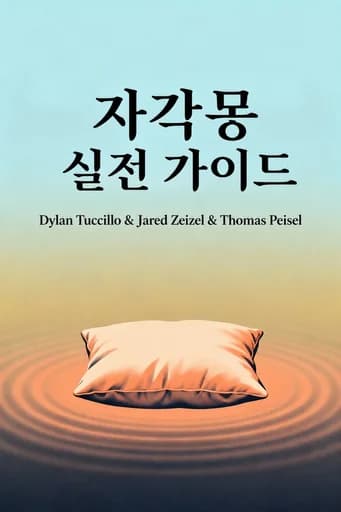
Dylan Tuccillo, Jared Zeizel, and Thomas Peisel are lucid dreaming experts and co-authors of A Field Guide to Lucid Dreaming: Mastering the Art of Oneironautics, a practical guide blending science, personal experimentation, and mystical inquiry into conscious dream exploration.
As writers, filmmakers, and self-described "nocturnal explorers," their decade-long immersion in dream research informs the book’s actionable framework for achieving self-awareness in sleep. The work draws on their collaborative filmmaking background to present complex concepts through narrative-driven storytelling, offering techniques like DILD (Dream-Initiated Lucid Dreaming) and WILD (Wake-Initiated Lucid Dreaming) to bridge waking life and subconscious realms.
Tuccillo’s additional work includes producing films and content on consciousness studies, while Zeizel and Peisel contribute to creative projects exploring human potential. Featured by Oprah.com, Men’s Fitness, and Barnes & Noble, the book has been translated into 12 languages and sold over 85,000 copies, establishing it as a foundational text for aspiring oneironauts worldwide.
A Field Guide to Lucid Dreaming by Dylan Tuccillo, Jared Zeizel, and Thomas Peisel is a practical manual for mastering lucid dreaming—the ability to consciously explore and control dreams. It provides step-by-step techniques like reality checks, dream journaling, and the wake-back-to-bed method to achieve lucidity, while emphasizing self-discovery, creativity, and overcoming fears through dream navigation. The book blends scientific insights with whimsical storytelling to demystify oneironautics (dream exploration).
This book is ideal for beginners curious about lucid dreaming, as well as experienced dreamers seeking structured techniques. It’s tailored for those interested in self-improvement, creative problem-solving, or overcoming nightmares. Psychology enthusiasts and mindfulness practitioners will also find value in its exploration of subconscious realms.
Yes—the book is praised for its accessibility, combining actionable advice (like the WILD and DILD techniques) with motivational case studies. It avoids dogma, encouraging readers to experiment and draw their own conclusions. Reviews highlight its engaging tone, making it a refreshing choice compared to more technical guides.
Key methods include:
The authors describe lucid dreaming as “the ability to know you’re dreaming while you’re dreaming,” enabling conscious control over dream narratives. It’s framed as a tool for personal growth, allowing dreamers to confront fears, enhance creativity, and interact with subconscious “dream characters.”
Wake-Initiated Lucid Dreaming (WILD) involves transitioning directly from wakefulness to a dream state while maintaining awareness. The book details how to use hypnagogic imagery (visuals seen when falling asleep) to enter dreams, calling it a challenging but rewarding method for stable, vivid lucid experiences.
The authors recommend “dream incubation”—setting an intention to solve a specific problem before sleep. Lucid dreamers can then seek guidance from dream characters or test solutions in a risk-free environment. For example, one case study describes a writer overcoming writer’s block through dream-inspired ideas.
REM sleep, which occurs in longer cycles later in the night, is critical for lucid dreaming. The WBTB technique leverages these cycles by interrupting sleep to heighten awareness before re-entering REM. The book explains how tracking sleep stages can optimize success rates.
It encourages confronting nightmares lucidly to reframe fear into empowerment. Techniques include:
The book categorizes dream figures into three archetypes:
Unlike dense academic texts, this guide prioritizes accessibility with conversational prose, exercises, and relatable anecdotes. It stands out for balancing practicality (e.g., REM cycle charts) with philosophical musings on consciousness.
Absolutely—the book avoids jargon and simplifies advanced concepts. Beginners appreciate its structured approach, while seasoned lucid dreamers value its fresh perspectives on dream control and subconscious exploration.
저자의 목소리로 책을 느껴보세요
지식을 흥미롭고 예시가 풍부한 인사이트로 전환
핵심 아이디어를 빠르게 캡처하여 신속하게 학습
재미있고 매력적인 방식으로 책을 즐기세요
Dreams are real, vivid experiences that only become cloudy upon waking.
Lucid dreaming represents one of humanity's final frontiers of consciousness.
The capacity for lucid dreaming appears to be universal.
Dreams mirror your inner landscape.
A field guide to lucid dreaming의 핵심 아이디어를 이해하기 쉬운 포인트로 분해하여 혁신적인 팀이 어떻게 창조하고, 협력하고, 성장하는지 이해합니다.
A field guide to lucid dreaming을 빠른 기억 단서로 압축하여 솔직함, 팀워크, 창의적 회복력의 핵심 원칙을 강조합니다.

생생한 스토리텔링을 통해 A field guide to lucid dreaming을 경험하고, 혁신 교훈을 기억에 남고 적용할 수 있는 순간으로 바꿉니다.
무엇이든 물어보고, 목소리를 선택하고, 진정으로 공감되는 인사이트를 함께 만들어보세요.

샌프란시스코에서 컬럼비아 대학교 동문들이 만들었습니다
"Instead of endless scrolling, I just hit play on BeFreed. It saves me so much time."
"I never knew where to start with nonfiction—BeFreed’s book lists turned into podcasts gave me a clear path."
"Perfect balance between learning and entertainment. Finished ‘Thinking, Fast and Slow’ on my commute this week."
"Crazy how much I learned while walking the dog. BeFreed = small habits → big gains."
"Reading used to feel like a chore. Now it’s just part of my lifestyle."
"Feels effortless compared to reading. I’ve finished 6 books this month already."
"BeFreed turned my guilty doomscrolling into something that feels productive and inspiring."
"BeFreed turned my commute into learning time. 20-min podcasts are perfect for finishing books I never had time for."
"BeFreed replaced my podcast queue. Imagine Spotify for books — that’s it. 🙌"
"It is great for me to learn something from the book without reading it."
"The themed book list podcasts help me connect ideas across authors—like a guided audio journey."
"Makes me feel smarter every time before going to work"
샌프란시스코에서 컬럼비아 대학교 동문들이 만들었습니다

A field guide to lucid dreaming 요약을 무료 PDF 또는 EPUB으로 받으세요. 인쇄하거나 오프라인에서 언제든 읽을 수 있습니다.
Have you ever found yourself soaring over cityscapes or confronting impossible scenarios, only to suddenly realize you're dreaming - yet remain fully aware within the dream? This extraordinary state of consciousness, known as lucid dreaming, represents one of humanity's final frontiers of inner exploration. The revolutionary aspect isn't just that lucid dreaming exists - it's that anyone can learn to do it. From Salvador Dali drawing inspiration through his "slumber with a key" technique to Christopher Nolan's mind-bending "Inception," lucid dreaming has captivated artists, scientists, and spiritual seekers alike. The scientific validation came in 1975 when researcher Keith Hearne documented a sleeping subject who performed predetermined eye movements from within a dream state - proving conscious awareness could exist while dreaming. This bridged ancient wisdom with modern science, as cultures throughout history had already recognized this potential. The Egyptians called dreams "resut" or "awakening," believing they represented a deeper reality where transformation occurred. Tibetan Buddhists developed dream yoga techniques at least a thousand years ago specifically to achieve lucidity within dreams.