1장
Leadership: The Ultimate Game-Changer for Your Impact
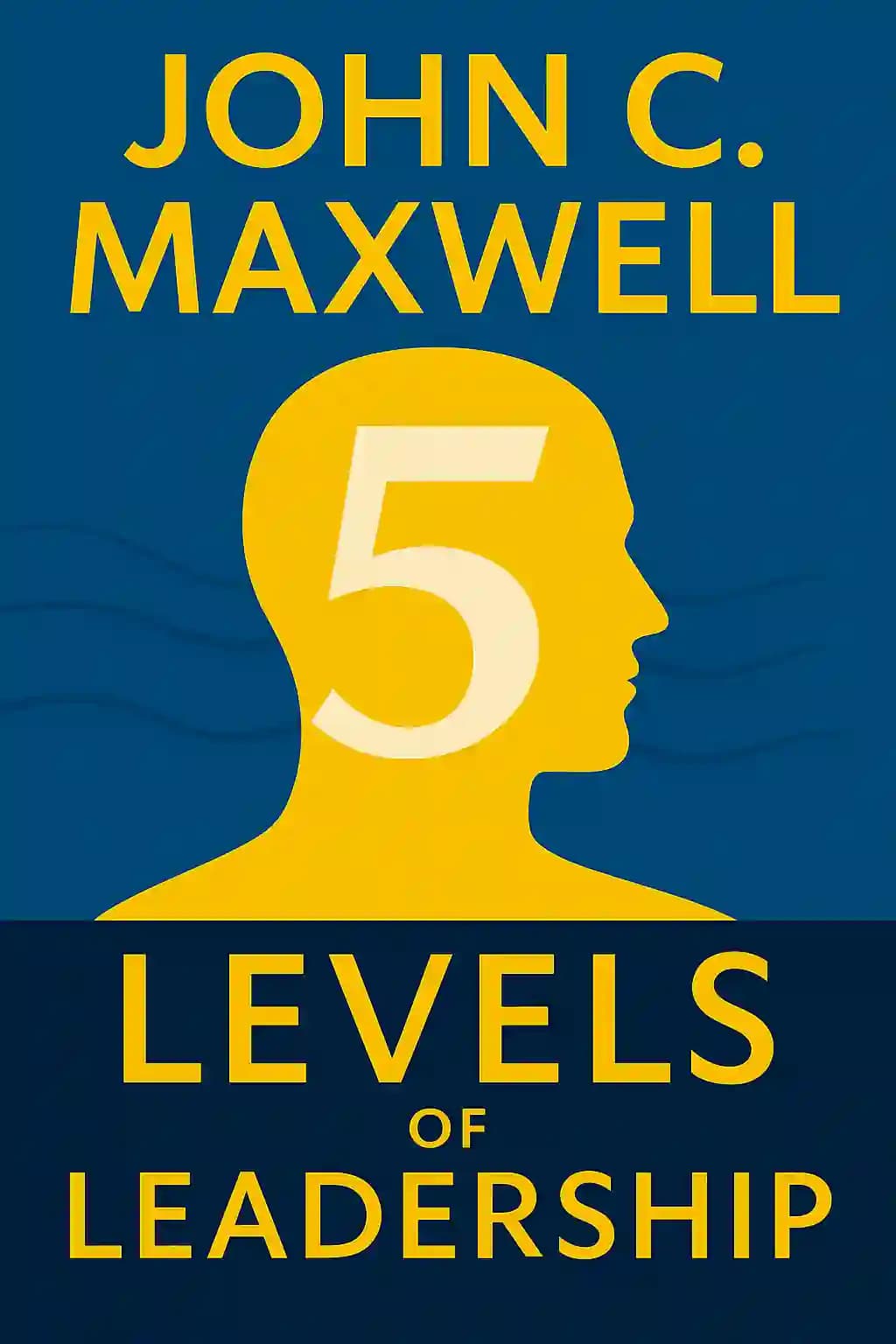
Have you ever wondered why some leaders inspire deep loyalty while others can barely get their teams to show up on time? John C. Maxwell's "5 Levels of Leadership" has become the most requested leadership lecture across six continents-from West Point to Microsoft-for good reason. As Oprah Winfrey once cited it as the leadership model that transformed her management approach, and companies like Southwest Airlines have built their entire leadership development programs around it, this framework has proven its worth in countless organizations worldwide. Maxwell's insight that "everything rises and falls on leadership" isn't just a catchy phrase-it's the foundation for understanding how influence works and how you can systematically increase yours to make a greater impact.
2장
The Leadership Ladder: Understanding the 5 Levels
Leadership isn't a destination but a journey that unfolds across five distinct levels. Unlike traditional hierarchical models, the 5 Levels framework reveals that true leadership isn't about position or power-it's about influence that must be earned and developed over time.
At Level 1 (Position), people follow because they have to. This entry-level leadership relies entirely on title and authority. While everyone starts here, those who stay become mere bosses rather than leaders, creating environments where people do the minimum required. Think of the micromanaging supervisor who constantly reminds everyone who's in charge-they may have subordinates, but they'll never have a team.
Level 2 (Permission) marks the first real step into leadership territory. Here, relationships become the foundation as people follow because they want to. Leaders who genuinely like their people and treat them as valuable individuals develop trust and create positive environments. The Permission level transforms the workplace from a place people have to be into a place they want to be.
At Level 3 (Production), results become the focus. Leaders gain credibility through what they accomplish, and people follow them for their achievements. This is where momentum kicks in, problems get solved, and the organization experiences tangible progress. Production leaders are change agents who make difficult decisions and elevate their team's effectiveness.
Level 4 (People Development) is where leadership multiplication begins. Leaders use their position, relationships, and productivity to invest in followers and develop them into leaders themselves. The focus shifts from personal achievement to helping others grow and succeed. While production wins games, people development wins championships.
Level 5 (Pinnacle) represents the highest achievement in leadership-developing leaders who develop other leaders. Few reach this level, as it requires not just effort and skill but also natural leadership talent. Pinnacle leaders create legacies that extend beyond their organizations and often beyond their lifetimes.
3장
The Paradoxical Nature of Leadership Growth
What makes Maxwell's framework particularly insightful is how it captures leadership's paradoxical nature. As you climb the levels, several counterintuitive principles emerge that explain why leadership can feel so challenging.
First, you never leave previous levels behind-you build upon them. When you develop relationships at Level 2, you don't abandon your position at Level 1. Instead, you add new dimensions to your leadership foundation. This explains why some technically competent managers fail: they try to skip levels rather than building systematically.
Second, you're not on the same level with every person. Leadership happens relationship by relationship. You might be at Level 4 with a long-time team member you've invested in, while simultaneously at Level 1 with a new hire. This dynamic quality means leadership isn't something you achieve once but must be earned continuously with each person.
Third, the higher you go, the easier it becomes to lead-but the harder it is to get there. Each level requires greater commitment than the previous one. Moving from Position to Permission requires relationship-building. Advancing to Production demands consistent results. Reaching People Development requires significant time investment in others. And the Pinnacle might take a lifetime.
Fourth, leadership growth occurs slowly, but decline can happen quickly. One trust-breaking mistake can erase years of relationship building. However, higher levels provide safety nets; if you make productivity mistakes at Level 3, the relationships you've built at Level 2 may save you.
Fifth, the return on investment increases dramatically at higher levels. While each level demands more from you, the rewards multiply. At Level 2, you earn trust. At Level 3, you add productivity. At Level 4, you multiply productivity through developing others. At Level 5, growth becomes exponential through generations of leadership development.
4장
Position: The Starting Point Everyone Must Navigate
Position is where all leadership journeys begin, but it's where too many leaders get stuck. The position itself isn't the problem-it's relying solely on position that limits leadership effectiveness. Whether you're a newly promoted manager, a department head, or a CEO, the authority that comes with the title is merely the first rung on the leadership ladder.
When you receive a leadership position, it typically means someone saw potential in you. This provides a foundation of recognized authority and an invitation to grow. The initial appointment often comes with formal power - the ability to make decisions, allocate resources, and direct others' work. However, this formal authority is just the starting point, not the destination. Many new leaders mistakenly believe their position alone will generate followers and results.
Positional leaders often devalue people, treating them as interchangeable parts or obstacles rather than valuable contributors. They might implement policies without consultation, make unilateral decisions, or dismiss employee feedback. For example, a positional leader might reorganize a department without considering the institutional knowledge and relationships that could be disrupted. They become entangled in office politics, focusing on protecting territory rather than advancing the organization's mission. These leaders spend more time defending their turf and authority than building alliances and developing their teams.
The isolation that positional leaders experience isn't inevitable-it's self-created. By feeling threatened by talented team members and undermining those who show promise, they drive away the best people and surround themselves with mediocrity. A classic example is the manager who takes credit for their team's successes while blaming them for failures, or who prevents high-performers from advancing to protect their own position. The result? High turnover among top performers and an environment where people give their least, not their best. Teams become disengaged, creativity diminishes, and innovation stalls.
To move beyond Position, leaders must make three critical shifts: stop relying on position to push people, trade entitlement for movement, and leave their position to move toward their people. This means letting go of control and embracing influence instead. Rather than commanding attendance at meetings, create gatherings people want to attend. Instead of demanding respect, earn it through consistent, authentic leadership. Focus on responsibility rather than rights, asking "What can I contribute?" rather than "What am I owed?" Take the initiative to connect with team members - walk the floor, engage in informal conversations, and show genuine interest in their work and lives. As Maxwell pointedly observes, "If you have to tell people that you're the leader, you're not."
The most effective leaders recognize that their position is merely a platform from which to serve, develop, and empower others. They understand that true leadership influence grows through relationships, results, and character - not through titles or organizational charts.
5장
Permission: Building the Relational Foundation
The Permission level transforms leadership from transactional to relational. When people follow because they want to rather than because they have to, the entire dynamic changes. Work becomes more enjoyable, energy levels increase, and communication channels open up.
At Level 2, leaders focus on the value of each person, nurturing trust through integrity and authenticity. They recognize that while you can care for people without leading them, you cannot lead them effectively without caring for them. This approach creates a shelter during difficult times and a launching pad during opportunities.
However, Permission leadership isn't without challenges. It can appear too soft for action-oriented environments and prove frustrating for achievement-focused individuals. Leaders who excel at relationships sometimes neglect productivity, making relationship-building an end unto itself rather than a means to organizational success.
The best behaviors at this level include connecting with yourself before trying to connect with others, developing a people-oriented leadership style, practicing the golden rule, becoming your team's chief encourager, and striking a balance between care and candor. This last point is particularly crucial-care without candor creates dysfunctional relationships, while candor without care creates distant ones. Together, they create developing relationships.
The Permission level activates several key leadership laws: the Law of Influence (leadership is influence, not position), the Law of Addition (leaders add value by serving others), the Law of Solid Ground (trust is leadership's foundation), and the Law of Connection (leaders touch hearts before asking for hands).
To move beyond Permission to Production, leaders must recognize that relationships alone aren't enough. Leadership ultimately means taking people somewhere to accomplish something. The relationship foundation must support forward movement and achievement.
6장
Production: Where Leadership Credibility Is Established
At Level 3, leadership truly takes off as leaders make things happen and get results. This level qualifies and separates true leaders from people who merely occupy leadership positions. Production leaders gain credibility through example, setting standards that inspire others to follow.
When leaders produce results, they bring clarity and reality to the organization's vision. Team members see what productivity looks like and understand how their efforts contribute to making the vision a reality. This clarity is compelling and validates the team's work, often expanding what people believe is possible.
Production also creates momentum-a leader's best friend. With momentum, everything becomes easier; without it, everything is harder. Level 3 leaders understand momentum and use it to their advantage, becoming "momentum makers" who produce and make things happen rather than "momentum takers" who just go along for the ride.
However, Production leadership comes with its own challenges. Being personally productive doesn't automatically make someone a leader-leadership is measured by what the entire team accomplishes. Level 3 leaders feel the weight of responsibility for results and must make difficult decisions that affect the organization's future. They must also continue nurturing the relationships established at Level 2, or risk burning bridges and finding themselves back at Level 1.
The best behaviors at this level include understanding your personal contribution to the vision, casting vision for what needs to be accomplished, developing your people into a team, prioritizing high-return activities, being willing to act as a change agent, and maintaining focus on results. Effective team building requires knowing each player's strengths and weaknesses, positioning them for success, ensuring they understand the mission, and providing regular feedback.
To move beyond Production to People Development, leaders must embrace the belief that production alone isn't enough. They must recognize that people are an organization's most appreciable asset, that growing leaders is the most effective way to accomplish the vision, and that developing others provides the greatest fulfillment for a leader.
7장
People Development: The Multiplication Level
People Development distinguishes elite leaders from the majority who remain focused only on production. At Level 4, leaders invest time, energy, money, and thinking into growing others as leaders, viewing every person as potential leadership material regardless of title or position. This perspective transforms ordinary team members into future leaders and creates a multiplier effect throughout the organization.
This investment sets leaders apart from their peers in several crucial ways. First, it ensures sustainable growth by creating a pipeline of capable leaders ready to step into new roles. Second, it empowers others to fulfill leadership responsibilities, reducing bottlenecks and dependency on single individuals. Third, it expands the leader's own capacity by creating a network of trusted lieutenants who can handle increasingly complex responsibilities. When leaders develop others, this investment becomes more valuable to employees than monetary compensation or even personal encouragement, as it provides lasting career advancement opportunities.
Organizations with strong development cultures consistently outperform their competitors. Companies like General Electric under Jack Welch and Microsoft under Satya Nadella demonstrate how systematic leadership development can create sustainable competitive advantages. These organizations typically show higher employee retention, stronger succession planning, and more innovative problem-solving approaches.
However, People Development isn't easy and faces several common obstacles. Self-centeredness manifests when leaders hoard knowledge or opportunities, fearing others might surpass them. Insecurity appears when leaders feel threatened by others' success, often leading to micromanagement or withholding of crucial development opportunities. Shortsightedness emerges when leaders focus exclusively on immediate results, sacrificing long-term capability building for short-term gains. Lack of commitment shows up when leaders aren't willing to invest the necessary time and resources to develop others properly, often treating development as an afterthought rather than a priority.
The best behaviors at Level 4 follow a clear, systematic process:
• Recruiting the best people possible through rigorous selection processes
• Positioning them correctly by matching skills with opportunities
• Modeling leadership through consistent example-setting
• Equipping them with both technical and soft skills
• Developing their life skills beyond just job-related capabilities
• Empowering them with increasing responsibility and authority
• Measuring their progress through regular feedback and assessment
This development requires three key components:
1. Assessment: Identifying weaknesses, blind spots, and growth opportunities through regular evaluation and feedback
2. Challenge: Encouraging growth through stretch assignments and increasing responsibilities
3. Support: Helping navigate difficulties through mentoring, coaching, and resource provision
To move toward the Pinnacle level, leaders must embrace fundamental beliefs about leadership development. They must accept that developing leaders is their highest calling, not just a nice-to-have activity. Creating a leadership culture becomes essential, where development is woven into daily operations rather than treated as a separate program. Leaders must view leadership development as a lifelong commitment, not just a job responsibility or temporary initiative.
This mindset shift transforms leadership from a career path into a life calling, creating a legacy that extends far beyond the leader's direct influence. Successful Level 4 leaders often measure their impact not by their personal achievements but by the success of those they've developed.
8장
The Pinnacle: Leadership's Highest Achievement
The Pinnacle represents the highest leadership accomplishment-developing other leaders to Level 4. Rare is the leader who reaches this level, as it requires both exceptional skill and natural leadership ability. Level 5 leaders create legacies that extend beyond their organizations and often beyond their lifetimes. These leaders are distinguished by their ability to transform not just individual teams but entire organizational cultures.
At the Pinnacle, leaders create Level 5 organizations where leadership becomes part of the DNA. They establish comprehensive leadership pipelines that ensure organizational continuity and gain platforms that extend their influence beyond their direct reach. Their authority transcends position, allowing them to impact society more broadly. For example, leaders like Bill Gates have moved beyond running Microsoft to influence global health and education initiatives, while others like Warren Buffett have reshaped investment philosophy while mentoring countless business leaders.
The challenges at this level are uniquely complex. Even at this level, dangers exist. Pinnacle leaders can fall into thinking they've "arrived," believing their own press, or losing focus on what matters most. The higher the leadership level, the more dramatic the fall when leaders lose their way. Historical examples like Ken Lay at Enron demonstrate how hubris can destroy even the most accomplished leaders and their organizations.
The best behaviors at Level 5 include making room for others at the top, continually mentoring potential Level 5 leaders, and creating an inner circle that keeps you grounded. Successful Pinnacle leaders focus on doing things that only Level 5 leaders can do, such as establishing leadership institutes, writing books to share their wisdom, or creating mentorship programs. They meticulously plan for succession, ensuring their organization's future beyond their tenure, and consciously work to leave a positive legacy. Level 5 leaders understand that leadership should always be about others, not themselves, often demonstrated through their willingness to step aside when new leadership can better serve the organization.
One of the most powerful ways Level 5 leaders develop others is by creating "crucible moments"-key experiences that create leadership breakthroughs. These might include assigning challenging international assignments, leading major organizational transformations, or handling crisis situations. By identifying essential leadership lessons, recognizing teachable moments, sharing their own breakthrough experiences, and connecting emerging leaders with other influential people, they accelerate leadership development in ways that formal training never could. They often create structured mentorship programs, leadership rotations, and strategic projects that serve as developmental opportunities.
The mark of true Level 5 leaders is their ability to cultivate an ecosystem of leadership development. They create environments where future leaders can fail safely, learn continuously, and gradually take on increasing responsibility. These leaders understand that their greatest achievement isn't in the metrics or milestones they reach, but in the leaders they develop who will continue to impact the world long after they're gone.
9장
The Leadership Legacy of John Wooden
John Wooden exemplifies the pinnacle of leadership through his remarkable journey as UCLA's basketball coach. His record of 620 wins, ten NCAA titles, and four perfect seasons only tells part of the story. Wooden's true greatness lay in his character and his unwavering commitment to developing not just skilled athletes but people of exceptional character who would succeed in life beyond the basketball court.
At Level 1 (Position), Wooden demonstrated masterful use of positional power, employing it sparingly but effectively. He demanded full attention during practices and maintained strict punctuality standards - famously locking the gym doors at the start of practice - but rarely relied on his authority alone to motivate players. Instead, he led by example, often arriving hours before practice to ensure everything was properly prepared.
At Level 2 (Permission), he built profound relationships with his players through genuine care and attention. He knew their families, academic challenges, and personal struggles. Wooden consistently did what was right for his players, even when it meant taking difficult stands, such as benching star players who didn't meet his standards for conduct or academic performance. He wrote personal notes to players and maintained relationships with them long after their playing days.
At Level 3 (Production), his achievements were legendary, but Wooden's philosophy emphasized process over outcomes. His famous quote, "Winning games, titles, and championships isn't all it's cracked up to be, but getting there, the journey, is a lot more than it's cracked up to be," reflected his belief that excellence in preparation inevitably led to success. His practices were meticulously planned, often scripted to the minute, focusing on fundamentals and continuous improvement.
At Level 4 (People Development), Wooden created his renowned Pyramid of Success, a framework that went far beyond basketball skills. The pyramid emphasized essential character traits like industriousness, friendship, loyalty, cooperation, and competitive greatness. He spent time teaching players how to properly put on their socks to prevent blisters - a lesson in attention to detail that became legendary. His development approach was holistic, focusing on academic achievement, personal growth, and athletic excellence.
At Level 5 (Pinnacle), Wooden's influence transcended basketball, earning him the Presidential Medal of Freedom and creating a legacy that continues to inspire leaders across business, education, and sports. His leadership principles have been adopted by Fortune 500 companies, and his books have sold millions of copies. Former players like Bill Walton and Kareem Abdul-Jabbar frequently credit Wooden for their success both on and off the court.
Wooden's enduring legacy reminds us that true leadership isn't measured solely by achievements but by the lasting impact on others' lives. His daily prayer - "I pray thee, O God, that I may be beautiful within" - captured the essence of Level 5 leadership: developing character that inspires others to reach their own greatness. His example shows that authentic leadership combines personal integrity, genuine care for others, and a commitment to excellence that extends far beyond immediate results.
10장
Transforming Your Leadership Journey
The 5 Levels of Leadership provides more than just a framework for understanding leadership-it offers a comprehensive roadmap for intentional growth and development. By recognizing where you currently stand with each team member and what's required to advance, you can systematically increase your influence and effectiveness through deliberate action and focused relationship building.
The journey requires careful self-assessment and honest feedback. Leaders must regularly evaluate their relationships with team members, understanding that they may be at different levels with different individuals. This dynamic nature of leadership means you might be at Level 4 with long-term team members while simultaneously working to establish Level 2 connections with new employees.
Remember that leadership isn't about advancing yourself-it's about advancing your team. Good leadership isn't measured by how high you climb but by how many people you bring with you. As Maxwell emphasizes, "Leadership is not about titles, positions, or flowcharts. It is about one life influencing another." This principle becomes evident when you observe how effective leaders create cascading positive effects throughout their organizations, with developed team members going on to develop others.
The journey through the 5 Levels isn't easy, but the rewards-for you, your people, and your organization-are immeasurable. Common challenges include overcoming the comfort of Position leadership, building genuine relationships beyond professional courtesy, and maintaining consistency in production while developing others. Success requires patience, persistence, and a willingness to invest significant time in others' growth.
By understanding that leadership is influence that must be earned and developed, you position yourself to make the kind of impact that extends far beyond your immediate reach. This ripple effect creates a legacy that continues long after your leadership role ends. Successful leaders often find their influence extending into multiple generations of leadership within their organizations.
The practical application of these levels involves specific actions at each stage:
• At Level 1: Focus on learning and demonstrating competence
• At Level 2: Invest time in understanding team members' personal goals and challenges
• At Level 3: Set and achieve meaningful team objectives
• At Level 4: Create development plans for key team members
• At Level 5: Actively mentor future leaders while building lasting organizational success
As you apply these principles, you'll discover that the greatest fulfillment in leadership doesn't come from personal achievement but from seeing others grow and succeed because of your investment in them. This multiplication effect - where developed leaders go on to develop other leaders - creates sustainable organizational growth and success. In a world hungry for authentic leadership, your commitment to climbing the 5 Levels may be the most significant contribution you ever make to your organization and the people you serve.