BeFreed
    Categories>Psychology>The Art of Thinking Clearly: The Illusion of Control and Heuristics

    The Art of Thinking Clearly: The Illusion of Control and Heuristics

    17分
    |
    |
    2026年8月24日
    • Psychology
    • Self-Growth

    Explore The Art of Thinking Clearly. Learn how the illusion of control and cognitive heuristics shape your decision making and influence your daily rational thinking.

    The Art of Thinking Clearly: The Illusion of Control and Heuristics
    0:00 / 0:00
    聴き方を選ぶ

    1つのエピソード。いろいろな聴き方。

    The Art of Thinking Clearly: The Illusion of Control and Heuristicsの同じアイデアを、あなたに合う声・深さ・ペースで。いつでも切り替えられます。

    文字起こしとチャプター

    チャプター 1

    The Hidden Architecture of Your Daily Choices

    In a small, quiet laboratory years ago, researchers sat participants in two separate booths to test a simple theory about the human mind. In both booths, the volume of a harsh, grating noise was slowly turned up, and participants were told they could signal the researchers to stop whenever it became too much to bear. But there was one subtle difference: one of the booths had a red button labeled as a panic switch. The participants in that booth were told they could press it to dampen the sound, though—unbeknownst to them—the button wasn't actually connected to anything. It was a placebo. Yet, the results were startling: the people who had that useless red button in front of them withstood significantly higher levels of noise than those who didn't. They felt a sense of agency that wasn't grounded in reality, but it changed their physical endurance. This is the illusion of control—the belief that we can influence things that are entirely outside our grasp—and it’s just one of the many invisible threads pulling on your daily decisions.

    You make dozens of choices every single day, from the trivial to the transformative, and it’s easy to assume you’re doing so with a clear, rational mind. But the truth is that your brain is a collection of ancient shortcuts—heuristics that helped your ancestors survive predators but now often lead you into modern traps. Whether you're deciding which project to prioritize at work, how to handle a tense conversation with a partner, or whether that "limited time offer" in your inbox is actually a good deal, you are operating within a cognitive architecture that is prone to systematic errors. These aren't random mistakes; they are predictable patterns of miscalculation called cognitive biases. Understanding them isn't just an academic exercise—it is the ultimate productivity hack and the foundation of a life lived with intention.

    This matters to you because every bad decision has a price tag—not just in money, but in time, energy, and emotional well-being. When you fall for the sunk cost fallacy by finishing a book you hate just because you paid for it, or when you let the planning fallacy trick you into thinking a three-hour task will only take forty-five minutes, you are essentially leaking your most precious resources. By the end of this journey, you won't just have a list of psychological terms; you'll have a mental toolkit—a set of lenses to help you see through the noise of the world and the fog of your own impulses. We’re going to explore how to strip away the illusions of control, how to stop chasing the "winner's story," and how to simplify the complex mess of daily life using tools that actually work under real-world constraints. So, let’s begin by looking at why your brain loves a good story—and why that love might be your biggest blind spot.
    チャプター 2

    The Mirage of Success and the Ghost of Failed Efforts

    If you’ve ever walked through a bookstore and felt a surge of inspiration from the rows of biographies featuring billionaire founders or world-class athletes, you’ve encountered the survivorship bias. We are naturally drawn to success stories because they are visible, loud, and remarkably persuasive. But as Rolf Dobelli points out in his exploration of clear thinking, we systematically overestimate our chances of success because we only hear from the people who made it. The thousands of others who followed the exact same path, worked just as hard, and took the same risks—but ultimately failed—are invisible to us. They don't write books; they don't give commencement speeches. When you study only the "survivors," you are looking at a distorted map of reality. You might see a specific trait, like "never giving up," as the secret to success, without realizing that thousands of failed entrepreneurs also never gave up—they just ran out of money.

    To think more clearly, you have to start looking for what isn't there. When you’re faced with a major decision, like starting a new business or pivoting your career, don't just ask "What did the winners do?" Ask instead, "What did the people who failed do?". Often, you’ll find they did the exact same things. This shift in perspective helps you move away from the "glossy case study" version of life and toward a more realistic assessment of risk. It’s about recognizing that luck and hidden variables play a much larger role than we’d like to admit. This is closely tied to what’s known as "negative knowledge"—understanding what to avoid is often more powerful than knowing what to do. If you can identify the pitfalls that swallowed up everyone else, you’re already ahead of the curve.

    But even when we recognize we’ve made a mistake, we often struggle to let go because of the sunk cost fallacy. You’ve likely experienced this: staying in a movie theater for an hour after you realized the film was terrible, or continuing to pour hours into a project that clearly isn't working, simply because you’ve already invested so much time or money into it. The brain tells a lie: "If I stop now, all that effort was for nothing." But the truth is that the money is gone and the time is spent regardless of what you do next. The only thing you can control is your future investment. Productivity isn't just about doing more; it's about knowing when to stop. The harder it feels to walk away, the more likely you are dealing with a sunk cost. To break this cycle, you need to ignore the past and ask: "If I were starting today with zero previous investment, would I choose to spend my next hour or my next dollar on this?" If the answer is no, it's time to cut your losses and move on to something that actually has a future.

    このエピソードで学びを深める

    このエピソードのアイデアを、BeFreedのガイド付き学習体験でさらに深めましょう。

    チャプター 3

    Breaking the Chains of Confirmation and Authority

    One of the most dangerous traps in your daily thinking is the confirmation bias, which Rolf Dobelli famously calls the "mother of all misconceptions". It’s our natural tendency to seek out information that supports what we already believe and to filter out, ignore, or explain away anything that contradicts us. You see this everywhere: in the news sources people choose, the friends they keep, and even the way they interpret a simple look from a colleague. If you believe someone is out to get you, you’ll see every missed email as an intentional slight. If you believe a certain diet is the only way to be healthy, you’ll find the three studies that agree with you and ignore the fifty that don't. This bias creates a comfortable bubble, but it’s a bubble that keeps you from seeing the world as it truly is.

    To fight this, you have to go against your instincts. Instead of looking for reasons why you’re right, you must actively hunt for evidence that you’re wrong. Great leaders and clear thinkers ask questions like, "Who disagrees with me and why?" or "What piece of information would change my mind?". This isn't about being indecisive; it's about being rigorous. It’s about building a "circle of competence"—an area where you actually understand the mechanics of what you’re doing, rather than just repeating things you've heard. Within that circle, you know where your judgment is reliable and where you are just guessing. Outside of it, you remain humble. Most of our bad decisions happen when we step outside that circle but carry the confidence of someone standing right in the center of it.

    This overconfidence is often bolstered by the authority bias—our deep-seated urge to obey or agree with people in positions of power or expertise. We see this in the famous Milgram experiments, where people followed orders to inflict pain on others simply because a man in a lab coat told them it was necessary. In your daily life, this might look like following a doctor’s advice without asking questions, or agreeing with your boss in a meeting even when you see a glaring flaw in the plan. While expertise is valuable, blind obedience is a shortcut to poor outcomes. True clarity requires you to separate the message from the messenger. You have to encourage yourself—and if you lead a team, encourage them—to question assumptions, even the ones that come from the top. Real leadership isn't about being followed without question; it’s about fostering independent thought and making sure the best idea wins, regardless of who it came from.

    チャプター 4

    The Architecture of Comparison and Choice

    Imagine you’re planning a night out with friends and you’re trying to decide who to invite. There’s a fascinating bit of psychological advice that suggests you should never bring your most attractive friend if you're hoping to get noticed yourself. It sounds cynical, but it points to a fundamental quirk of the human mind: we are terrible at making absolute judgments. Instead, we rely almost entirely on comparisons. This is the contrast effect. We don’t see an item as "expensive" or "cheap" in a vacuum; we see it as a "deal" because it’s 30% off its original price, even if that original price was inflated. A seventy dollar item looks like a bargain next to a hundred dollar one, but if you saw it on its own, you might think it wasn't worth more than fifty. Marketing departments thrive on this, using "limited time offers" and scarcity to trigger a fear of missing out, which short-circuits your ability to weigh actual pros and cons.

    This difficulty with absolute value becomes even more pronounced when we are faced with too many choices. You might think that more options would lead to a better outcome, but research shows the opposite is often true. In a famous study involving jelly, researchers found that displaying twenty-four different varieties actually led to fewer sales than displaying just six. This is the paradox of choice: when the options become overwhelming, we often choose to make no decision at all to avoid the stress of picking the "wrong" one. Or, if we do choose, we feel less satisfied with our selection because we can't stop thinking about the twenty-three other jellies we didn't get to try. In your daily life, this might manifest as spending forty minutes scrolling through a streaming service instead of just watching a movie, or being unable to commit to a career path because you’re afraid of closing doors.

    To navigate this, you have to protect your "decision energy." Every choice you make—from what to wear to how to word an email—depletes a finite resource known as decision fatigue. As your energy wanes, your brain starts taking even more shortcuts. It might default to the easiest option, or it might focus on just one single criterion—like physical attractiveness in dating or price in shopping—rather than looking at the whole picture. This is why the most productive people often automate the small stuff. They wear the same style of clothes or eat the same breakfast every day, not because they’re boring, but because they’re saving their mental strength for the choices that actually move the needle. They recognize that their willpower isn't infinite and that a cluttered mind is a mind that makes mistakes.

    このエピソードで学びを深める

    このエピソードのアイデアを、BeFreedのガイド付き学習体験でさらに深めましょう。

    チャプター 5

    Thinking Backward to Move Forward

    When you’re stuck on a problem, your first instinct is usually to ask, "How can I fix this?" or "How can I achieve success?" But there is a powerful mental tool that suggests you should do the exact opposite. It’s called inversion, and it involves solving a problem by thinking about it backward. Instead of asking how to have a productive day, ask yourself: "What would a guaranteed miserable, unproductive day look like?" You might say: "Well, I’d sleep in late, keep my phone next to me with all notifications on, have no plan for my tasks, and skip lunch so I’m irritable by 2:00 PM." Once you’ve identified those failure points, your strategy becomes simple: avoid them at all costs. Inversion is effective because it’s often much easier to identify what causes pain or failure than it is to define the exact path to greatness. If you want a better relationship, don't just look for "romantic gestures"—start by identifying and removing the behaviors that reliably destroy trust, like avoiding communication or assuming the worst of your partner’s intentions.

    This backward-thinking approach helps you cut through the noise of positive advice, which can often be vague or contradictory. It forces you to deal with the "negative knowledge" we touched on earlier—the boundaries of what you will not do and the distractions you will no longer tolerate. It’s a way of defining your life by what you eliminate as much as by what you pursue. This ties directly into the concept of the "planning fallacy," where we consistently underestimate how long a task will take because we only imagine the best-case scenario. If you apply inversion to your schedule, you stop asking "What’s the fastest I can do this?" and start asking "What could possibly go wrong to delay this?" By identifying the potential roadblocks—the "black swans" of your workday—you can build in a margin of safety.

    Leaving a margin of safety is a practical way to handle the inherent messiness of life. If a meeting usually takes an hour, don't book your next one at exactly sixty-one minutes past the hour. If your budget is tight, don't assume every expense will be predictable. Life is noisy, and plans fail less often when they include slack. This isn't about being pessimistic; it's about being realistic. It’s recognizing that your "map" of the world—your plans, your beliefs, your schedules—is not the "territory" itself. The map is just a simplified version of reality, and when reality disagrees with your plan, you have to be willing to update the map rather than blaming the world for not following your directions. Thinking clearly means staying humble enough to realize that your understanding is always a work in progress.

    チャプター 6

    The Long Game of Compound Decisions

    Most of us think of decisions as isolated events—points on a timeline that stand alone. But the reality is that your life is shaped by the second-order consequences of your choices. First-order thinking is simple: "I’m hungry, so I’ll eat this doughnut." It feels good immediately. Second-order thinking asks: "What happens after that?". It looks at the sugar crash an hour later, the impact on your long-term health if you do it every day, and how it reinforces a habit of emotional eating. This is the difference between reacting to a moment and managing a system. Most bad decisions feel great in the short term, while most good decisions—like having a difficult but necessary conversation or saving money—feel inconvenient or uncomfortable at first.

    This is where the power of compounding comes in. We usually associate compounding with money, but it applies to almost everything: learning, health, trust, and even clutter. A five-minute daily review of your goals might not seem to change much on a Tuesday, but over six months, it fundamentally shifts your trajectory. Conversely, a small daily mess or a habit of procrastination doesn't seem like a disaster today, but over weeks, it becomes an overwhelming burden. Compounding works in both directions, and it’s fueled by the feedback loops you create in your life. If you want to change a behavior, you have to make the feedback visible and timely. A habit tracker or a weekly review session provides the data your brain needs to realize that small, repeated actions are actually building toward a massive result.

    To truly master your daily decisions, you also have to understand the 80/20 rule—the idea that 20% of your efforts usually produce 80% of your results. This is a tool for radical prioritization. If you look at your to-do list, which two items will actually move the needle on your long-term goals? The rest might be "busy work" that gives you the illusion of productivity while keeping you from the deep work that matters. This requires a certain level of "negative knowledge"—the ability to say no to the 80% of tasks that offer low impact. It’s about aligning your effort with impact and asking whether your current activity is truly the best use of your limited time and skills. When you stop trying to do everything, you finally have the space to do the few things that count.

    このエピソードで学びを深める

    このエピソードのアイデアを、BeFreedのガイド付き学習体験でさらに深めましょう。

    チャプター 7

    A Practical Playbook for Clearer Thinking

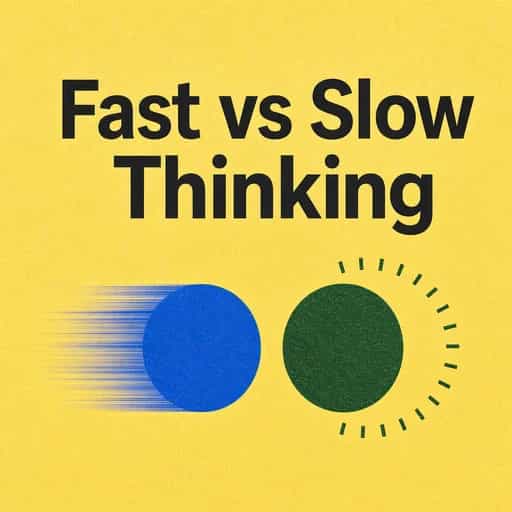
    Improving your decision-making isn't about memorizing ninety-nine different fallacies; it's about building a small, reliable "decision toolkit" that you actually use when the stakes are high. Think of these as mental drills you can run through whenever a situation feels foggy or your emotions are starting to take the wheel. The goal is to move from reactive, "fast" thinking to a more deliberate, "slow" process when it matters most. The next time you're faced with a choice that feels heavy, try this simple checklist to see through the cognitive noise.

    Start by checking for the "contrast effect" and "scarcity." Ask yourself: "Am I choosing this because it's genuinely valuable, or just because it's 'on sale' or 'limited'?". Strip away the discounts and the countdown timers and look at the costs and benefits in isolation. If you wouldn't buy it at full price, or if you didn't feel the rush of the deadline, is it still something you need? Next, apply "inversion." Instead of focusing on how to make this choice a success, ask: "What would make this a total disaster?". If you're considering a new job, don't just think about the salary—think about what would make you miserable three months in, like a long commute or a lack of autonomy. This often reveals the hidden trade-offs you were trying to ignore.

    Then, look for your "confirmation bias." Actively seek out one person who thinks your idea is a mistake and listen to their reasons without getting defensive. Ask yourself: "What evidence would it take for me to change my mind?" If the answer is "nothing," you're not making a decision—you're defending a belief. Finally, consider the "second-order consequences." Don't just ask "What happens next?"—ask "And then what?". Look past the immediate relief of avoiding a conflict or the quick hit of a purchase and see where that choice leads in a week, a month, or a year. By slowing down and using these lenses, you turn decision-making from a stressful gamble into a structured practice.

    チャプター 8

    The Art of Living with Intention

    As we wrap up our journey through the architecture of the mind, it’s worth remembering that the goal of thinking clearly isn't to become a perfect, robotic logic machine. Humans are designed to work with shortcuts; they are what allow us to navigate a world that is far too complex for us to process every single detail. You don't need to over-analyze which brand of toothpaste to buy or agonize over every minor email. But for the big, important, and complex decisions—the ones that shape your career, your finances, and your relationships—taking the time to check for these fallacies is the difference between being a passenger in your own life and being the pilot.
    Thinking clearly is ultimately an act of humility. It’s the recognition that your brain is a beautiful but flawed instrument, prone to seeing patterns where none exist and clinging to stories that may not be true. By embracing a bit of doubt and slowing down your reactions, you give yourself the space to see reality a little more honestly. You start to realize that you have less control over the world than you think, but much more control over how you respond to it. You begin to value "negative knowledge"—the wisdom of knowing what to avoid—and you learn to protect your focus from the "twaddle tendency" and the noise of a world that rewards speed over depth.

    Thank you for spending this time exploring the inner workings of your own judgment. As you move back into the flow of your day, perhaps pick just one tool we’ve discussed—maybe it’s inversion, or the 80/20 rule, or simply pausing to check for confirmation bias—and try applying it to a single choice you face this week. You don’t have to master all ninety-nine fallacies at once; you just have to start making fewer avoidable mistakes. Clear thinking is a habit, and like any habit, it grows stronger every time you choose to pause, reflect, and ask a better question. The world will always be noisy and the path will often be foggy, but with the right mental toolkit, you can navigate it with a much steadier hand.

    ★★★★★

    The Art of Thinking Clearly: The Illusion of Control and Heuristicsを最後まで学びました

    “23日間、毎日使い続けています。今では日課の一部です。”

    jayallen

    The Art of Thinking Clearly: The Illusion of Control and Heuristicsのベスト引用

    “

    Understanding cognitive biases isn't just an academic exercise—it is the ultimate productivity hack and the foundation of a life lived with intention.

    ”
    K

    Generated by Kairah

    質問を入力

    The art of thinking clearly, with a focus on making better daily decisions.

    ホストの声
    Lenaplay
    知識ソース
    An Overview of The Art of Thinking Clearly - Matthias Karner
    link
    http://matthiaskarner.com/2025/09/An-Overview-of-The-Art-of-Thinking-Clearly/
    Book Summary and Review: The Art of Thinking Clearly by Rolf Dobelli
    link
    https://fourminutebooks.com/the-art-of-thinking-clearly-summary/
    Decision Making: How to Make Smart Decisions and Avoid Bad Ones
    link
    https://jamesclear.com/decision-making
    Mental Models For Everyday Thinking: Practical Tools That Help
    link
    https://brightdiscover.com/mental-models-for-everyday-thinking/
    Mental Models for Everyday Decisions: Simple Thinking Tools - Mind Treks
    link
    https://mind-treks.com/mental-models-for-everyday-decisions/

    よくある質問

    The illusion of control is the psychological belief that we can influence outcomes that are actually outside our grasp. As discussed in The Art of Thinking Clearly, researchers demonstrated this using a placebo 'panic button' that increased participants' endurance against harsh noise. Even when a button isn't connected to anything, the mere sense of agency can significantly alter how we perceive and handle difficult situations in our daily lives.

    Cognitive heuristics are ancient mental shortcuts that once helped human ancestors survive predators. While these shortcuts were essential for survival, they often act as modern traps that lead us away from rational thinking. Whether you are prioritizing work projects or navigating tense conversations, these invisible threads pull on your decisions, making it difficult to maintain a truly clear and rational mind without conscious effort.

    Yes, behavioral science research shows that a perceived sense of agency can change physical endurance, even if that agency is not grounded in reality. In laboratory tests, individuals with access to a placebo control device withstood much higher levels of grating noise than those without one. This suggests that our psychological state and the belief that we have control can have a transformative impact on our physical capabilities and persistence.

    コロンビア大学卒業生が開発 | サンフランシスコ発

    BeFreedは好奇心旺盛な仲間が集うグローバルコミュニティ

    4.7

    平均評価

    7,840件以上のアプリ評価

    BeFreedコミュニティ

    正直、まだアプリを使いこなせていませんが、この数日使っただけで本当に感動しました… BeFreed は、今まで使ったどの学習アプリともレベルが違います。夢中になれるうえに集中力も実際に上がるので、スマホをだらだら見てしまう人にぴったりです!

    @ladyInfinity

    ちょうど 23 日前に BeFreed を購入して、それから毎日欠かさず使っています。仕事の流れと学習習慣に完全に溶け込みました。

    @jayallen

    正直なところ、このアプリは期待をすべて超えてきました。どんなテーマでも音声を生成してもらえて、その結果には驚かされます。私の専門は心理療法で、多分野にまたがる領域ですが、それでも回答はとても正確です。

    @Raguipa

    何よりありがたいのは、スマホをだらだら見る時間が減ったことです。探す時間が減って、吸収する時間が増えました。オーディオブック、ポッドキャスト、学習プランの組み合わせが素晴らしいです。

    @colonyofcreatorsNGO

    私は 24 年間、PhotoReading 加速学習のインストラクターをしています… 本と読書と学びが私の専門ですが、BeFreed は情報を消化しやすい形で届ける革新的なアプローチを見事に実現しています。

    @BeFreed user

    ただの本の要約アプリではありません。「ファン」スタイルを使ってみたら、従来のやり方よりずっと良い要約で、アイデアもつかみやすいです。これだけでも十分元が取れます。

    @austinakon

    このアプリが大好きです。数日使っただけで、聞くのが止まらなくなりました。始め方として最高です。

    @jcrules328

    本当に気に入っています。約 1 か月試していますが、まさに掘り出し物だと感じます。BeFreed で自分だけのテーマを作れるのが便利で、声も素晴らしく、ナレーションの選択肢は無限です。

    @DanielCZ

    正直、まだアプリを使いこなせていませんが、この数日使っただけで本当に感動しました… BeFreed は、今まで使ったどの学習アプリともレベルが違います。夢中になれるうえに集中力も実際に上がるので、スマホをだらだら見てしまう人にぴったりです!

    @ladyInfinity

    ちょうど 23 日前に BeFreed を購入して、それから毎日欠かさず使っています。仕事の流れと学習習慣に完全に溶け込みました。

    @jayallen

    正直なところ、このアプリは期待をすべて超えてきました。どんなテーマでも音声を生成してもらえて、その結果には驚かされます。私の専門は心理療法で、多分野にまたがる領域ですが、それでも回答はとても正確です。

    @Raguipa

    何よりありがたいのは、スマホをだらだら見る時間が減ったことです。探す時間が減って、吸収する時間が増えました。オーディオブック、ポッドキャスト、学習プランの組み合わせが素晴らしいです。

    @colonyofcreatorsNGO

    私は 24 年間、PhotoReading 加速学習のインストラクターをしています… 本と読書と学びが私の専門ですが、BeFreed は情報を消化しやすい形で届ける革新的なアプローチを見事に実現しています。

    @BeFreed user

    ただの本の要約アプリではありません。「ファン」スタイルを使ってみたら、従来のやり方よりずっと良い要約で、アイデアもつかみやすいです。これだけでも十分元が取れます。

    @austinakon

    このアプリが大好きです。数日使っただけで、聞くのが止まらなくなりました。始め方として最高です。

    @jcrules328

    本当に気に入っています。約 1 か月試していますが、まさに掘り出し物だと感じます。BeFreed で自分だけのテーマを作れるのが便利で、声も素晴らしく、ナレーションの選択肢は無限です。

    @DanielCZ

    役立つ情報やアイデアを 8〜15 分のポッドキャスト風音声にぎゅっとまとめて聞けるのが最高です。ポッドキャストは余計な話が多くて苦手でしたが、これは無駄を全部そぎ落としてくれます。

    @BeFreed user

    博士課程の仕上げの段階で、なじみのない資料を大量に読む必要があります… BeFreed ならプロンプトを入力するだけで、アプリが資料を探して音声ポッドキャストを作ってくれます。BeFreed のほうが NotebookLM よりも流れがスムーズだと感じます。

    @Brad

    朝食を作りながら、散歩しながら、通勤しながら聞くものを YouTube でよく探していましたが、BeFreed は広告も余計な話もなしで、もっと的を絞った聞き方をさせてくれます!

    @BeFreed user

    このプラットフォームの一番の魅力は、その万能さです。扱えないテーマは文字どおりひとつもありません。何を投げても応えてくれます… 制限がまったくないのに約束をきちんと果たしてくれる学習ツールには、なかなか出会えません。

    @jayallen

    BeFreed は素晴らしいです。使いやすいデザインのおかげで、操作に迷う時間が減り、学ぶ時間が増えました。オーディオブック、ポッドキャスト、学習プランの組み合わせは天才的で、毎日の習慣がすっかり変わりました。

    @BeFreed user

    最初はイタリア語でポッドキャストを作る方法を理解するのに少し時間がかかりましたが、わかった瞬間、最高でした!どんなテーマでも説明してもらえて、しかもとても賢く、うまく話してくれます!

    @matteo77

    BeFreed は毎日使うオーディオブックアプリになりました… 一番気に入っているのは、自分のテキストを入れると、外出先でも聞ける音声にしてくれるところです。

    @kotanzu1

    役立つ情報やアイデアを 8〜15 分のポッドキャスト風音声にぎゅっとまとめて聞けるのが最高です。ポッドキャストは余計な話が多くて苦手でしたが、これは無駄を全部そぎ落としてくれます。

    @BeFreed user

    博士課程の仕上げの段階で、なじみのない資料を大量に読む必要があります… BeFreed ならプロンプトを入力するだけで、アプリが資料を探して音声ポッドキャストを作ってくれます。BeFreed のほうが NotebookLM よりも流れがスムーズだと感じます。

    @Brad

    朝食を作りながら、散歩しながら、通勤しながら聞くものを YouTube でよく探していましたが、BeFreed は広告も余計な話もなしで、もっと的を絞った聞き方をさせてくれます!

    @BeFreed user

    このプラットフォームの一番の魅力は、その万能さです。扱えないテーマは文字どおりひとつもありません。何を投げても応えてくれます… 制限がまったくないのに約束をきちんと果たしてくれる学習ツールには、なかなか出会えません。

    @jayallen

    BeFreed は素晴らしいです。使いやすいデザインのおかげで、操作に迷う時間が減り、学ぶ時間が増えました。オーディオブック、ポッドキャスト、学習プランの組み合わせは天才的で、毎日の習慣がすっかり変わりました。

    @BeFreed user

    最初はイタリア語でポッドキャストを作る方法を理解するのに少し時間がかかりましたが、わかった瞬間、最高でした!どんなテーマでも説明してもらえて、しかもとても賢く、うまく話してくれます!

    @matteo77

    BeFreed は毎日使うオーディオブックアプリになりました… 一番気に入っているのは、自分のテキストを入れると、外出先でも聞ける音声にしてくれるところです。

    @kotanzu1

    BeFreedがウェブ上でどのように話題になっているかをもっと見る
    129.7K19.5K
    55.2K19.2K
    154.2K10827355
    48.1K2.5K
    81.2K6.6K
    82.3K1.8K
    今すぐ学習の旅を始めよう
    BeFreedアプリ
    BeFreed

    なんでも、あなた向けに学ぶ

    DiscordLinkedIn
    注目の書籍要約
    Crucial ConversationsThe Perfect MarriageInto the WildNever Split the DifferenceAttachedGood to GreatSay Nothing
    人気のカテゴリ
    Self HelpCommunication SkillRelationshipMindfulnessPhilosophyInspirationProductivity
    著名人の読書リスト
    Elon MuskCharlie KirkBill GatesSteve JobsAndrew HubermanJoe RoganJordan Peterson
    受賞作品コレクション
    Pulitzer PrizeNational Book AwardGoodreads Choice AwardsNobel Prize in LiteratureNew York TimesCaldecott MedalNebula Award
    注目のトピック
    ManagementAmerican HistoryWarTradingStoicismAnxietySex
    年別ベストブック
    2025 Best Non Fiction Books2024 Best Non Fiction Books2023 Best Non Fiction Books
    注目の著者
    Chimamanda Ngozi AdichieGeorge OrwellO. J. SimpsonBarbara O'NeillWinston ChurchillCharlie Kirk
    BeFreed vs 他のアプリ
    BeFreed vs. Other Book Summary AppsBeFreed vs. ElevenReaderBeFreed vs. ReadwiseBeFreed vs. Anki
    学習ツール
    Knowledge VisualizerAI Podcast Generator
    情報
    会社概要arrow
    料金arrow
    よくある質問arrow
    ブログarrow
    採用情報arrow
    パートナーシップarrow
    アンバサダープログラムarrow
    ディレクトリarrow
    BeFreed
    Try now
    © 2026 BeFreed
    利用規約プライバシーポリシー
    BeFreed

    なんでも、あなた向けに学ぶ

    DiscordLinkedIn
    注目の書籍要約
    Crucial ConversationsThe Perfect MarriageInto the WildNever Split the DifferenceAttachedGood to GreatSay Nothing
    人気のカテゴリ
    Self HelpCommunication SkillRelationshipMindfulnessPhilosophyInspirationProductivity
    著名人の読書リスト
    Elon MuskCharlie KirkBill GatesSteve JobsAndrew HubermanJoe RoganJordan Peterson
    受賞作品コレクション
    Pulitzer PrizeNational Book AwardGoodreads Choice AwardsNobel Prize in LiteratureNew York TimesCaldecott MedalNebula Award
    注目のトピック
    ManagementAmerican HistoryWarTradingStoicismAnxietySex
    年別ベストブック
    2025 Best Non Fiction Books2024 Best Non Fiction Books2023 Best Non Fiction Books
    学習ツール
    Knowledge VisualizerAI Podcast Generator
    注目の著者
    Chimamanda Ngozi AdichieGeorge OrwellO. J. SimpsonBarbara O'NeillWinston ChurchillCharlie Kirk
    BeFreed vs 他のアプリ
    BeFreed vs. Other Book Summary AppsBeFreed vs. ElevenReaderBeFreed vs. ReadwiseBeFreed vs. Anki
    情報
    会社概要arrow
    料金arrow
    よくある質問arrow
    ブログarrow
    採用情報arrow
    パートナーシップarrow
    アンバサダープログラムarrow
    ディレクトリarrow
    BeFreed
    Try now
    © 2026 BeFreed
    利用規約プライバシーポリシー

    関連コンテンツ

    The Art of Thinking Clearly の書籍表紙
    The Art of Thinking Clearly
    Rolf Dobelli
    Uncover cognitive biases and logical fallacies to make better decisions in all aspects of life through 99 insightful chapters.
    29 min
    Brain Glitches: Overcoming Cognitive Bias の書籍表紙
    Common Cognitive Biases: A Comprehensive List With ExamplesDebiasing: How to Reduce Cognitive Biases in Yourself and in Others – EffectiviologyNoticing and Overcoming Bias — LessWrongThought Records - A Step-by-Step CBT Exercise for Overthinkers
    5 sources
    Brain Glitches: Overcoming Cognitive Bias
    Our brains use shortcuts that often warp reality and lead to poor choices. Learn to identify these mental triggers and build systems to think clearly.
    22 min
    Thinking, Fast and Slow: The Two Systems の書籍表紙
    Thinking, Fast and Slow: Full Book Summary & Analysis | SparkNotesThinking, Fast and Slow by Daniel Kahneman Summary and Key Takeaways — Business FlossThinking Fast and Slow: summary, key insights and book reviewThinking, Fast and Slow by Daniel Kahneman: Summary & Notes
    6 sources
    Thinking, Fast and Slow: The Two Systems
    Your brain relies on mental shortcuts that often lead to irrational choices. Learn how to spot cognitive biases and take control of your decisions.
    1268 min
    Metacognition: The Art of Thinking About Thinking の書籍表紙
    Metacognition and Polyregulation in Daily Self-Control ConflictsSystematic metacognitive reflection helps people discover far-sighted decision strategies: A process-tracing experimentThinking About Thinking: The Key to Wise ChoicesInstrumental Rationality 4.2: Creating Habits — LessWrong
    7 sources
    Metacognition: The Art of Thinking About Thinking
    When willpower fails, your mental strategy matters most. Learn to use metacognition to break autopilot habits and make sharper everyday decisions.
    1155 min
    Cognitive Biases: Our Mind's Hidden Shortcuts の書籍表紙
    The Art Of Thinking ClearlyYou Are Not So SmartPredictably IrrationalThinking, Fast and Slow
    11 sources
    Cognitive Biases: Our Mind's Hidden Shortcuts
    Explore how our brains use mental shortcuts that lead to systematic errors in judgment, from overconfidence to spotting patterns that don't exist, and learn practical tools to recognize these biases in daily decision-making.
    33 min
    Cognitive Biases: The Logic of a Distorted Mind の書籍表紙
    Thinking, fast and slowHeuristic Decision Making | Annual ReviewsFrontiers | Modelling decision-making biasesThe Handbook of Evolutionary Psychology
    5 sources
    Cognitive Biases: The Logic of a Distorted Mind
    Struggling with irrational choices? Discover how your brain’s biases are actually survival features that help you navigate a chaotic world.
    731 min
    Clear Thinking の書籍表紙
    Clear Thinking
    Shane Parrish
    A practical guide to mastering clear thinking, overcoming cognitive biases, and making better decisions in everyday life and business.
    34 min
    Thinking, Fast and Slow: The Two Systems の書籍表紙
    [4abec1b0-b17d-42f8-b495-b83a4a55c1cc:c0000] Thinking, Fast and Slow (Daniel Kahneman) (z-library.sk, 1lib.sk, z-lib.sk).epub p1-1[4abec1b0-b17d-42f8-b495-b83a4a55c1cc:c0001] Thinking, Fast and Slow (Daniel Kahneman) (z-library.sk, 1lib.sk, z-lib.sk).epub p1-1[4abec1b0-b17d-42f8-b495-b83a4a55c1cc:c0002] Thinking, Fast and Slow (Daniel Kahneman) (z-library.sk, 1lib.sk, z-lib.sk).epub p1-1[4abec1b0-b17d-42f8-b495-b83a4a55c1cc:c0003] Thinking, Fast and Slow (Daniel Kahneman) (z-library.sk, 1lib.sk, z-lib.sk).epub p1-1
    25 sources
    Thinking, Fast and Slow: The Two Systems
    We often believe we're in control of our choices, but hidden mental shortcuts often run the show. Learn to spot these biases and think more clearly.
    1168 min