The Adaptive Edge: Master Your Metacognition
Explore how 'thinking about thinking' is replacing raw IQ as the ultimate survival skill. Learn to rewire your brain for resilience and cognitive flexibility in an AI-driven world.

The Adaptive Edge: Master Your Metacognitionのベスト引用
Metacognition is the ultimate meta-skill; it’s the ability to step back from the 'object level' of our lives and look at the 'meta level' to physically reorganize our biology. When you stop seeing uncertainty as a failure and start seeing it as a prompt for simulation, you become truly unstoppable.
Generated by Siir
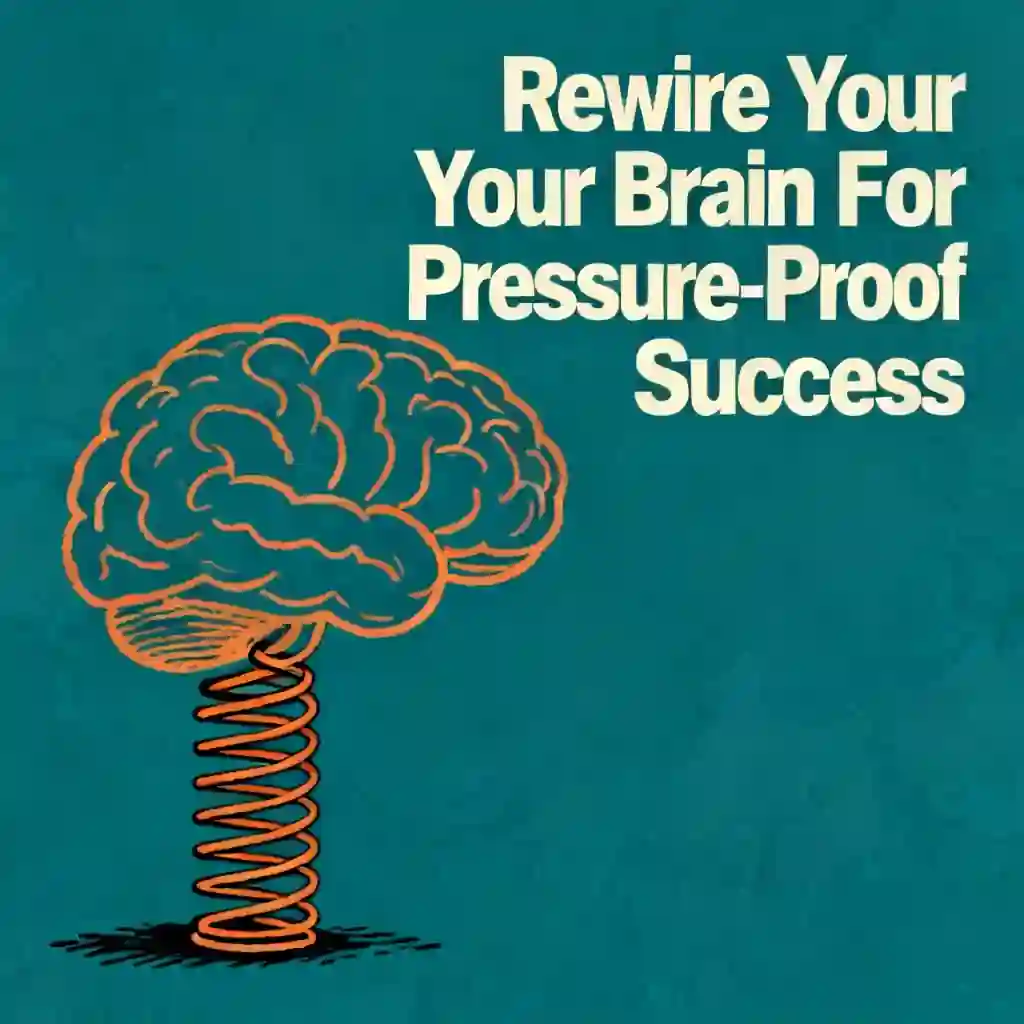
Meta cognitive adaptability

よくある質問
The bifurcated model suggests that the mind operates on two distinct levels simultaneously. The "object level" is where you perform actual tasks, such as writing an email or solving a problem. The "meta level" acts like a supervisor in a control room, monitoring those object-level operations for errors and deciding if a change in strategy is necessary. This creates a bidirectional flow where information goes up to be monitored and instructions come back down to control the task.
The brain uses a "metacognitive problem-solving axis" to choose between "model-free" and "model-based" learning. Model-free learning relies on habits—doing what worked in the past without much thought. Model-based learning uses the hippocampus to simulate an internal map of the environment and predict future outcomes. The prefrontal cortex acts as an arbitrator, deciding to stick with a habit if the environment is stable or switching to a simulated new strategy if it detects high uncertainty or a "prediction error."
Metacognitive awareness is categorized into three layers: intellectual, emergent, and anticipatory. Intellectual awareness is the basic knowledge that a deficit or weakness exists. Emergent awareness is the ability to recognize a problem while it is actively happening. The highest level is anticipatory awareness, which allows a person to predict that a problem will occur in the future and prepare a strategy in advance to mitigate it.
Yes, the brain exhibits experience-dependent structural changes. Regions like the prefrontal cortex and the anterior cingulate cortex can physically alter their architecture based on how much they are used for strategic monitoring and regulation. Additionally, activities like high-intensity exercise release a protein called BDNF (Brain-Derived Neurotrophic Factor), which acts as "Miracle-Gro" for the brain, supporting the birth of new neurons and strengthening the synaptic connections needed for these complex thinking skills.
Rest is essential for a process called "hippocampal replay." When the brain is offline or at rest, the hippocampus replays sequences of information to encode the structure of new environments and organize experiences. This "defragmenting" allows the brain to update its internal predictive maps. Without these breaks, the brain remains stuck in outdated, habitual loops and loses the ability to effectively simulate new paths or reorganize its "psychobiological" structure.
"Instead of endless scrolling, I just hit play on BeFreed. It saves me so much time."


"I never knew where to start with nonfiction—BeFreed’s book lists turned into podcasts gave me a clear path."


"Perfect balance between learning and entertainment. Finished ‘Thinking, Fast and Slow’ on my commute this week."
"Crazy how much I learned while walking the dog. BeFreed = small habits → big gains."
"Reading used to feel like a chore. Now it’s just part of my lifestyle."

"Feels effortless compared to reading. I’ve finished 6 books this month already."
"BeFreed turned my guilty doomscrolling into something that feels productive and inspiring."

"BeFreed turned my commute into learning time. 20-min podcasts are perfect for finishing books I never had time for."
"BeFreed replaced my podcast queue. Imagine Spotify for books — that’s it. 🙌"

"It is great for me to learn something from the book without reading it."
"The themed book list podcasts help me connect ideas across authors—like a guided audio journey."
"Makes me feel smarter every time before going to work"
"Instead of endless scrolling, I just hit play on BeFreed. It saves me so much time."
"I never knew where to start with nonfiction—BeFreed’s book lists turned into podcasts gave me a clear path."
"Perfect balance between learning and entertainment. Finished ‘Thinking, Fast and Slow’ on my commute this week."
"Crazy how much I learned while walking the dog. BeFreed = small habits → big gains."
"Reading used to feel like a chore. Now it’s just part of my lifestyle."
"Feels effortless compared to reading. I’ve finished 6 books this month already."
"BeFreed turned my guilty doomscrolling into something that feels productive and inspiring."
"BeFreed turned my commute into learning time. 20-min podcasts are perfect for finishing books I never had time for."
"BeFreed replaced my podcast queue. Imagine Spotify for books — that’s it. 🙌"
"It is great for me to learn something from the book without reading it."
"The themed book list podcasts help me connect ideas across authors—like a guided audio journey."
"Makes me feel smarter every time before going to work"
"Instead of endless scrolling, I just hit play on BeFreed. It saves me so much time."
"I never knew where to start with nonfiction—BeFreed’s book lists turned into podcasts gave me a clear path."
"Perfect balance between learning and entertainment. Finished ‘Thinking, Fast and Slow’ on my commute this week."
"Crazy how much I learned while walking the dog. BeFreed = small habits → big gains."
"Reading used to feel like a chore. Now it’s just part of my lifestyle."
"Feels effortless compared to reading. I’ve finished 6 books this month already."
"BeFreed turned my guilty doomscrolling into something that feels productive and inspiring."
"BeFreed turned my commute into learning time. 20-min podcasts are perfect for finishing books I never had time for."
"BeFreed replaced my podcast queue. Imagine Spotify for books — that’s it. 🙌"
"It is great for me to learn something from the book without reading it."
"The themed book list podcasts help me connect ideas across authors—like a guided audio journey."
"Makes me feel smarter every time before going to work"
"Instead of endless scrolling, I just hit play on BeFreed. It saves me so much time."
"I never knew where to start with nonfiction—BeFreed’s book lists turned into podcasts gave me a clear path."
"Perfect balance between learning and entertainment. Finished ‘Thinking, Fast and Slow’ on my commute this week."
"Crazy how much I learned while walking the dog. BeFreed = small habits → big gains."
"Reading used to feel like a chore. Now it’s just part of my lifestyle."
"Feels effortless compared to reading. I’ve finished 6 books this month already."
"BeFreed turned my guilty doomscrolling into something that feels productive and inspiring."
"BeFreed turned my commute into learning time. 20-min podcasts are perfect for finishing books I never had time for."
"BeFreed replaced my podcast queue. Imagine Spotify for books — that’s it. 🙌"
"It is great for me to learn something from the book without reading it."
"The themed book list podcasts help me connect ideas across authors—like a guided audio journey."
"Makes me feel smarter every time before going to work"