Finding happiness by needing less from others
Feeling drained by everyone else's expectations? Learn why being indispensable is a trap and how choosing contentment over clout leads to true freedom.

Finding happiness by needing less from othersのベスト引用
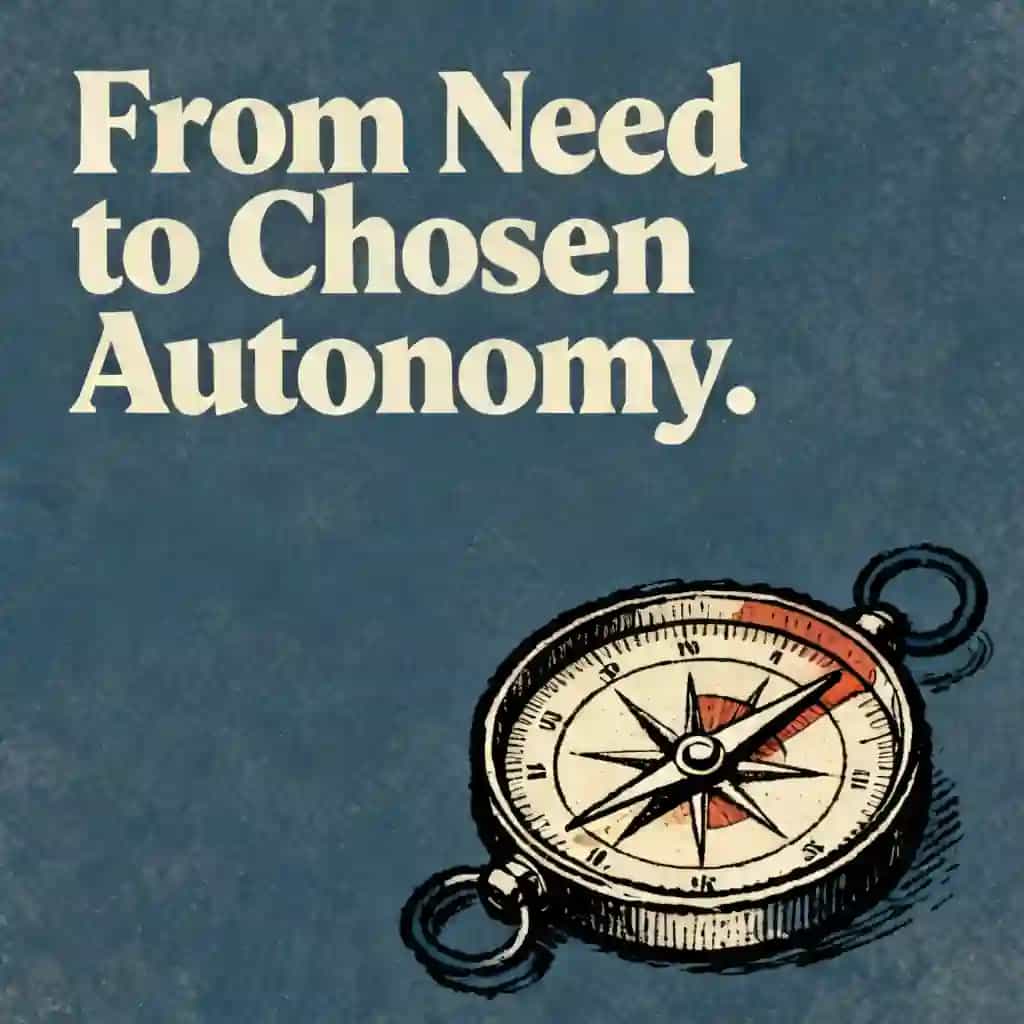
The secret to genuine happiness isn't actually gratitude journals or positive thinking; it’s the ability to need less external validation and move from being a 'weather vane' that reacts to every breeze to being a 'compass' that knows its own true north.

このオーディオレッスンはBeFreedコミュニティメンバーが作成しました
Find happiness. Be content with life. Overcome feeling of being needed


![Facing Codependence [ABRIDGED]](https://d1y2du6z1jfm9e.cloudfront.net/covers/1d91cc59-653c-487c-bb06-0a03ac09820d/image_resized.webp)

よくある質問
While society often teaches that being indispensable is a goal, the script explains that building your entire worth around being "the one who always shows up" can lead to identity loss. This happens because your day becomes a constant reaction to other people's requirements rather than your own desires. When you act as a "hollow vessel" filled only by the expectations of others, you lose track of who you actually are and what you truly want, leading to a heavy feeling of being burdened rather than fulfilled.
The script suggests that the drive for constant approval is often a survival strategy developed in childhood. If a person grew up in an unpredictable emotional climate where love felt conditional, they learned to become a "room reader" to stay safe. This hyper-vigilance to the moods and tones of adults becomes a "talent" carried into adulthood. What feels like empathy or reliability is often a deep-seated pattern of seeking safety through the "gold stars" of external praise.
Caretaker codependency occurs when a person mistakes managing someone else's life for loving them. According to the script, this often stems from the caregiver's own anxiety; they intervene to solve problems because they cannot handle the discomfort of watching a loved one struggle. This "rescuing" behavior can be a subtle form of control that deprives the other person of the dignity of their own process and the opportunity to grow, eventually creating an unbalanced and exhausting dynamic for both parties.
The script recommends several low-stakes exercises to build "internal validation" muscles. One example is the "Small No," where you decline a minor request—like a store rewards program—without offering an elaborate excuse or apology. Another is the "Private Win," which involves completing a task you are proud of and intentionally not telling anyone or posting it on social media. These acts help break the "approval addiction" and prove to your nervous system that you can be okay without an external audience.
The script highlights that both Stoicism and CBT focus on the "internal locus of self-worth." The Stoic principle of distinguishing between what is "up to us" (our thoughts and reactions) and what is "not up to us" (other people's opinions) is the foundation of thought reframing. By treating a coworker's neutral tone or a stranger's criticism as "data" rather than a "verdict" on one's value, an individual can move from being a reactive "weather vane" to a stable "compass" guided by their own internal standards.
もっと発見

Build self-esteem and stop seeking attention
This plan is designed for individuals who struggle with people-pleasing and feel drained by a constant need for external approval. It provides a structured path to move from seeking attention to building a sustainable, internal sense of worth.

End self-help and success obsession
Modern culture often traps us in a cycle of endless self-improvement that leads to burnout rather than fulfillment. This plan is essential for high-achievers and wellness enthusiasts who feel exhausted by the pressure to constantly optimize every aspect of their lives.

Overcome neediness
This learning plan is essential for anyone who finds themselves constantly seeking approval, struggling with codependency, or feeling incomplete without a relationship. It's particularly valuable for individuals who recognize patterns of people-pleasing, difficulty being alone, or anxiety about rejection, and who want to build healthier relationships by first developing a secure relationship with themselves.

The Unshakable Self
In an era of constant social comparison, building an internal anchor is essential for long-term mental health. This plan is designed for individuals seeking to break free from people-pleasing and develop the resilience needed to navigate life's inevitable frictions with confidence.

Break the self-help dopamine trap
In an era of constant digital stimulation, many find themselves trapped in a loop of superficial self-improvement without real change. This plan is essential for anyone feeling overwhelmed by screen time or 'productivity porn' who wants to reclaim their focus and mental clarity.

Build self-trust; end need for approval.
This plan is essential for high-achievers who feel drained by the constant need for external validation. It provides a roadmap for anyone looking to replace self-doubt with an unshakeable internal compass and authentic confidence.

Choose myself and reinforce my boundaries
This plan is designed for individuals who struggle with people-pleasing and feel drained by the demands of others. It provides a structured path to reclaiming your time and energy by building a foundation of self-worth and practical communication skills.

How to not care what others think of you.
This learning plan is essential for anyone struggling with social anxiety, chronic people-pleasing, or a loud inner critic. It provides a roadmap for individuals seeking to reclaim their autonomy and build a life rooted in authentic self-worth rather than external validation.
"Instead of endless scrolling, I just hit play on BeFreed. It saves me so much time."


"I never knew where to start with nonfiction—BeFreed’s book lists turned into podcasts gave me a clear path."


"Perfect balance between learning and entertainment. Finished ‘Thinking, Fast and Slow’ on my commute this week."
"Crazy how much I learned while walking the dog. BeFreed = small habits → big gains."
"Reading used to feel like a chore. Now it’s just part of my lifestyle."

"Feels effortless compared to reading. I’ve finished 6 books this month already."
"BeFreed turned my guilty doomscrolling into something that feels productive and inspiring."

"BeFreed turned my commute into learning time. 20-min podcasts are perfect for finishing books I never had time for."
"BeFreed replaced my podcast queue. Imagine Spotify for books — that’s it. 🙌"

"It is great for me to learn something from the book without reading it."
"The themed book list podcasts help me connect ideas across authors—like a guided audio journey."
"Makes me feel smarter every time before going to work"
"Instead of endless scrolling, I just hit play on BeFreed. It saves me so much time."
"I never knew where to start with nonfiction—BeFreed’s book lists turned into podcasts gave me a clear path."
"Perfect balance between learning and entertainment. Finished ‘Thinking, Fast and Slow’ on my commute this week."
"Crazy how much I learned while walking the dog. BeFreed = small habits → big gains."
"Reading used to feel like a chore. Now it’s just part of my lifestyle."
"Feels effortless compared to reading. I’ve finished 6 books this month already."
"BeFreed turned my guilty doomscrolling into something that feels productive and inspiring."
"BeFreed turned my commute into learning time. 20-min podcasts are perfect for finishing books I never had time for."
"BeFreed replaced my podcast queue. Imagine Spotify for books — that’s it. 🙌"
"It is great for me to learn something from the book without reading it."
"The themed book list podcasts help me connect ideas across authors—like a guided audio journey."
"Makes me feel smarter every time before going to work"
"Instead of endless scrolling, I just hit play on BeFreed. It saves me so much time."
"I never knew where to start with nonfiction—BeFreed’s book lists turned into podcasts gave me a clear path."
"Perfect balance between learning and entertainment. Finished ‘Thinking, Fast and Slow’ on my commute this week."
"Crazy how much I learned while walking the dog. BeFreed = small habits → big gains."
"Reading used to feel like a chore. Now it’s just part of my lifestyle."
"Feels effortless compared to reading. I’ve finished 6 books this month already."
"BeFreed turned my guilty doomscrolling into something that feels productive and inspiring."
"BeFreed turned my commute into learning time. 20-min podcasts are perfect for finishing books I never had time for."
"BeFreed replaced my podcast queue. Imagine Spotify for books — that’s it. 🙌"
"It is great for me to learn something from the book without reading it."
"The themed book list podcasts help me connect ideas across authors—like a guided audio journey."
"Makes me feel smarter every time before going to work"
"Instead of endless scrolling, I just hit play on BeFreed. It saves me so much time."
"I never knew where to start with nonfiction—BeFreed’s book lists turned into podcasts gave me a clear path."
"Perfect balance between learning and entertainment. Finished ‘Thinking, Fast and Slow’ on my commute this week."
"Crazy how much I learned while walking the dog. BeFreed = small habits → big gains."
"Reading used to feel like a chore. Now it’s just part of my lifestyle."
"Feels effortless compared to reading. I’ve finished 6 books this month already."
"BeFreed turned my guilty doomscrolling into something that feels productive and inspiring."
"BeFreed turned my commute into learning time. 20-min podcasts are perfect for finishing books I never had time for."
"BeFreed replaced my podcast queue. Imagine Spotify for books — that’s it. 🙌"
"It is great for me to learn something from the book without reading it."
"The themed book list podcasts help me connect ideas across authors—like a guided audio journey."
"Makes me feel smarter every time before going to work"