Attachment styles and why they make intimacy feel hard
Struggling with relationship anxiety or the urge to pull away? Learn how your attachment style shapes intimacy and how to move toward earned security.

Attachment styles and why they make intimacy feel hardのベスト引用
Your attachment style is a tendency, not a life sentence; because these models were built through experience, they can also be updated through new experiences to create 'earned security.'
Generated by Freedee_7C9664BB
Understanding different attachment styles in relationships and how that impacts connection and communication



よくある質問
An internal working model is an unconscious mental representation of how relationships work, formed during the first few years of life based on interactions with caregivers. It acts as a biological motivational system and a psychological filter that helps you answer whether others are reliable and whether you are worthy of care. Because these early experiences wire the brain's neural pathways, they create a blueprint that dictates how you perceive intimacy, detect threats, and react to emotional distance or closeness in adulthood.
Your attachment style is not a permanent verdict or a life sentence. While research suggests that a majority of people maintain their broad attachment category into adulthood, the brain’s neuroplasticity allows for the development of "earned secure attachment." This is the process of moving toward security by making sense of your personal history, developing self-soothing skills, and engaging in corrective relational experiences. By moving from autopilot reactions to conscious awareness, you can update your internal model and learn to respond to intimacy with intention rather than survival-based fear.
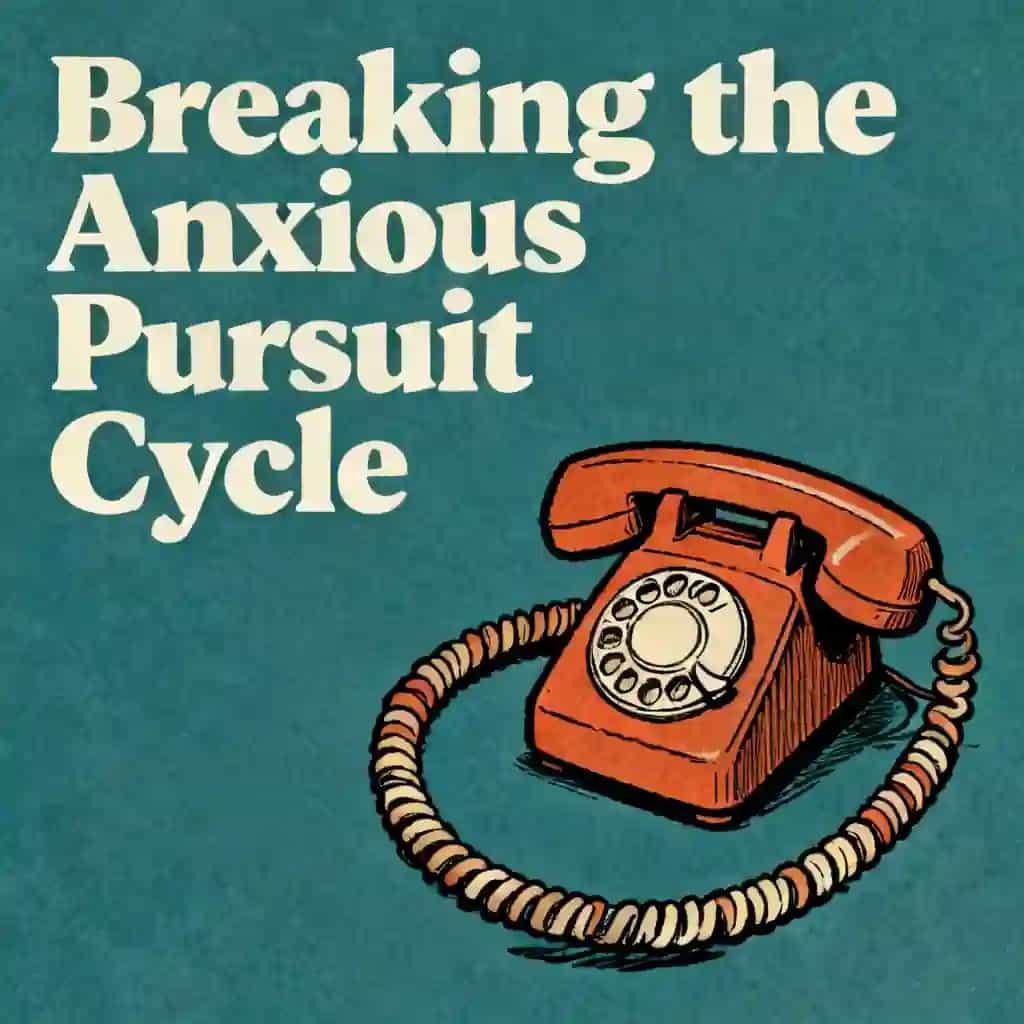
The anxious-avoidant trap is a self-perpetuating cycle triggered by opposing attachment needs. When an anxious partner senses distance, their fear of abandonment activates, causing them to pursue the partner for reassurance. This pursuit feels suffocating to the avoidant partner, whose system reacts to intensity by withdrawing to maintain independence. This withdrawal further panics the anxious partner, leading to more pursuit and more withdrawal. Breaking this cycle requires both partners to externalize the problem as a shared "loop" and practice new behaviors, such as the avoidant partner offering time-bound reassurance and the anxious partner practicing the restraint of giving space.
Attachment patterns follow individuals into the workplace, influencing how they handle feedback, collaboration, and authority. Securely attached individuals often make effective leaders because they can delegate and mentor without their self-worth being tied solely to performance. Anxiously attached professionals may struggle with boundaries and over-engage to prove their worth, often misinterpreting neutral workplace interactions as rejection. Avoidant individuals may excel in independent tasks but struggle with the "soft skills" or emotional attunement required for high-level management, often viewing vulnerability or collaboration as a threat to their autonomy.
Moving toward earned security involves three primary practices: noticing without reacting, processing a coherent narrative, and seeking corrective experiences. First, you must learn to label when your attachment system is activated to create space between a feeling and an impulse. Second, journaling about childhood experiences helps move the blueprint from an unconscious drive to a conscious understanding, dissolving shame. Finally, you should prioritize "repair over perfection" by initiating the "comeback" after a conflict, which teaches the brain that relationships are resilient and that connection can be a safe harbor.
コロンビア大学卒業生がサンフランシスコで開発
"Instead of endless scrolling, I just hit play on BeFreed. It saves me so much time."


"I never knew where to start with nonfiction—BeFreed’s book lists turned into podcasts gave me a clear path."


"Perfect balance between learning and entertainment. Finished ‘Thinking, Fast and Slow’ on my commute this week."
"Crazy how much I learned while walking the dog. BeFreed = small habits → big gains."
"Reading used to feel like a chore. Now it’s just part of my lifestyle."

"Feels effortless compared to reading. I’ve finished 6 books this month already."
"BeFreed turned my guilty doomscrolling into something that feels productive and inspiring."

"BeFreed turned my commute into learning time. 20-min podcasts are perfect for finishing books I never had time for."
"BeFreed replaced my podcast queue. Imagine Spotify for books — that’s it. 🙌"

"It is great for me to learn something from the book without reading it."
"The themed book list podcasts help me connect ideas across authors—like a guided audio journey."
"Makes me feel smarter every time before going to work"
 Ask ChatGPT
 Ask Claude
コロンビア大学卒業生がサンフランシスコで開発
"Instead of endless scrolling, I just hit play on BeFreed. It saves me so much time."
"I never knew where to start with nonfiction—BeFreed’s book lists turned into podcasts gave me a clear path."
"Perfect balance between learning and entertainment. Finished ‘Thinking, Fast and Slow’ on my commute this week."
"Crazy how much I learned while walking the dog. BeFreed = small habits → big gains."
"Reading used to feel like a chore. Now it’s just part of my lifestyle."
"Feels effortless compared to reading. I’ve finished 6 books this month already."
"BeFreed turned my guilty doomscrolling into something that feels productive and inspiring."
"BeFreed turned my commute into learning time. 20-min podcasts are perfect for finishing books I never had time for."
"BeFreed replaced my podcast queue. Imagine Spotify for books — that’s it. 🙌"
"It is great for me to learn something from the book without reading it."
"The themed book list podcasts help me connect ideas across authors—like a guided audio journey."
"Makes me feel smarter every time before going to work"
"Instead of endless scrolling, I just hit play on BeFreed. It saves me so much time."
"I never knew where to start with nonfiction—BeFreed’s book lists turned into podcasts gave me a clear path."
"Perfect balance between learning and entertainment. Finished ‘Thinking, Fast and Slow’ on my commute this week."
"Crazy how much I learned while walking the dog. BeFreed = small habits → big gains."
"Reading used to feel like a chore. Now it’s just part of my lifestyle."
"Feels effortless compared to reading. I’ve finished 6 books this month already."
"BeFreed turned my guilty doomscrolling into something that feels productive and inspiring."
"BeFreed turned my commute into learning time. 20-min podcasts are perfect for finishing books I never had time for."
"BeFreed replaced my podcast queue. Imagine Spotify for books — that’s it. 🙌"
"It is great for me to learn something from the book without reading it."
"The themed book list podcasts help me connect ideas across authors—like a guided audio journey."
"Makes me feel smarter every time before going to work"
"Instead of endless scrolling, I just hit play on BeFreed. It saves me so much time."
"I never knew where to start with nonfiction—BeFreed’s book lists turned into podcasts gave me a clear path."
"Perfect balance between learning and entertainment. Finished ‘Thinking, Fast and Slow’ on my commute this week."
"Crazy how much I learned while walking the dog. BeFreed = small habits → big gains."
"Reading used to feel like a chore. Now it’s just part of my lifestyle."
"Feels effortless compared to reading. I’ve finished 6 books this month already."
"BeFreed turned my guilty doomscrolling into something that feels productive and inspiring."
"BeFreed turned my commute into learning time. 20-min podcasts are perfect for finishing books I never had time for."
"BeFreed replaced my podcast queue. Imagine Spotify for books — that’s it. 🙌"
"It is great for me to learn something from the book without reading it."
"The themed book list podcasts help me connect ideas across authors—like a guided audio journey."
"Makes me feel smarter every time before going to work"