第1章
Love: The Ultimate Evolutionary Bribery
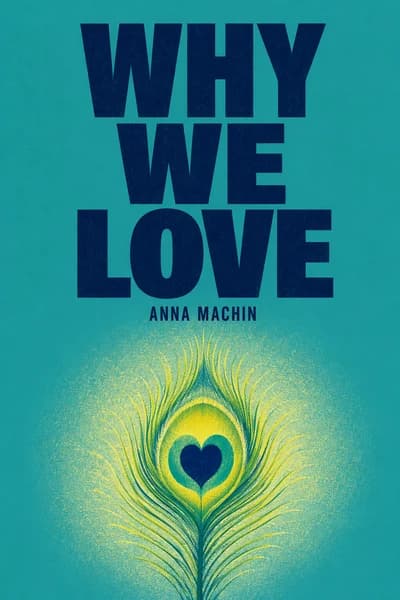
What if love isn't what we think it is? What if this profound, mysterious force that poets have celebrated for centuries is actually a sophisticated biological trick-evolution's way of bribing us into forming the relationships essential for our survival? In Dr. Anna Machin's groundbreaking book, she approaches love like a scientific detective, piecing together evidence from genetics, neuroscience, anthropology, and evolutionary biology to reveal love's true nature. As an Oxford anthropologist, Machin doesn't settle for simple answers to the question "What is love?" Instead, she offers ten robust responses that together capture love's immense complexity. The book has resonated with scientists and romantics alike, with neuroscientist Robert Sapolsky calling it "a tour de force" and relationship experts praising its accessible blend of cutting-edge science and human storytelling. Written during the COVID-19 pandemic when human connection became both more precious and more precarious, this exploration feels particularly timely, reminding us that our fundamental need for love isn't just poetic-it's woven into our very biology.
第2章
The Evolutionary Origins of Human Love
To truly understand love, we must first understand why it evolved. Unlike most mammals, humans face a unique reproductive challenge: our massive brains combined with our narrow, bipedal pelvises force our babies to be born developmentally premature. A human newborn is utterly helpless-unable to feed, clean, or protect itself for years. This evolutionary quirk created an unprecedented childcare burden that a mother alone couldn't manage while also gathering food and ensuring her own survival.
Initially, mothers turned to female relatives for help-sisters, cousins, and grandmothers formed cooperative childcare networks, taking turns watching infants while others gathered resources. This female kin support system worked for millions of years until approximately 500,000 years ago, when further brain expansion made babies even more dependent. At this critical juncture, something revolutionary happened: fathers began to invest in their offspring.
This shift introduced a new complexity to human cooperation. While female kin networks exchanged similar currencies (childcare for childcare), cross-sex cooperation required trading different values-typically sex and reproductive opportunity in exchange for protection and resources. This complex exchange demanded sophisticated calculations to ensure fair trades, dramatically increasing the cognitive demands of human relationships.
Our survival depends entirely on these cooperative networks. From hunting parties to modern supply chains, humans rely on others in ways no other species does. Research shows we maintain remarkably consistent social structures across cultures-a core group of 4-5 emotionally close people who receive 40% of our social time, surrounded by wider circles of 15, 45, and finally about 150 total active relationships (Dunbar's Number). This network structure exists because of cognitive constraints-our brains simply cannot maintain meaningful relationships with more people.
The size and quality of these social networks directly impact our health and longevity. Julianne Holt-Lunstad's research demonstrates that being embedded in a supportive social network reduces mortality risk by 50%-comparable to quitting smoking and more influential than maintaining a healthy BMI. Harvard studies confirm that social capital significantly impacts mortality, cardiovascular disease risk, cancer, diabetes, and obesity.
But maintaining these life-saving relationships comes with significant costs. Living in hierarchical social groups creates stress-those at the top must maintain position, those at the bottom struggle for resources, and those in the middle face pressure from both directions. We constantly monitor each other's behavior and intentions, taxing our cognitive resources and time.
This is where love enters the evolutionary story. At its most fundamental level, love functions as biological bribery-a set of neurochemicals that motivate and reward us for forming and maintaining cooperative relationships. These chemicals create sensations of warmth, contentment, and euphoria that encourage us to seek out and invest in relationships essential for survival. As Margaret, one of Machin's interviewees, notes: "Love allows us to experience our best selves through connection, creating a form of self-love only possible through relationship."
第3章
The Neurochemistry of Attachment
Love functions remarkably like addiction-consuming our thoughts, creating euphoric highs, intense cravings, and painful withdrawal when separated from those we love. This biological bribery involves a sophisticated cocktail of neurochemicals that motivate us to form and maintain relationships crucial for survival.
When relationships begin-whether romantic, parental, or friendship-oxytocin and dopamine work in partnership. Oxytocin quiets the amygdala, reducing our fear of rejection and giving us confidence to approach others. Dopamine provides both reward and motivation, acting as the "hormone of vigor" that drives us to pursue connection despite potential difficulties. Studies show new lovers have higher circulating oxytocin than singles, with baseline levels even predicting which couples will remain together six months later.
While oxytocin and dopamine levels rise in new love, serotonin levels drop-creating the obsessive quality that resembles obsessive-compulsive disorder. This obsession serves an evolutionary purpose, ensuring we coordinate our lives with loved ones, focus on their needs, and prioritize the relationship. Whether sharing endless baby photos, daydreaming about a new lover, or enthusiastically embracing a friendship, this mild obsession helps maintain relationship momentum amid life's many distractions.
But what sustains love long-term? Research points to beta-endorphin-the body's natural painkiller-as the foundation for enduring human bonds. PET scanning studies confirm its role in romantic touch between partners, while genetic studies show that genes associated with beta-endorphin have the strongest relationship with social disposition, including attachment style and empathy.
Beta-endorphin's power as the universal love chemical comes from its comprehensive influence throughout the brain-affecting both primal emotions in the limbic system and complex decision-making in the neocortex. Unlike oxytocin, which has limited release triggers mostly related to reproduction, beta-endorphin is released during numerous social activities we can enjoy with anyone-laughter, touch, dance, singing, and exercise. This makes it capable of underpinning all forms of human love.
Synchronized activities dramatically amplify beta-endorphin release. Studies with Oxford rowers demonstrated higher pain tolerance (a proxy measure for endorphin levels) after rowing in synchrony versus alone, while similar results emerged from comedy show audiences and synchronized dancers. This explains why synchronous activities like choral singing, military marching, and sports fan chanting are so effective at creating group bonds.
The addictive quality of beta-endorphin-creating feelings of warmth, closeness, and euphoria-drives us to repeatedly seek contact with loved ones, while its withdrawal explains the physical and psychological pain of heartbreak. As one research participant described it: "When I'm with my friends, I feel this warmth spreading through my body... it's like being wrapped in the softest, warmest blanket."
Recent research by Adi Ulmer-Yaniv provided conclusive evidence that beta-endorphin also underpins the parent-child bond. The study measured beta-endorphin, oxytocin, and interleukin-6 levels in new romantic couples, first-time parents with infants, and single individuals. All three chemicals were significantly elevated in both new parents and new lovers compared to singles, confirming that beta-endorphin is the key chemical in long-term bonds.
第4章
The Science of Human Attachment
Attachment relationships, first identified by psychiatrist John Bowlby and elaborated by Mary Ainsworth, are defined by intense emotional bonds that persist across time and distance. Bowlby discovered that children's distress when separated from their mothers couldn't be explained merely by food dependency-there was something uniquely important about the maternal bond itself. Through his work as a child psychiatrist, he observed that children with insecure maternal attachments experienced significant emotional and behavioral development problems.
Attachment profiles are defined by two dimensions: avoidance and anxiety. In romantic relationships, four distinct types emerge: secure (low avoidance, low anxiety), preoccupied (high anxiety, low avoidance), fearful-avoidant (high anxiety, high avoidance), and dismissing-avoidant (low anxiety, high avoidance). Secure individuals feel comfortable with intimacy and empowered by relationships. Preoccupied people worry constantly about abandonment and cling to partners. Fearful-avoidant individuals worry about abandonment but avoid relationships to prevent hurt. Dismissing-avoidant types show little interest in relationships, often fearing intimacy.
Our earliest attachments shape all future loves. Children's attachment styles are assessed around eighteen months using Mary Ainsworth's Strange Situation test, which observes interactions between child, mother, and a stranger. Secure children explore confidently when mother is present, get upset when she leaves but are quickly soothed upon her return; avoidant children show emotional independence and indifference to mother's absence; resistant/ambivalent children fear separation and show anger when mother returns; disorganized children display inconsistent behaviors and high anxiety.
The first attachment to our parent is profoundly influential because of human developmental timing. Born prematurely due to our large heads and narrow birth canals, our brains-particularly the social intelligence centers in the prefrontal cortex-continue developing rapidly after birth. Research by Israeli neuroscientists shows that parental brain structure and caregiving behavior directly predict children's emotional and social development. Basic parenting behaviors like touch, soothing speech, and gaze help children regulate simple emotions, while biobehavioral synchrony between parent and child enables management of complex emotions.
Twin studies reveal that childhood attachment is primarily environmentally determined rather than genetic. Dutch researchers studying both monozygotic (identical) and dizygotic (fraternal) twins found no significant differences in attachment profiles between the twin types, confirming minimal genetic contribution. The shared environment accounted for 59% of influence, while unique environmental factors between specific parent-child pairs contributed 41%.
Interestingly, adolescence marks a shift in attachment influences. Unlike early childhood attachment, teenage attachment shows significant genetic components. Research with 15-year-old twins revealed that identical twins had more similar attachment profiles (44%) than fraternal twins (33%), with genes accounting for roughly 38% of secure attachment profiles.
Attachment extends beyond observable behaviors into profound physiological connections. When attached individuals interact, their blood pressure, body temperature, and heart rate synchronize. Brain scans reveal that romantic couples display synchronized gamma waves in temporal parietal regions responsible for social comprehension and eye contact-a phenomenon absent between strangers. This synchrony is primarily driven by non-verbal behavior rather than conversation, highlighting its evolutionarily ancient nature.
Research using magnetoencephalography (MEG) has revealed that neural synchrony exists not only between romantic partners but also between mothers and their children. When viewing videos of their own positive interactions from two years prior, mother-child pairs showed synchronized gamma waves-synchrony absent when viewing unfamiliar pairs. The connection extends to neurochemistry too: when fathers received oxytocin before playing with their infants, not only did they engage more socially, but remarkably, their babies' oxytocin levels rose to match their fathers' artificially elevated levels within just seven minutes of interaction.
第5章
The Underestimated Power of Friendship
We often undervalue friendship in our hierarchy of love, placing parental and romantic love above it. Yet friendships constitute the majority of our social network-the greatest factor in our health, happiness, and life satisfaction. Unlike family relationships, friendships are actively chosen, offering unique benefits: unmet depths of intimacy for women and relaxation and humor for men.
Research shows significant gender differences in friendship patterns: women's friendships tend to be more emotionally intimate with tighter bonds, while men's groups are typically less emotionally close, preferring activities over intimate conversations. This difference may be neurochemically based-studies show oxytocin administration enhances emotional sharing experiences for women by reducing amygdala activity and increasing reward center activation, while actually increasing amygdala activity in men. This explains why women often enjoy intimate conversations over wine while men might prefer group activities.
For a growing number of people who remain single throughout life (projected at 6% of the US adult population), friends fulfill roles traditionally occupied by romantic partners or children. Research by Claudia Brumbaugh found that best friends play crucial roles for single women, with larger friendship networks correlating with less avoidant attachment styles.
The concept of "chosen family" emerged in the 1970s and 1980s among LGBTQ+ communities who faced rejection from biological families. These networks provided crucial emotional support and nurturing when legal family formation was restricted. Research shows that for people in same-sex relationships, chosen families often provide more valued support than biological ones. This remains vital today-a study by the Illinois Caucus for Adolescent Health found that 80.7% of adolescents formed chosen families, with 73.4% discussing sex and sexuality with them compared to 52.8% with biological family.
Humans extend love beyond our species, forming intense bonds with pets that many consider family members. Research using Ainsworth's Strange Situation Protocol with dogs revealed they exhibit attachment behaviors toward their human caregivers that mirror human attachment styles. Greg Berns' fMRI studies with fifteen trained dogs revealed that their brains' ventral striatum activates similarly for both food rewards and human praise, with most dogs actually showing greater activation for social rewards than for food treats. This neurological evidence suggests dogs genuinely love their owners beyond mere food association.
Our relationship with smartphones mirrors attachment behavior-most users check their phones within minutes of waking, keep them close throughout the day, and experience distress when separated from them. Cyberpsychologist Chris Fullwood's research reveals people treat phones almost as social network members, with participants describing their devices as "part of you." However, our attachment isn't to the physical object but what it represents: our connection to loved ones through photos, messages, and real-time communication.
第6章
The Personalized Experience of Love
What is love? This question elicits remarkably diverse answers-from viewing it as a survival mechanism to describing it as comfort, warmth, or even "a tasty butt." Our individual experience of love is shaped by genetics, biological sex, gender, age, ethnicity, and sexuality.
The oxytocin receptor (OXTR) gene, with its 28 different single nucleotide polymorphisms (SNPs), significantly impacts how we love. These genetic variations affect receptor density in the brain, where receptors are located, the affinity between neurochemicals and receptors, baseline neurochemical levels, and neurochemical transport efficiency. While genes aren't deterministic, they increase the likelihood of certain love-related behaviors and attributes expressing themselves.
Research confirms that the rs53576 SNP significantly impacts empathetic ability. Those carrying the GG variant display the highest empathy levels, with a clear dose response (more G alleles means greater empathy). While this genetic influence works similarly across ethnicities, Europeans have a higher frequency of the empathy-enhancing G allele than Asians, possibly reflecting their more individualist society where one-to-one emotional attunement is particularly valuable, compared to Asia's more collectivist cultures.
Some genes provide resilience against childhood trauma. Studies show that individuals with the GG variant of rs53576 who experienced emotional abuse as children were significantly more likely to report satisfaction in adult relationships with family, friends, and lovers, while those carrying an A allele reported more strained relationships. The GG carriers may experience greater neurochemical rewards from social interactions, motivating them to build and maintain vital relationships despite difficult early experiences.
Our experience of love changes throughout life-from teenage crushes to first loves at university, through attachment issues in early marriage, to the intensity of parental love and the companionate love of long-term relationships. Research comparing young adults (average age 22) with older adults (average age 71) found that while both groups showed similar ranges of OXTR methylation and baseline oxytocin levels, only among younger people was there a connection between these factors and attachment style. This suggests that as we age, our ancestors' epigenetic influences diminish while our own environmental experiences become more influential in shaping how we love.
How parents bond with their children is partly influenced by specific genetic variants in the OXTR and CD38 genes. Research following families from infancy through preschool found that parents carrying certain "risk variants" showed lower oxytocin levels and less sensitive parenting behaviors. These parents displayed more negative affect, less infant gaze, less sensitive touch, and fewer positive vocalizations. The first six months appear critical for developing the oxytocin levels needed for lifelong relationship formation.
While studies show no genetic differences between men and women in love-related allele frequencies, brain imaging reveals distinct patterns in how they process romantic stimuli. When viewing romantic scenarios in fMRI scans, both sexes perceive the same emotional intensity, but men show greater activation in the caudate nucleus, insula, and prefrontal cortex-suggesting romantic evaluation requires more conscious processing for men than women. Gay fathers provide a fascinating counterpoint, showing brain activation patterns combining both "mom" and "dad" regions, suggesting they've transcended gendered parenting barriers.
第7章
The Cultural Dimensions of Love
Frank Sinatra famously compared love and marriage to a horse and carriage, suggesting one cannot exist without the other. While this overstates their connection, in every human society romantic love is treated as a public matter. When you fall in love, you immediately become subject to others' opinions about your partner's character or appearance, the acceptability of your relationship, and the appropriate timing for rituals celebrating your union.
Our brains are wired to observe and analyze others' social lives-we evolved to dedicate most of our cognitive power to understanding social relationships. In a revealing experiment, students could perfectly recall complex relationship details from a soap opera but struggled with basic geometry problems. This happens because social knowledge directly impacts survival-knowing who's available for mating, who might help us climb social hierarchies, and who poses threats.
While romantic love is universally experienced, how we display it varies dramatically across cultures. In one study, members of the isolated Kreung tribe in Cambodia could accurately identify body language expressing anger or happiness from an American performer, but only 3 of 26 participants correctly identified expressions of love-compared to 24 of 27 Americans.
Cultural context dramatically shapes how we define love. While English has just one word for "love," Arabic has numerous terms capturing different dimensions-from ishq (love that entwines two people) to wlaah (love carrying sorrow). In Arab Muslim cultures, male love is seen as potentially dangerous, risking a loss of control, with women encouraged to choose partners rationally rather than emotionally.
The collectivist-individualist spectrum fundamentally shapes how societies view love. In collectivist cultures, individual needs are subordinated to the group, with love described through its benefits to others and emphasis placed on companionate rather than passionate bonds. Conversely, Western individualist societies frame love as a personal experience with little reference to group benefit. Collectivist societies often view passionate love negatively-a threat that might lead individuals to prioritize personal desires over societal expectations about suitable partners.
All societies maintain evolving rules about love that shift with political, religious, and economic changes. Even in the seemingly liberated West, love remains governed by unwritten codes. In Jane Austen's England, courtship followed strict protocols-women initiated contact through formal invitations "to call," couples progressed from chaperoned meetings to eventual private encounters, with family scrutiny throughout. This "regime of performativity of emotions" contrasts with modern Western emphasis on emotional authenticity, where love must drive action and individual feelings trump collective opinion.
The social, religious, and cultural rules governing love ultimately serve as control mechanisms. They maintain cultural identities, preserve power structures, keep wealth concentrated, and ensure societal stability. Love threatens this order because it's powerful and unpredictable, motivating people to overcome seemingly impossible obstacles. By understanding and conforming to these rules, we expend less cognitive energy monitoring group members.
第8章
Beyond Monogamy: Diverse Expressions of Love
Western concepts of love traditionally align with exclusivity-finding our "one true love." But is monogamy natural to human romantic love, or merely social propaganda? Despite cultural emphasis on exclusivity, infidelity remains common (25% of American men, 15% of women), with 5% openly practicing polyamory.
Our obsession with monogamy stems from evolutionary mate-guarding behaviors and resource protection-men ensure paternity through exclusive relationships with women (whose fertility signs are concealed), while women secure their partner's resources exclusively for their offspring. This explains why adultery faces severe sanctions across cultures, from divorce grounds to criminal prosecution. Marriage institutionalized these controls, particularly benefiting patriarchal power structures by keeping wealth concentrated.
A 2017 study by Bureigh, Rube, and Meegan explored attitudes toward monogamy versus polyamory through vignettes about a couple named Dan and Susie. Results confirmed zero-sum thinking about love-participants believed Susie's love for Dan decreased when she developed feelings for Oliver, as though love were a finite resource that must be divided. They also rated the polyamorous relationship as less satisfying, less likely to endure, and viewed Susie as less trustworthy compared to the monogamous scenario.
Polyamory represents love defined by freedom of choice rather than constraint. As Jo explains, partners choose each other daily not from lack of options but because their connection enhances life in irreplaceable ways. Unlike swinging or open relationships, polyamory involves both romantic and sexual connections with multiple people. Central is the concept of "compersion"-feeling joy when seeing a partner happy with someone else. Polyamorists reject the "zero-sum game" view of love, believing instead that love multiplies rather than divides when shared.
When questioned about loving multiple partners equally, polyamorists point to our capacity to love all our children at once. As Kate explains, "I don't think any parent loves their children exactly the same... I love lots of different things about them and they complement each other." Research by van Anders found polyamorous people exhibit higher testosterone levels than monogamous individuals, though whether this causes polyamory or results from it remains unclear.
Western society positions romantic love as life's ultimate achievement, with singlehood viewed as failure-especially for women. Aromantics, who feel no romantic attraction regardless of gender or sexual orientation, challenge this cultural obsession. Contrary to stereotypes of being cold or unloving, aromantics experience deep love for friends, family, and pets, and many desire companionship through queer platonic partnerships (QPPs). They face significant challenges navigating a culture saturated with romantic narratives, often feeling excluded even within the queer community.
第9章
Love as the Ultimate Motivator
The author challenges our understanding of love, asserting that love is not an emotion but rather a motivation or drive similar to hunger, thirst, and fatigue-fundamental to our survival. While oxytocin opens us to forming new relationships, dopamine provides the motivation to take action-whether approaching someone at a bar or caring for a baby. Research in rats, voles, and humans confirms dopamine's crucial role in motivation, while its absence results in apathy.
Psychologist Enrique Burunat argues that love has been misclassified as an emotion when it should be considered a survival-focused motivation like hunger or thirst. Unlike emotions, which are short-term responses to stimuli, love persists long-term even when not actively felt. While emotions trigger unconscious physiological responses, love involves conscious thoughts alongside behaviors and physiological processes. Like other motivations, love remains constant but only triggers yearning when absent, motivating us to seek it.
The author discusses Abraham Maslow's pyramid of human needs, which placed love at the third level as a psychological need. However, the author argues love belongs at the first level with physiological needs, as it's essential for species survival and physical health. A study by psychologists Agnieszka Hermans-Konopka and Hubert Hermans found that among fourteen different feelings, love was the strongest motivator for positive change in both men and women.
Our genetic makeup influences how love motivates us. Research by neurologist Shingo Mitaki shows that variations in the COMT gene affect dopamine levels in the prefrontal cortex, with the Met version associated with higher dopamine levels and less apathy than the Val version. Additional research by Leire Erkoreka found that Val carriers are more likely to display avoidant attachment in romantic relationships, making them actively de-motivated from pursuing love.
The author explores remarkable real-life stories of love as motivation, including Saroo Brierley's journey to find his birth family in India using Google Earth after 25 years of separation, and Dashrath Manjhi, "the Mountain Man," who spent 22 years hand-carving a path through a mountain after his wife died because the journey to the hospital was too long. Another inspiring tale features P.K. Mahanandia, who cycled 11,000 miles from India to Sweden to reunite with Charlotte, the woman who fulfilled his mother's prediction about his future wife.
The author explores the profound relationship between love and artistic creation, suggesting they exist in a feedback loop-we create art to understand love and use art to enhance our experience of love. Geoffrey Miller's theory suggests creativity evolved not for survival but as a sexual selection trait that increases one's value in the "mating market." Miller argues that art serves as an "extended phenotype"-a representation of genetic worth separate from our body-displaying our creativity, intelligence, and cognitive flexibility, which are highly attractive qualities in potential mates.
Love emerges as a complex, multifaceted experience-biological bribery driven by neurochemicals like oxytocin, dopamine, serotonin, and beta-endorphin that motivate us to maintain survival-critical relationships. The author celebrates our capacity to love widely-from romantic partners to family, friends, animals, and even potentially AI-while acknowledging love's darker potential for exploitation and control. She concludes that while we may never fully understand love, this very unknowability makes it exhilarating. Her ultimate message is that love should be placed at the center of our being, as it infiltrates every aspect of our existence. The answer to "What is love?" might simply be "Everything."




![[why-we-love-by-anna-machin:c0000] Why We Love p1-1](/_next/image?url=https%3A%2F%2Fd1y2du6z1jfm9e.cloudfront.net%2Fassets%2Fpodcast%2Fpurple.png&w=1024&q=50)
![[why-we-love-by-anna-machin:c0002] Why We Love p1-1](/_next/image?url=https%3A%2F%2Fd1y2du6z1jfm9e.cloudfront.net%2Fassets%2Fpodcast%2Fyellow.png&w=1024&q=50)
![[why-we-love-by-anna-machin:c0003] Why We Love p1-1](/_next/image?url=https%3A%2F%2Fd1y2du6z1jfm9e.cloudfront.net%2Fassets%2Fpodcast%2Fblue.png&w=1024&q=50)