第1章
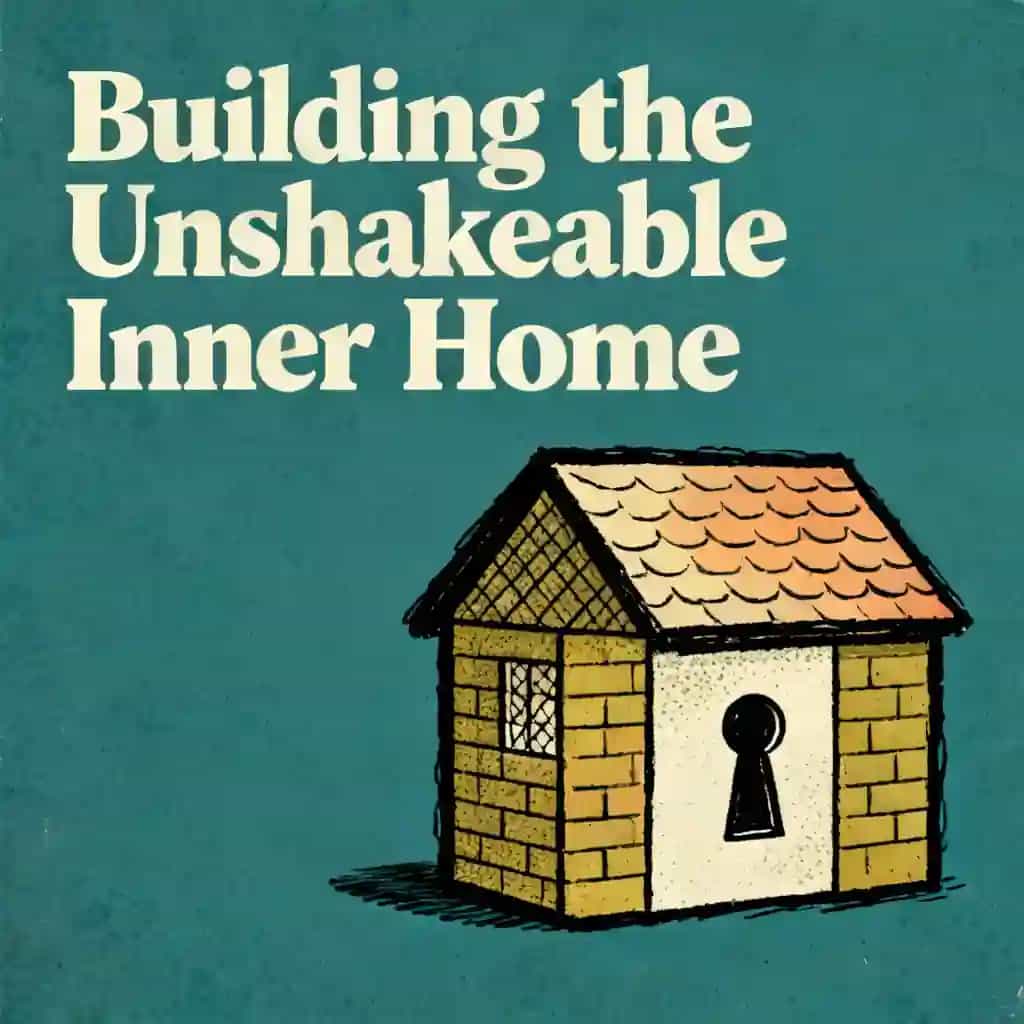
Finding Home Within: A Journey of Self-Discovery
Have you ever felt like you're searching for a place to belong, only to discover that the home you've been seeking has been within you all along? This is the powerful message at the heart of Najwa Zebian's transformative work. As Oprah Winfrey described it, "Najwa's words are a gift to anyone searching for home in themselves." The book has resonated deeply with celebrities like Sophia Bush and Rupi Kaur, who praise its healing wisdom. In a world where many feel disconnected and homeless within themselves, Zebian's philosophy has sparked a movement across social media platforms, garnering millions of followers who find solace in her insights about building an internal sanctuary. What makes this work particularly significant is how it bridges Eastern and Western perspectives on self-love and healing, offering universal wisdom that transcends cultural boundaries while acknowledging the unique challenges faced by those navigating multiple identities.
第2章
The Road to Building Your Inner Home
The journey to constructing a home within yourself begins with understanding that we often mistakenly build our homes in other people. When Najwa received that fateful call from Noah ending their connection because it had become "too intense," the pain she felt went far beyond what their brief relationship warranted. Her reaction wasn't about Noah but about deeper wounds-the feeling of being unworthy of love that stemmed from childhood experiences.
As an eight-year-old girl, Najwa sat alone upstairs while her cousins celebrated downstairs, hearing their exclamations of "Look what I got!" while her heart cried "Why can't I have that?" What she longed for wasn't the gifts but the love, warmth, and belonging they represented. Too young to articulate these feelings, she could only label what she was missing as "that." This early wound shaped her belief that she didn't deserve connection, creating a pattern of seeking home in others rather than building it within herself.
Home isn't a physical place but where your soul belongs-where you're loved for your authentic self without having to work for it. For years, Najwa carried her home in her backpack-her journal-where she retreated when bullied or aching for connection. When she later destroyed that journal in frustration, asking "What's the point if no one hears?" she disconnected from her inner sanctuary. It wasn't until she began writing to empower refugee students whose eyes screamed "I don't belong" that she unknowingly began healing her younger selves.
This healing journey led to her powerful insight, shared in a TEDx talk: "The biggest mistake we make is that we build our homes in other people... when you build your home in other people, you give them the power to make you homeless." Yet despite this realization, when Noah later rejected her, she still felt that childhood wound reopen-still that eight-year-old wondering "Why can't I have that?"
The fundamental shift came when she changed her question from "Why can't I have that?" to "Why don't I have that?"-transforming a statement of impossibility into one of discovery. This subtle change opened the door to building her own path home, breaking down roadblocks into the very bricks that would form her foundation.
第3章
Building a Foundation of Self-Acceptance
Just as a physical house requires a solid foundation to withstand external forces, your internal home must be built on the bedrock of self-acceptance and self-awareness. Without this foundation, you'll feel chaotic and unorganized, constantly looking to others for stability and risking your sense of worth through external validation.
When Najwa was young, a textbook image showed two families: one wealthy but miserable, another poor but happy, captioned "Money doesn't buy happiness-a home does." What makes a home isn't its size or cost but the togetherness of its elements. Without a foundation, she placed the elements of her worth inside others, asking "How could you not see my worth?" when she should have been asking herself that question.
True self-acceptance means knowing yourself as you are, with all your weaknesses and strengths. Many mistake shallow self-acceptance-accepting the image dictated by others-for true self-acceptance. Like when Najwa was teaching, she nearly accepted being silent and reserved because others expected it, though her authentic self knew how to speak up. Through writing, she rediscovered her authentic voice and rejected the silent version of herself that was merely a product of her circumstances.
To discover your authentic self, you must first sit in silence and listen to your inner voice. This voice is likely not your authentic self but your ego-formed from early life experiences and others' opinions about you. Recognize these voices and push them away, affirming that your authentic self transcends time, space, and labels. Your authentic self isn't dependent on surroundings, people, or things, and is worthy of your acceptance.
Growing up, cultural and religious expectations defined what was "appropriate" for Najwa as a woman, and she carried the burden of her reputation and her family's on her shoulders. This shallow self-acceptance-believing that the self others deem "okay" or "good" is who you need to be-erodes your foundation. When you don't know why you believe something, you lack self-confidence and project an image that molds to your environment rather than bringing your authentic self into the world.
The three-step process to discover your authentic self beyond labels begins with writing down how you introduce yourself in different contexts. Then examine each label individually, asking who you are without it and how you feel without using it as self-description. Finally, look inward to feel your core self detached from all labels. This process reveals that self-awareness combined with self-acceptance creates a solid foundation-the only permanent residence guaranteed to you.
第4章
The Practice of Self-Love
Self-love transforms from a buzzword into a daily mindful practice tailored to your unique needs. Like an individualized meal plan, your self-love practice must reflect your specific requirements. The goal is to make self-love an integral part of everyday life rather than an occasional luxury, becoming the CEO of your own life.
Through personal reflection, Najwa discovered she wasn't attracted to Noah but to his pain-she wanted to save him. This pattern of emotional rescue appeared throughout her life: crying over strangers' injuries, being the friend everyone sought for comfort, forgiving those who hurt her. A therapist identified her as an empath-someone who absorbs others' emotions as their own. In the Self-Love room, she learned to balance accepting her empathic nature while protecting her emotional well-being.
One powerful technique involves imagining a protective bubble of power around yourself, creating separation between your empathy and others' emotions. Instead of involuntarily absorbing others' feelings like arrows, you stop them at your bubble's boundary. This allows you to question: Is this emotion mine to carry? Am I being asked to carry it? If yes, do I want to and have the energy to do so? This bubble prevents emotional depletion and protects your empathy.
You can be the most beautiful gem, but in the wrong hands, you'll be devalued. Instead of questioning what's wrong with you when someone doesn't love you, understand it may simply mean they aren't right for you. Stop changing yourself hoping someone will love you-embrace your authentic self, and the right people will respect you for it.
Understanding attachment styles (secure, anxious, avoidant, and anxious-avoidant) helps build relational security. Being secure means expressing your needs even if it risks someone turning away. Your authentic self requires clarity, consistency, and communication-not sacrificing these needs out of fear.
Moving from homeless to at-home requires looking at your conditioning with empathy, not judgment. Instead of asking "What's wrong with me?", ask "What did I go through that taught me to be this way?" This means tracing back your patterns to understand rather than judge yourself. The "Walk in Your Own Shoes" exercise helps you show yourself the same empathy you'd give anyone you love by recalling an experience where you regret your reaction, considering what you'd tell a friend with the same story, and then saying those compassionate words to your younger self.
We often block ourselves from seeing love from sources other than where we're seeking it. Like refusing all water except one specific kind even when desperately thirsty, we reject available love while exhausting ourselves seeking it from unavailable sources. Our ego constantly searches for evidence to reinforce our unworthiness beliefs, interpreting neutral interactions as rejection. But whatever we look for, we'll find-whether positive or negative.
Self-love requires ongoing practice, including giving yourself permission and time to heal. Building boundaries is a practical application of self-love-not about what you're protecting yourself from, but what you're protecting within. Boundaries reflect how much you value yourself, like the protective bubble around your home.
第5章
The Power of Forgiveness
In the Forgiveness room, you learn to cut the chains of pain holding you down. This isn't about the person who hurt you-it's about you letting go. Forgiveness allows you to accept what happened rather than trying to change it.
When pain knocks on your door, you must let it in rather than ignoring it. Resisting pain only makes it knock louder and more persistently, ultimately controlling you. Denying that someone has hurt you badly enough to warrant forgiveness-whether because you think the pain isn't severe enough or because you believe you should be "strong" enough to withstand it-only prolongs your suffering.
Having something to forgive doesn't make you weak or less than others. Many people hide their pain because they're afraid of becoming a burden or a broken record. The journey toward forgiveness often involves facing the death of the person you were taught to be-the person you were convinced would make you happy once you became them.
Forgiving yourself means truly understanding your own story through your eyes. It requires accepting that you'll never again be the person you were before the pain happened. When Najwa judged herself for innocently falling for the attention of someone she admired, she had to remind herself that she wasn't the one who crossed the line first. Healing isn't about erasing trauma-trauma still shows up as an invisible organ beating pain into her veins-but about accepting it when it comes without self-judgment.
Stop trying to become the person you were before your pain-that's looking backward instead of forward. When you break, you see all parts of yourself that needed to be seen. Healing isn't about unbreaking but reconstructing yourself with awareness. Najwa once thought healing meant returning to who she was before her trauma, but she needed to reconstruct instead. This meant giving each part of herself the opportunity to be seen, heard, and loved.
If there could be another name for the Forgiveness room, it would be letting go. It doesn't matter who caused the pain-knowing who to blame won't take it away but only creates resentment. Najwa kept her wounds hidden under a Band-Aid, not allowing them to heal because she wasn't ready to let go. She clung to her pain identity because facing herself without it seemed terrifying-who would she be without this defining pain?
Before coming home to herself, she introduced herself by what had happened to her-a victim of abuse and harassment. Now she defines herself as someone who's survived, rebuilt herself, and actively participates in her own life. Many of us find it easier to live in pain than to live unanchored to something-a memory, a moment, an identity. Letting go means accepting yourself as you are without the pain, without the story, without the labels.
第6章
Compassion: Opening Your Door to Others
In a world of judgment and division, the Compassion room reminds us of three kinds of compassion: toward the world, toward ourselves, and from others. This is the only room where people are allowed in, which inherently involves boundaries. We must be selective about who we welcome, choosing those who display empathy and a desire to help-those who feel with us, not for us.
Being at home with yourself means knowing who to welcome, under what conditions, and when it's time for them to leave. Building boundaries-not just drawing them-is essential. The time taken for self-compassion isn't selfish or taking away from compassion for others; it ensures your compassion comes from a healthy place without depleting yourself.
Before welcoming others, welcome yourself first-you're the host of your home. The people worthy of sitting at your table are those who listen without judgment, who practice compassion, who say "It must be so hard" rather than "How did you not see this coming?" Welcome those who've earned your trust, who feel with you in empathy rather than for you in pity, who amplify your voice when it feels faint, who remind you of your value when you forget it.
When Najwa was first introduced to boundaries, she mistakenly thought they were about changing others' behavior. But boundaries have nothing to do with other people-they're about what she accepts and doesn't accept. You don't build boundaries in reaction to others but around yourself to honor your inner value. It's not about defending jewels from thieves but declaring their value and refusing unauthorized access.
Many mistakenly believe setting boundaries ends at expressing hurt, expecting others' behavior to change. True boundaries aren't validated by others' changed behavior. Instead of asking "Why do they keep hurting me?" ask "Do I accept this in my life?" When you take ownership of your feelings using "I" statements, you dismantle others' power over you.
Emotions are visitors in your home, not permanent residents. While you must acknowledge them when they arrive, don't give them permanent space. When negative emotions like shame or guilt visit, develop a process to welcome them temporarily: "I welcome you. I hear what you're telling me about myself. I acknowledge where it's coming from. I know nothing is fundamentally wrong with me. Now you can leave."
Before welcoming others into your life, truly believe you deserve what they offer. Without knowing your worth, you'll welcome anyone who knocks, equating their interest with your value. When Najwa's friend Stephan asked what she was "open to receiving" professionally, she realized she didn't know what she deserved. Similarly, she felt like a burden when Adam drove two hours just to see her, until she recognized she was rejecting his expression of love because she didn't believe she deserved it.
第7章
Finding Clarity Through Self-Reflection
The Clarity room helps you see yourself clearly by removing the layers obscuring your vision. You enter this room when confusion overwhelms you, when you can't make sense of your experiences. While most seek clarity through others' perspectives, here you'll look through your own eyes-the most important form of clarity that reveals who you are and what you stand for.
In the Clarity room, mirrors surround you, reflecting truths you can no longer hide from. The greatest tragedy isn't when others don't see us clearly, but when we lose sight of ourselves. Layers of who we think we should be obscure our authentic self, creating a blur of fear that we aren't good enough. Living this way turns life into an act where we forget who we truly are, seeking validation from outside approval rather than our inner truth.
To find clarity, Najwa had to unravel how she came to be and recreate a self she could recognize. She questioned everything by asking: "If I had a choice, is this what I would choose?" She confronted painful truths about remaining silent about abuse, waiting for marriage to fulfill her "destiny as a woman," living at home despite wanting independence, and wearing the hijab when she no longer connected with it.
The Blank Canvas Mirror exercise helps you assess your authentic self by visualizing your life as a canvas. The process involves writing down your current life situation, questioning if it truly reflects you, and then imagining what your life would look like if it genuinely reflected your choices. This exercise requires courage to unveil your authentic self beneath societal layers.
When removing the blur between yourself and the mirror, guilt inevitably surfaces. This uncomfortable emotion might tempt you to keep the blur rather than confront it, but guilt is normal when challenging long-held beliefs. Najwa experienced profound guilt when deciding to remove her hijab after wearing it since seventh grade. She felt naked and exposed the first time she walked outside with her hair showing, believing she needed to explain her choice to everyone. Only with time did she understand that what she does with her body is solely her business.
If something doesn't feel right in a way you can't explain, it probably isn't. Your body is trying to tell you something is off. Throughout her situationship with Noah, Najwa always felt something was wrong but didn't listen to her gut-she hoped it was wrong. She mistook the highs and lows of confusion for liking him. Because she hadn't built that home within herself or internalized her worthiness of love, she took his unavailability as a cue to work harder to prove her worth.
When seeking clarity, especially in relationships, we often get lost searching for something that simply isn't there. Step back, distance yourself, and see the bigger picture-getting too close to the mirror exaggerates minor details through the power of your attention. Sometimes people hurt you without considering the pain they cause, but this doesn't necessarily make them bad people. Getting stuck in anger brings no peace, only more pain.
第8章
The Art of Surrender
You enter the Surrender room when emotions knock at your door. By surrendering, you drop resistance to your true feelings and create space to experience them. This reveals your coping patterns with sadness, vulnerability, shame, and anger. Building a home means opening the door to what's happening inside. The goal isn't avoiding negative emotions but learning to dive into them constructively rather than drowning by resisting them.
When emotions knock, most people share common responses: an ache to make pain disappear, resistance to feeling it, and self-judgment for not healing faster. These reactions create blocks that prevent actually processing the emotion. It's like building a dam against an emotional river-the higher the dam, the more intense the blocked emotions become, creating emotional debt. Instead, have tea with your pain. Let it in rather than letting it knock harder and louder.
Emotional debt accumulates when we leave unresolved pains and traumas without experiencing the emotions they demand us to feel. Understanding emotions requires recognizing that feelings are the conscious products of meanings your brain attaches to emotions, while emotions themselves can be experienced consciously or subconsciously. When your body experiences an emotion but your mind doesn't assign meaning because you never took time to understand what's happening inside, the emotion persists and eventually controls you.
Negative emotions often feel familiar and predictable, making them seem safer than positive ones which can feel risky and dangerous. This stems from the fear that we might not deserve positive experiences. We tend to choose negative emotions when they're what we know-like those from broken homes falling into abusive relationships because the pattern feels familiar.
Surrendering means accepting reality as it is rather than how you think it should be. Najwa realized her attachment to men who offered nothing came from her ego and the story she told herself about being unworthy. With Adam, she confronted her resistance to vulnerability when he asked how she could get attached to someone who didn't want her. The truth was painful: she felt she had let herself down, experiencing humiliation and shame that she masked by focusing on Noah's faults.
We often dwell on those who abandoned us while pushing away those who hold on to us-not out of fear, but because stability feels unfamiliar. We're attracted to people who make us beg for belonging because earning that place feels like a familiar path to happiness. But true happiness comes from choosing to leave that storyline behind and recognizing that being at home with yourself matters more than being welcomed into someone else's home.
第9章
Nurturing Your Dreams and Aspirations
In the Dream Garden, you'll water your dreams while resisting societal pressure to reach benchmarks by certain ages. Rather than "fake it till you make it," you're urged to live authentically in a world that insists there's only one path to success. This room invites you to start living your dreams rather than just planning them.
The seemingly innocent childhood question "What do you want to be when you grow up?" begins our obsession with needing to know our future. As a child, Najwa wanted to be a teacher like her parents. After moving to Canada, she temporarily abandoned her teaching dream when her parents pushed her toward dentistry. She accepted a Science program over Social Studies to please them, only to discover later her grades weren't high enough for dental school. Reflecting on her favorite university courses, she realized education would allow her to combine activism, storytelling, and creativity. Five years ago, she would have predicted a simple future as a full-time teacher with a family, never imagining the much bigger dream she's now living.
Sometimes we blind ourselves to truths right in front of us by wearing shades that limit our potential. Had Najwa not opened her eyes to her own potential, she would have dismissed opportunities like speaking engagements as distractions from her teaching dream. Instead, she chose to see them as teaching in a bigger classroom-the classroom of the world.
You don't have to have your dream figured out before you live it out. While setting goals is important, becoming fixated on a specific vision creates a box around yourself. The "how" can't be figured out before you start, and there's no guarantee you'll reach your initial goal. The best stories are unplanned and unique. If Najwa had been fixated on teaching, she wouldn't have compiled her writings or learned to self-publish.
Don't imitate others hoping to achieve their apparent success or happiness. Being at home with yourself eliminates the perceived need for certain wealth, fame, or admiration. Comparison always leaves someone with "more" and someone with "less," and without a strong foundation of self-acceptance, you'll feel that you are less, not just have less. Why enter your Dream Garden only to mold yourself into someone else's dream?
Many believe transitioning between dreams makes previous efforts a waste of time. But like learning languages, where skills from your first language help acquire a new one, dreams work similarly. Throughout life, you gain transferable skills-organizational, analytical, managerial-useful across diverse contexts. Najwa went from teaching in a classroom to teaching the world about healing, applying her education training to writing.
第10章
The Journey Home to Yourself
Listening to yourself isn't a separate room but an integral part of every room in your home. It's an art that amplifies your thoughts and emotions, allowing you to separate your true self from the voices within. You are not who these voices tell you you are. By becoming the listener and watcher over them, you disarm their power.
There are three types of silence: the silence you give others when listening to them, the silence you express to others when you want them to listen to you, and the silence you experience within yourself. While the first two types focus on others, the third type is most important for building your home within. In this internal silence, you can finally hear the voices within you-even negative ones-and talk back to them.
Your ego sounds like a broken record that confines you with labels and fear, while your authentic self is the watcher of your thoughts. Najwa deals with her ego like a child having a tantrum-she observes it and chooses whether to follow it. When you listen to your ego, you disarm it by bringing it into awareness. Your authentic voice is the most powerful, but if you drown it out with other voices, you won't recognize it anymore.
Throughout her journey home, Najwa practiced listening to herself in different ways. After things ended with Noah, she caught her ego trying to tell her she was unworthy, but bringing that voice into awareness prevented her from believing it. Before her TEDx talk, she listened to her heart telling her to speak authentically rather than following a script. In the Self-Love room, she discovered meditation wasn't about immediate relief but understanding through listening to herself.
You've built your own home, or perhaps you're still under construction-and that's okay. Wherever you are in your journey, you've taken ownership of your healing. The hardest part is already accomplished, so keep building. While your home is under construction, you'll experience many changes-like a caterpillar becoming a butterfly, you're turning all you already are into a beautiful masterpiece.
Expect people from your past to question where the old you has gone. Remember that even after building your home, the work isn't done-you must maintain it just as you would a physical home. You might have setbacks, but since you've built your foundation, coming home will be easier. The profound realization is that home is you-not who your mind tells you you are or your past pains, but your authentic self, like the deep place in an ocean unaffected by surface currents.