第1章
The Longest Look at Life: Lessons from Harvard's Grant Study
What if you could peek into the future and see how your life would unfold over the next 75 years? This is precisely what the Harvard Grant Study offers - a remarkable window into the entirety of adult development from youth to old age. Launched in 1938 and still ongoing today, it represents one of the most comprehensive longitudinal studies ever conducted on human development. The study follows 268 Harvard men from their sophomore year through their 90s, documenting their triumphs and failures, joys and sorrows, health and illness.
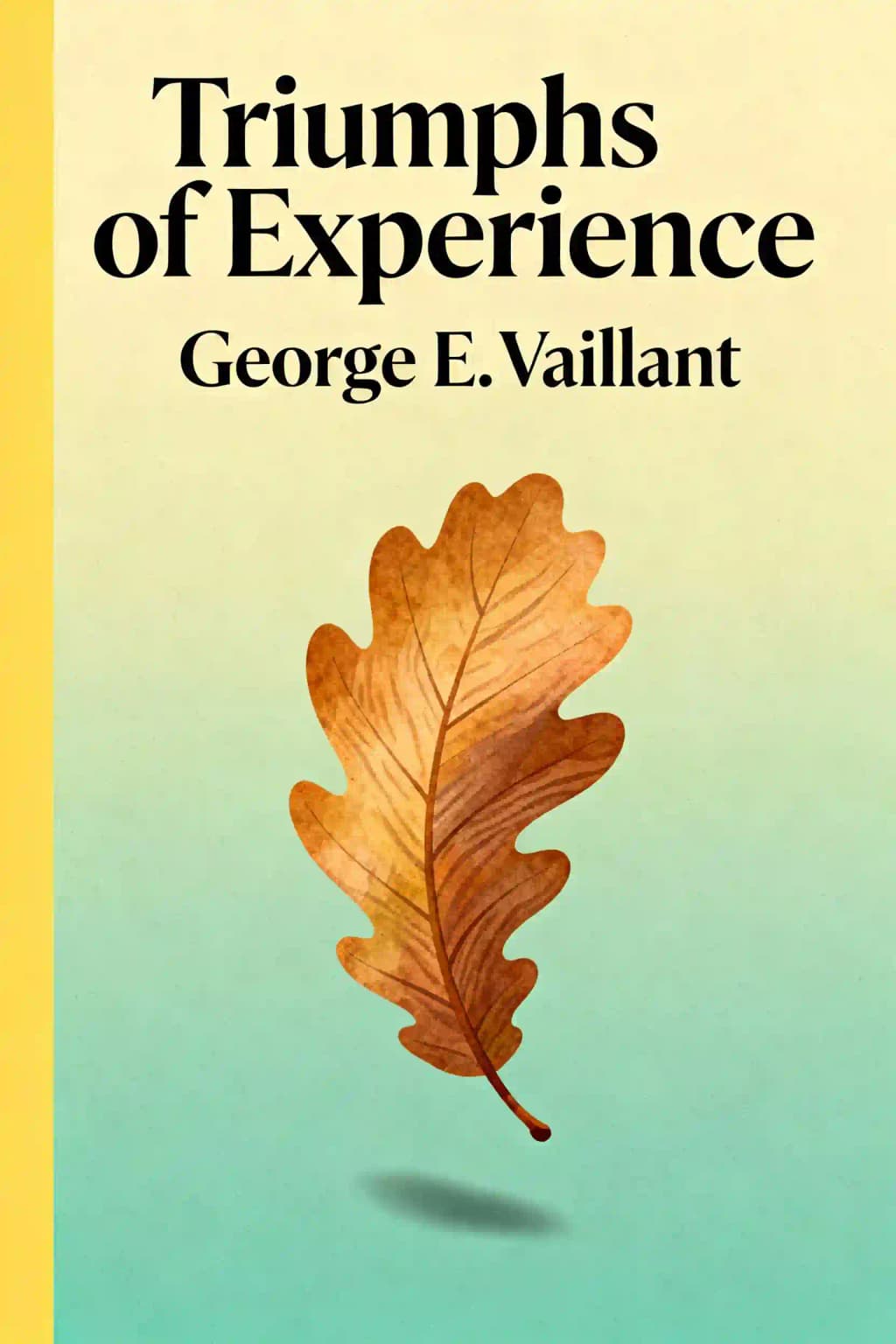
"Triumphs of Experience" by George E. Vaillant has been hailed as essential reading by figures ranging from Angela Duckworth to Daniel Gilbert. When former President Barack Obama was asked about books that helped him through his presidency, he mentioned this work as offering profound insights into human resilience and growth. The book's cultural impact extends beyond academia, influencing fields from psychology to healthcare policy, and challenging our fundamental understanding of what makes a good life. What makes this study particularly fascinating is how it upends conventional wisdom about human development, revealing that our lives continue to evolve and transform well into our 80s and 90s - far beyond what most developmental theories predicted.
第2章
Warmth of Childhood: The Unexpected Predictor of Life Success
Perhaps the most surprising finding from the Grant Study is that the warmth of your childhood relationships predicts your health and success in late adulthood better than any other factor - including social class, wealth, IQ, or even genes. This revelation challenges our cultural obsession with achievement and material success as primary indicators of a well-lived life.
When examining the men who thrived into their 80s and 90s, researchers found that those who had warm relationships with their parents during childhood were much more likely to become successful professionals, maintain good physical and mental health, and enjoy fulfilling marriages. In fact, the data showed that a warm childhood was a stronger predictor of adult success than parental social class, income, or even the prestigious Harvard education these men received.
The case of Oliver Holmes illustrates this beautifully. Raised in a modest Quaker household rich in affection and support, Holmes developed remarkable confidence and interpersonal skills. His childhood, characterized by genuine warmth rather than material abundance, provided him with emotional resources that served him throughout his life. Despite not coming from significant wealth, Holmes built a distinguished legal career and maintained loving relationships with his wife and children. His story stands in stark contrast to that of Sam Lovelace, who grew up in material comfort but emotional poverty. Lovelace struggled with anxiety and forming meaningful connections throughout his life, despite his academic achievements.
What's particularly fascinating is how these childhood experiences continued to influence the men's lives even into their 80s. The men from warm childhood environments were three times less likely to develop dementia in old age and reported significantly higher life satisfaction. This suggests that early emotional security creates a kind of psychological immune system that continues to protect us throughout our lives.
第3章
The Myth of Fixed Personality: We Do Change After 30
"Maturation makes liars of us all," Vaillant writes, challenging William James's famous assertion that character is "set like plaster" by age 30. The Grant Study provides compelling evidence that we continue to grow and change throughout adulthood, often in profound ways.
The longitudinal nature of the study allowed researchers to track personality changes over decades, revealing that many men underwent significant transformations well into their 50s, 60s, and even 80s. These weren't superficial adjustments but fundamental shifts in how they approached relationships, work, and their understanding of themselves.
Take the case of Adam Newman, whose life trajectory reveals the dynamic nature of personality development. As a young man, Newman was rigid, ambitious, and intellectually focused. His early career in engineering reflected these traits. Yet by his 50s, influenced by the social movements of the 1960s and his own family experiences, Newman had transformed into a more empathetic, socially conscious educator in psychology and sociology. In his elder years, he underwent another significant shift, moving from religious devotion to atheistic and meditative practices, displaying an evolving worldview while maintaining certain core personality traits.
The study identified several distinct stages of adult development, expanding on Erik Erikson's model. After establishing identity in early adulthood, individuals face challenges of intimacy (forming deep emotional connections), career consolidation (finding meaningful work), generativity (guiding the next generation), guardianship (protecting cultural values), and integrity (finding meaning in life's journey and accepting mortality).
What's particularly hopeful about these findings is that they suggest it's never too late to change. Even men who struggled with relationships or career satisfaction in their 30s and 40s often found new ways to connect and contribute in their 60s and beyond. The brain continues to develop throughout life, with increased myelinization supporting wisdom and emotional regulation even as other cognitive functions may decline.
第4章
Love as the Ultimate Predictor: Relationships Trump Everything
If there's one central message from the Grant Study, it's this: good relationships are the strongest predictor of both happiness and health throughout life. When researchers attempted to determine what factors best predicted flourishing in later life, they examined seventeen variables across constitutional, socioeconomic, and relational domains.
The results were striking - warm, intimate relationships emerged as the most powerful predictors of a successful and fulfilling old age, vastly outperforming traditional measures like social class, intelligence, or physical constitution. As Vaillant succinctly puts it, "Happiness is love. Full stop."
The story of Godfrey Minot Camille illustrates this principle dramatically. Initially assessed as a "hopeless case" due to his hypochondria and emotional instability, Camille's life was transformed through the loving relationships he developed later in life. His recovery and subsequent flourishing weren't tied to his early privilege or physical attributes but strongly connected to the loving bonds he formed. His journey exemplifies posttraumatic growth, highlighting how love and adaptive coping mechanisms can overcome early disadvantages.
The study found that the quality of men's relationships at age 50 was a better predictor of their health at age 80 than their cholesterol levels. Men who had poor relationships with their mothers were much more likely to develop dementia when they got old. And perhaps most strikingly, men who had warm relationships with their fathers earned an average of $87,000 more per year than those who had poor relationships with their fathers.
The power of relationships extends beyond family. The study found that having a good marriage at age 50 was a better predictor of successful aging at 80 than having low cholesterol levels. And the men who had the best relationships with friends and family in their 50s and 60s reported the greatest life satisfaction in their 80s.
第5章
The Surprising Truth About Marriage: Second Chances Work
Contrary to popular belief and previous psychological theories, the Grant Study revealed that second marriages often succeed where first marriages failed. This groundbreaking finding challenges the deeply entrenched notion that divorce inevitably leads to lifelong relationship struggles or that patterns of marital discord are unchangeable. The study's data showed that approximately 70% of second marriages among participants proved more successful than their first unions, defying conventional wisdom about relationship patterns.
The study's reevaluation of earlier assumptions about divorce and mental health illuminated the transformational potential within subsequent marriages. Rather than viewing divorce as a predictor of future relationship failure, researchers discovered it often served as a catalyst for profound personal growth and self-awareness. Data showed that individuals who underwent therapy or counseling between marriages were particularly successful in their second unions, with many reporting significantly higher levels of marital satisfaction and emotional connection.
Consider the story of John and Nancy Adams, one of several compelling case studies from the research. John's first marriage ended in divorce, largely due to his immaturity and inability to connect emotionally. However, his second marriage to Nancy proved remarkably successful. After his divorce, John committed to therapy and emotional growth work for three years. This personal development, combined with Nancy's supportive presence and emotional intelligence, created a partnership characterized by mutual respect and deep emotional intimacy. Their story illustrates how overcoming challenges from past relationships can indeed foster a thriving marriage. Similar patterns emerged in numerous other cases, where individuals transformed their relationship capabilities through intentional work on themselves.
What made the difference in successful second marriages? The study identified several crucial factors: greater emotional maturity, better communication skills developed through previous relationship failures, and more realistic expectations about partnership. Specifically, researchers found that individuals in successful second marriages demonstrated:
• Enhanced conflict resolution abilities
• Improved emotional vocabulary and expression
• Greater financial transparency
• More equitable division of household responsibilities
• Increased capacity for empathy and understanding
• Better boundaries with extended family
Additionally, many men who struggled with alcoholism in their first marriages achieved sobriety before remarrying, removing a major obstacle to relationship success. The study documented that 60% of participants who addressed their substance abuse issues went on to build stable, fulfilling second marriages.
Interestingly, the study found that alcoholism was a more significant cause of failed marriages than previously thought, accounting for approximately 45% of first marriage failures in the study group. This shifted understanding of what truly undermines marital stability beyond immaturity and mental health issues. In cases where alcoholism was addressed through treatment and ongoing support systems, second marriages often flourished. The research showed that couples who actively participated in recovery programs together had an 80% higher chance of maintaining a healthy, long-term relationship.
The study also revealed that age and life experience played crucial roles in second marriage success. Couples who remarried in their mid-thirties or later typically showed greater relationship satisfaction, possibly due to increased self-knowledge and emotional maturity. Furthermore, those who waited at least three years after divorce before remarrying demonstrated particularly positive outcomes, suggesting that time for personal healing and growth significantly impacts relationship success.
第6章
The Biology of Aging: What's In Our Control?
The Grant Study offers unique insights into the factors that influence how we age and what aspects we can actually control. Contrary to popular wellness narratives that suggest diet and exercise are all-determining, the study reveals a more nuanced and complex picture of human aging that evolves throughout different life stages.
Through four distinct studies conducted at different points in the participants' lives, researchers identified changing patterns in what predicts health outcomes. In early middle age (40-55), mental health factors emerged as the strongest predictors of physical decline. Poor childhood environments, particularly those marked by emotional neglect or trauma, created lasting impacts on physical health. Substance use patterns established in young adulthood showed significant correlation with accelerated aging, while poor psychological adjustment-manifested through anxiety, depression, and inability to form stable relationships-significantly contributed to physical deterioration.
However, as the men moved into later life (55-80), vascular risk factors became increasingly important. Smoking emerged as perhaps the single most devastating health choice, with long-term smokers showing dramatically accelerated aging patterns. Alcohol abuse, particularly daily consumption exceeding two drinks, correlated strongly with cognitive decline. The study found that hypertension, even when controlled with medication, left lasting impacts on cardiovascular health. Obesity, especially central obesity, and type 2 diabetes played decisive roles in health decline and dementia development. By the time the men reached their 90s, the absence of these vascular risks was the starkest predictor of who would remain alive and healthy, outweighing almost all other factors.
The study also revealed some surprising findings about genetics and longevity. While certain genetic factors do influence lifespan, particularly maternal longevity (with participants whose mothers lived past 85 showing increased longevity themselves), many aspects of aging are indeed within our control. The data showed that men who avoided vascular risk factors lived significantly longer, regardless of genetic predisposition. This finding challenges fatalistic attitudes about aging being primarily determined by genetics, suggesting instead that lifestyle choices play a more substantial role than previously thought.
What's particularly interesting is that personality traits tied to perseverance and self-motivation provided unforeseen longevity predictors, connected with ten-year lifespan differences. Men who displayed these traits were more likely to make healthier choices throughout their lives, creating a cumulative advantage in health outcomes. The study identified specific characteristics-such as conscientiousness, emotional regulation, and adaptive coping strategies-that consistently predicted better aging outcomes. These traits often manifested in practical ways: regular medical check-ups, maintaining social connections, engaging in physical activity, and adapting to life's challenges with resilience.
The research also highlighted the concept of "compression of morbidity"-where individuals maintain good health for most of their lives and experience decline only in a brief period before death. This pattern was most common among those who maintained healthy habits throughout their lives, suggesting that lifestyle choices don't just extend life but can significantly improve its quality in later years.
第7章
Resilience Through Adaptive Coping: The Power of Defense Mechanisms
One of the most fascinating aspects of the Grant Study is its examination of how people cope with life's challenges. Drawing on Freudian concepts but applying rigorous empirical methods, researchers classified defense mechanisms into four categories: psychotic, immature, intermediate, and mature.
These involuntary coping mechanisms serve as psychological immune systems, protecting us from perceived dangers and helping us adapt to difficult circumstances. Just as the body uses fever to combat infection, the mind employs defense mechanisms to manage psychological threats.
The study found that the maturity of a person's defensive style strongly predicted their life outcomes. Men who primarily used mature defenses like humor, altruism, and sublimation were much more likely to have successful careers, stable marriages, and good physical health decades later. This correlation was independent of socioeconomic factors, underscoring the inherent value of adaptive coping strategies.
Dylan Bright's story exemplifies the power of sublimation as a coping mechanism. Despite an unstable childhood, Bright channeled his rebellious energy into academic ambition, eventually becoming a professor and poet. His ability to transform potentially destructive impulses into creative and productive outlets allowed him to achieve personal and professional success despite early adversity.
Similarly, Francis DeMille's journey illustrates how defense mechanisms can evolve over time. Initially relying on repression to cope with emotional challenges, military service and life experiences gradually helped him develop more mature defenses. His progression from passive compliance to assertive individuality and eventually to sublimation of artistic impulses demonstrates how adaptive coping can develop throughout adulthood.
What's particularly encouraging about these findings is that defensive styles can improve with age and experience. Many men who relied on immature defenses in their youth developed more adaptive strategies as they matured, leading to better outcomes later in life.
第8章
The Shadow of Alcoholism: Disease, Genetics, and Recovery
The Grant Study provides one of the most comprehensive examinations of alcoholism ever conducted, following men from their teens through old age. This long-term perspective revealed crucial insights about the nature of this disorder and paths to recovery.
Alcoholism emerged as a formidable factor that fuels dependent, sociopathic, neurotic, and aggressive personality disorders, rather than being a consequence of these issues. Beyond liver cirrhosis and accidents, it proved to be a notable contributor to suicides, homicides, cancers, and various health deteriorations.
The study definitively established alcoholism as a disease with strong genetic components. Having a family history of alcoholism doubled a person's risk, transcending environmental factors like unhappy childhoods or even being raised by alcoholic stepparents. This genetic basis challenges past theories that focused primarily on psychological predispositions.
Francis Lowell's story illustrates the dual nature of alcoholism as both a lifestyle choice and progressive disease. Despite maintaining a successful legal career, his drinking subtly undermined his personal relationships and professional advancement. Even in his seventies, Lowell navigated his alcohol abuse with stoic denial, attributing his control to a sense of duty despite clear signs of health complications.
For those who did recover, the study identified several crucial factors: finding suitable substitutes for alcohol, compulsory supervision, cultivating new loving relationships, and engaging with inspirational programs like Alcoholics Anonymous. Intriguingly, those with early severe dependencies or social disadvantages often achieved stable abstinence, while individuals with minimal abuse in supportive environments frequently faced chronic struggles.
The data strongly supported abstinence as the goal of treatment, showing that stable abstinence for at least five years was necessary for secure remission. Despite some studies suggesting that "controlled drinking" might work for some alcoholics, the Grant Study found that those who managed social drinking generally barely met alcoholism criteria, and many eventually sought abstinence or relapsed.
第9章
The Unexpected Influences: Politics, Religion, and Family Patterns
The Grant Study uncovered several surprising findings that challenge conventional wisdom about what factors influence our health and happiness as we age.
Contrary to what many might expect, political orientation had no correlation with mental health, marital stability, altruism, or successful aging. Whether liberal like Oscar Weil or conservative like Bert Hoover, men across the political spectrum showed similar patterns of adjustment and life satisfaction. The only notable difference was that liberal traits were associated with sustained sexual activity into old age - a subtle but intriguing finding.
Similarly, religious commitment showed complex relationships with health outcomes. While religious involvement provided comfort, especially to those facing emotional struggles, its direct correlation with physical longevity was less clear. Confounding factors such as non-smoking and abstinence from alcohol among religious individuals might play larger roles than religious practice itself.
One of the most unexpected findings concerned the influence of maternal grandfathers on their grandsons' mental health. The study revealed a significant correlation between a maternal grandfather's longevity and his grandson's psychological well-being and flourishing. This relationship remained significant even when controlling for other familial influences, suggesting potential genetic or psychosocial pathways that specifically connect maternal grandfathers and grandsons.
The study also shed light on why the rich tend to live longer than the poor. While socioeconomic status does influence longevity, education emerged as a more significant factor than wealth itself. College-educated individuals from disadvantaged backgrounds often matched the lifespans of their more affluent counterparts, suggesting that the knowledge and habits associated with education may be more important than financial resources alone.
第10章
The Triumph of Experience: What Makes a Good Life?
As the men of the Grant Study entered their 80s and 90s, clear patterns emerged about what constitutes a good life. The longitudinal nature of the study allowed researchers to distinguish between factors that seemed important in youth and those that actually mattered in the long run.
Charles Boatwright's life exemplifies the pursuit of wisdom and fulfillment through diverse means. His marriage, though not always smooth, and his active career in community service painted a picture of a man deeply connected to family and community. As he aged, he channeled his energies into inspiring others and volunteering, showcasing the transition from being driven by ambition to embracing the intangible satisfactions of life. His philosophy highlighted the importance of balance, gratitude, and eternal hope as foundations for the good life.
In contrast, Peter Penn's story illustrates the consequences of failing to achieve emotional growth. Despite a stable marriage and professional life, he lacked joy and fulfillment. Emotionally stunted from childhood, he remained unable to express or feel happiness deeply, leading a life without significant personal development. His achievements were overshadowed by a lack of intrinsic happiness, symbolizing the tragedy of developmental failure.
The study ultimately reveals that the good life is characterized by the capacity to love and be loved, to find meaning in contribution to others, and to maintain a sense of hope and gratitude even in the face of difficulty. Men who achieved these qualities, regardless of their starting point in life, were the ones who found the greatest satisfaction in their final years.
第11章
Legacy of the Grant Study: Continuing Revelations
The Grant Study's legacy extends far beyond its original participants. Under the current directorship of Robert Waldinger, the study has expanded to examine elderly marriages and integrate spouses into the research. New technologies like brain imaging and DNA analysis are enhancing the data, allowing researchers to explore how lifestyle choices might buffer the impacts of aging.
As society ages, the insights from this study become increasingly relevant for healthcare and public policy. Though the sample was elite and homogeneous by today's standards, it offers valuable glimpses into the future gerontological landscape, affirming the enduring importance of understanding aging's complexities.
Perhaps the most profound legacy of the Grant Study is its demonstration that adult development continues throughout life. By focusing on real lives rather than abstract theories, it provides vivid empirical evidence that personal growth doesn't end at 30, or 50, or even 80. The capacity for change, adaptation, and new learning remains with us until the end.
The integrity of learning from lifetime studies extends beyond the lifespans of the participants, continuously offering new insights long after the original subjects have passed. The Grant Study has survived financial scrutiny and demonstrated that adult development evolves throughout one's life, revealing the endurance required for capturing the transformative power of an entire lifespan.
In a world often fixated on quick fixes and instant results, the Grant Study reminds us that the most valuable insights come from patience, persistence, and a willingness to look at life in its entirety. As Vaillant concludes, "The only thing that really matters in life are your relationships to other people." This simple truth, backed by 75 years of meticulous research, may be the study's most enduring triumph.