第1章
From Farmboy to War Hero: The Extraordinary Journey of Audie Murphy
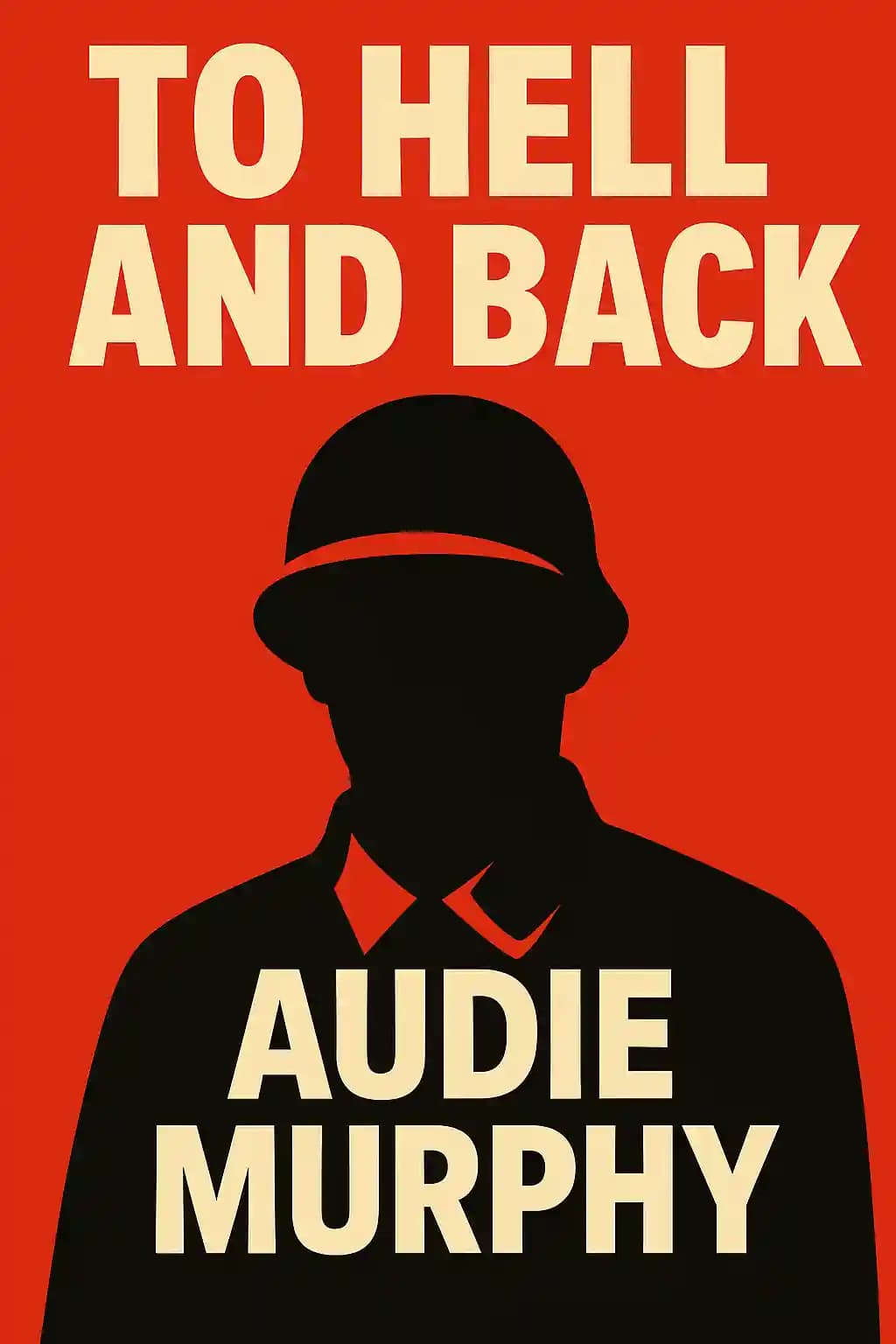
Imagine waking up in a frozen foxhole, your body wracked with malaria, yet knowing you must return to the frontlines or be forever branded a coward. This was the reality for Audie Murphy, America's most decorated World War II soldier, whose memoir "To Hell and Back" has captivated generations since its publication. The book, which later became a hit film starring Murphy himself, offers a raw, unflinching account of combat that Ernest Hemingway praised as "one of the finest American war memoirs ever written." Beyond its literary merit, Murphy's story represents the quintessential American narrative-a poverty-stricken Texas farmboy who became a reluctant hero through extraordinary courage and determination. His experiences continue to resonate with modern military personnel, with copies of his memoir still distributed to soldiers in combat zones today as a testament to resilience under unimaginable pressure.
第2章
The Crucible of Combat: Anzio Beachhead
The men of the Third Division found themselves trapped in the hellish conditions of the Anzio beachhead, where death became as commonplace as breathing. A doomlike quality permeated everything-the howling wind, the endless mud, and especially the hollow stares of the soldiers. With Beltsky evacuated due to a shell wound, Murphy reluctantly assumed leadership of the platoon. The veterans clung together, instinctively suspicious of replacements until they proved their mettle.
When Jackoby arrived with a defiant attitude, refusing Murphy's order to help bury rotting cow carcasses, Murphy beat him into submission. Jackoby threatened to report him, but Kerrigan's response captured their grim reality: "We left regulations in the rear. They were too goddamned heavy to carry." This wasn't a war of rulebooks and protocols-it was about survival.
The relentless rain transformed their position into a sea of mud. Men crouched in ankle-deep water in their foxholes, using ration cans as makeshift toilets. The constant shelling collapsed their dugouts, forcing them to repeatedly dig themselves out. Illness spread like wildfire-stomachs turned sour, the stench of vomit permeated everything, and diarrhea became a common enemy. One night, Snuffy passed out drunk on watch from scavenged wine, forcing Murphy to man his machine gun.
Resignation and futility consumed them. They could neither advance nor retreat without endangering the entire beachhead. Rumors spread that the British were abandoning them or that Germans were preparing a major attack. Then tragedy struck-Smathers, a well-liked soldier engaged to a girl from Toledo, was accidentally shot dead by the jumpy Gates while on outpost duty. Gates became inconsolable, insisting Smathers was still talking after being shot. When the grave detail arrived, they callously referred to their job as "packing meat," a stark reminder of how death had become routine. Murphy marked Smathers' magazine pages about homes and gardens for his personal effects, remembering how they'd teased him about his post-war dreams of domestic bliss.
第3章
Between Life and Death: Finding Humanity in Hell
Despite constant bombardment from planes and enormous railroad guns, the beachhead grew stronger as boats brought precious cargo of men and equipment. At night, armor rumbled into hiding places under camouflage nets while frightened replacements dug in, awaiting the inevitable German counterattack.
The rain that cursed them also turned the earth into swampland where enemy armor floundered. From their ruined house observation post, Murphy spotted twenty German tanks one morning. His hands trembled as he called in artillery coordinates. Their shells initially fell short, but he corrected the fire until one tank was hit. He picked off a fleeing crewman with his Garand but dared not shoot more for fear of revealing their position.
That night, Murphy led a patrol with Brandon, Kerrigan, Snuffy, and the newly cooperative Jackoby to disable the abandoned tank. Armed with rifles and antitank grenades, they approached the vehicle, which still had a light burning inside. Murphy's Molotov cocktails failed when the fuses proved faulty. Hearing German voices, he quickly lobbed a grenade through the open manhole and blasted off the treads with rifle grenades. Enemy machine guns opened fire, and they fled back to safety.
The monotony of static warfare drove men to strange behavior. Kerrigan composed poetry that Snuffy set to a folk tune about Anzio where "hell is six feet deep." To escape the tedium, they volunteered for dangerous patrols. One misty night, intelligence requested prisoners, so Berner, Kohl, Kerrigan, and Murphy set out. They tracked Germans to a hut by their tobacco smoke, and Kohl called for their surrender in German. When they didn't respond, they threw grenades through the window. Inside, Murphy found a mortally wounded man who died as he pulled him from a hole in the floor.
Amid this brutality, moments of humanity emerged. When Murphy's body finally gave out, and he collapsed in the mud, he woke in a hospital tent where he met Helen, a remarkable nurse with bright blonde hair and blue eyes. Despite his surly defenses, she broke through with her candor and skill. She called him "Irish" and shared her own childhood nickname-"Droopy-drawers"-which shattered his resistance. They connected through their shared experiences of hardship; his poverty as a child and her escape from the monotony of civilian life. Helen revealed she joined the nurses corps to find meaning beyond cocktail parties and "shabby romances." When Murphy left to return to the lines, they said goodbye with their childhood nicknames, a brief moment of tenderness in an otherwise brutal world.
第4章
The Changing Seasons of War
Spring arrived at the Anzio beachhead, bringing green life to the ruined landscape. When the guns fell silent, birdsong filled the air. A cherry tree near their command post blossomed, its cycle from bud to fruit a stark contrast to their grim surroundings.
Kerrigan, moved by the sight, composed another song about having "cherries on Anzio; Cherries, yes; but women, no." Brandon preferred to contemplate April in Kentucky. His ten-year-old daughter wanted to cut off her pigtails-a seemingly trivial concern that deeply mattered to them all. Through months of war, the image of this innocent child with braids and freckles had reminded them that somewhere, purity still existed. They gathered around Brandon as he read her letter aloud, momentarily transported from their hellish reality.
Horse-Face, claiming not to be sentimental, launched into an outlandish tale about an Apache woman with knee-length braids, sheep's blood, and ghostly encounters that left young replacement Flack bewildered. The platoon rested in the spring sunshine, hope returning with the season. The beachhead bristled with accumulated power as they prepared for an all-out attack, eager to end the war before another winter.
The platoon had been strengthened with replacements. Flack, a pale boy who looked too weak to lift a rifle, volunteered eagerly for patrols and worked with quiet thoroughness. His mother drove his ambition-disappointed he entered the army as a private, she was certain he'd eventually be commissioned.
Valero, a tough Italian from Chicago's slums, was a born soldier-nerveless and merciless in battle, his face lighting with savage joy when firing, yet friendly as a shaggy dog with fellow soldiers, calling everyone "Pal." His favorite was meek Constantino, whom he constantly volunteered for dangerous missions, saying, "I got to look after him."
Bergman, a redheaded Swede from Minnesota who forgot his "h's," threatened to quit during military foul-ups but never did. Muscular as a young ox, his irony tempered his quick temper, and his capacity for punishment was matched only by his thirst for cognac.
In late May, their vast operation began. Night after night, every cannon on the beachhead pounded enemy positions. The Germans responded furiously at first, falling into the trap of expending precious ammunition while the Americans remained under cover.
第5章
Breaking Through: The Road to Rome
Rome, their long-dreamed objective during the bitter Anzio months, brought only indifference when they finally reached it. The eternal city, which had sustained their hopes through months of brutal combat, now seemed hollow and meaningless. They pitched tents in a sprawling public park, collapsing onto their bedrolls without even removing their mud-caked boots. They slept for nearly twenty hours straight until life slowly returned to their exhausted bodies. Despite previous elaborate plans for celebration and revelry, they wandered the ancient streets like ghosts, finding no satisfaction in the victory, feeling like men briefly reprieved from death but unable to shake its shadow.
Snuffy recovered first, his coping mechanism manifesting in a desperate search for alcohol. He sneaked out to gather wine, methodically burying bottles beneath his blanket, drinking steadily even during the night. His drunkenness triggered an intense religious fervor - tearfully confessing his unworthiness and begging Kerrigan to repent while clutching his rosary. The spiritual crisis intensified each night until Kerrigan, after repeated warnings and attempts to calm him, finally knocked him unconscious with a swift right hook. Three men were needed to drag him to his tent where he slept for two full days, emerging subdued but somewhat restored.
As battle lines pushed northward, rear echelons poured into Rome, their crisp pressed uniforms and carefree gaiety stirring deep resentment in those who still smelled of mud and death. The contrast between the combat veterans and support troops became increasingly stark. This tension finally erupted when a group of drunken air corps men approached their table at a small cafe near the Colosseum. When one particularly boisterous officer asked how it felt to kill a man while childishly mimicking machine gun fire, Kerrigan's patience snapped. The confrontation escalated rapidly after Kerrigan and Snuffy began mockingly singing "Junior Birdmen" at full volume, leading to a full-scale brawl that sent bottles, chairs, and bodies flying until Military Police arrived to break it up.
Rome gradually lost what little meaning it held for them. Elleridge, a bespectacled schoolteacher replacement who hadn't seen combat, attempted to lecture them on the city's historical significance. His romantic notions about ancient Rome and enthusiastic references to Caesar and Cicero clashed harshly with their war-weary cynicism. They found it impossible to appreciate marble monuments while still haunted by the faces of fallen comrades. As twilight fell each evening, they gathered in small groups to drink local wine and sing songs of home - "Don't Sit Under the Apple Tree," "I'll Be Seeing You," and other melodies that stirred buried memories and unexpected tenderness. This routine continued until orders came to move out. Within weeks, they learned they were bound for Operation Dragoon - the invasion of southern France - where they would once again face the German army on yet another battlefield.
第6章
The Third Front: Invasion of Southern France
The invasion of southern France unfolded with machine-like precision, facing lighter resistance than previous landings. With German forces already battling Allied advances in northern France and the Russians on the eastern front, they represented the third front-like someone climbing through a trap door as the enemy frantically guarded both main entrances.
As their landing craft approached "Yellow Beach," Murphy studied the terrain beyond the mist-covered farmlands and green hills. The battleships had pounded the shore, and now rocket boats fired salvos to detonate mines and blast barbed wire. Standing in their boat, he felt the familiar fear gripping his guts and tried distracting himself by observing his seasick comrades. Suddenly seeing the comedy in their situation-small men facing an indifferent universe-he laughed, but his attempt to lighten the mood with singing fell flat.
They waded ashore through swirling water as German guns cracked from the hills. The beach was mined, causing casualties as they moved cautiously toward cover. They advanced through vineyards and farmlands, encountering scattered resistance. Valero coolly shot a fleeing German, commenting he "shoulda got him wid de first burst."
Murphy's company was assigned to neutralize an enemy strongpoint on a wooded hill. As they advanced, automatic fire pinned down his platoon. He found Valero bending over the dying Constantino, who made him promise to visit his mother. After Constantino died, Valero, face hardened with rage, charged forward only to be killed himself. Alone and under fire, Murphy killed two Germans in a ditch, then retrieved a machine gun when its squad refused to advance. Setting up in the open field, he eliminated the German position, but found himself unable to shoot a young, mortally wounded German soldier.
As they pushed through France, the French underground emerged from hiding to strike against their former occupiers. The F.F.I. (French Forces of the Interior) had already liberated some towns before their arrival, and Maquis fighters joined them as guides, providing valuable intelligence on enemy positions.
第7章
The Brotherhood of Combat
The bond between soldiers transcended conventional friendship-it was forged in blood and sacrifice. When Brandon was shot in the ear but killed two Germans with two perfect shots, it exemplified the strange mixture of humor and horror that characterized their daily existence. When Brandon ignored Murphy's warnings about trusting surrendering Germans and was killed by their false surrender, Murphy was consumed by rage, methodically clearing the hill alone, using a captured machine gun and moving with cold, deadly precision.
After the fighting, Murphy returned to Brandon's body, checked his personal effects, looked one last time at the photo of his little girl with pigtails, and broke down crying. When he rejoined the company, he told Kerrigan about Brandon's death, both of them bitter about the "goddamned stupid war."
Swift encircling movements trapped Germans in Montelimar, an important communications center. When they counterattacked fiercely, Murphy's unit was ordered to drive straight through resistance and enter the town from the north. At dawn, they encountered two 88-millimeter cannons and German troops preparing breakfast, unaware of their presence until they opened fire.
In the midst of battle, Murphy destroyed an ammunition dump with a bazooka, forcing Germans from their foxholes. As they advanced, Bergman took a bullet in the leg but refused to fall back, limping forward while blood soaked his trousers. Outside Montelimar, they witnessed the horrific aftermath of artillery strikes on a German convoy-twisted vehicles, burning bodies, and wounded horses that affected them more deeply than human casualties. Mahler, a gentle Texan rancher, used Murphy's captured Luger to mercifully end the suffering of injured horses.
Snuffy got hit by a sniper in the hip as they fought toward Besancon. When Kerrigan and Murphy reached him, he was already on a medical jeep, proudly displaying his bandage and shouting, "I just got that million-dollar wound!" As the jeep bounced away, Kerrigan tore up Snuffy's poker debt records, scattering them to the wind. They exchanged glances, wordlessly acknowledging that of their original group, only they two remained.
第8章
The Final Push: Into Germany's Heartland
The snow melted, streams rose, and the earth transformed into an endless bog as winter closed. Their intense training program focused on street fighting, river crossings, and reducing permanent fortifications-clear signs they were preparing for the big jump into Germany itself.
As spring buds appeared on trees and French villagers began spading gardens, the men grew restless. They watched the fields drying in warm winds, knowing the ground would soon support armor. Hope and fear walked hand in hand-they could see the end now, but they were going back up. Every man thought about that one lead pill, that one splinter of steel that could lose him the race with the finish line in sight.
They argued constantly about how Germans would fight on their own soil. Some believed resistance would collapse once they crossed the Rhine; others thought they'd make a last-ditch stand, fighting harder as they pushed deeper. Rumors flew that Germany, pounded by bombings and attacked from all sides, was tottering internally. Equally persistent rumors claimed the entire country was a fortress like the Colmar Pocket, requiring slow, agonizing reduction.
Murphy remained pessimistic. The road across Germany was long, each mile bought with blood-why not his? His luck had been extraordinary, but everything ends. He'd continue living day to day, making no postwar plans.
Then the unexpected happened-Captain Hogan returned and resumed command, while Murphy was transferred to liaison duty, largely removing him from combat. There would still be dangers and moments of terror, but the constant peril of front lines was temporarily over. He received this gift of life without emotion-he was so much a part of the war now that it didn't matter. Eventually, he felt he'd go back up, and somewhere the bullet bearing his name would find him.
第9章
The Last Stand: Holtzwihr and the Medal of Honor
In January, Murphy returned to the front to find his division had pushed through the Vosges Mountains, broken through the enemy's winter defenses, and reached the Rhine at Strasbourg. Now they faced the formidable challenge of eliminating the Colmar Pocket-a heavily fortified German bridgehead west of the Rhine that threatened their right flank.
The terrain heavily favored the defenders: patches of forest, open fields, and villages converted into German strongholds. Enemy tanks hid in forests overlooking the plains they must cross. Temperatures rarely rose above fourteen degrees, with knee-deep snow making movement brutal. Between them and the enemy lay two rivers-the Fecht and the Ill.
Disaster struck when German tanks and tank destroyers hit the 30th's battalions near both villages. Against the armor, the Americans had no defense. The frozen ground prevented digging in, and the enemy methodically cut their forces into small pockets before raking them with machine gun fire. The survivors made a bloody withdrawal, many swimming the icy Ill River.
By afternoon, Murphy spotted Germans preparing to attack-six tanks and hundreds of infantry in snow capes advancing across the field. One of their tank destroyers slid into a ditch, rendering its guns useless. The crew abandoned it. Murphy sent the artillery observer to the rear and called in coordinates for artillery support. The enemy barrage was devastating, knocking out their machine gun squad and destroying their second tank destroyer.
Murphy ordered the remaining men-about 40 of the original 128-to withdraw while he stayed with the field telephone to direct artillery fire. After his ammunition ran out, he noticed the machine gun on the burning tank destroyer was still operational. He dragged the telephone up, removed the dead lieutenant's body from the hatch, and began firing at the advancing Germans. Despite multiple hits on the tank destroyer, he continued directing artillery fire and operating the machine gun through thick smoke and the stench of burning flesh, determined to hold off the enemy as long as possible.
The tank destroyer shuddered violently with each direct hit. Through the phone, Sergeant Bowes kept checking if Murphy was still alive. He fed another belt into the machine gun and kept firing through the thick smoke, barely able to see but firing at any movement when the wind cleared his view. The Germans couldn't locate him-they didn't expect anyone to use a burning tank destroyer loaded with gasoline and ammunition as cover. His numbed brain focused only on destruction, conscious only that the smoke provided good cover and, ironically, his feet were finally warm.
第10章
Coming Home: The War Within
The war was over except for formalities, and some received rest leaves. On a train to the French Riviera, Murphy woke to church bells and accordion music in a small town. A red-faced artillery sergeant told him the German surrender was official. His unit expected deployment to the South Pacific, having been overseas just nine months.
VE-Day brought no jubilation among the war-weary soldiers on the train. When Murphy shared the news, his compartment mates responded with exhausted indifference. One suggested poker to celebrate, but there was no enthusiasm. The conversation drifted aimlessly as the train raced onward.
At the Cannes hotel, Murphy soaked in a hot bath, muscles finally unwinding. His roommate urged him to join him celebrating in town, but he declined, preferring sleep. Later, he woke to see gulls wheeling over the Mediterranean and hear "Lili Marlene" playing somewhere below. He automatically checked his service revolver-more beautiful than a flower, more faithful than most friends-before heading out.
The streets teemed with merrymakers, but he felt only irritation and conflict. Images of war flickered through his mind: smoldering bodies on tanks, the smell of burning flesh, Novak rotting in an Anzio grave, Horse-Face's dark humor, the shivering girl in Naples, Kerrigan shuffling cards with half a hand, Antonio dying as machine gun fire ripped through him, Brandon dead under the cork tree.
Back in his room, sleepless, he wondered if he'd been permanently branded by war. Had years of blood and ruin stripped him of all decency and belief? Not entirely. He believed in the force of a hand grenade, the power of artillery, the accuracy of a Garand. He believed in hitting before getting hit, and that dead men don't look noble.
But he also believed in men like Brandon, Novak, Swope, and Kerrigan-men who stood against the enemy, taking beatings without whimpering and triumphs without boasting. Men who would go to hell and back to preserve what our country thinks right and decent.
America! That's it. They'd been so focused on death that they'd forgotten life. Now life faced them, and Murphy swore to measure up to it. Though branded by war, he refused to be defeated by it. Gradually, clarity came. He would go back home. He would find the kind of girl he once dreamed about. He would learn to see life through uncynical eyes, to have faith, to know love. He would learn to work in peace as in war. And finally-finally-like countless others, he would learn to live again.