第1章
When the Extraordinary Happens to Everyone Else
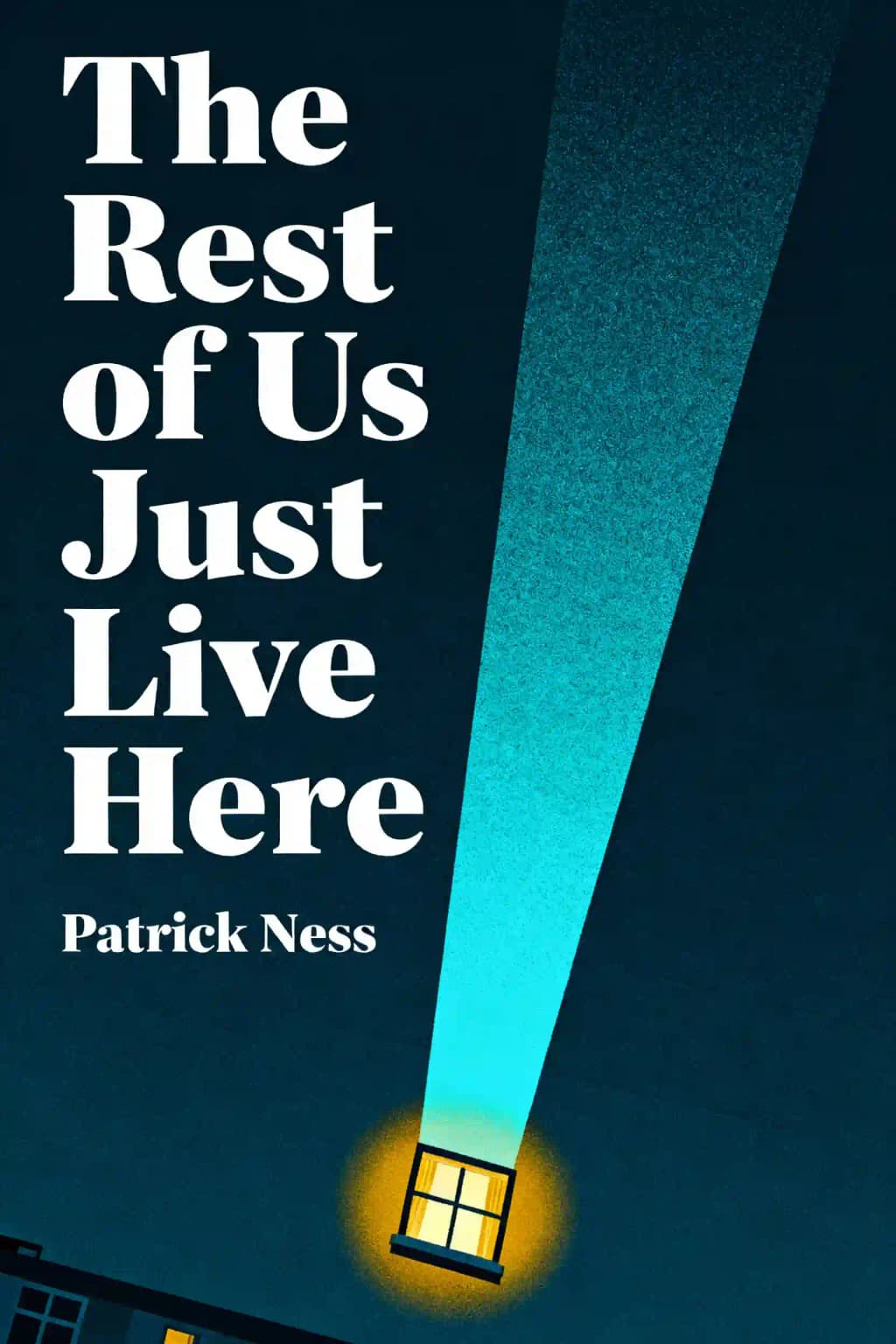
Have you ever wondered what happens to the ordinary people in a world where vampires sparkle, chosen ones battle evil forces, and high schools routinely explode? While most young adult novels focus on the special teens with supernatural powers or cosmic destinies, Patrick Ness's "The Rest of Us Just Live Here" brilliantly flips the script. This darkly humorous, deeply moving novel follows Mikey Mitchell and his friends-the background characters in someone else's epic tale-as they navigate the universal challenges of growing up while trying not to get killed by whatever apocalypse the "indie kids" are dealing with this week. The book became an instant critical darling upon its 2015 release, with The Guardian calling it "a new evolution in young adult fiction." Even celebrities like Lin-Manuel Miranda have praised its unique perspective on mental health and friendship, making it required reading for anyone who's ever felt like a supporting character in their own life.
第2章
Living in the Shadow of the Chosen Ones
In a small American town where supernatural phenomena occur with the regularity of seasonal changes, Mikey Mitchell and his friends navigate the complexities of ordinary teenage life against an extraordinary backdrop. The core group consists of Mikey, his sharp-witted sister Mel who's recovering from an eating disorder, their free-spirited friend Henna, and Jared - a quarter-god who downplays his divine heritage by focusing more on his job at the local cat sanctuary than his supernatural abilities. They're finishing their senior year of high school, dealing with college applications, family dynamics, and mental health struggles while existing firmly in the shadow of the town's more dramatic residents.
The "indie kids" - those supernaturally-gifted teenagers with names like Satchel, Dylan, and Finn - battle cosmic forces with clockwork regularity. These chosen ones face an escalating series of supernatural threats: first vampires (which resulted in the memorable cafeteria incident), then soul-eating ghosts (leading to that unfortunate homecoming dance disaster), and now mysterious blue lights and entities known as "the Immortals" who seem intent on claiming the town for their own enigmatic purposes.
Ness masterfully crafts a world where the extraordinary has become mundane. When the indie kids dash through town pursued by otherworldly beings, locals barely look up from their coffee. School administrators routinely include supernatural damage in their insurance policies, and students know to avoid certain parts of campus where dimensional portals tend to appear. This normalization of the bizarre serves as a brilliant backdrop for exploring deeply human experiences. Parents still worry about their children's futures, teachers still assign homework, and teenagers still struggle with crushes, even as blue light floods the sky and mysterious symbols appear on classroom walls.
Each chapter opens with a brief update on the indie kids' adventure - perfectly mimicking the breathless style of YA supernatural fiction. These snippets feature everything from ancient prophecies and forbidden love to dramatic sacrifices and mystical artifacts, all written with knowing wit. Meanwhile, the main narrative delves deep into Mikey's world: his debilitating anxiety attacks that leave him trapped in thought loops, his complicated feelings for Henna that he can't seem to voice, his fierce protectiveness of Mel as she battles her demons, and his growing fear that his friends will move on to bigger things while he remains stuck in place.
The contrast between these parallel narratives powerfully illustrates the novel's core theme: that personal struggles - whether fighting mental illness, confronting family dysfunction, or simply trying to figure out who you are - carry as much weight as any world-ending crisis. When Mikey reflects, "Not everyone has to be the Chosen One. Not everyone has to be the guy who saves the world. Most people just have to live their lives the best they can," it's not just an observation but a validation of every ordinary person's journey. His story reminds us that heroism exists in many forms, from battling supernatural entities to simply showing up each day for the people we love, despite our fears and insecurities.
第3章
The Weight of Mental Illness: Beyond Metaphors
Patrick Ness delivers one of the most authentic portrayals of mental illness in young adult literature through Mikey's obsessive-compulsive disorder and Mel's eating disorder. Unlike many stories that use mental health challenges as convenient metaphors or quirky character traits, Ness presents these conditions with unflinching honesty and complexity.
Mikey's OCD manifests in counting rituals and compulsive hand-washing that can trap him in endless loops. During one particularly harrowing scene, he becomes stuck washing his face repeatedly in Jared's bathroom, unable to stop despite knowing what he's doing is irrational. "I'm crying with frustration and self-hatred," he describes, capturing the maddening nature of the disorder. The raw vulnerability of these moments-the way Mikey describes being "at the bottom of a well" where no one can truly hear him-creates an intimate connection with readers who have experienced similar struggles.
Similarly, Mel's eating disorder isn't romanticized or simplified. When Mikey notices her pouring water instead of Diet Coke despite a bottle being in the fridge, the subtle detail speaks volumes about her ongoing battle. Their family underwent family-based treatment (FBT) after Mel's heart attack four years earlier, and Mikey has been helping her maintain her health ever since. When she skips lunch at the care facility, explaining she needs Mikey to feed her because she needs to "feel safe," it's a poignant reminder of how recovery isn't linear.
What makes Ness's approach so powerful is that these mental health challenges aren't presented as problems to be "solved" by the end of the book. They're ongoing parts of who these characters are. When Jared offers to use his divine powers to heal Mikey's OCD and anxiety, Mikey declines: "If you heal all that stuff, I'll live the rest of my life not knowing if I could have figured it out on my own." It's a profound statement about accepting oneself while still working toward healing.
The novel also acknowledges the role of professional help through Mikey's therapy sessions with Dr. Luther, who compassionately compares anxiety to physical illness: "You're not morally at fault for it. No more than you would be for a tumor." This destigmatizing message, along with the normalization of medication, offers readers a realistic and hopeful perspective on managing mental health.
第4章
Family Fractures: When Parents Fail Their Children
The dysfunctional Mitchell family provides a stark contrast to the idealized families often portrayed in young adult literature. Mikey's mother is a State Senator more concerned with her political career than her children's wellbeing. His father is an alcoholic who embezzled money from his brother-in-law's car dealership. Their neglect and self-absorption have forced Mikey and Mel to become each other's primary caretakers, creating a sibling bond that's both beautiful and heartbreaking.
The novel doesn't shy away from showing how parental failures can devastate children. When a campaign advisor commented that Mel looked "a little fat" in press photos, and their mother didn't fire him, it contributed to Mel's eating disorder. Later, when their mother announces her congressional run immediately after Mikey and Henna's car accident, her inappropriate enthusiasm reveals her warped priorities. "Mom, seriously?" Mel responds with justified anger.
Perhaps most devastating is the scene where Mikey's father wakes him at 3:43 AM, drunk and crying, threatening suicide before passing out on Mikey's bedroom floor. This forces Mikey to sleep on the couch, a small detail that speaks volumes about how the parent-child roles have been reversed in this household.
Yet Ness avoids making these parents one-dimensional villains. In a rare moment of genuine connection, Mikey's mother admits politics isn't just ambition but a desire to make the world better for her children. She reveals she saw strange things as a teenager too, hinting at a deeper understanding of the supernatural events than she lets on. When Mikey confesses his OCD has worsened, she's surprisingly supportive, showing a glimpse of the mother he needs her to be.
These complex family dynamics reflect a harsh reality many teenagers face: parents are flawed human beings who sometimes fail their children. The Mitchell siblings have learned to rely on each other and their friends instead, creating their own support system when their family structure crumbles. As Mikey says about his sister Meredith's distress over their mother's behavior, "It's a lesson we all learn eventually. Parents are humans, with human failings."
第5章
Friendship as Salvation: The Chosen Family
At its heart, "The Rest of Us Just Live Here" is a love letter to friendship-particularly the kind of deep, chosen-family bonds that sustain us through our darkest moments. Mikey, Mel, Henna, and Jared form a tight-knit group that provides the stability and acceptance their biological families often fail to offer.
Jared, who is one-quarter god and has healing powers, serves as a literal and figurative healer for the group. When Mikey gets trapped in his compulsive behaviors, it's often Jared who physically pulls him out, applying moisturizer to his raw skin and offering reassurance. Their friendship transcends typical teenage male relationships, allowing for vulnerability and physical affection without awkwardness. When Jared confesses, "I wouldn't have made it without you. I got my dad and I got you and I need you both. More than you know," it's a powerful testament to how essential their connection is to his survival.
The friendship between Mikey and his sister Mel is equally profound. Having watched her nearly die from an eating disorder, Mikey has become hypervigilant about her health. When she asks him to help her eat at the care facility, explaining she needs to feel safe, their silent understanding demonstrates a bond forged through shared trauma. They protect each other fiercely, with Mel punching a blogger who calls her "the anorexic one" and tries to photograph them after the concert explosion.
Even Henna, who is the object of Mikey's unrequited love for much of the novel, proves to be a true friend above all else. When they finally sleep together near the end of the book, they discover they love each other deeply, but not romantically: "It's love. But it's a different kind," Henna explains. This mature realization-that deep friendship can be just as valuable as romantic love-is rarely portrayed so honestly in young adult literature.
The novel's climactic scene, where they all sit on a hill watching their high school burn after the indie kids' final battle, beautifully encapsulates the strength of their bond. Despite knowing they'll eventually separate-Jared will become a full deity, they'll attend different colleges-there's comfort in their present connection. As Mikey reflects, "I know if I need saving, they'll be there. But I also know I might not need it quite so often."
第6章
Identity and Sexuality: Finding Yourself in a Complicated World
In a refreshing departure from many coming-of-age stories, "The Rest of Us Just Live Here" presents sexuality as fluid and complex rather than a source of crisis or a defining characteristic. Mikey's occasional physical encounters with Jared coexist comfortably with his attraction to girls, including his feelings for Henna and past relationships with Vanessa and Darlene. This casual bisexuality isn't treated as a plot point or a revelation-it's simply part of who he is.
Similarly, when Jared reveals he's in love with Nathan, the news isn't presented as a dramatic "coming out" moment. The fact that everyone except Mikey already knew speaks to the group's acceptance of each other's identities. Mikey's hurt comes not from Jared's sexuality but from being the last to know something important about his best friend.
The novel also explores identity beyond sexuality. Jared struggles with his divine heritage, ultimately accepting the Gods' offer to become a full-time deity after college. His condition-healing power for anyone he wants-reveals how his identity is tied to caring for others. Henna grapples with her parents' expectations and her own independence, eventually deciding not to go to Africa: "I'm eighteen. I realized they can't actually make me."
For Mikey, much of his identity has been shaped by his mental illness and his role as caretaker for his sisters. His fear that he's "the least-wanted person" in his friend group reveals his deep insecurity. When he declines Jared's offer to heal his OCD and anxiety, it's a profound moment of self-acceptance-acknowledging these challenges as part of who he is while still wanting to face them on his own terms.
These nuanced explorations of identity suggest that figuring out who you are is rarely a straightforward process. It involves questioning, experimenting, and ultimately accepting the complicated, sometimes contradictory aspects of yourself. As Henna wisely observes, "I wonder if realizing you're not sure about stuff is what makes you a grown-up."
第7章
The Supernatural as Metaphor: Blue Lights and Real Monsters
While the supernatural elements in "The Rest of Us Just Live Here" often serve as background to the characters' personal struggles, they also function as powerful metaphors for the very real monsters teenagers face. The blue-eyed police who threaten Mikey and Henna reflect authority figures who abuse their power. The zombie deer with its broken neck and legs, reanimated by blue light, represents how trauma can keep painful experiences unnaturally alive.
When Mikey's grandmother mistakes him for someone named "Phillip" due to her Alzheimer's, he notes that the disease bears no resemblance to its kooky, wise portrayal in movies. This juxtaposition of real horror (dementia) with supernatural horror (zombie deer) highlights how ordinary human suffering can be just as devastating as any fictional apocalypse.
The novel's structure reinforces this theme, with each chapter opening with a brief summary of the indie kids' battle against the Immortals before shifting to Mikey's everyday struggles. These parallel narratives suggest that while the indie kids fight literal monsters, Mikey and his friends battle equally dangerous metaphorical ones: mental illness, family dysfunction, uncertain futures.
Perhaps most telling is how the adults in town seem to forget or deny supernatural events, a willful ignorance Mikey sees as their way of coping with the world. This mirrors how adults often minimize teenagers' problems or refuse to acknowledge difficult truths. When a half-drunk police officer dismisses their account of seeing Finn chased by a glowing girl, it echoes how teenagers' concerns are frequently invalidated by authority figures.
By the novel's end, when the indie kids blow up the high school (again) to defeat the Immortals, there's a sense that some battles-both supernatural and ordinary-will always recur. As Satchel, one of the indie kids, says through tears, "I don't know why it always happens to us. I don't know why we always have to blow up the high school." Mel's response-"Everybody's got something"-bridges the gap between their extraordinary struggles and the universal experience of facing personal demons.
第8章
Growing Up in the Shadow of Apocalypse
The looming specter of graduation serves as both literal and metaphorical apocalypse in "The Rest of Us Just Live Here." For Mikey and his friends, the end of high school represents a terrifying unknown, potentially separating them forever. This fear of change and loss parallels the supernatural threat of the Immortals, creating a dual sense of impending doom. The novel masterfully weaves together these personal and supernatural threats, showing how the mundane anxieties of teenage life can feel just as overwhelming as world-ending catastrophes.
Mikey's anxiety about the future manifests in his worsening OCD symptoms, which become increasingly intrusive as graduation approaches. His compulsive hand-washing and need to perform daily routines perfectly reflect his desperate attempt to maintain control in a world that feels increasingly chaotic. His confession to Dr. Luther - "I don't know if I'm going to make it" - reveals the existential dread many teenagers feel when facing adulthood. His fear of being left behind, of being "the least-wanted person" in his friend group, stems from the knowledge that their tight-knit community will inevitably dissolve after graduation. These fears are amplified by his sister Mel's previous mental health struggles, showing how family history can shape our perception of our own resilience.
Henna's potential move to the war-torn Central African Republic represents another kind of apocalypse - being forced into a dangerous situation by parents who believe they're doing what's best for her. Her relationship with her missionary parents highlights the complex dynamics between teenage independence and parental authority. Her decision to assert her independence - "I'm eighteen. I realized they can't actually make me" - marks a crucial step in her transition to adulthood. This conflict illustrates how growing up often requires challenging family expectations and establishing personal boundaries.
Even Jared faces his own version of apocalypse, accepting that after college he'll become a full deity and leave his human life behind. His condition for this transformation - healing power for those he loves - demonstrates how growing up often involves negotiating between our own needs and those of the people we care about. Jared's struggle with his divine heritage mirrors many teenagers' efforts to reconcile their individual identity with their family legacy and expectations.
The novel's climactic scene, with the friends watching their destroyed high school burn from a nearby hill, beautifully captures this bittersweet transition. The building that housed their adolescence is gone, yet they remain together, at least for now. The physical destruction of their school becomes a powerful metaphor for the end of childhood, while the smoke rising against the night sky suggests both ending and transformation. As Mikey observes, "Everything's always ending. But everything's always beginning, too." This wisdom - that endings and beginnings are inseparable parts of life - offers a hopeful perspective on growing up, even in the shadow of personal and global apocalypses. The novel suggests that while change is inevitable and often frightening, the connections we forge help us navigate these transitions with grace and resilience.
第9章
Finding Meaning in an Indifferent Universe
In a world where indie kids are chosen for cosmic battles while everyone else just tries to survive, "The Rest of Us Just Live Here" poses profound questions about meaning and significance. If you're not the Chosen One, how do you find purpose? If your struggles aren't saving the world, do they still matter?
The novel suggests that meaning comes not from grandiose destinies but from connections with others. When Mikey helps feed his sister during her eating disorder relapse, when Jared uses his powers to comfort Meredith after the concert explosion, when Henna gets her brother's name tattooed on her side-these small acts of love and remembrance create significance in an otherwise indifferent universe.
There's also meaning in survival itself. As Mel says about her eating disorder recovery, she wants to live long enough to "really live." Similarly, Mikey's decision to continue managing his OCD rather than accepting Jared's magical cure reflects his belief that working through difficulties has inherent value. "If you heal all that stuff," he explains, "I'll live the rest of my life not knowing if I could have figured it out on my own."
Perhaps most importantly, the novel suggests that ordinary lives deserve to be centered in stories too. By focusing on the background characters rather than the chosen ones, Ness argues that everyone's experience has narrative worth. When Henna says, "I've never been happier not to be an indie kid," she's acknowledging that while their lives may lack supernatural drama, they're no less meaningful for it.
The final image of friends watching their school burn, uncertain about the future but present with each other, encapsulates this philosophy. As Mikey reflects, "I know if I need saving, they'll be there. But I also know I might not need it quite so often." In this simple statement lies a profound truth: meaning comes not from being saved by others or saving the world, but from learning to navigate life's challenges while remaining connected to those we love.
第10章
When the Ordinary Becomes Extraordinary
"The Rest of Us Just Live Here" ultimately celebrates the extraordinary nature of ordinary lives. Through Mikey's journey, we see that everyday struggles with mental health, family dysfunction, unrequited love, and uncertain futures can be just as compelling-and just as important-as battles against supernatural forces.
The novel's dual narrative structure brilliantly highlights this theme. While the indie kids fight the Immortals in brief chapter openings, the main story focuses on Mikey feeding his sister, confronting his father's alcoholism, navigating his feelings for Henna, and managing his OCD. These seemingly mundane experiences are rendered with such emotional depth and authenticity that they become the true heart of the story.
When Mikey and his friends sit on the hill watching their school burn, there's a sense of both ending and beginning-the apocalypse has come and gone, yet they remain. "Everything's always ending," Mikey reflects. "But everything's always beginning, too." This cyclical view of life acknowledges that while some battles end, others will always emerge. The indie kids will face new supernatural threats, and Mikey will continue struggling with his mental health. What matters is not the elimination of challenges but how we face them and who stands beside us as we do.
In giving voice to the background characters-those who just happen to live in a world where extraordinary things occur-Ness reminds us that every person's story deserves to be told. As Henna wisely observes, "Everyone's got something," suggesting that our individual struggles, however ordinary they may seem, connect us to the universal human experience.
By the novel's end, Mikey has come to accept both his place in the world and the inevitability of change. Some friendships will evolve, others will fade. Mental health challenges will persist but become more manageable. The future remains uncertain, yet no longer terrifying. In this acceptance lies the novel's most profound message: that finding peace with our ordinary, imperfect lives might be the most extraordinary achievement of all.