第1章
The Radical Love That Changes Everything
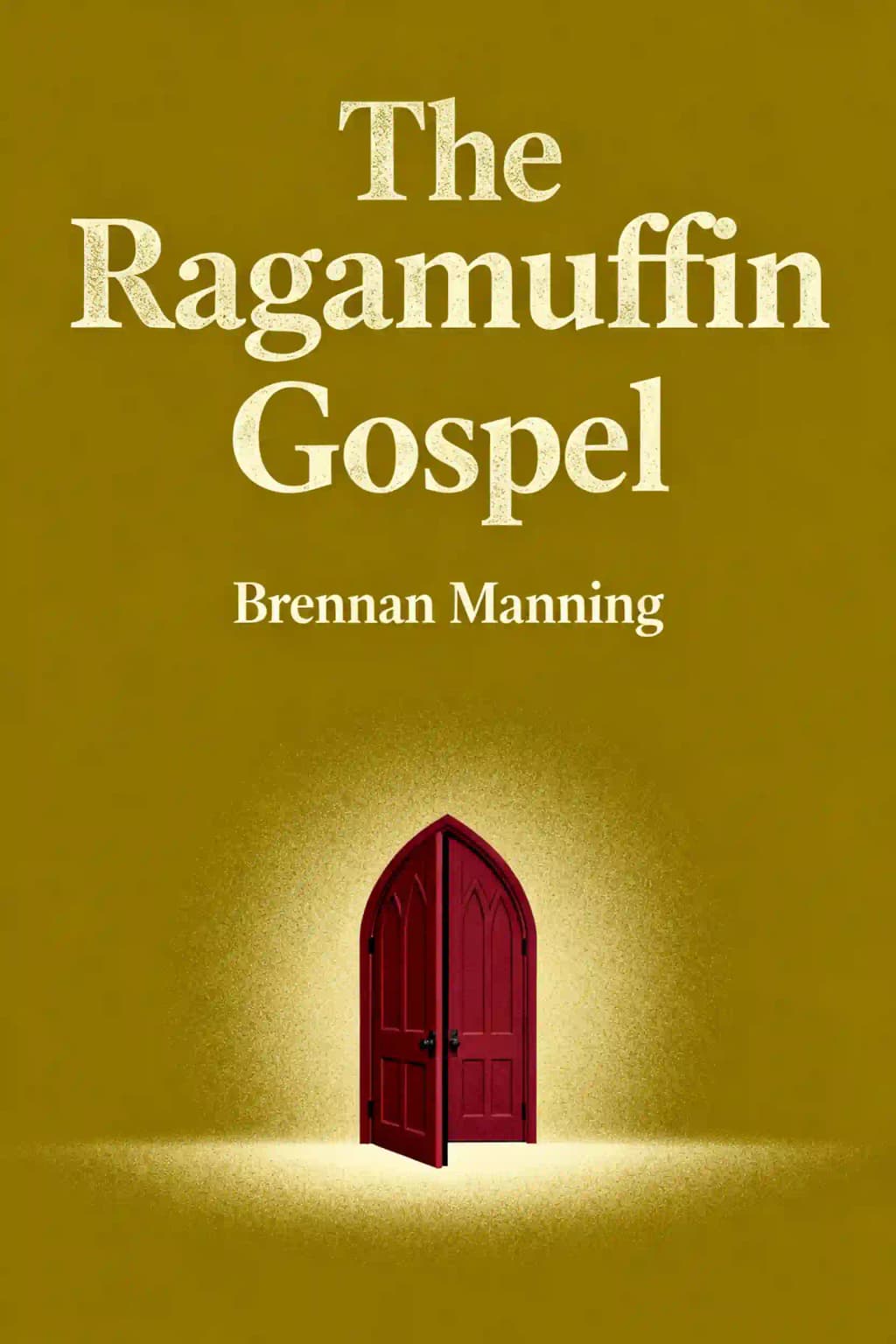
Have you ever felt like you're just not good enough for God? Like your sins, mistakes, and failures have disqualified you from divine love? If so, you're in good company. When musician Rich Mullins formed his "Ragamuffin Band," he was celebrating a profound truth that would later be articulated in one of the most transformative spiritual books of the 20th century. Brennan Manning's "The Ragamuffin Gospel" has become a modern spiritual classic, selling over a million copies since its publication in 1990. Endorsed by contemporary Christian artists like Michael W. Smith and Amy Grant, this dangerous little book has shaken countless readers to their core by presenting a scandalous message: God loves you exactly as you are, not as you should be. Manning, a former Franciscan priest and recovering alcoholic, wrote from personal experience of failure and grace. His message resonated so deeply that it inspired a generation of musicians, pastors, and ordinary believers to embrace their identity as beloved "ragamuffins" - the bedraggled, beat-up, and burnt-out children whom God loves with fierce tenderness.
第2章
When Religion Replaces Grace
Something is radically wrong with much of contemporary Christianity. The gospel of grace has been twisted into religious bondage and legalism, transforming God from a loving father into a stern bookkeeper meticulously recording our moral failures. While the American church theoretically accepts grace, it often denies it in practice. Our culture has made genuine grace almost impossible to understand, conditioning us with slogans like "There's no free lunch" and "You get what you deserve."
Though Scripture consistently emphasizes God's initiative in salvation, our spirituality frequently begins with self, not God. We believe we can pull ourselves up by our spiritual bootstraps. Eventually, we confront our inadequacy. Our security shatters. After religious fervor passes, weakness appears. We discover our inability to add even an inch to our spiritual stature, leading to subtle despair, boredom, and joylessness.
Martin Luther's breakthrough came when wrestling with Romans 1:17 - how could the gospel be "good news" if God is merely a righteous judge? He realized God's righteousness wasn't passive but active - God makes sinners righteous through Christ's forgiveness. This "justification by grace through faith" is what G.K. Chesterton called "the furious love of God." Unlike false gods who despise sinners, our God loves all people unconditionally.
The Good News means we can stop self-deception and admit our ongoing battles with lust, greed, and pride. God loves and knows us as we are - we don't need spiritual cosmetics. When we get honest, we admit we're bundles of paradoxes - believing yet doubting, loving yet hating. All goodness is gift, not reward for faithfulness.
True faith isn't merely believing God exists but trusting Him with our hearts. As theologian Paul Tillich wrote, grace strikes when we're in darkness, saying "You are accepted." We need not hide our failings from Jesus - He comes especially for the wobbly and weak-kneed. Any church rejecting those Jesus accepts - whether divorced people, addicts, or sexual minorities - implicitly rejects the gospel of grace.
The myth that conversion guarantees an unbroken upward spiral toward holiness has caused incalculable harm. Even the apostle Peter struggled with prejudice and inconsistency after Pentecost. Justification means we're in right relationship with God, not made perfect. We want instant spirituality with scorecards tracking progress. For many Christians, life remains a long January of spiritual winter.
第3章
The God Who Is Wildly In Love With You
Scientists and scholars have observed that the universe appears designed by a "Pure Mathematician" with a "cosmic order, mathematically definable." The Master Planner left nothing to chance. The earth's precise 23-degree tilt creates our seasons-any different angle would pile up continental ice. If the moon were 50,000 miles away instead of 250,000, tides would submerge continents. Just ten feet more earth crust would eliminate oxygen; slightly deeper oceans would absorb carbon dioxide and oxygen, preventing plant life.
Our planet, weighing six sextillion tons, rotates perfectly at over 1,000 miles per hour while traveling through space at 68,000 miles per hour in its 600-million-mile annual orbit. The sun emits constant energy of 130,000 horsepower per square yard, while our solar system's planets move with exact precision in their orbits. Our Milky Way contains 100 billion stars-a single dime held at arm's length would block 15 million from view if we could see them.
Contemplating this vastness, we echo Isaiah's praise: "He who created these things leads out their army in order, summoning each by name." We're enchanted by God's power, stammer about His holiness, tremble before His majesty-yet grow squeamish before His love. As a traveling speaker, I've encountered shocking resistance to the God the Bible defines as Love, from polite professionals hinting at universalism heresy to Bible thumpers fixated on a war-like deity demanding perfectionism.
We blame various factors for hiding God's compassionate face. Yet if we were truly people of prayer, we'd discard excuses and experience God's awesome love personally. Then we'd understand why the aging apostle John wrote with "magnificent monotony" about Christ's love, and why Paul wrote lavishly of grace-describing it as the means of righteousness, the basis of his calling, God's glorious gift in Christ, salvation for all, overflowing faith and love, our access and standing, abundant beyond sin, received in Christ, extending to more people, opposed to works and law, and the very gospel itself.
The gracious God in Jesus Christ loves us. Grace is the active expression of this love. The Christian lives as Abba's child, rejecting both the harsh God who catches us in weakness and the "pastel-colored patsy" who never challenges us. The graced life calls us to a cold, windy mountain of surrender, not middle-of-the-road religion. At the gospel's heart, a young man walks up another Moriah carrying a cross, obeying a wild God who will have His way regardless of cost.
第4章
Jesus Had "A Totally Intense Thing For Ragamuffins"
Jesus had "a totally intense thing for ragamuffins," as one young woman observed after reading Luke's Gospel. Indeed, Jesus spent disproportionate time with society's outcasts - the poor, blind, lame, lepers, hungry, sinners, prostitutes, tax collectors, the persecuted, downtrodden, captives, possessed, burdened, the crowds, the little ones, the least, last and lost.
His love wasn't exclusive to these groups - that would merely substitute one prejudice for another. He showed warmth to all social classes not because of their connections or status, but because they were God's children. While "poor" in the gospel includes the economically deprived and oppressed, it extends to all who rely entirely on God's mercy - the "poor in spirit."
Jesus' preference for the undesirable and unlovely is undeniable in the gospel narrative. As philosopher Maurice Blondel said, to understand someone, watch what they do, not just what they say. The key to this mystery is Jesus' relationship with Abba - He loves those whom the Father loves.
When asked about greatness in heaven's kingdom, Jesus abolished distinctions between elite and ordinary by placing a child in their midst. The child represents unself-consciousness and inability for pretense - like three-year-old John Dyer who, when I greeted him warmly, demanded simply, "Where's the cookies?" The kingdom belongs to those not trying to impress anyone, not plotting for attention or worrying about interpretations of their actions. Jesus speaks pointedly to spiritual perfectionists and those fretting about weaknesses. The child doesn't struggle to position himself for a relationship with God or craft explanations - he simply accepts the gift of the kingdom.
When Jesus tells us to become like children, He invites us to forget what lies behind. Little John Dyer has no past. Whatever we've done, good or evil, is irrelevant to our stance before God today. We exist only in the present moment with God - neither retreating to the past nor anticipating the future. Like the monk in the Zen story who, pursued by a tiger and dangling from a cliff with mice gnawing at his rope, still savored a strawberry growing from the cliff face, we must focus on the gift God gives us now, not the tigers of past or future.
Paul understood this, writing "forgetting all that lies behind me, and straining forward to what lies in front." Our past achievements and disgraces have been crucified with Christ.
In first-century Palestine, children weren't idealized as innocent and pure; they were considered unimportant and scorned. "Becoming like a little child" means accepting oneself as unimportant. Jesus gave these scorned little ones privileged places in His kingdom and presented them as models to disciples. Their privilege came not from merit but from God's pleasure in those whom adults despised.
Jesus' hymn of jubilation in Luke carries this theme: "I bless you, Father, for hiding these things from the wise and clever and revealing them to mere children." The "mere children" (napioi in Greek, meaning babes) represented the uneducated and ignorant - contrasted with the scribes who were excessively honored for their learning. God's grace falls on these negligible creatures not because of their qualities but purely from divine liberality. Jesus deals the death blow to any distinction between elite and ordinary in the Christian community.
第5章
The Sinner's Privilege
Jesus directed His messianic ministry not to those who merely skipped morning devotions, but to those society considered real sinners. They had done nothing to merit salvation yet opened themselves to the gift offered. Meanwhile, the self-righteous trusted in works of the Law and closed their hearts to grace. Jesus destroyed the notion that our works entitle us to bargain with God - everything depends on His good pleasure.
This uneasiness with the ragamuffin gospel spans all denominations. Christians everywhere plunge into spiritual activities, charitable contributions, and church organizations seeking to win God's favor. Though earnest and sincere, what's missing is surrender to the Christ of grace. Our good works can become the very undoing of the ragamuffin gospel when we construct self-worth from them rather than delighting in God's unconditional love.
The scandal of Jesus' table fellowship with sinners cannot be overstated. In first-century Palestinian Judaism, mingling with those outside the law was forbidden. To share a meal symbolized shared life - a guarantee of peace, trust, fraternity and forgiveness. By accepting sinners as friends and equals, Jesus took away their shame and gave them dignity. His physical contact with them made them feel clean and acceptable. Because Jesus was seen as a man of God, sinners interpreted his friendship as God's approval.
Through table fellowship, Jesus acted out his insight into Abba's indiscriminate love. Though often portrayed as homeless, Jesus likely had some residence where he regularly hosted meals. His guest list included a ragtag parade of social outcasts - so regularly that he was accused of being a drunkard and glutton.
Unlike today's social climbers who carefully select dinner guests, Jesus' table companions were those society had written off. This wasn't mere tolerance but the expression of his mission: peace and reconciliation for all, without exception, even moral failures.
The gospel portrait shows Jesus cherished life and people as loving gifts from the Father. His presence awakened joy and freedom. While John the Baptist's disciples fasted, Jesus' disciples feasted - breaking bread with Jesus was a festive celebration of good fellowship in which there was salvation. The ragamuffins discovered that sharing a meal with Him liberated them from self-hatred. He gave them what they needed most - encouragement and reassuring words like "Do not live in fear" and "your sins are forgiven."
If Jesus appeared at your dining table tonight knowing everything about you - every skeleton, mixed motive, and dark desire - you would feel His acceptance and forgiveness. Salvation is joy in God expressing itself in joy with neighbors. It's unimaginable to picture a wooden-faced, joyless Jesus as He reclined with ragamuffins.
第6章
A Tale of Two Communities
The ragamuffin spirit of Jesus surfaces in unlikely settings and is often absent where we most expect it. Two contrasting communities illustrate this reality.
In New Orleans, sixteen recovering alcoholics gather for their weekly AA meeting - their home group. The personal investment in each other's sobriety is substantial, with no pretense among them. All are there because they've made "slobbering messes" of their lives. Rich and poor, educated and not, for one hour the high descend and the lowly rise, resulting in true fellowship.
During one meeting, Phil confesses to a five-day relapse after seven years of sobriety. The group responds with compassion, tears, and support rather than judgment. The meeting ends with physical affirmation - hands on shoulders, kisses on Phil's face - and an invitation to go for ice cream.
In stark contrast, during a religious education course at Loyola University, Dr. Meghan McKenna conducts an exercise after lecturing on the religious groups of Jesus' time. She separates the class into non-smokers, reformed smokers, and active smokers. While all agree smoking regulations are good, when asked about smokers personally, the non-smokers unleash harsh judgments: "disgusting," "inconsiderate," questioning their faith and relationship with Christ.
Roslyn, one of the three active smokers, feels utterly isolated and rejected by people she'd studied, prayed, and bonded with for years. She compares herself to the woman caught in adultery, feeling the group would have stoned her if stones were available.
The exercise reveals how Christian Pharisaism manifests today. Jesus' fierce words to the Pharisees stretch across time to each of us, not as weapons against others but as personal challenges. The real division in Christianity may not be between conservatives and liberals but between the awake and asleep - those who acknowledge their ragamuffin status and those who don't.
第7章
The Wonder of Grace All Around Us
Rabbi Abraham Joshua Heschel, near death after a heart attack, whispered to his friend: "I asked for wonder, and He gave it to me." Our world has largely lost this sense of wonder. We've grown sophisticated, no longer catching our breath at rainbows or roses. Science edges God out of His world - thunderstorms reduced from theophany to meteorological events.
Our preoccupation with ourselves makes us immune to creation's glory. We barely notice clouds, dewdrops, ice on ponds, or blackbirds nesting. We refrigerate ourselves in summer, entomb ourselves in plastic during winter, missing the experience of awe and reverence.
Yet our world remains saturated with grace. The Celtic monks saw God's revelation not just in Scripture but in nature - "The power of the Lord is in the paw of the cat." Where scientific minds saw only gulls and gannets, they saw angels. For eyes of faith, every created thing manifests Abba's grace.
Grace appears most profoundly in loving human actions: the beggar who refuses to blaspheme God even for gold; Mayor LaGuardia fining everyone in court fifty cents for living in a town where someone must steal bread to feed starving children; a stranger embracing a retreat participant on a beach, whispering "I love you" as answer to prayer.
Grace abounds in contemporary culture - movies, books, music. Bruce Springsteen's albums and Bill Cosby's family-centered television show became vehicles of grace, teaching virtues like patience, trust, sensitivity and forgiveness through humor and familiar conflicts. Through Cosby's portrayal of family life - engagement announcements, birthdays, telephone bills, weddings - we learned how to live lovingly in families, seeing how virtues like patience, trust, honesty and flexibility resolve conflicts.
Walker Percy's novel "The Moviegoer" reveals grace through catastrophe - a commuter suffering a heart attack suddenly sees his own hand as if for the first time, awakening from the "everydayness" of life. This "natural grace" liberates him from despair, launching him into an active search for meaning. Percy shows how disaster can be the very thing that awakens us to choose "generativity over stagnation."
Erma Bombeck echoes this in her column "If I Had My Life to Live Over Again," regretting practical choices over seizing life's moments - "I would seize every minute, look at it and really see it, live it, and never give it back."
The spirituality of wonder recognizes our world charged with grace. In wonder's grasp, we're enraptured like Moses before the burning bush, Stephen seeing the Son of man, Thomas discovering God in Christ's wounds. It's America thrilling to footsteps on the moon, a child's kite catching wind, a mother gazing at her newborn, the wonder of a first kiss.
第8章
The Second Call: Midlife and the Deeper Journey
Many people between thirty and sixty undergo what can be called a second journey - a profound questioning of life's meaning and purpose. This awakening can be triggered by various events: a brush with death like Gail Sheehy experienced on Bloody Sunday in Northern Ireland, discovering a spouse's infidelity, a car accident, or simply the realization that career success feels hollow.
During this time, people feel confused and lost, unable to maintain their carefully constructed lives. Anne Tyler's character in "Breathing Lessons" captures this perfectly, crying out, "O Ira, what are we going to do with the rest of our lives?"
These second journeys typically conclude with new wisdom - accepting human limitations, letting some dreams die, forgiving those who've caused pain, and recognizing that others are neither angels nor devils but simply human. This wisdom acknowledges limited time remaining and illuminates what truly matters.
For Christians, this second journey often includes a deeper call from Jesus, inviting serious reflection on faith, hope and love. The naive idealism of early faith becomes seasoned with pain, rejection, failure and self-knowledge. At its core lies a fundamental question: "Do you really accept that God is head over heels in love with you?" Our ability to grow spiritually depends on answering this question honestly, as rejecting God's unconditional love means rejecting the message of the cross.
Manning identifies three obstacles to embracing this second call: crises of faith, hope, and love. The crisis of faith occurs when we take God's love for granted, robbing Him of the chance to love us in surprising ways. True faith must remain alive and growing - when Scripture, prayer and worship become routine, they die.
The crisis of hope manifests as hesitation to enter God's banquet. Many stand outside, afraid to enter fully into celebration. Christian hope isn't naive optimism but confidence even facing death.
The crisis of love involves risking being loved by God whose love is "outrageous" and undignified. This love extends to loving ourselves despite our failures. Fear prevents growth in Christ, as we avoid risking failure and narrowing our personalities.
Despite our cultural demands for a perfect image, Christianity requires admitting failure. Projecting flawlessness keeps us from connecting with others and leads to shallow existence. The Christian with depth is one who has failed and learned to live with it. Procrastination may be the worst failure - wasting time avoiding what's most important.
The real challenge is personal responsibility - taking charge of our lives and truly believing. Like the man at the abyss watching an acrobat cross with a wheelbarrow, we must decide if we'll actually get in when Jesus invites us. Our actions, not just our creeds, reveal our true faith. As Nikos Kazantzakis prayed: "I am a bow in your hands, Lord. Draw me, lest I rot. Do not overdraw me, Lord. I shall break. Overdraw me, Lord, and who cares if I break?"
第9章
The Victorious Limp
In 1938 Baltimore, racial segregation was deeply entrenched. Black residents of Lemmon Street lived in dilapidated shanties and were considered inferior, tolerated only if they stayed in "their place." When Joe Louis, the "Brown Bomber," knocked out German Max Schmeling in just over two minutes, it sparked a spontaneous civil rights demonstration as the black community marched proudly down Lombard Street, briefly claiming public space typically denied them.
This wasn't the "victorious life in Christ" as commonly portrayed - it was what Manning calls "the victorious limp." While popular Christianity often promises that accepting Jesus transforms life into an idyllic experience where marriages flourish, careers soar, and problems vanish, the New Testament presents a different picture of victory: Jesus on Calvary.
True discipleship isn't marked by spectacular success or spiritual ecstasies but by faithfulness despite failures. Authentic disciples may stumble repeatedly, endure relapses, and wander far from God, yet they keep returning to Jesus. Like Peter, who denied Christ three times despite his confident boast, many believers build their relationship with Jesus on assumed personal adequacy rather than grace. Peter's restoration proved that his failure wasn't terminal but an occasion for growth.
Many Christians experience profound encounters with Jesus that initially fill them with peace, joy and love. But gradually, they become distracted by careers, media bombardment, and trivial routines. They treat Jesus like an old friend they've lost touch with, their hearts growing cold through inattention. Days become mechanical - dictated by clocks, traffic, meetings and crises - with little room for authentic human response.
Manning confesses his own "victorious limp" includes attempts to fill spiritual emptiness with substitutes like writing, preaching, television, food, shallow relationships, and alcohol. He's opted for "slavery" at times, hardening his heart against true love and abandoning prayer. Yet none of these failures proved terminal - radical grace repeatedly gripped him, bringing him back to acknowledge his wrongdoings and return to faith.
The forgiveness of God is gratuitous liberation from guilt, where personal sinfulness becomes the occasion for encountering God's merciful love. The prodigal son's father didn't cross-examine, lecture, or demand high motivation - he simply welcomed his son home with overwhelming joy. We don't need perfect motives or complete contrition before returning to God; Abba just wants us to show up.
The mature Christians Manning has met are those who have failed and learned to live gracefully with their failure. Faithfulness requires risking everything on Jesus, willingness to keep growing, and readiness to risk failure throughout our lives. The ragamuffin gospel says we can't lose because we have nothing to lose. We must stand with Jesus despite our sins, scars and insecurities, refusing to bow before worldly values.
On the last day, Manning concludes, many of us will arrive at the "Great Cabin in the Sky" bloodied, battered, and limping. But there will be a light in the window and a "Welcome Home" sign on the door.
第10章
The Folly of God's Love
In a world that is torn and tearing, Manning argues it takes "a touch of folly" to believe that God's love remains unwavering even when our choices are destructive. As suffering increases globally - from displaced Native Americans to refugees, AIDS victims, drug epidemics, and religious divisions - many Christians become "bedraggled, beat-up, and burnt-out." This despair leads to what Parker Palmer calls "functional atheism" - the belief that nothing happens unless we make it happen.
The gospel's truth doesn't rise or fall on corrupt clergy or social injustices but deserves acceptance or rejection based on its answers to life's fundamental questions: Is life absurd or purposeful? What is Ultimate Reality? Will life triumph over death? Jesus answers that our lives have divine purpose, that Reality is generous love, and that nothing can permanently harm us - though suffering remains part of our journey.
For rejuvenation, Manning suggests accepting our poverty and emptiness before God without forcing prayer. He offers a simple faith exercise: imagining Jesus looking at you with love, meditating on Psalm 23 and personalized passages from Hosea that emphasize God's tender care. The French Easter greeting "L'amour de Dieu est folie!" (The love of God is folly) captures this radical message. Like Thomas Aquinas who stopped writing because his experience of Christ made his theological works seem "like straw," Manning concludes that God's love is always greater than we can comprehend.
第11章
Mercies: The Ragamuffin's Path
Manning describes how ragamuffins approach their spiritual life with distinctive characteristics. They remain flexible rather than rigid, comfortable with silence and listening for God's presence. "Be still and acknowledge that I am God" isn't merely a suggestion but a divine command.
For ragamuffins, God's name is Mercy. They value their spiritual darkness because it drives them to God, realizing their poverty belongs to the mysterium tremendum of a loving God. In prayer, they discover they're embraced by Mercy even before they fully understand themselves.
This encounter with Mercy transforms how they interact with others. They look beyond appearances to recognize fellow wounded companions, extending the same mercy they've received. Like Jesus who forgave His killers, ragamuffins are quick to excuse others' offenses and slow to retaliate. They practice the tolerance, pity and patience they would grant a sick friend.
Gratitude becomes their primary spiritual attitude, constantly remembering their rescues and healings. They're assured of merciful judgment because they've shown mercy to others. The greatest gift any ragamuffin receives is the Abba experience - approaching God with childlike simplicity, crawling into His arms.
Manning concludes by sharing his own identity as "Abba's Ragamuffin," the epitaph he wants on his tombstone. This identity shapes his intimacy with God, relationships with others, and gentleness with himself.
The ragamuffin gospel continues to scandalize, particularly among legalists and moral crusaders who take offense at the freedom of God's children. These critics want Christianity to make people feel wretched rather than whole, seeking to control rather than liberate through rules and regulations. Despite criticism, ordinary believers have overwhelmingly affirmed this message's truth. The "ragamuffin" metaphor has inspired songs, books, and even a band, resonating with people's spiritual condition as the "poor in spirit" who recognize their emptiness and trust completely in God's mercy.
Manning's final invitation is simple: "Don't wait." Like Mary Magdalene who approached Jesus in her brokenness, we're invited to come just as we are. The creative power of Jesus' love enables us to see ourselves as He does, delivering us from self-hatred to the heights where God dwells. When Jesus invites himself to our house for dinner, He's declaring, "I want to enter into a deeper friendship with you." On Judgment Day, our lives will be measured by one encompassing question: "Did you believe that I loved you? That I desired you? That I waited for you day after day?"