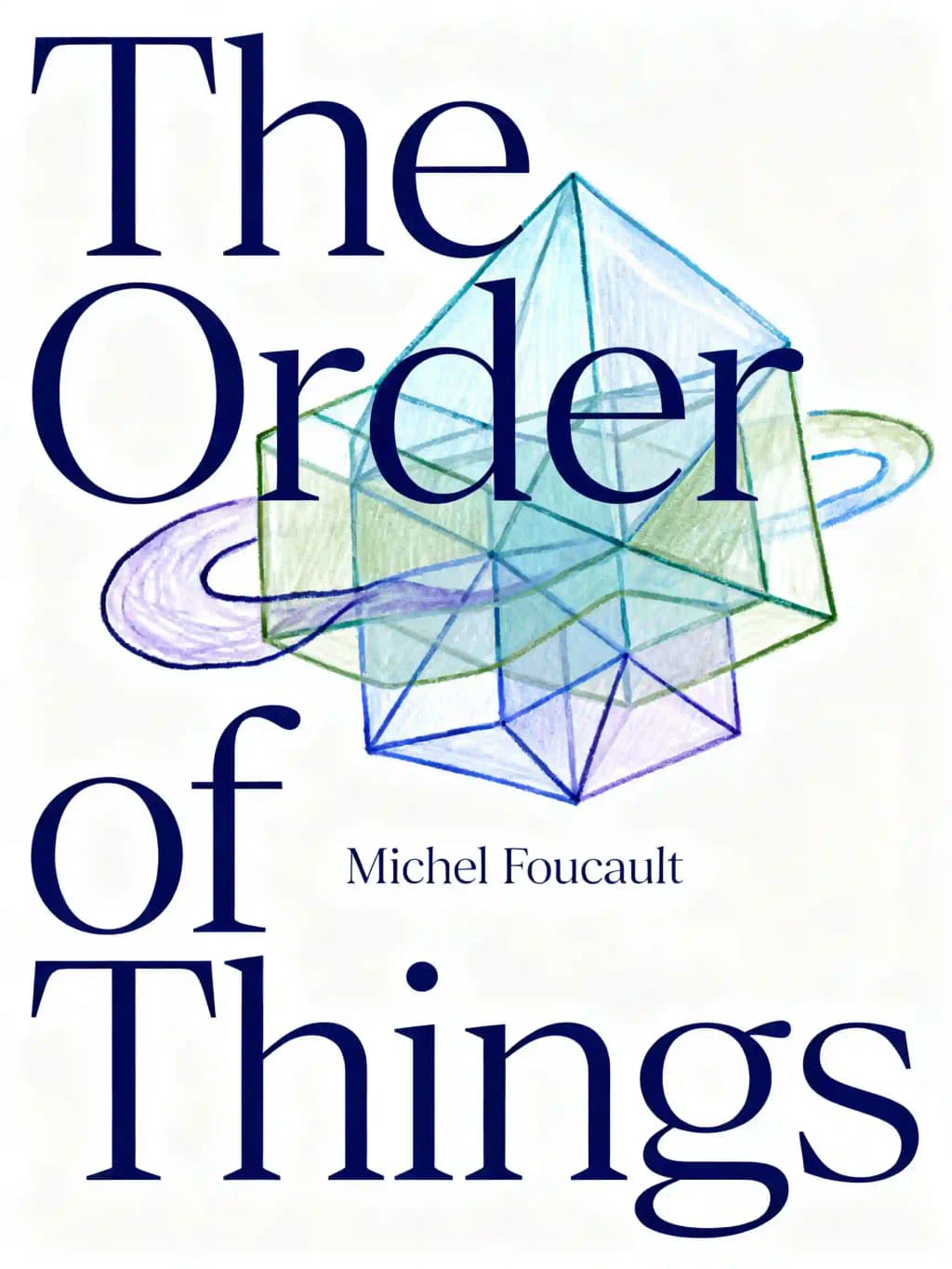
Foucault's explosive masterpiece deconstructs how we organize knowledge across history. By analyzing epistemes from Renaissance to Modern era, he challenged our understanding of "truth" itself. His analysis of Velazquez's "Las Meninas" reveals how power shapes what we consider reality.
著者の声を通じて本を感じる
知識を魅力的で例が豊富な洞察に変換
キーアイデアを瞬時にキャプチャして素早く学習
楽しく魅力的な方法で本を楽しむ
Man is an invention of recent date. And perhaps drawing to a close.
『The Order of Things』の核心的なアイデアを分かりやすいポイントに分解し、革新的なチームがどのように創造、協力、成長するかを理解します。
『The Order of Things』を素早い記憶のヒントに凝縮し、率直さ、チームワーク、創造的な回復力の主要原則を強調します。

鮮やかなストーリーテリングを通じて『The Order of Things』を体験し、イノベーションのレッスンを記憶に残り、応用できる瞬間に変えます。
何でも質問し、声を選び、本当にあなたに響く洞察を一緒に作り出しましょう。

"Instead of endless scrolling, I just hit play on BeFreed. It saves me so much time."
"I never knew where to start with nonfiction—BeFreed’s book lists turned into podcasts gave me a clear path."
"Perfect balance between learning and entertainment. Finished ‘Thinking, Fast and Slow’ on my commute this week."
"Crazy how much I learned while walking the dog. BeFreed = small habits → big gains."
"Reading used to feel like a chore. Now it’s just part of my lifestyle."
"Feels effortless compared to reading. I’ve finished 6 books this month already."
"BeFreed turned my guilty doomscrolling into something that feels productive and inspiring."
"BeFreed turned my commute into learning time. 20-min podcasts are perfect for finishing books I never had time for."
"BeFreed replaced my podcast queue. Imagine Spotify for books — that’s it. 🙌"
"It is great for me to learn something from the book without reading it."
"The themed book list podcasts help me connect ideas across authors—like a guided audio journey."
"Makes me feel smarter every time before going to work"

The Order of Thingsの要約をPDFまたはEPUBで無料でダウンロード。印刷やオフラインでいつでもお読みいただけます。
Imagine waking up one morning to discover that everything you believed about how the world works was merely one possible arrangement among many. This is the intellectual earthquake Michel Foucault triggers in "The Order of Things." Published in 1966 to immediate acclaim, this groundbreaking work doesn't just examine what we know-it excavates how we know. Foucault's central insight is both simple and profound: in different historical periods, knowledge itself is organized according to fundamentally different principles. These principles-what he calls "epistemes"-function like invisible scaffolding that determines what can be thought, said, and recognized as truth in any given era. The revolutionary power of this idea explains why the book sold over 100,000 copies in France alone within months of publication, captivating not just academics but a broader public hungry for radical new ways of understanding knowledge itself.