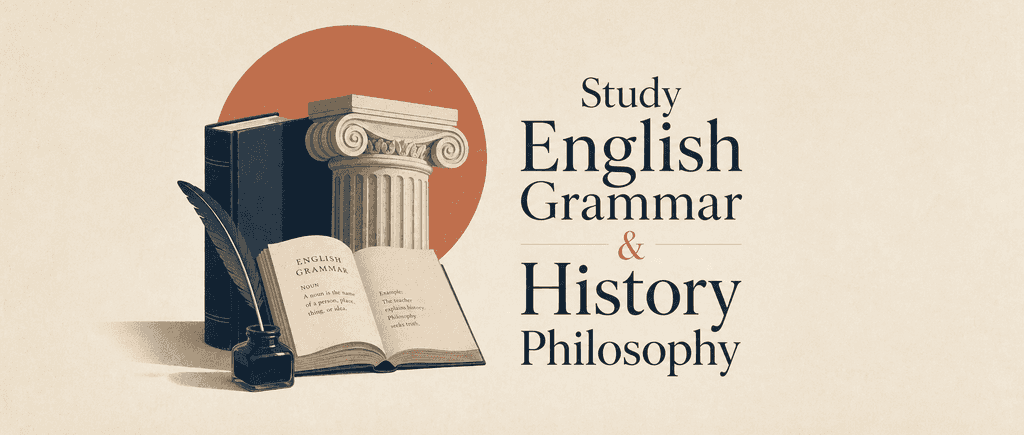
Derrida's revolutionary "Of Grammatology" shattered Western philosophy by challenging speech's primacy over writing. This 1967 cornerstone of deconstruction theory transformed linguistics, literature, and cultural studies forever. What dangerous idea made academics both worship and fear this intellectual bombshell?
Jacques Derrida (1930–2004), author of Of Grammatology, was a groundbreaking Algerian-born French philosopher and the founder of deconstruction, a method critiquing Western metaphysics and linguistic hierarchies. Born in El Biar, Algeria, Derrida studied at Paris’s prestigious École Normale Supérieure and became a leading figure in post-structuralist thought.
His work interrogates philosophical oppositions like speech/writing and presence/absence, with Of Grammatology (1967) famously challenging logocentrism by arguing writing predates speech—a cornerstone of literary theory and critical philosophy.
Derrida’s influential works include Writing and Difference, Dissemination, and Specters of Marx, which expand his analyses of language, ethics, and politics. A professor at institutions like the Sorbonne and UC Irvine, his ideas permeated anthropology, law, architecture, and film studies.
Of Grammatology remains a seminal text in humanities curricula worldwide, translated into over a dozen languages and continuously debated for its radical reevaluation of textuality. Derrida’s legacy endures through his dismantling of entrenched binaries, reshaping disciplines far beyond philosophy.
Of Grammatology critiques Western philosophy’s prioritization of speech over writing, introducing deconstruction to reveal hidden contradictions in language and thought. Derrida argues that writing, often dismissed as secondary, fundamentally shapes meaning through concepts like différance (difference/deferral). The book examines thinkers like Rousseau and Saussure, challenging logocentrism—the belief in a stable, transcendent truth.
This book is essential for students of philosophy, critical theory, or literary studies seeking to engage with poststructuralism. Academics analyzing language, metaphysics, or cultural critique will find its deconstructive framework transformative, though its dense prose requires familiarity with continental philosophy.
Yes—it’s a landmark 20th-century text that redefined literary and philosophical analysis. While challenging, its insights into language’s instability and cultural hierarchies remain influential in fields from postmodern theory to digital media studies.
Derrida’s différance combines “difference” and “deferral,” arguing meaning arises from distinctions between signs and is perpetually postponed. This undermines fixed interpretations, emphasizing language’s fluid, relational nature over static definitions.
Derrida exposes logocentrism—the Western tradition privileging speech as a direct expression of truth—as a myth. He shows how writing, despite being marginalized, structurally enables all communication, destabilizing claims of pure presence or absolute meaning.
Critics argue deconstruction fosters relativism, making coherent critique impossible. Others note its abstract style obscures practical applications, while defenders counter that it rigorously challenges ideological assumptions in philosophy and culture.
It’s more systematic than Writing and Difference but less experimental than Glas. Alongside Speech and Phenomena, it forms his core deconstructive project, though later works like Specters of Marx apply these ideas to politics.
Its analysis of language’s fluidity resonates in digital age debates about AI, misinformation, and identity. The concept of différance informs algorithmic critique, as seen in studies of how search engines shape knowledge.
Spivak’s 1976 English translation, including her seminal preface, made Derrida accessible to Anglo-American audiences. Her commentary clarifies his critique of colonialism and links deconstruction to postcolonial theory.
Derrida challenges this philosophical tradition seeking ultimate truths or origins (e.g., God, reason). He argues such pursuits ignore how language’s instability inherently defers presence, making absolute certainty unattainable.
It revolutionized textual interpretation by prioritizing ambiguity and intertextuality over authorial intent. Critics now routinely deconstruct binaries (e.g., literal/metaphorical) to expose ideological assumptions in novels, laws, or media.
著者の声を通じて本を感じる
知識を魅力的で例が豊富な洞察に変換
キーアイデアを瞬時にキャプチャして素早く学習
楽しく魅力的な方法で本を楽しむ
Writing [is] a dangerous supplement-necessary but potentially corrupting.
These oppositions don't merely organize our thinking; they constitute the very structure of Western thought.
When Derrida says 'there is nothing outside the text,' he's not claiming reality doesn't exist.
The trace is neither a concept nor a word but the very possibility of conceptuality.
There's never a final meaning, only more signs pointing to other signs.
『Of Grammatology』の核心的なアイデアを分かりやすいポイントに分解し、革新的なチームがどのように創造、協力、成長するかを理解します。
『Of Grammatology』を素早い記憶のヒントに凝縮し、率直さ、チームワーク、創造的な回復力の主要原則を強調します。

鮮やかなストーリーテリングを通じて『Of Grammatology』を体験し、イノベーションのレッスンを記憶に残り、応用できる瞬間に変えます。
何でも質問し、声を選び、本当にあなたに響く洞察を一緒に作り出しましょう。

"Instead of endless scrolling, I just hit play on BeFreed. It saves me so much time."
"I never knew where to start with nonfiction—BeFreed’s book lists turned into podcasts gave me a clear path."
"Perfect balance between learning and entertainment. Finished ‘Thinking, Fast and Slow’ on my commute this week."
"Crazy how much I learned while walking the dog. BeFreed = small habits → big gains."
"Reading used to feel like a chore. Now it’s just part of my lifestyle."
"Feels effortless compared to reading. I’ve finished 6 books this month already."
"BeFreed turned my guilty doomscrolling into something that feels productive and inspiring."
"BeFreed turned my commute into learning time. 20-min podcasts are perfect for finishing books I never had time for."
"BeFreed replaced my podcast queue. Imagine Spotify for books — that’s it. 🙌"
"It is great for me to learn something from the book without reading it."
"The themed book list podcasts help me connect ideas across authors—like a guided audio journey."
"Makes me feel smarter every time before going to work"

Of Grammatologyの要約をPDFまたはEPUBで無料でダウンロード。印刷やオフラインでいつでもお読みいただけます。
A philosopher walks into a library and discovers something unsettling: every book on the shelf contradicts itself at its foundation. Not through sloppy thinking, but through the very structure of language itself. This isn't the setup to a joke-it's the radical insight that transformed Jacques Derrida from an obscure French academic into one of the most influential (and controversial) thinkers of the twentieth century. His 1967 masterwork "Of Grammatology" reads like a philosophical detective story, tracking down a crime that's been hiding in plain sight for over two thousand years: Western philosophy's systematic privileging of speech over writing. But here's the twist-the crime scene reveals that the detective, the criminal, and the victim are all the same entity: language itself.