第1章
The Language That Conquered the World
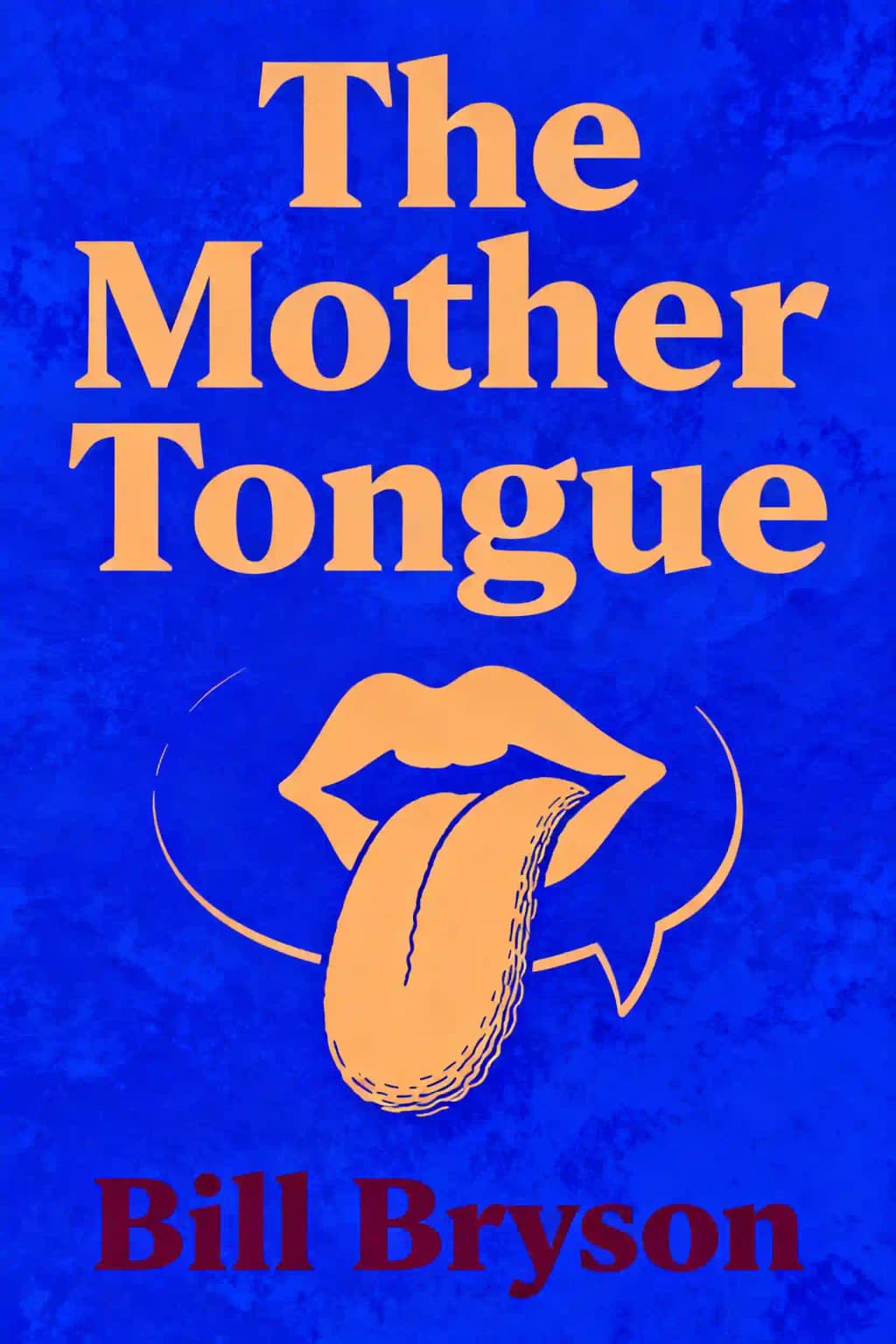
English is the world's most remarkable linguistic success story-a language that began as a minor Germanic dialect spoken by a few thousand people on a damp island has become the global lingua franca. When Bill Bryson wrote "The Mother Tongue," English was already spoken by 300 million people natively, with countless millions more attempting to master it with varying degrees of success. Today, it dominates international business, science, aviation, entertainment, and diplomacy. Even France, which famously resists linguistic imports, has seen its prestigious Pasteur Institute switch its medical journal to English. What makes this linguistic conquest particularly fascinating is that English is notoriously difficult to learn, filled with contradictions, irregular verbs, and idioms that defy logic. Yet its vocabulary surpasses most languages-with 450,000-615,000 words compared to German's 184,000 and French's 100,000-allowing for nuanced expression impossible elsewhere. Perhaps this explains why English has become not just a language but a global phenomenon that continues to reshape how the world communicates.
第2章
The Mysterious Origins of Human Speech
How did language begin? This fundamental question remains one of humanity's greatest mysteries. Archaeological evidence suggests that Neanderthals, despite their physical similarities to modern humans, had significant physiological limitations in speech production. Philip Lieberman's research at Brown University demonstrated that their vocal tract structure couldn't produce many basic sounds we take for granted, including the /e/ in "bee" or the /oo/ in "boot." This anatomical constraint likely resulted in nasal, imprecise speech that severely limited their communicative potential.
By contrast, Homo sapiens developed remarkably sophisticated cultural achievements-intricate cave paintings, specialized tools, and coordinated hunting strategies targeting specific animals seasonally. These complex behaviors strongly suggest they possessed language capable of detailed planning and coordination: "Today we'll hunt red deer. You drive them from the woods while we wait with spears by the riverbank." Neanderthals, with their limited vocal capabilities, might have managed only basic utterances like "Hungry. Hunt."
One fascinating linguistic puzzle involves the Basques, Europe's oldest distinct ethnic group. Their language, Euskara, shares no clear relationship with any other known language and may represent the last surviving remnant of pre-Indo-European languages once spoken across Europe. With distinctive words for numbers one through five (bat, bi, hirur, laur, bortz), Basque stands as a linguistic island, possibly preserving elements of how our distant ancestors communicated.
Even more intriguing is how humans worldwide simultaneously developed language capacity. Isolated populations created entirely distinct language families like Dravidian in southern India, Luorawetlan in eastern Siberia, and Ainu in northern Japan. Yet recent research suggests deeper connections than previously thought-surprising similarities between geographically distant language families like Basque and Na-Dene (northwestern North America) or Finnish and Eskimo-Aleut. Some basic words appear nearly universal, like similar terms for "dog" across continents, hinting that perhaps all human languages ultimately share a common ancestor.
How did these first words form? Various theories exist-the Bow-Wow theory (imitation of natural sounds), the Ding-Dong theory (instinctive sounds corresponding to meanings), the Pooh-Pooh theory (emotional exclamations), and the Yo-He-Ho theory (rhythmic grunts accompanying physical effort). English certainly shows patterns suggesting sound symbolism: sp- words often relate to wetness (spray, splash, spit), fl- words to movement (flail, flap, flee), and -ash endings to abrupt actions (flash, crash, smash). Perhaps most remarkably, children everywhere learn language in the same sequence and developmental patterns, suggesting some aspects of language acquisition are hardwired into our brains-a linguistic inheritance that connects us across time to those first human speakers.
第3章
The Great Language Families
The story of English begins with a remarkable linguistic discovery. In the 1780s, Sir William Jones, an English judge serving in India, noticed striking similarities between Sanskrit, Greek, Latin, Gothic, Celtic, and Persian. His observation that these languages "have sprung from some common source, which, perhaps, no longer exists" launched the field of historical linguistics and revealed the vast Indo-European language family that encompasses most European and many Asian languages.
This insight sparked a scholarly quest to reconstruct Proto-Indo-European, the ancestral language spoken around 7000 BCE. Though no written records exist, linguists have reconstructed aspects of this ancient tongue through comparative analysis. These Neolithic people shared words for family relationships, body parts, common animals, and natural elements. Their vocabulary included terms for snow and cold but none for sea, suggesting an inland origin. They had words for oak, beech, wolf, sheep, and dog, but not horse or window, giving us glimpses into their daily lives.
Around 3500-2500 BCE, these Proto-Indo-Europeans gradually dispersed across Europe and Asia, their language eventually splitting into a dozen major branches-Celtic, Germanic, Greek, Indo-Iranian, Slavonic-which further subdivided into scores of languages from Latin to Hindi. Some Indo-European speakers reached as far as China's Sinkiang province, where Buddhist documents in Indo-European languages called Tocharian were later discovered.
English belongs to the Germanic branch, which split into three groups: North Germanic (Scandinavian languages), West Germanic (English, German, Dutch), and East Germanic (extinct languages like Gothic). The Germanic languages themselves evolved from earlier forms, with systematic sound shifts transforming consonants in predictable patterns-what was "p" in Latin became "f" in Germanic languages (pater/father, piscis/fish).
Celtic languages, once dominant across Europe (evident in place names from Belgrade to Paris), now survive only in western fringes-remote areas of Scotland, Ireland, Wales, and Brittany. Latin evolved into the Romance languages through a similar process of fragmentation. The year 813 marks a turning point when Charlemagne ordered sermons delivered in "lingua romana rustica" (rustic Roman language) instead of "lingua latina" (Latin), acknowledging the emergence of new vernacular languages.
This pattern of language evolution-unity followed by diversity-reveals how languages spread, change, and diverge over time. English itself would undergo multiple transformations through contact with other languages, beginning with the arrival of Germanic tribes to Britain following the Roman withdrawal around 450 CE-setting the stage for one of history's most remarkable linguistic journeys.
第4章
From Anglo-Saxon to Modern English
In the country inns of northern Germany, near the Danish border, you can still hear speech that sounds eerily like ancient English-phrases like "veather ist cold" and "What ist de clock?" This region, Angeln, was home to the Angles who, along with Saxons and Jutes, crossed the North Sea to Britain around 450 CE, bringing with them the language that would become English.
The Anglo-Saxon settlement wasn't a sudden invasion but a gradual migration over generations. These Germanic tribes settled in different regions of Britain, bringing speech variations that persist in regional dialects today. Though the Saxons were numerically dominant, the new nation became known as England (Angle-land) and its language as English-though nobody knows exactly why.
The early Anglo-Saxons were largely illiterate except for runic inscriptions. The earliest surviving Anglo-Saxon writing appears on a gold medallion from 450-480 CE bearing the inscription: "This she-wolf is a reward to my kinsman"-the first sentence in what would become English. Despite their cultural limitations, these settlers possessed a language "rich in possibilities." When St. Augustine brought Christianity and literacy in 597 CE, converting King Ethelbert of Kent, English culture flourished with remarkable speed. Within a century, England became a leading European center of learning.
Old English was grammatically complex, with three genders, five cases for nouns, and seven classes of strong verbs. Adjectives could have eleven different forms, and even the definite article varied by gender and case. Yet many Old English words remain recognizable today: scip (ship), b (bath), brycg (bridge).
This cultural renaissance centered in Northumbria was interrupted by Viking raids beginning in 793 with the sacking of Lindisfarne monastery. After years of territorial battles, the conflict ended with the establishment of the Danelaw in 878, dividing Britain between English south and Danish north. The Scandinavian influence was enormous, with over 1,400 place-names in northern England having Norse origins. English adopted countless Norse words like freckle, leg, skull, husband, and sky. Remarkably, English even borrowed grammatical elements like the pronouns they, them, and their-a rare instance of a language adopting basic elements of syntax from another.
The final transformation came with the Norman Conquest of 1066. For three centuries afterward, no English king spoke English as a native language. The Norman invasion created a two-tiered society: French-speaking aristocracy and English-speaking peasantry. This division is reflected in our vocabulary-humble trades have Anglo-Saxon names (baker, miller, shoemaker) while skilled trades have French names (mason, painter, tailor). Similarly, animals in fields kept English names (sheep, cow, ox) but their meat acquired French names (beef, mutton, veal).
Despite these upheavals, English persisted and evolved. By Shakespeare's time, Middle English had undergone significant grammatical simplification-gender distinctions disappeared, adjective inflections reduced, and verb forms regularized. This linguistic flexibility allowed unprecedented creative expression, especially in Shakespeare's hands, as he alone coined roughly 1,700 words including barefaced, lonely, hurry, and summit. From its humble Germanic origins to its modern global dominance, English's journey represents one of history's most remarkable linguistic transformations.
第5章
The Magnificent Vocabulary Machine
English vocabulary offers remarkable specificity-from arachibutyrophobia (fear of peanut butter sticking to the roof of your mouth) to hendiadys (a figure of speech linking connotative words with conjunctions). Our language has developed words for nearly everything imaginable, from the mild desire of velleity to the slovenly slubberdegullion. Yet curious gaps exist-no coolness equivalent to warmth, missing middling terms, and negative words without positive counterparts. Despite these gaps, English retains perhaps the richest vocabulary of any language, with multiple synonyms for virtually everything.
This lexical abundance comes from multiple sources. Many English words originated from mistakes-"ghost words" like dord (mistakenly included in dictionaries) arise from typographical errors. Mishearings transformed buttonhold into buttonhole, sparrow-grass into asparagus, and shamefast into shamefaced. Back-formations created words like pea (from pease) and cherry (from cerise) when plurals were misunderstood as singular forms.
English readily adopts foreign words-shampoo from India, ketchup from China, boondocks from Tagalog. Many travel circuitous routes: Greek words became Latin, then French, then English. The same word can reach us multiple times in different forms, creating pairs like canal/channel and poor/pauper. Some roots produced triplets (cattle/chattel/capital) or even the record-holding Latin discus, which gave us disk, disc, dish, desk, dais, and discus.
Words often spring mysteriously from nowhere. Dog suddenly replaced hound in Middle English with no known etymology. Others like jaw, bad, gloat, fun, and jalopy similarly appeared without pedigree. Shakespeare alone coined roughly 1,700 words-about one-tenth of his 17,677-word vocabulary was original. The period from 1500-1650 saw 10,000-12,000 new English words created.
Words often retain their form while meanings transform completely-sometimes becoming their opposites. Counterfeit once meant legitimate copy; brave implied cowardice; crafty was praise while enthusiasm was mild abuse. Nice demonstrates remarkable versatility, having meant stupid (1290), wanton (Chaucer), extravagant, strange, luxurious, and finally pleasant by 1769.
English's remarkable flexibility with affixes creates both versatility and confusion. With over a hundred prefixes and suffixes, we transform words with unmatched facility, creating forms like "incomprehensibility" with its root and eight affixes. This system produces both helpful variety and perplexing inconsistency-we have six different adjectival forms of "labyrinth" and eight ways to express negation with prefixes like un-, in-, and non-. English also excels at forming compounds with reversible elements, distinguishing between houseboat and boathouse in ways other languages cannot.
This vocabulary richness makes English uniquely expressive but also challenging to master. The average educated English speaker knows between 150,000-250,000 words but actively uses only a small fraction. Just forty-three words account for half of all words in common use, and merely nine words-and, be, have, it, of, the, to, will, and you-make up a quarter of written English. Yet this core vocabulary supports a vast lexical universe that continues to expand by 15,000-20,000 new words annually, making English the world's most dynamic and adaptable language.
第6章
The Sounds of English
English pronunciation defies certainty, containing a rich mixture of sounds many languages find challenging, like our "th" sound. The humble schwa []-that colorless murmur appearing in countless words like the "i" in "animal" or middle "o" in "orthodox"-is actually our most common vowel sound. Unlike languages with consistent spelling-to-sound correspondence like Finnish, English pronunciation seems almost random. No letter maintains consistent pronunciation, and combinations become even more unpredictable-the notorious "ough" has eight different pronunciations. Some words like "hegemony" and "phthisis" have nine pronunciation variants each.
We pronounce words quite differently from how they're spelled or how we think we say them. "Later" becomes "lader," "ladies" becomes "laties," "handbag" becomes "hambag," and "butter" becomes "budder." We insert sounds where they don't belong-adding "p" between "m" and "t" (as in "warmpth"), or "t" between "n" and "s" (making "mints" and "mince" nearly indistinguishable). Some of these intrusions became permanent: "glimpse" was originally "glimsen," "thunder" had no "d," and "messenger" never had an "n."
We tend to slur familiar words, especially place names. Australians say "Stralia," Torontonians say "Tronna," and Philadelphians come from "Fuhluffia." The more familiar the word, the more slurred it becomes, as with London's Marylebone Road, which locals compress to something like "Mbn." This compression is ancient-"daisy" was once "day's eye," "goodbye" was "God-be-with-you," and "shepherd" was "sheep herd."
The British excel at clipping syllables, turning "immediately" into "meejutly" and "library" into "libree." They also compress place names dramatically, transforming Barnoldswick to "Barlick" and Cholmondeston to "Chumson." Americans, while giving full value to syllables in words like "necessary" and "laboratory," freely add schwas to words ending in "-ile" like "fragile" and "mobile" (though not "infantile").
Despite our imprecise speech, we communicate with remarkable subtlety and speed-about 300 syllables per minute. We shape puffs of air into a continuous blur of sound (theytalklikethis) that listeners must separate into words and sentences. We interpret spoken sounds almost instantaneously, distinguishing between similar-sounding phrases like "that's tough" and "that stuff" with ease.
Pronunciation has changed dramatically over time, as revealed by misspellings and rhymes in historical texts. Shakespeare's rhymes show that "knees," "grease," "grass," and "grace" once rhymed, while he made puns connecting "food" with "ford" and "reason" with "raising." The "k" in "knight" was still pronounced in Shakespeare's day. Elizabethans pronounced many "er" words as "ar" ones, with some remnants surviving in names like Derby and Berkeley.
These historical sound shifts explain many of English's spelling oddities. When printing standardized spelling around 1650, it unfortunately coincided with major pronunciation changes, preserving outdated pronunciations in modern spellings. This is why English spelling seems so disconnected from pronunciation-it's essentially a fossil record of how people spoke 400 years ago, when "knight" sounded like "kuh-nee-guh-tuh" and "name" rhymed with "psalm."
第7章
Accents and Dialects: The Geography of Speech
Our speech patterns reveal our origins with remarkable precision. Whether you call a sandwich a hero, submarine, hoagie, or torpedo; whether cottage cheese is called Dutch cheese, pot cheese, or clabber cheese-these choices map your linguistic geography. A sophisticated computer could likely place any English speaker within a small geographical area based on just ten key words: cot, caught, cart, bomb, balm, oil, house, horse, good, and water.
A paradox exists where England has tremendous accent diversity in a small area while America has relative homogeneity across its vast territory. As Simeon Potter notes, greater pronunciation differences exist between northern England regions than across all of North America. In northern England alone, an area about the size of Maine, there are seventeen different pronunciations for "house." Some claim to distinguish speakers from opposite sides of a village street.
American speech regions do have distinctive characteristics. Northerners say "frosting" while Southerners prefer "icing." Easterners put groceries in a "bag," Southerners in a "poke," and elsewhere in a "sack." Northern speakers tend toward "oo" sounds in words like "duty" and "newspaper," and often drop words at the beginning of sentences. They struggle to distinguish between sounds in "cot" and "caught," while Southerners have difficulty differentiating between word pairs like "fire/far" and "morning/moaning."
William Labov's groundbreaking research revealed that dialect features often function as social markers. In New York, he found that pronunciation of "r" correlates with social class-upper-middle-class speakers pronounce it more frequently, especially in careful speech. On Martha's Vineyard, traditional pronunciations have increased as locals use them to distinguish themselves from tourists.
Dialects aren't just regional-they're also occupational, ethnic, and class-based. In Northern Ireland, subtle accent differences often signal religious affiliation, with Protestants saying "aitch" and Catholics "haitch" for the letter H. National accents can develop surprisingly quickly-within a generation of colonization, visitors to Australia were noticing a distinctive "Strine" accent.
Some dialects approach being separate languages. Scots (Lallans), spoken in Scotland's Lowlands, has its own dictionary and literature, including Robert Burns' poems filled with words incomprehensible to other English speakers. Gullah, spoken by up to 250,000 people on Georgia and South Carolina's Sea Islands, blends 28 West African languages with English. Despite its economical grammar, it possesses remarkable subtlety and beauty.
Some dialects preserve remarkably ancient forms. Until the early 20th century, Yorkshire shepherds still counted sheep using Celtic numbers predating the Roman occupation. The Yorkshire question "Weeah ta bahn?" (Where are you going?) directly contracts the medieval "Where art thou bound?" In South Yorkshire, people still use "thee" and "thou" (transformed to "tha'"), following complex unwritten grammatical and social rules.
The most isolated English dialect exists on Tristan da Cunha, a remote island group 1,500 miles from the nearest landfall between Africa and South America. Though the 300-odd inhabitants have Portuguese ancestry, their names and language are primarily English-with endearing ungrammatical constructions like "How you is?" The dialect features unique local terms such as pennemin (penguin) and watrem (stream).
These linguistic variations represent not just different ways of speaking but different ways of experiencing the world-each dialect preserving unique cultural perspectives and historical memories that enrich the tapestry of English.
第8章
The Challenges of English Spelling and Grammar
English spelling presents numerous challenges compared to other writing systems. Our alphabet originated from Semitic pictographs that evolved to represent sounds rather than objects. The letter A comes from aleph (meaning "ox"), while B derives from beth ("house"). This phonetic leap was revolutionary compared to the complex pictographic systems used in the Far East.
English has about 40 sounds but over 200 ways to spell them. The irregularities stem from various sources: the vanishing "u" in forty (despite remaining in four), words like "ache" (which adopted verb pronunciation with noun spelling), and Anglo-Saxon adaptations of the Roman alphabet. Norman scribes further complicated matters by introducing changes like substituting "qu" for "cw" and "o" for "u" in words like "come."
William Caxton, a wealthy English merchant, established the first English-language printing press in 1475, publishing "Recuyell of the Historyes of Troy." His work helped standardize London spellings across Britain. By 1640, over 20,000 titles were available, firmly establishing London English as the printed standard. Unfortunately, this standardization occurred precisely when English pronunciation was undergoing dramatic changes, meaning today's spellings largely reflect how people spoke 400 years ago.
By the late eighteenth century, many called for spelling reform. Benjamin Franklin complained that without reform, English words would "cease to express Sounds" and published "A Scheme for a New Alphabet and a Reformed Mode of Spelling" in 1768. Despite support from luminaries including Darwin, Tennyson, and Conan Doyle, reform efforts had minimal impact. In 1906, Andrew Carnegie funded the Simplified Spelling Board with $250,000, helping establish American spellings like "catalog" and "program." But when the Board proposed more radical changes like "tuf," "def," and "yu," public resistance mounted.
English grammar presents a fascinating paradox: it achieves remarkable flexibility with minimal inflection. While Latin verbs have up to 120 forms, English verbs rarely exceed five inflections, yet express complex temporal relationships. This efficiency creates classification challenges-the "present tense" of "drive" can express past, future, or conditional meanings, while actual present actions require the participial form "driving."
English grammar is unnecessarily complex because its rules are based on Latin-a language with which English has little in common. This creates absurdities like the prohibition against split infinitives, which is like asking people to play baseball using football rules. Many supposed grammar "rules" have little basis in linguistic reality. The prohibition against ending sentences with prepositions originated with Robert Lowth's 1762 grammar book, where it was merely stylistic advice for "solemn and elevated" writing, not an absolute rule.
Without a language academy, dictionaries might defend the language, but increasingly avoid this role. The debate centers on whether dictionaries should be prescriptive (prescribing proper usage) or descriptive (merely documenting actual usage). Webster's Third New International Dictionary (1961) notoriously took the descriptive approach, accepting contested usages without comment and claiming "ain't" was used by "many cultivated speakers."
English thrives as a fluid, democratic language where meanings shift through common usage rather than committee dictates. Yet there's a case for resisting slapdash change. Even descriptivists must accept some conventions-we must agree "cat" means a small furry quadruped, not an elephant. Similarly, clarity benefits from maintaining distinctions between words like "imply" and "infer," "fortuitous" and "fortunate." As John Ciardi noted, resistance may ultimately prove futile, but it tests changes and makes them prove their worth.
第9章
English Goes Global: Triumph and Challenge
English has spread globally, often with amusing results. In Hong Kong, you might find the "Plastic Bacon Factory," while Naples has a sports shop called "Snoopy's Dribbling." Brussels features a men's store called "Big Nuts" selling sweatshirts. Japan offers "Homo Milk" and "Poccari Sweat" soft drinks. Despite Yugoslavia having five languages, none containing the word "stop," every stop sign in the country uses this English term.
Counting English speakers globally proves challenging. Native speakers number between 300-400 million, with uncertainty stemming from non-English speakers in English-speaking countries and the question of whether English-based creoles count. Another issue is distinguishing between actual speakers and those who merely think they speak it, as evidenced by hilariously incomprehensible English in tourist brochures. Despite having fewer speakers than Mandarin Chinese, English serves as an official language in 44 countries (covering 1.6 billion people) and functions as a competent second language for perhaps 400 million people worldwide.
English dominates globally, with two-thirds of scientific papers published in it and substantial portions of European business conducted in it. The English teaching industry generates $6 billion annually worldwide, becoming Britain's sixth-largest source of invisible earnings. English words have infiltrated languages worldwide. Germans speak of "die Teenagers" and "das Walkout," Italians use "col-cream," and nearly everyone says "telephone" in some form. Universal English terms include "airport," "hotel," "weekend," and "no problem."
Not all welcome English's incursion. France has battled "Anglo-Saxon" influence since 1911, establishing multiple commissions and laws with fines for using anglicisms. French speakers must say "oleoduc" instead of "pipeline," "avion a reaction" instead of "jet," and "pate a macher" for "chewing gum." Despite this resistance, anglicisms comprise between 2-5% of French vocabulary.
Despite appearances, most foreigners speak English out of necessity, not pleasure. In Amsterdam, Antwerp, and Oslo, people speak excellent English but prefer books and TV in their native languages. When German viewers could choose between English broadcasts and German-dubbed versions, they overwhelmingly chose German dubbing. In many former colonies, English serves as a practical expedient rather than a beloved lingua franca.
Translation creates enormous costs and misunderstandings. The European Community spent $700 million on translation in 1987, with one-third of employees engaged in translation work. Mistranslations have had serious consequences: a 1905 Russia-Japan treaty nearly collapsed over confusion between English "control" (dominate) and French "controler" (inspect). Japan's WWII involvement may have been prolonged when "mokusatsu" was mistranslated.
English speakers show alarming complacency about language learning. In 1986, only 25,000 Americans studied Russian while 4 million Russians studied English-a 160:1 ratio favoring the Soviets. By 1989, 77% of American college graduates had taken no foreign language courses whatsoever. Despite a presidential commission calling this "scandalous," Congress's response-the Education for Economic Security Act-provided a mere $2.45 million (one cent per American) for language education.
The most pressing question for English's future is whether it will remain cohesive or fragment into mutually incomprehensible sublanguages. Robert Burchfield, then chief editor of Oxford English Dictionaries, sparked controversy in 1978 by suggesting British and American English were moving apart so inexorably they'd be mutually unintelligible within 200 years.
Unlike Latin's evolution into separate Romance languages, modern communications create powerful binding influences. Today's television viewers might watch Australian, American, and British programs in a single evening, experiencing vocabulary and accents that previous generations wouldn't encounter in a lifetime. The greater concern may be not that English varieties will drift apart, but that they'll become indistinguishable-"And what a sad, sad loss that would be."
第10章
The Enduring Legacy of English
The English language displays a remarkable genius for creating memorable, often absurd names. British Who's Who entries read like P.G. Wodehouse characters, with gloriously redundant appellations like Sir Humphrey Dodington Benedict Sherston Sherston-Baker. Even more fascinating is how the British pronounce their names in ways bearing almost no resemblance to spelling: Leveson-Gower becomes "looson gore," Marjoribanks is "marchbanks," and Beaudesert somehow transforms into "belzer."
The British delight in mangling name pronunciations. They turn Norman names into uniquely English forms: Beaulieu becomes "bewley," Beauchamp becomes "beecham," and Belvoir somehow "beaver." Even simple names undergo transformation: Sinclair becomes "sinkler," Cockburn is "coburn," and Anthony Powell is "pole." Academic institutions aren't spared-Caius College is "keys," while both Magdalen College, Oxford and Magdalene College, Cambridge are "mawdlin."
British pub names represent a special kind of creative absurdity, from the Dog and Duck to the Crab and Gumboil. The naming tradition dates to Roman times but took its current quirky form in the Middle Ages when illiterate travelers needed recognizable symbols. Many names have been corrupted over centuries: the Pig and Whistle likely derived from "peg" (drinking vessel) and "wassail" (festive drink), while the Goat and Compasses may have originated as "God Encompasseth Us."
The study of names, onomastics, reveals that surnames evolved gradually over centuries, starting with the upper classes. Before the Norman conquest, most English people used only given names. Surnames typically derived from four sources: place-names (Lincoln), nicknames (Whitehead), trades (Smith), or patronymics (Johnson). Medieval bureaucracy accelerated surname adoption-the 1379 poll tax required recording everyone's name, while the 1413 Statute of Additions mandated that legal documents include occupation and residence.
Names often conceal fascinating origins. Russell comes from French roussell meaning "red-haired," while Morgan is Welsh for "white-haired." Some innocent-sounding names hide strange meanings-Kennedy means "ugly head" in Gaelic, Campbell means "crooked mouth," and Cicero is Roman slang for a nose wart.
Most English swear words have considerable antiquity. Words like tits and fart would be understood by Anglo-Saxon peasants from the tenth century. Shit evolved from the Anglo-Saxon scitan, becoming shite by the 1300s. Fuck possibly springs from Latin futuo, French foutre, or German ficken, first appearing in print in 1503. Words considered vulgar today were once perfectly acceptable. Shit was standard until the early nineteenth century, prick until the eighteenth, and piss for 500 years until 1750.
Wordplay is as ancient as language itself, from Greek palindromes to Roman anagrams. In English, it's been woven into our literature since the eighth century when poet Cynewulf embedded acrostics of his name into religious poems. The crossword puzzle, invented in 1913 by Arthur Wynne (who called it a "word-cross"), has become the most popular sedentary recreation, occupying thirty million Americans daily.
In 1787, America's founding fathers never considered establishing an official national language, assuming English would naturally prevail. By the 1980s, however, growing immigrant populations prompted movements to legally protect English. According to the Census Bureau, 11% of Americans speak another language at home, with Spanish particularly prevalent.
Perhaps more pressing than immigrant language use is the declining quality of English among native speakers. Between 1973 and 1983, high-scoring SAT students dropped from 10 to 7 percent, while verbal scores fell nearly 10 percent between 1967 and 1984. During this period, students receiving four years of English instruction plummeted from 85 to 41 percent.
Despite these challenges, English continues to thrive as the world's most dynamic and influential language. Its remarkable journey from a minor Germanic dialect to global lingua franca represents one of humanity's most extraordinary linguistic achievements-a testament to the language's adaptability, expressiveness, and enduring appeal. As we look to the future, English will undoubtedly continue to evolve, absorbing new influences while maintaining the core qualities that have made it the world's most successful language.