第1章
The Miraculous Machine: Our Bodies, Ourselves
In a world obsessed with technological marvels, we often overlook the most extraordinary machine ever created-the human body. Bill Bryson's "The Body" invites us to marvel at this astonishing biological masterpiece that we inhabit. This book has captivated millions worldwide, including celebrities like Barack Obama who included it in his 2019 summer reading list, and has been translated into over 30 languages. What makes this exploration so compelling is Bryson's ability to transform complex scientific concepts into an accessible journey of discovery that leaves readers in awe of their own existence. As we navigate an era of unprecedented health challenges and medical breakthroughs, understanding our bodies has never been more culturally relevant. The book arrived at a perfect moment-just before a global pandemic would make us all acutely aware of our biological vulnerabilities and resilience.
第2章
The Humble Miracle: Building a Human from Stardust
Our bodies represent an astonishing paradox-constructed from remarkably humble materials yet capable of extraordinary feats. While the Royal Society of Chemistry calculated it would cost $151,578.46 to assemble the elemental components of a human (using actor Benedict Cumberbatch as their template), PBS's Nova program estimated just $168. This stark difference highlights how much remains uncertain about our physical makeup.
What's truly miraculous isn't the materials themselves-the same elements found in ordinary dirt-but how they organize into a living being. Every second, without conscious effort, your body manufactures a million red blood cells. Your 7 octillion atoms work in perfect concert to maintain your existence, despite having no consciousness themselves. If unpacked, your body would reveal staggering proportions-lungs covering a tennis court, blood vessels circling Earth multiple times, and DNA stretching beyond Pluto.
The cell forms life's fundamental unit, yet pinpointing exactly where life begins remains elusive. Perhaps most remarkable is that no single component serves as "commander-in-chief"-everything responds to signals from other components in an intricate dance producing coordinated action across your entire body. Your DNA exists solely to replicate itself, passing information with extraordinary fidelity (making just one error per billion letters copied). Every ancestor in your lineage successfully transmitted genetic material for three billion years to create you.
Despite sharing 99.9% of our DNA with other humans, we remain uniquely individual. Only 2% of our genome codes for proteins, with the remainder's function largely mysterious. Though often compared to machines, our bodies are infinitely more remarkable-working for decades without servicing, running on water and organic compounds, reproducing themselves, and appreciating beauty.
Even when abused, our bodies maintain and preserve us. Most smokers don't develop lung cancer. Our immune systems destroy cancerous cells daily. We may not be perfectly designed-with impacted molars, painful childbirth, and susceptibility to backache-but the true miracle is that we aren't overwhelmed by these frailties, especially considering we evolved from ancestors who weren't even human.
第3章
The Living Envelope: Our Skin and Its Mysteries
Our skin serves as both boundary and ambassador between our bodies and the outside world. This remarkable organ covers approximately two square meters and weighs 10-15 pounds-our largest organ by far. The surface consists entirely of dead cells that we shed copiously-about 25,000 flakes per minute, creating that familiar dust that accumulates on bookshelves and windowsills.
Beneath this surface lies an intricate world of blood vessels, nerve fibers, hair follicles, and specialized glands. Your skin houses millions of sensory receptors like Meissner's corpuscles that detect light touch and Pacinian corpuscles that register movements as slight as 0.00001 millimeter. These receptors allow you to feel a feather brushing your arm or detect the slightest vibration.
Skin color, which has divided humanity for centuries, comes from melanin in a thin translucent layer. All races have the same number of melanocytes but differ in melanin production-a simple adaptation to sunlight exposure that has evolved multiple times in human history. This represents convergent evolution-similar traits developing independently in different populations based on environmental conditions.
Light skin evolved at least three times in human history, possibly in response to agricultural lifestyles and reduced vitamin D from animal sources. The process of depigmentation can occur in just 2,000-3,000 years, much faster than previously thought. Today, increased human mobility means many people live where their skin tone doesn't match local sunlight conditions, leading to widespread vitamin D deficiency.
Our fingerprints remain equally mysterious. While commonly assumed to aid gripping like tire treads, this has never been proven. Similarly puzzling is why fingers wrinkle in water. Rarely, people are born with adermatoglyphia-completely smooth fingertips-suggesting some genetic connection between fingerprints and sweat glands.
Sweating proved crucial to human evolution. With twice as many sweat glands as chimpanzees, humans can dissipate heat more efficiently than quadrupeds that cool by panting. This evaporative cooling system allowed for our enlarged, temperature-sensitive brain. Even at rest, we sweat steadily, but during exertion, water loss accelerates dramatically. After losing 3-5 quarts, headaches and lethargy set in; beyond 10.5 quarts, death occurs.
Our skin hosts approximately 100,000 microbes per square centimeter, creating a highly personalized ecosystem influenced by our soaps, clothing, and hygiene habits. The Belly Button Biodiversity Project discovered an average of 67 bacterial species per navel, including 1,458 species previously unknown to science. Beyond bacteria, our skin also hosts tiny mites called Demodex folliculorum, which have coevolved with humans for so long their DNA can track ancient human migrations.
第4章
The Invisible Companions: Our Microbial Universe
We are not just human-we are a walking ecosystem. Without the trillions of microorganisms that call our bodies home, we couldn't survive a day, yet we know surprisingly little about these tiny companions.
Every breath brings in mostly nitrogen, which bacteria convert into forms useful to us. Our bodies host trillions of microbes providing 10 percent of our calories and essential vitamins by breaking down foods we couldn't otherwise digest. Though individually tiny and short-lived-weighing one-trillionth of a dollar bill and living just twenty minutes-collectively they're formidable. Unlike us, bacteria can swap genes like trading cards and mutate rapidly, allowing them to evolve at astonishing speeds. A single bacterium could theoretically produce offspring greater than Earth's mass in two days.
Our personal microbiome consists of roughly 40,000 species weighing about three pounds-the same as our brain-with possibly twenty million bacterial genes compared to our mere twenty thousand human ones. This means that genetically speaking, you are more bacterial than human.
Viruses exist in a strange limbo between life and non-life. Outside cells, they're inert objects that don't eat, breathe, or move on their own. But once inside living cells, they animate furiously. Most viruses don't affect humans at all-they infect bacteria-and we've barely begun to understand their prevalence. Seawater contains up to 100 billion viruses per quart, and healthy human lungs harbor 174 virus species, 90 percent previously unknown.
Some viruses show remarkable patience, like the varicella-zoster virus causing childhood chickenpox before potentially reactivating decades later as shingles. The common cold, caused by hundreds of different virus varieties, continues to elude cure despite extensive research. Studies show how efficiently cold viruses spread-not through kissing or sneezing, but primarily through touch, with contamination spreading through an entire office building within hours.
Our relationship with microbes has been transformed by antibiotics, beginning with Fleming's serendipitous 1928 discovery of penicillin when Penicillium mold spores landed on his unattended petri dish. Though Fleming noted the antibiotic implications, it was Howard Florey's Oxford team who developed it into medicine. By 1944, pharmaceutical companies were producing 100 billion units monthly, though Fleming presciently warned in his 1945 Nobel speech about bacterial resistance.
Penicillin's broad-spectrum effectiveness is also its weakness-it kills beneficial bacteria alongside pathogens. Most Westerners receive between five and twenty antibiotic courses by adulthood, with potentially cumulative effects as each generation passes on fewer microorganisms than before. Meanwhile, antibiotics are grossly misused, with 70% of prescriptions written for conditions they can't treat and 80% of U.S. antibiotics fed to livestock. Consequently, superbugs like MRSA and CRE have emerged, with antimicrobial resistance projected to cause 10 million annual deaths within thirty years.
第5章
The Three-Pound Universe: Inside the Human Brain
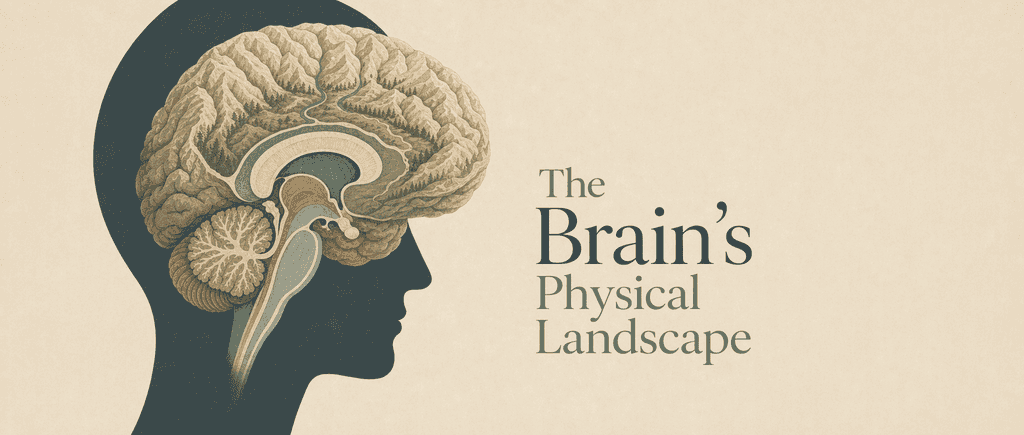
The human brain is arguably the most extraordinary thing in the universe-a three-pound mass of mostly water, fat and protein that creates our entire conscious experience despite never directly experiencing the world itself. It processes more information in thirty seconds than the Hubble Telescope has in thirty years, with a cubic millimeter of cortex capable of storing two thousand terabytes of information.
Despite consuming just 400 calories daily (about a blueberry muffin's worth), it uses 20% of our body's energy while comprising only 2% of our weight. Remarkably, nothing about the brain is uniquely human-we use the same components as other mammals, and contrary to popular belief, we have about 86 billion neurons rather than 100 billion. Our intelligence resides not in neuron count but in the trillions of synaptic connections between them.
The brain divides into three main sections. The cerebrum fills most of the cranial vault and handles higher functions, divided into two hemispheres that control opposite sides of the body, connected by the corpus callosum. The cerebellum, occupying 10% of cranial space but housing over half the brain's neurons, controls balance and complex movements. The brain stem, the oldest part, manages basic functions like breathing and heartbeat.
Despite extensive study, fundamental questions about the brain remain unanswered. We don't fully understand consciousness or what a thought physically is. Memory storage is similarly mysterious-we retain trivial information (like baseball lineups from decades ago) while forgetting essential daily needs. When we "see" something, only about 10% of information comes from the optic nerve; the rest is the brain's interpretation. Most remarkably, the brain forecasts what the world will be like a fifth of a second from now and presents that as the present-meaning we perpetually live in a world that doesn't quite exist yet.
Memory is surprisingly unreliable. Research shows people can develop entirely false memories through suggestion-believing they experienced events that never happened. Even vivid memories of significant events like 9/11 change substantially over time without our awareness. Memory storage is idiosyncratic; the brain breaks memories into component parts (names, faces, locations) and stores them in different areas, reassembling them when needed.
Think about your childhood home. You can probably recall details you haven't thought about in years-the pattern of a carpet, the sound a particular door made, the smell of a specific room. These memories were always there, but inaccessible until the right trigger brought them forth. This demonstrates how much more information our brains store than we can easily access.
Brain development continues well into adulthood. A teenager's brain is only 80% complete, with synaptic wiring not fully established until the mid-to-late twenties. During adolescence, the pleasure center (nucleus accumbens) reaches maximum size while dopamine production peaks, explaining why teenage experiences feel so intense and why risk-taking behavior increases dramatically.
Perhaps most puzzling is that human brains have shrunk significantly over the past 12,000 years-equivalent to losing a tennis ball-sized portion-while our skulls have simultaneously grown thinner. Whether this represents increased efficiency or diminished capacity remains an open question.
第6章
The Remarkable Heart: Rhythm of Life
The heart is our most misperceived organ. It looks nothing like the Valentine's Day symbol, is located centrally in the chest rather than where we place our hand during patriotic moments, and despite being the emotional seat of our being in metaphor, has no actual investment in our emotional well-being. It is single-mindedly focused on its one job: beating approximately once every second, 100,000 times daily, up to 3.5 billion times in a lifetime.
The heart's workload is staggering-pumping 70 gallons of blood hourly, 1,680 gallons daily, with enough force to overcome gravity when returning blood from the feet to the heart. Over a lifetime, it performs work equivalent to lifting a one-ton object 150 miles into the air.
Despite its importance, the heart is modest in size, weighing less than a pound and divided into four chambers: two atria (entry rooms) and two ventricles (chambers). It functions as two synchronized pumps-one sending blood to the lungs, the other throughout the body. The brain receives 15% of pumped blood, while the kidneys receive the most at 20%.
Maintaining proper blood distribution throughout the body requires overcoming gravity's pull. When standing, about a pint and a half of blood tries to drain downward, but valves in veins prevent backflow while leg muscles act as pumps when contracted-which is why regular movement is important.
The heart can falter in numerous ways. Some people experience palpitations-up to ten thousand extra beats daily-without noticing, while others find arrhythmia an endless discomfort. Heart attacks and cardiac arrests are distinct conditions. A heart attack occurs when a coronary artery blockage prevents oxygenated blood from reaching heart muscle, causing tissue death within about sixty minutes. Cardiac arrest happens when the heart stops pumping altogether due to electrical signaling failure.
Heart failure can be cruelly deceptive-about a quarter of victims only discover their heart problem during a fatal attack. More than half of first heart attacks occur in seemingly healthy people with no obvious risk factors. Women experience heart attacks differently than men, often with abdominal pain and nausea rather than chest pain, leading to misdiagnosis and twice the fatality rate for women under fifty-five compared to men.
The twentieth century witnessed revolutionary advances in cardiac medicine. Werner Forssmann pioneered cardiac catheterization in 1929 by threading a catheter through his own arm into his heart. John H. Gibbon spent twenty years developing the first heart-lung machine, enabling the first successful open-heart surgery in 1953. Christiaan Barnard performed the first heart transplant in 1967, while the discovery of cyclosporine from a soil fungus revolutionized transplant medicine by preventing rejection.
Blood itself is equally remarkable. A single drop contains roughly 4,000 different molecules, making blood tests invaluable diagnostic tools. When centrifuged, blood separates into four layers: plasma (over 50% of volume), red blood cells (44%), white blood cells (less than 1%), and platelets (less than 1%). Red blood cells are remarkably efficient-each teaspoon of blood contains 25 billion of them, each holding 250,000 hemoglobin molecules.
第7章
The Chemistry Department: Hormones and Regulation
The body's chemical regulation systems represent some of its most elegant and complex operations. In 1920, Frederick Banting, a struggling young general practitioner from London, Ontario, had a breakthrough idea about diabetes despite knowing so little about the disease that he misspelled it as "diabetus" in his notes. Working with assistant Charles Best at the University of Toronto, they tackled the challenge of extracting insulin from the pancreas, where specialized cells called islets of Langerhans produce this vital hormone.
Despite conducting experiments that were "wrongly conceived, wrongly conducted, and wrongly interpreted," they miraculously succeeded in producing pure insulin. When administered to diabetic patients, the results were nothing short of resurrection-skeletal, barely-alive patients were swiftly restored to full vibrancy.
Hormones are the body's chemical messengers, produced in one location but causing actions elsewhere. Despite their critical importance, they were the last major bodily system discovered, with our understanding still evolving. As Oxford endocrinology professor John Wass enthusiastically explains, the field remains "terribly exciting" with new hormones continually being identified-from about twenty known in 1958 to perhaps a hundred today.
These powerful chemicals come from the endocrine glands-tiny organs like the pituitary, thyroid, pancreas, and gonads that collectively weigh just ounces but profoundly influence our well-being. In 1995, geneticist Jeffrey Friedman revolutionized endocrinology by discovering leptin, a hormone produced not in traditional endocrine glands but in fat cells. This revelation upended conventional understanding that hormones came exclusively from dedicated glands. We now know hormones are produced throughout the body-in the stomach, lungs, kidneys, pancreas, brain, and bones.
Our bodies evolved to cope with food scarcity, not abundance, so we lack chemical signals to stop eating. When leptin is completely absent, you keep eating continuously because your body thinks you're starving, but adding leptin to a normal diet makes no discernible difference to appetite. Leptin primarily tells the brain whether you have enough energy reserves for demanding processes like pregnancy or puberty.
Oxytocin exemplifies the bewildering diversity of hormone functions. Known as "the hug hormone" for generating feelings of attachment and affection, it also plays crucial roles in facial recognition, directing uterine contractions during childbirth, interpreting others' moods, and initiating milk production in nursing mothers. This peculiar combination of specializations remains unexplained.
The liver stands apart from other glands by its sheer size-weighing about 3.3 pounds like the brain-and filling much of the central abdomen below the diaphragm. It's the body's most versatile organ, performing roughly 500 metabolic processes. The liver's most remarkable feature is its regenerative ability-remove two-thirds and it regrows to original size within weeks.
The kidneys, though small at just five ounces each, process an astonishing 190 quarts of water and 3.3 pounds of salt daily. Located higher than commonly thought-at the bottom of the rib cage rather than the small of the back-these organs filter waste, regulate blood chemistry and pressure, metabolize vitamin D, and maintain salt-water balance.
第8章
In Motion: The Skeleton and Movement
Our skeletal architecture serves dual purposes: rigidity and pliancy. As trauma surgeon Ben Ollivere notes, "We are both floppy and rigid." Our knees must lock when standing but instantly bend up to 140 degrees for sitting and kneeling-all with grace and fluidity for decades. Compared to the jerky movements of robots, our bodily mechanics are remarkably accomplished.
While typically cited as 206 bones, this number varies between individuals-about one in eight people has an extra pair of ribs, while those with Down's syndrome often have fewer. This count excludes sesamoid bones found in tendons. Our bones are unevenly distributed, with over half located in hands and feet.
Beyond structural support, bones protect organs, manufacture blood cells, store chemicals, transmit sound, and produce hormones like osteocalcin, which regulates glucose, influences mood, and may help stave off Alzheimer's disease through exercise.
Bones are living tissue-70% inorganic material, 30% organic-with collagen as their fundamental element. They grow stronger with use, becoming 30% thicker in a professional tennis player's serving arm. Despite weighing only about twenty pounds collectively, bones can withstand up to a ton of compression, are stronger than reinforced concrete, and uniquely heal without scarring.
Our body's support system extends beyond bones to include muscles, tendons, ligaments, and cartilage. Tendons connect muscles to bone and are stretchy extensions of muscles, visible as ridges when making a fist. While strong, they heal slowly due to limited blood supply. Cartilage, having no blood supply, barely heals at all.
Among 250 primate species, humans alone walk exclusively on two legs-a defining characteristic perhaps as important as our advanced brains. Though theories abound about why our ancestors adopted bipedalism (freeing hands, improving sight lines, enabling throwing), the transition made us vulnerable. Walking itself is remarkably complex-essentially hurling the body forward and letting the legs catch up.
Our bipedal evolution required profound anatomical changes: repositioned skull attachment, supple back, angled thigh bones, massive gluteus maximus muscles, Achilles tendons, arched feet, and flatter faces with vocal tracts capable of speech. Most crucially, we developed the nuchal ligament that stabilizes the head when running-revealing our evolutionary superpower: endurance running.
While not fast sprinters, humans can outlast most animals in hot conditions. We cool through perspiration while quadrupeds must stop to pant, giving persistence hunters a crucial advantage. Our throwing ability-requiring mobile waists, loose shoulders, and whiplike arms-gave us another survival edge, allowing us to wound prey from a safe distance. However, bipedalism brought consequences we still experience today: back pain, knee problems, and dangerously difficult childbirth.
第9章
The Balancing Act: Homeostasis and Survival
Life exists within extraordinarily fine tolerances. Our body temperature normally stays within a degree of 98.6F-deviating just two degrees below or four degrees above can cause irreversible brain damage or death. The hypothalamus controls this balance, telling the body to cool itself through sweating or warm itself by shivering and redirecting blood flow.
Despite seemingly simple mechanisms, the body maintains temperature with remarkable precision. In one experiment, a subject ran a marathon while room temperature gradually changed from -49F to 131F, yet his core temperature varied less than one degree. Two centuries earlier, physician Charles Blagden conducted similar experiments, enduring temperatures of 198F for ten minutes while eggs and steak cooked nearby. These experiments revealed perspiration's crucial role in cooling.
Maintaining equilibrium within the body-homeostasis-was pioneered by Harvard physiologist Walter Bradford Cannon, who coined the term. Despite his stern appearance in photographs, Cannon possessed remarkable skill at persuading students to participate in uncomfortable experiments. He convinced Arthur Washburn to overcome his gag reflex and swallow a tube with an inflatable balloon to measure stomach contractions during hunger, and had others consume food while being X-rayed to observe peristalsis.
The staggering energy required by our cells remained mysterious until an eccentric, self-funded Englishman named Peter Mitchell made a breakthrough discovery. Working from his Cornwall estate, the long-haired, earring-wearing Mitchell proposed theories about cellular energy that were initially dismissed but eventually earned him the 1978 Nobel Prize in Chemistry.
Inside our cells, charged particles called ions flow through membrane channels, generating electrical impulses of 100 millivolts-collectively producing thirty million volts per meter, equivalent to lightning. The key energy molecule, adenosine triphosphate (ATP), functions as a cellular battery powering all cellular activities. Remarkably, we produce and consume our own body weight in ATP daily-some 200 trillion trillion molecules-though we only contain about two ounces at any moment.
Our size dictates how we interact with the physical world. As J.B.S. Haldane noted, humans couldn't exist at much larger scales-a hundred-foot human would weigh 280 tons but have bones only 300 times thicker, insufficient to support such mass.
Size also determines how gravity affects us. Small creatures like insects barely notice falls, and even children experience only one thirty-second the impact force of adults when falling. Adults typically can't survive falls beyond 25-30 feet, though remarkable exceptions exist-like Flight Sergeant Nicholas Alkemade, who survived falling three miles from a burning Lancaster bomber in 1944 when pine trees and snow cushioned his landing.
The human body shows remarkable resilience in extreme conditions. Toddler Erika Nordby of Edmonton survived hours in freezing temperatures with her heart stopped for at least two hours, making a full recovery after being carefully warmed. Despite our adaptability, Earth remains largely inhospitable to humans-we can permanently inhabit only about 12 percent of land area and just 4 percent of the total surface.
第10章
The Defenders: Our Immune System
The immune system is vast, complex, and distributed throughout the body, incorporating unexpected elements like earwax, skin, and tears as first-line defenses. Behind these barriers wait specialized immune cells from lymph nodes, bone marrow, spleen, thymus, and elsewhere, ready to mount sophisticated attacks against invaders.
The immune system's complexity is staggering, involving hundreds of specialized cell types and chemical messengers including antibodies, lymphocytes, cytokines, chemokines, histamine, and countless others. Some components serve multiple functions-interleukin-1 both fights pathogens and regulates sleep, explaining drowsiness during illness.
Daniel Davis, Manchester immunology professor, suggests the number of immune cell types is essentially incalculable since the same cell type functions differently depending on location. Each person's immune system is unique, responding not just to germs but to toxins, drugs, cancers, foreign objects, and even psychological states. When stressed or exhausted, infection risk increases dramatically.
The immune system's core function is identifying and eliminating foreign invaders while preserving beneficial elements. Five types of white blood cells form its foundation: lymphocytes, monocytes, basophils, neutrophils, and eosinophils.
Lymphocytes-particularly B and T cells-are especially remarkable. B cells, first identified in birds' bursa of Fabricius (though humans produce them in bone marrow), and T cells, which mature in the thymus, form the adaptive immune system's core. The thymus functions as a training ground where failing T cells die, a discovery made by Jacques Miller in 1961-"the last person to identify the function of a human organ."
T cells divide into helper and killer varieties, with memory T cells providing long-term protection against previously encountered pathogens-the basis for both natural immunity and vaccination. These vigilant cells can protect against diseases like mumps for decades. When they identify invaders, they direct B cells to produce antibodies that target specific threats.
Inflammation represents the immune system's battleground, but requires precise regulation-too much destroys healthy tissue while too little fails to control infection. Dysregulated inflammation contributes to numerous conditions from diabetes and Alzheimer's to heart attacks and strokes. In extreme cases, the immune system unleashes all its weapons simultaneously in a potentially fatal "cytokine storm," seen in pandemic diseases and severe allergic reactions.
Ironically, about 5% of people suffer from autoimmune diseases where the immune system attacks healthy cells-conditions like multiple sclerosis, lupus, rheumatoid arthritis, and Crohn's disease. These disorders are becoming more common despite limited treatment advances. As Davis explains, given the immune system's constant bombardment with novel threats like mutating viruses, it's surprising autoimmune disorders aren't more prevalent.
第11章
The Final Journey: Aging and Death
We've reached a pivotal moment in human history where lifestyle diseases now kill more people globally than infectious diseases. About 60% of deaths follow a protracted decline, with nearly a third of elderly Americans spending time in intensive care during their final months. While people are living longer-90% now reach age 65 in developed countries-we've hit diminishing returns. Curing all cancers would add just 3.2 years to life expectancy; eliminating heart disease only 5.5 years.
Despite extensive research, we still don't understand why we age. Over 300 serious scientific theories exist, falling into three categories: genetic mutation theories, wear-and-tear theories, and cellular waste accumulation theories. Leonard Hayflick's groundbreaking 1961 discovery showed that cultured stem cells can divide only about fifty times before dying-the "Hayflick limit"-revealing aging as an internal cellular process. Later research identified telomeres as the cellular "tallying device" that shortens with each division until cells die.
Aging brings inescapable physical consequences even for the healthiest among us. The bladder becomes less elastic, making frequent bathroom trips a hallmark of growing older. Skin loses elasticity, becoming drier and more leathery, while blood vessels break more easily causing bruises. The immune system weakens, and pigment cells may decrease or enlarge to create age spots. Most seriously, heart efficiency gradually declines, with each heartbeat pushing out less blood as we age.
How long can humans live? Scientific opinions vary dramatically. The Albert Einstein College of Medicine suggests we're unlikely to exceed 115 years, while some researchers like Matt Kaeberlein believe today's young people might live 50% longer than current lifespans. Currently, only about one in ten thousand people reaches 100, and supercentenarians (110+) are even rarer-about one in seven million. Women are ten times more likely than men to reach 110, continuing the pattern of female longevity that has persisted throughout human history.
In 1901, Auguste Deter told pathologist Alois Alzheimer she had "lost herself" through persistent forgetfulness. After her death in 1906, Alzheimer discovered her brain riddled with destroyed cells. Alzheimer's involves accumulation of beta-amyloid protein fragments and tau tangles, progressively destroying memory and bodily functions. Despite affecting 50 million people worldwide and costing healthcare systems billions, Alzheimer's research remains underfunded compared to heart disease and cancer.
Death is universal, claiming about 160,000 people daily-roughly 60 million per year. Yet this represents only 0.7 deaths per 100 people annually, showing humans excel at survival compared to other animals. While death terrifies most people-writer Jenny Diski described the "excruciating terror" of her impending cancer death-our bodies appear equipped with defense mechanisms. Studies show 50-60% of terminally ill patients experience comforting dreams about death, and brain chemistry changes at death may explain near-death experiences.
A corpse remains biologically active as bacteria consume tissues, producing gases including methane, ammonia, hydrogen sulfide, cadaverine and putrescine, creating the characteristic smell of decay. Decomposition in sealed coffins takes between 5-40 years for non-embalmed bodies. While cremation has increased from 1% a century ago to 75% of Britons and 40% of Americans today, those buried typically receive visitors for only about 15 years-meaning our physical remains outlast our memories.