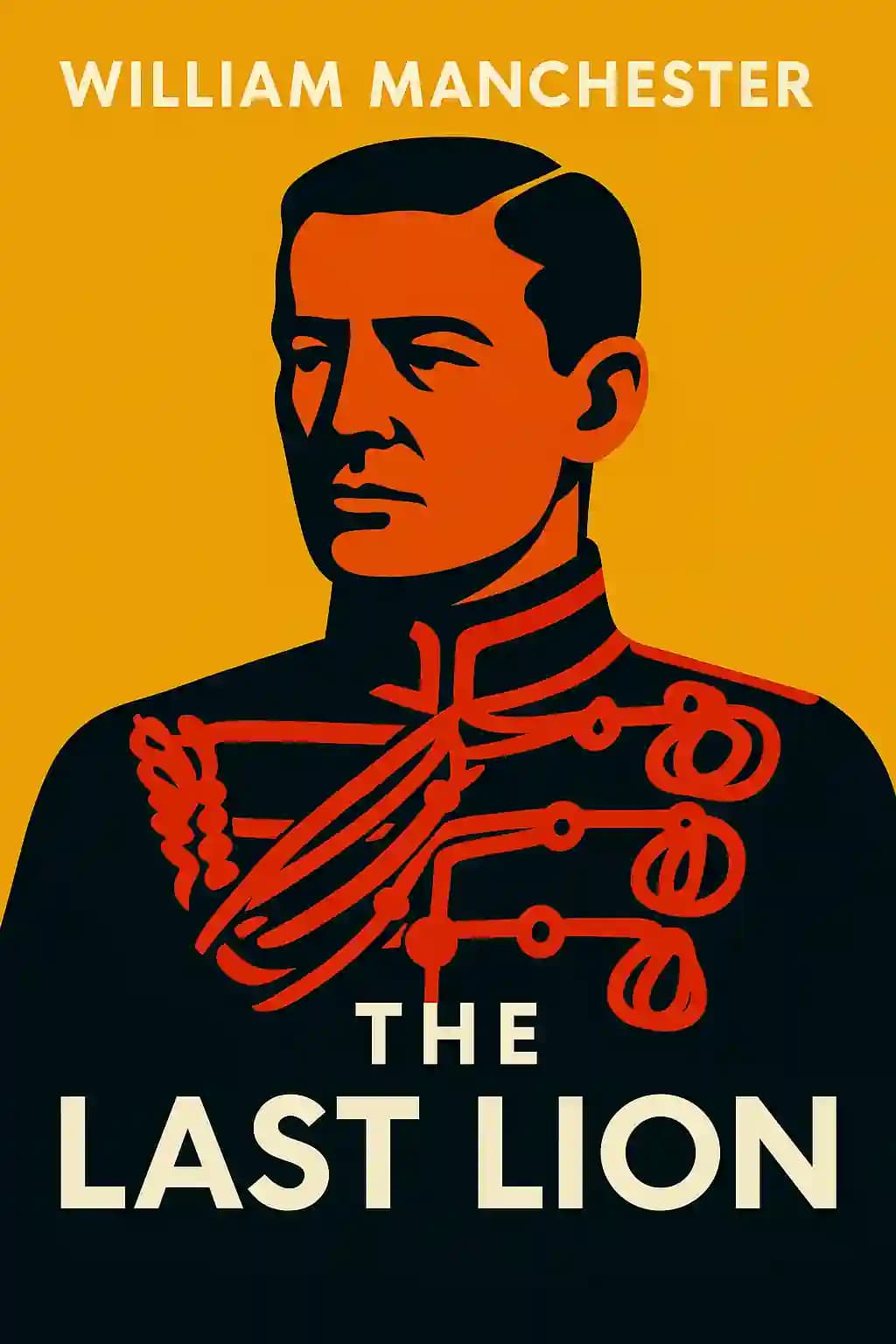
The Last Lion
Visions of Glory Part 2 of 2
『The Last Lion』の概要
Manchester's epic Churchill trilogy spans 2,961 pages over twenty years, revealing how one man's defiance against Nazi Germany changed history. Presidential historians rank it among the most compelling biographical achievements - a masterclass in leadership during humanity's darkest hour.
『The Last Lion』の主要テーマ
- british imperial decline
- victorian aristocratic upbringing
- anti-appeasement movement
- wartime leadership oratory
- political isolation
『The Last Lion』の名言
Winston was known for his stubbornness and willingness to speak his mind.
We shall never surrender.
『The Last Lion』の登場人物
- Winston Spencer ChurchillBritish Prime Minister and legendary leader
- Randolph ChurchillWinston's father and Chancellor of the Exchequer
- Jennie JeromeWinston's mother and American socialite
- Elizabeth EverestWinston's nanny who raised him
- Clementine ChurchillWinston's devoted wife
The Last Lionの要約をダウンロード
The Last Lionの要約をPDFまたはEPUBで無料でダウンロード。印刷やオフラインでいつでもお読みいただけます。
この本に関するよくある質問
The Last Lion by William Manchester chronicles Winston Churchill’s leadership during 1932–1940, a pivotal era as Nazi Germany rose to power. This second volume of Manchester’s trilogy details Churchill’s warnings against appeasement, his political isolation, and eventual resurgence as Britain’s wartime prime minister. It combines meticulous research with gripping prose to explore his resilience, strategic foresight, and role in defying fascism.
History enthusiasts, political leaders, and fans of biographical works will find this book compelling. It appeals to readers interested in WWII leadership, British history, or Churchill’s complex persona. Manchester’s vivid storytelling also makes it accessible to general audiences seeking a deeper understanding of 20th-century geopolitics.
Yes—reviewers widely praise it as one of the finest Churchill biographies, blending scholarly rigor with narrative brilliance. Manchester’s trilogy (completed by Paul Reid) is celebrated for its depth, balanced perspective, and ability to contextualize Churchill’s flaws and triumphs within his tumultuous era.
Key themes include leadership under crisis, the dangers of political complacency, and the moral imperative to confront tyranny. Manchester highlights Churchill’s relentless advocacy for military preparedness and critiques the Allied governments’ failure to counter Hitler’s aggression until 1940.
Manchester depicts Churchill as a flawed visionary—stubborn yet prophetic, politically ostracized early in the 1930s but vindicated as Hitler’s threats materialized. The biography emphasizes his oratorical genius, strategic acumen, and unwavering belief in Britain’s destiny.
The book examines Germany’s rearmament, the collapse of the Treaty of Versailles, and Britain’s policy of appeasement. It also dissects France’s military stagnation and Churchill’s efforts to rally support for collective security against Nazi expansion.
A standout line describes Churchill’s complexity: “Yet though all saw him, all did not see him alike. He was a multifarious individual, including within one man a whole troupe of characters, some subversive of one another and none feigned”—capturing his paradoxical nature.
Manchester condemns Britain’s rationalization of German aggression and France’s reluctance to modernize its military. He argues that their inaction, driven by post-WWI trauma, allowed Hitler to dominate Europe unchallenged until 1940.
Manchester blends cinematic detail with scholarly analysis, turning historical events into gripping narratives. His prose intensifies as WWII looms, mirroring the era’s urgency. Co-author Paul Reid maintains this vigor in the final volume.
Widely regarded as the definitive account, Manchester’s trilogy excels in scope and readability. Unlike drier academic works, it immerses readers in Churchill’s world while providing critical insights into his policies and personality.
Some readers find the trilogy’s length (2,600+ pages) daunting. Early sections occasionally delve excessively into aristocratic scandals, though this contextualizes Churchill’s upbringing.
The metaphor underscores Churchill’s role as Britain’s defiant protector during its “darkest hour.” Manchester positions him as the last titanic figure of the British Empire, embodying courage and tradition amid modernity’s crises.