第1章
A Dance with Gods and Wolves
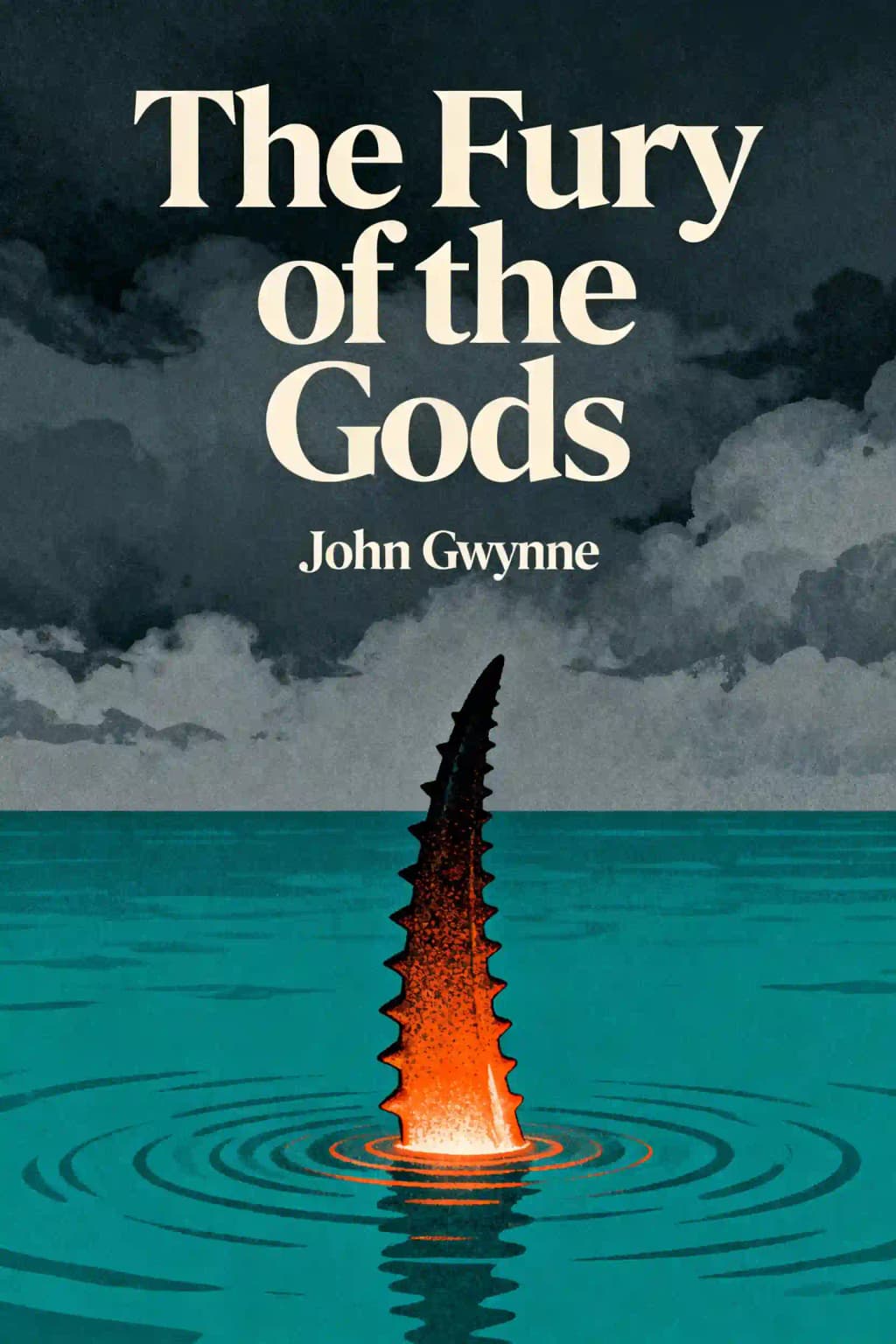
In the frost-bitten lands of Vigri, where the blood of gods runs through mortal veins, a war unlike any other is brewing. John Gwynne's "The Fury of the Gods" concludes his Bloodsworn Trilogy with an epic clash between freedom and tyranny, where the fate of an entire realm hangs in the balance. This Norse-inspired fantasy has captivated readers worldwide, with Stephen King naming it among his favorite recent reads and celebrities like Henry Cavill spotted carrying copies between filming scenes. The trilogy has redefined Viking fantasy, blending mythological elements with gritty, character-driven storytelling that critics have called "the perfect marriage of Game of Thrones' political intrigue and Norse mythology's raw power."
第2章
The World of Tainted Blood and Ancient Gods
The realm of Vigri stands at a precipice of transformation. In this Norse-inspired world, certain individuals carry the blood of gods in their veins-they are the Tainted, blessed with supernatural abilities yet cursed to live as thralls, enslaved by those who fear their power. The social hierarchy is rigid: jarls rule territories with their drengrs (warriors) while thralls serve at their masters' pleasure, many wearing iron collars that bind them to obedience.
What makes this world truly unique is the presence of ancient, powerful beings. Gods like Ulfrir the wolf, Lik-Rifa the dragon, Rotta the rat, and Snaka the serpent once ruled this land before being defeated and bound during an event called the Gufalla. Now they're returning, some seeking vengeance, others desiring dominion over mortals once more.
The landscape itself feels alive-from the skull of the god Snaka forming a mountain range to the mystical Iron Wood where Froa spirits protect ancient trees. Cities like Snakavik nestle within Snaka's massive skull, while fortresses like Wolfdales hide within hills, protected by powerful Seir-magic (this world's form of sorcery). Magical creatures abound: frost-spiders whose venom freezes victims from within, night-hags who strangle with misty tendrils, and vaesen-spirits bound to households or individuals through ancient pacts.
Combat follows Viking traditions, with shield walls clashing in brutal confrontations where only the strongest and most cunning survive. Warriors seek glorious deaths to be remembered in skald-songs, while jarls maintain power through oaths of loyalty and displays of strength. In this harsh reality, three distinct factions have formed around our protagonists, each fighting for their vision of what Vigri should become.
第3章
Three Warriors, Three Paths
At the heart of this saga are three remarkable protagonists whose journeys have become inextricably intertwined: Orka, Varg, and Elvar.
Orka Skullsplitter, once a feared member of the Bloodsworn warrior band, abandoned that life to build a peaceful existence with her husband Thorkel and son Breca. When Thorkel is murdered and Breca kidnapped by dragon-born warriors, she unleashes her hidden nature-she carries wolf-god blood that gives her incredible strength and ferocity. Her single-minded quest for vengeance has led her to track her son across the realm, leaving a trail of bodies in her wake.
"They took my son," she often says, a simple statement that carries the weight of her uncompromising determination. Orka represents the fierce protective instinct that transcends all other concerns-she would burn the world to save her child.
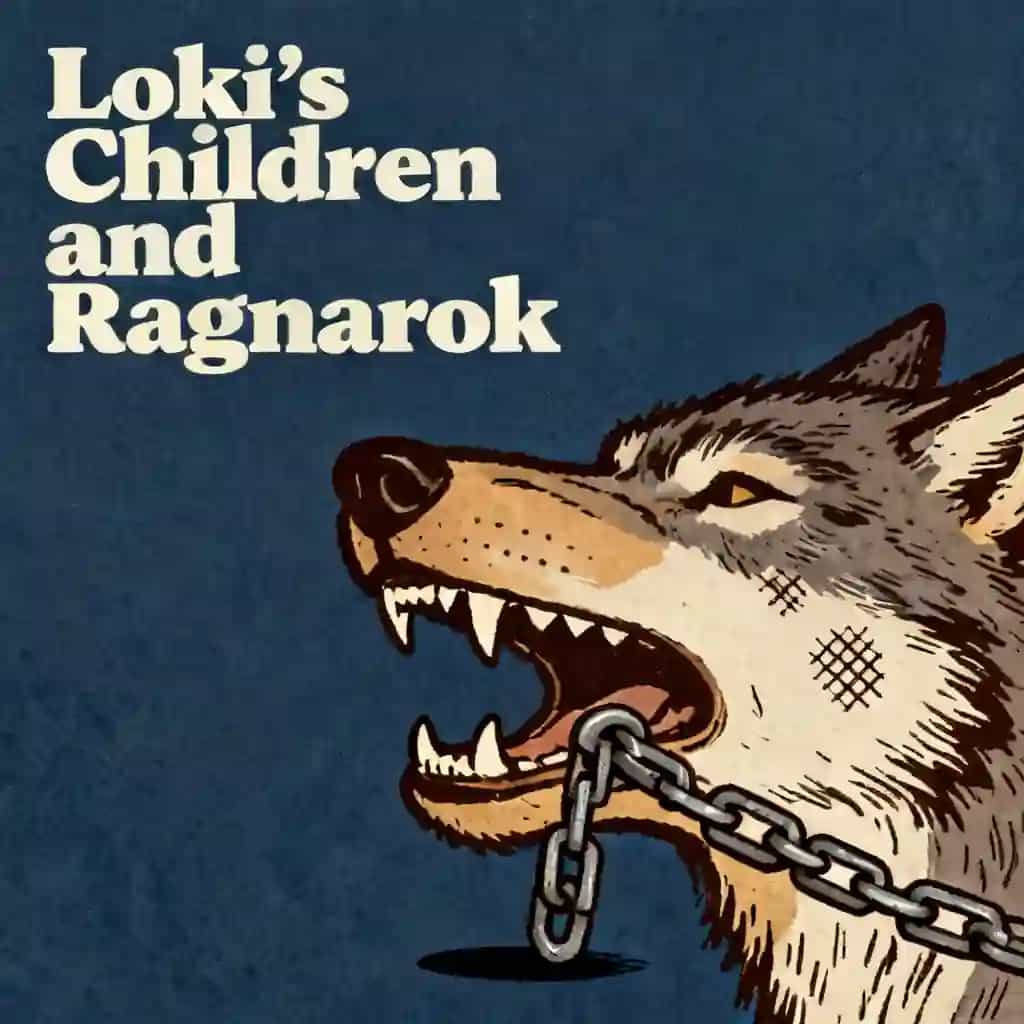
Varg began as a thrall who killed his master and fled, seeking to discover who murdered his sister Frya. His journey led him to join the Bloodsworn, where he discovered his own Tainted nature-he carries the blood of the wolf-god Ulfrir. Unlike Orka, who embraces her power, Varg struggles with his identity, torn between his human side and the wolf within.
"We decide the way of the world in our thought-cage," becomes his mantra, reflecting his belief that one's choices define them more than their blood. Varg represents the search for belonging and purpose in a world that would reduce him to property.
Elvar Fire-Fist, daughter of the powerful Jarl Storr, rejected her father's plans for a political marriage and instead joined the Battle-Grim mercenary band. Her path has led her to command not only the Battle-Grim but also the thralled wolf-god Ulfrir himself. When she kills her brother and her father dies, she inherits his position as jarl, placing her at the center of the coming conflict.
"Gold buys many things," she often says, believing wealth and power are the ultimate currencies. Yet her journey has taught her that some things-loyalty, freedom, honor-cannot be purchased. Elvar represents the potential for transformation, as she evolves from a privileged noble seeking adventure to a revolutionary leader questioning the very foundations of her society.
These three warriors-each carrying their own wounds, secrets, and blood-oaths-find themselves on a collision course as gods awaken and ancient rivalries reignite across Vigri.
第4章
The Dragon's Ambition
As "The Fury of the Gods" opens, the dragon-god Lik-Rifa has been freed from her centuries-long imprisonment and now gathers an army to conquer Vigri. Her forces include her dragon-born children-Ilska the Cruel, Drekr, and Myrk-as well as her brother Rotta the rat-god. They've rallied countless Tainted warriors to their cause by promising freedom from thralldom, though their true aim is domination rather than liberation.
"We fight for freedom," claims Biorr, a rat-blooded warrior who betrayed the Battle-Grim to join Lik-Rifa's forces. Yet Orka exposes this hypocrisy when she sees how they treat their prisoners: "A fair world and freedom," she spits sarcastically as Myrk feeds the weakest captives to frost-spiders.
Lik-Rifa's first major victory comes when she destroys Darl, killing Queen Helka and defeating the resurrected eagle-god Orna. This conquest establishes her as a terrifying force, capable of destroying cities and slaying other gods. Her ultimate target becomes her brother Ulfrir, the wolf-god who now serves Elvar. The siblings' ancient rivalry drives much of the conflict, with Lik-Rifa obsessively hunting Ulfrir across Vigri.
The dragon's forces grow continuously as they march westward-bands of trolls abandon their bone-strewn dwellings, frost-spiders scuttle from woodlands, night-hags float like banks of black-winged smoke, and spertus creatures clamber from streams. This unholy alliance of monsters and Tainted warriors creates an army that seems unstoppable, threatening to transform Vigri into a realm ruled by dragon-fire and fear.
第5章
The Wolf's Resistance
Against Lik-Rifa's overwhelming force stands an unlikely alliance led by Elvar Fire-Fist. After inheriting her father's position as jarl, Elvar makes the unprecedented decision to free Ulfrir from his thrall-collar, binding him instead with a blood oath to never abuse his power and to protect all people equally. This revolutionary act signals her intention to challenge not just the dragon-god but the entire social order of Vigri.
"I have set Ulfrir free, set all the Tainted free," she declares to the astonished Biorr during their confrontation. Her fortress of Wolfdales becomes a symbol of resistance, where Tainted and non-Tainted alike gather to stand against Lik-Rifa's tyranny.
The Bloodsworn join Elvar's cause, bringing with them Orka Skullsplitter, whose combat prowess and tactical mind prove invaluable. Varg, now a full member of the Bloodsworn after completing his blood oath ceremony, finds himself fighting alongside those who were once his enemies. The alliance grows to include Jarl Orlyg and his warriors, Queen Estrid of Darl (though she secretly plots against them), and various mercenary bands drawn by Elvar's promise of gold.
Their strategy hinges on luring Lik-Rifa into Wolfdales, where Ulfrir believes they can trap and kill her. They fortify the entrance with Seir-magic from Vol, Uspa, and Iva, while Ulfrir reveals the fortress's greatest secret-a Froa-spirit named Gelta carved into the great tree at its center, put to sleep by his father Snaka and now awakened to aid their cause.
As Lik-Rifa's forces approach, tensions rise within the alliance. Glornir Shield-Breaker of the Bloodsworn nearly attacks Skalk the Galdurman for past offenses, while Orka secretly plans to kill Skalk to protect her own Tainted nature. Despite these internal conflicts, they prepare to make their stand against the dragon's fury, knowing the fate of Vigri hangs in the balance.
第6章
Betrayal and Sacrifice
The battle for Wolfdales becomes the centerpiece of the novel's climactic confrontation. Lik-Rifa's forces attack the fortress with overwhelming numbers, sending waves of warriors, frost-spiders, and trolls against the defenses. Though the Seir-protected gates initially hold, traitors within the fortress threaten to undermine everything.
Elvar's brother Broir attempts to assassinate her, hoping to gain control of Ulfrir himself. Though Orka thwarts this attempt, Broir escapes to join Lik-Rifa, revealing crucial information about Wolfdales' defenses. Meanwhile, Queen Estrid, Skalk, and Hjalmar Peacemaker secretly work with the enemy, planning to open the gates from within.
The most insidious infiltration comes from Rotta, who leads Biorr and other rat-blooded warriors through a hidden entrance into Elvar's chamber. In the ensuing fight, Elvar is mortally wounded and thrown from the great tree to her death below. Her sacrifice, however, proves not to be in vain-her earlier decision to free Ulfrir means he remains unbound by her death, able to continue fighting against his sister.
As the battle rages across multiple fronts, personal vendettas play out amid the chaos. Varg finally confronts Brak Trolls-Bane, his sister's murderer, defeating him in single combat before allowing Brak's other victims to participate in his execution. Orka and her son Breca work together to kill Drekr, avenging Thorkel's death. Lif the fisherman corners and kills Guvarr, who had murdered his father and brother.
The tide turns when Lik-Rifa breaks free of her bonds and Rotta opens the gates, allowing their forces to flood into Wolfdales. Just as all seems lost, an unexpected development shifts the balance-Snaka himself awakens, his massive serpent form rising from Snakavik and destroying an invading Iskidan fleet before making his way to Wolfdales.
第7章
The Gods' Final Fury
The appearance of Snaka, father of the gods, transforms the conflict entirely. His massive serpent form tears through Wolfdales, causing the hill to collapse as warriors from both sides flee the destruction. In human form, he asserts dominance over his children, digging his nails into Lik-Rifa's scalp when she dares command him.
What follows is the most shocking betrayal of all-Rotta and Lik-Rifa poison their father, not out of love but to steal his heart's power. Though Snaka fights the poison, his children savagely murder him, cutting open his chest to extract his heart. At the crucial moment, the tennur Vesli swoops down and snatches the heart away, preventing them from consuming it.
The final battle erupts across the ruins of Wolfdales, with gods fighting gods and warriors battling warriors. Ulfrir and Lik-Rifa face each other in their true forms-wolf and dragon-while their followers clash around them. The Bloodsworn fight with desperate fury, losing several members including the mighty sa to a troll's club. Glornir Shield-Breaker suffers mortal wounds but lives long enough to witness victory.
In the end, Ulfrir defeats his sister Lik-Rifa with help from Skuld, who stabs scissors into the dragon's eye crying "For my mother!" Rotta attempts to escape but is captured by the ravens Grok and Klo, who drop him from a great height, leaving him broken among shattered wagons. The remaining enemies scatter into the wilderness, their grand ambitions reduced to mere survival.
As the survivors gather to assess their losses, a muffled voice emerges from within Lik-Rifa's belly-Hrung, the animated giant's head, somehow survived being swallowed by the dragon. This moment of dark humor amid the tragedy perfectly captures the blend of tones that makes the story so compelling.
第8章
A New Beginning for Vigri
In the aftermath of the gods' fury, the survivors face the daunting task of rebuilding their world. Orka leads the Bloodsworn to her old homestead, the place she once shared with Thorkel. There they bury their dead, including Glornir, beside Thorkel's barrow. Vol declines Ulfrir's offer to bury Glornir with other fallen heroes, saying, "This is where you should be, my beloved. With your kin."
As they gather around a fire to discuss their future, Varg proposes something revolutionary-a permanent home, not just for warriors but for children like Breca and Refna, and for themselves when they grow old. "I think we need a steading of our own," he says, "where those who wish to go raiding can, and those who wish to raise their children in peace, can."
Vol suggests Orka's homestead as the perfect location-defensible, with timber for building and access to a fjord. When asked if staying would be too painful given the memories of Thorkel, Orka looks at her husband's barrow and at Breca playing by the stream, then answers, "I think it is a gold-browed idea."
This ending represents a profound transformation in their world. The Tainted, once enslaved and feared, now have the opportunity to build communities based on mutual respect rather than domination. The cycle of vengeance that drove many characters has been completed, allowing them to look toward building something new rather than destroying their enemies.
Yet threats remain on the horizon. Rotta may have survived his fall, and an invasion fleet from Iskidan still threatens Vigri's shores. The awakening of Snaka, even briefly, suggests other ancient powers might stir as well. But for now, our protagonists have earned their moment of peace, gathered around a fire with those they consider family-not by blood, but by choice.
第9章
The Power of Choice in a World of Fate
Throughout "The Fury of the Gods," one theme emerges consistently: the power of individual choice to overcome predetermined fate. In a world where blood often determines destiny-Tainted are enslaved, jarls rule by birthright, and gods seem bound to their ancient rivalries-the characters repeatedly demonstrate that their decisions matter more than their heritage.
Elvar's choice to free the Tainted rather than control them transforms the social order of Vigri. "You have changed the world," Grend tells her with tears in his eyes. Her revolutionary act proves that even entrenched systems of oppression can be challenged by those brave enough to imagine alternatives.
Varg's journey from thrall to Bloodsworn warrior illustrates how one can transcend their circumstances through perseverance and loyalty. His blood oath ceremony represents his conscious decision to create a new family after losing his sister: "To become kin with you, my brothers, my sisters; to become pack." When he proposes creating a permanent settlement, he's extending this concept of chosen family to create a new kind of community.
Even Orka, who seemed defined solely by her quest for vengeance, chooses to embrace a future beyond bloodshed. By accepting Varg's proposal to rebuild at her old homestead, she acknowledges that life must continue after revenge is satisfied. Her decision to include Breca in Drekr's execution-teaching him precisely where to place the killing blow-represents both closure for their past suffering and her commitment to preparing him for the dangerous world they inhabit.
Perhaps most significantly, the gods themselves are not exempt from this theme. Ulfrir chooses to honor his blood oath to Elvar even after her death, fighting against his sister rather than reclaiming his freedom for selfish ends. Conversely, Lik-Rifa and Rotta choose betrayal, murdering their father in their quest for power-a decision that ultimately leads to their downfall.
In the end, "The Fury of the Gods" suggests that true freedom comes not from divine blood or martial prowess, but from the courage to make difficult choices and live with their consequences. As the survivors gather around the fire at Orka's homestead, they've earned the right to choose their own paths forward-no longer bound by thrall-collars, blood feuds, or the machinations of gods.
第10章
Legacy of Blood and Honor
John Gwynne's Bloodsworn Trilogy concludes with a masterful meditation on legacy-what we inherit, what we pass on, and what truly endures when gods and mortals clash. Throughout "The Fury of the Gods," characters grapple with the legacies they've received and those they hope to create.
Physical legacies appear throughout the narrative: Thorkel's seaxes that Orka reclaims from Myrk, Elvar's father's throne that she inherits but transforms, the lock of Frya's hair that allows Varg to witness his sister's final moments. These tangible connections to the past provide both comfort and burden to those who carry them.
More significant are the intangible legacies-oaths, memories, and traditions that shape behavior long after their origins are forgotten. The blood oath that binds the Bloodsworn creates a family stronger than birth relations: "We are Bloodsworn, closer than kin. We are pack," as Svik reminds Varg. Similarly, the oath Grend swore to Elvar's mother compels him to protect her daughter for fifteen years, transcending his own freedom.
The novel asks profound questions about what deserves to be preserved and what should be discarded. Elvar chooses to break with tradition by freeing the Tainted, while maintaining the warrior culture that values strength and honor. Orka passes on both combat skills and moral guidance to Breca, ensuring he can survive in their harsh world while understanding the difference between necessary violence and cruelty.
Perhaps most poignantly, the survivors honor their fallen by building barrows and telling their stories, ensuring they'll be remembered in skald-songs. When Vol insists on burying Glornir beside Thorkel rather than with legendary heroes, she acknowledges that the bonds formed in life matter more than posthumous glory.
As the trilogy closes, the legacy these characters create together-a community where Tainted and non-Tainted can live as equals-represents their greatest achievement. In a world where gods themselves can die, perhaps this new way of living will prove more enduring than any divine power.
第11章
When Mortals Challenge Gods
"The Fury of the Gods" delivers on its title's promise with spectacular confrontations between divine beings and the mortals caught in their struggles. The novel explores the complex relationship between gods and humans in a world where divinity is both revered and feared.
Gods in this world are physically imposing but morally ambiguous. Lik-Rifa appears as a massive dragon capable of destroying cities with her breath, while Ulfrir transforms into an enormous wolf that can tear through armies. Snaka manifests as both a colossal serpent and a pale-skinned man with protruding teeth and eyes flickering with red-gold fire. Their power inspires awe-Guvarr feels Snaka's presence "like mead in his blood"-but their actions reveal them to be driven by very human emotions: rivalry, vengeance, and thirst for power.
The Tainted, carrying divine blood in their veins, occupy an uncomfortable middle ground between humanity and godhood. Their abilities-Orka's wolf-strength, Varg's enhanced senses, Rkia's transformation-mark them as different, yet they remain fundamentally human in their desires and fears. Their struggle for acceptance reflects timeless questions about otherness and belonging.
What makes this story particularly compelling is how mortals find ways to challenge gods despite their physical disadvantages. Elvar binds Ulfrir not through force but through a clever blood oath. Vesli the tennur steals Snaka's heart at the crucial moment, preventing Rotta from consuming it. Even Lik-Rifa's defeat comes not solely through Ulfrir's power but through the combined efforts of many, including Skuld's precise attack on the dragon's eye.
The novel suggests that gods, for all their might, remain vulnerable to betrayal, poison, and cunning-perhaps because they share the same flaws as the mortals who worship them. When Rotta and Lik-Rifa murder their father Snaka, they demonstrate that even divine family bonds can be severed by ambition.
In the end, as gods fall and mortals rebuild, the story implies that humanity's greatest strength may be its ability to imagine and create new possibilities-something the long-lived gods, bound by ancient rivalries and patterns, struggle to achieve. Perhaps this is why Ulfrir chooses to ally with humans rather than rule them; he recognizes that true power lies not in domination but in transformation.
第12章
The Bloodsworn Legacy
John Gwynne's Bloodsworn Trilogy concludes with a powerful meditation on what truly constitutes family in a world torn by violence and betrayal. Throughout "The Fury of the Gods," blood relationships repeatedly fail while chosen bonds prove more enduring.
The blood oath ceremony that gives the Bloodsworn their name perfectly encapsulates this theme. When Varg completes his initiation, his blood mingles with Vol's in a cup, rising mysteriously before dropping back as one. This magical binding represents something deeper than mere allegiance-it creates kinship through choice rather than birth. "Welcome to the Bloodsworn," Glornir declares as tears of joy stream down Varg's face, finally finding his place among them as kin.
This chosen family proves stronger than biological ties throughout the narrative. Elvar kills her brother Thorun and later faces betrayal from Broir, while Orka's wolf-blood gives her strength but must be hidden from society. In contrast, the Bloodsworn fight and die for each other without hesitation, demonstrating loyalty that transcends self-interest.
The novel's final scene, with survivors gathering around a fire at Orka's homestead, represents the culmination of this theme. They've created something more precious than any treasure or conquest-a community based on mutual respect and shared purpose. Varg's proposal for a permanent settlement where "those who wish to go raiding can, and those who wish to raise their children in peace, can" envisions a future where individual choice coexists with collective responsibility.
This vision stands in stark contrast to the hierarchical society they've left behind, where thralls wear collars and jarls rule by birthright. The Bloodsworn legacy suggests a third path between tyranny and chaos-voluntary association bound by honor rather than force.
As they bury their dead and plan their future, these warriors demonstrate that true strength comes not from divine blood or martial prowess alone, but from the bonds forged through shared struggle and sacrifice. In a world where gods themselves can die, perhaps this human connection represents the most enduring power of all.