第1章
When Fear Takes a Backseat: Creating Workplaces Where Ideas Flourish
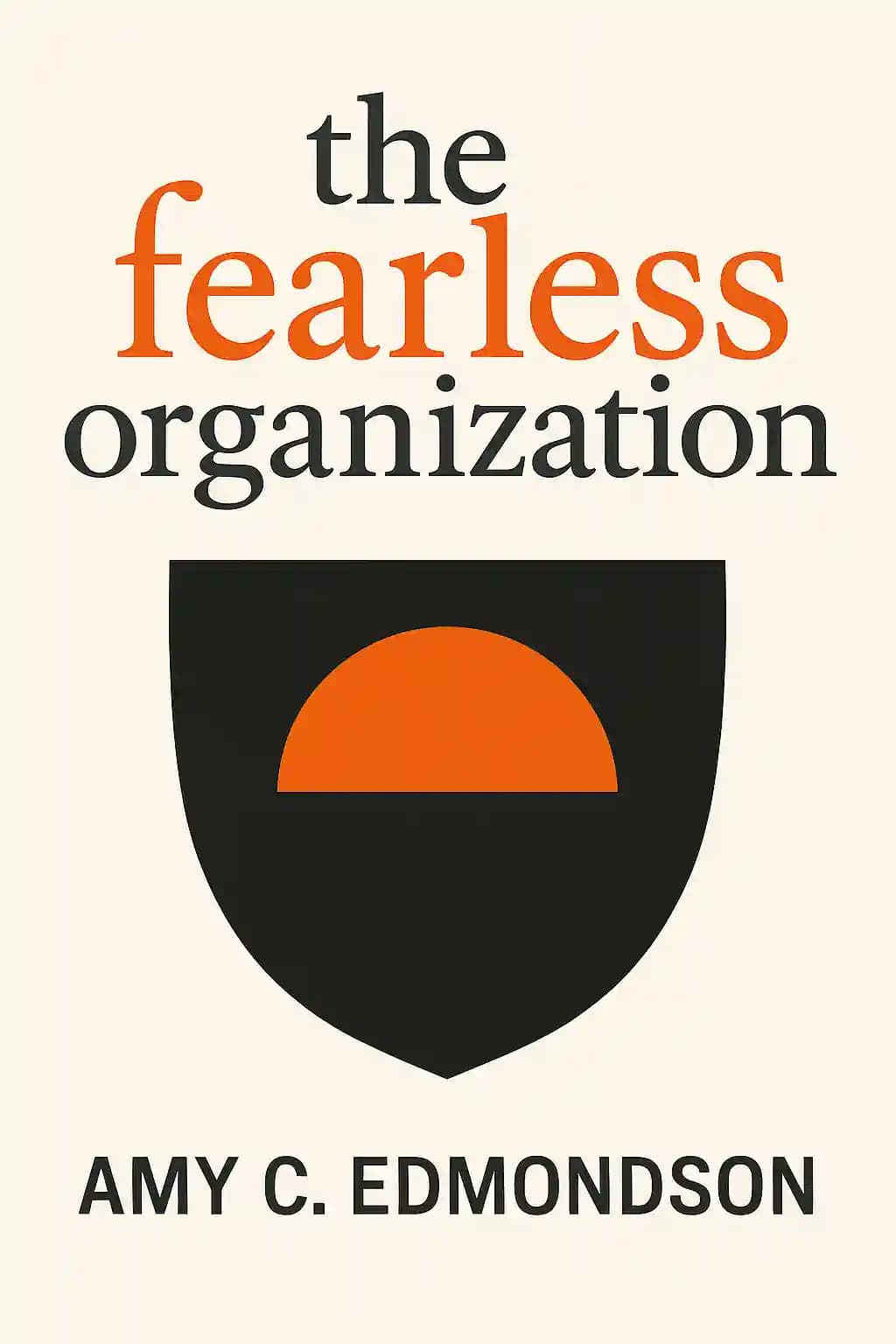
In a world where innovation drives success, why do so many organizations struggle to tap their employees' full potential? Amy Edmondson's "The Fearless Organization" provides the answer: psychological safety-the belief that one can speak up without fear of humiliation or punishment. This concept has gained significant traction since Google's Project Aristotle identified it as the single most important factor in high-performing teams. The book has become required reading in companies like Microsoft and Pixar, with executives citing it as transformative for their leadership approach. Celebrities like Brene Brown and Adam Grant have championed its ideas, while Harvard Business Review named psychological safety one of the most important management concepts of the decade. What began as Edmondson's accidental discovery while researching hospital medication errors has evolved into a framework that's reshaping how we think about workplace dynamics in our increasingly complex, uncertain world.
第2章
The Hidden Barrier to Organizational Excellence
Why do smart people stay silent when speaking up could prevent disaster? The answer lies in our unconscious risk calculations that occur in milliseconds. Consider Christina, a neonatal nurse who hesitated to remind a senior doctor about medication for premature twins after witnessing him berate another nurse. This split-second decision prioritized immediate social consequences (being humiliated) over potential future risks (harm to the babies). Similarly, a software engineer might notice a critical flaw in a project but remain quiet after seeing colleagues dismiss another team member's concerns in a previous meeting.
We're constantly making these micro-assessments in workplace interactions, often without conscious awareness. No one wants to appear ignorant by asking "stupid" questions, incompetent by admitting mistakes, or disruptive by challenging the status quo. These self-protective behaviors become automatic, creating what research shows is an epidemic of silence-85% of employees report instances where they felt unable to raise important concerns with bosses. In manufacturing, workers might notice safety violations but stay quiet. In healthcare, junior staff often hesitate to question senior physicians' decisions, even when patient safety is at stake.
This silence isn't about personality traits or individual courage. Both introverts and extroverts benefit equally from psychologically safe environments, and even naturally outspoken individuals can become silent in threatening contexts. Rather, it's about workplace climate and group dynamics. Psychological safety operates at the group level, varying significantly even within the same organization. Your experience in one department might differ dramatically from another team just down the hall. For instance, two engineering teams in the same company might have vastly different cultures - one where mistakes are treated as learning opportunities, another where they lead to public criticism.
What makes psychological safety distinct from concepts like trust is its immediacy and collective nature. Trust involves expectations about future actions between specific individuals, while psychological safety concerns immediate interpersonal consequences within a group. It's the difference between "Will this person fulfill their promises to me?" and "Will these people ridicule me for speaking up?" This distinction explains why someone might trust their manager one-on-one but still feel unsafe speaking up in team meetings.
Perhaps most importantly, psychological safety doesn't mean lowering performance standards or creating a cozy environment where anything goes. In fact, the opposite is true. When combined with high expectations, psychological safety creates what Edmondson calls the "learning zone"-the optimal environment for innovation and performance in uncertain, interdependent work. Without it, high standards merely create an "anxiety zone" where fear prevents people from taking the risks necessary for excellence. Companies like Google have found that their highest-performing teams consistently demonstrate high psychological safety alongside ambitious goals and clear accountability.
第3章
The Paper Trail: Evidence for Psychological Safety's Impact
The research supporting psychological safety's importance is overwhelming. Over 100 academic studies across diverse settings-from corporate offices to hospital wards, sports teams to schools-have linked psychological safety to concrete outcomes ranging from error reporting to company ROI. These studies consistently demonstrate that psychological safety isn't just a "nice to have" but a fundamental driver of organizational performance.
In Belgian hospitals, units with higher psychological safety reported more errors to supervisors while actually making fewer mistakes overall. This counterintuitive finding reveals a crucial insight: psychological safety doesn't increase errors-it increases the reporting of errors, which ultimately leads to learning and fewer actual mistakes. For example, nurses in high psychological safety units were 67% more likely to report medication errors, leading to systematic improvements in drug administration protocols. Similar patterns emerged in aviation, where crews with higher psychological safety scores caught and corrected potential safety issues before they became incidents.
Research distinguishes between "learn-what" behaviors (independent activities like reading) and "learn-how" behaviors (collaborative problem-solving). Psychological safety specifically boosts the latter, which explains why it's become so critical in today's workplace where complex problems require teamwork rather than individual heroics. Studies in software development teams showed that those with high psychological safety were 41% more likely to engage in collaborative debugging sessions and shared code reviews, resulting in fewer production bugs and faster development cycles.
When confidence is low, psychological safety becomes even more valuable. A study across manufacturing and service companies found that while people readily share ideas they're highly confident about regardless of climate, psychological safety helps overcome hesitation when confidence is lower. For instance, junior employees in psychologically safe environments were three times more likely to propose process improvements, many of which led to significant cost savings. Since an individual's confidence doesn't always correlate with an idea's actual value, psychological safety facilitates vital knowledge sharing that might otherwise be lost.
Google's multi-year "Project Aristotle" examined 180+ teams and identified psychological safety as the critical factor explaining team performance differences, more important than team composition, skills or backgrounds. High-psychological safety teams demonstrated 41% higher productivity and 76% better engagement scores. Similarly, Baer and Frese's study of 47 German firms found psychological safety increased company performance by 23% in return on assets and 34% in goal achievement.
Psychological safety helps teams overcome three key challenges: geographic dispersion, conflict, and diversity. In distributed teams, those with high psychological safety showed 89% better virtual collaboration effectiveness. Regarding conflict, psychologically safe teams were able to transform 76% of potentially destructive disagreements into productive debates. In diversity studies, teams with members from different educational and cultural backgrounds performed 35% better on innovation tasks when psychological safety was high, but 21% worse when it was low. Research with expertise-diverse teams shows they generate 28% more patents and breakthrough innovations with strong psychological safety but suffer from communication breakdowns without it.
The evidence extends to customer-facing roles too, where teams with high psychological safety scores showed 32% higher customer satisfaction and 27% lower turnover rates. These teams were more likely to surface customer complaints early and collaborate across departments to resolve systemic issues before they escalated.
第4章
Avoidable Failure: The Cost of Fear-Based Cultures
The Volkswagen emissions scandal of 2015 exemplifies how a psychologically unsafe workplace can lead to catastrophic failure. Despite being the world's largest automaker with a pristine reputation, VW installed "defeat devices" in 11 million diesel vehicles that cheated emissions tests while polluting up to 40 times permitted levels when driven normally. This deception cost the company over $30 billion in fines and settlements, while destroying decades of built-up consumer trust.
The roots weren't simply about one leader's perfectionism but reflected an outdated belief system about worker motivation. CEO Martin Winterkorn's management style created an environment where engineers couldn't report that clean diesel targets were simply unattainable under the demanded conditions. His reputation for berating executives in public and demanding impossible performance targets created a climate where middle managers felt compelled to find workarounds rather than admit technical limitations. When the scandal broke, Winterkorn's call for "stricter rules" missed the point entirely-the real issue was a culture where people couldn't speak truth to power without risking their careers.
Wells Fargo followed a similar pattern with its "Going for Gr-Eight" campaign that pushed employees to sell an unprecedented eight products per customer. Those who missed targets faced termination, creating intense pressure that led to widespread unethical practices-opening unauthorized accounts, creating fake email addresses, and lying to customers. The pressure was so intense that some employees developed anxiety disorders and depression. Regional managers would call their branches multiple times daily demanding updates on sales targets. Whistleblowers who reported these practices were often fired, reinforcing a culture of fear. By 2016, over 5,300 employees had been terminated for creating fake accounts, yet the aggressive sales culture persisted.
Nokia's dramatic fall from mobile phone dominance stemmed from what investigators called a "fearful emotional climate" with "temperamental leaders and frightened middle managers, scared of telling the truth." As the industry shifted toward smartphones, Nokia clung to featurephones while competitors invested in advanced software platforms. Middle managers labeled as "losers" when questioning company direction presented overly optimistic assessments rather than reality checks, preventing Nokia from learning fast enough to survive. Internal surveys revealed that 78% of employees felt they would be punished for bringing bad news to leadership. This culture of fear directly contributed to Nokia's market share plummeting from 50% to less than 3% in just six years.
These weren't sudden failures but developed over months or years while senior management remained unaware. Early warning signs were ignored because employees feared sharing bad news. Organizations need to treat early signs of underperformance as valuable data rather than evidence of employee failure. Front-line employees possess the most important strategic information about customers, competitors, and technology, making their input crucial for organizational learning and adaptation. Research shows that companies with psychologically safe environments are 76% more likely to see increases in revenue and significantly outperform their peers in innovation and adaptability.
The key lesson from these cases is that fear-based management creates organizational blind spots that eventually lead to crisis. Leaders must actively work to create environments where employees feel safe raising concerns, admitting mistakes, and challenging assumptions. This requires consistent messaging, protective policies for whistleblowers, and visible consequences for leaders who perpetuate fear-based management styles.
第5章
Dangerous Silence: When Lives Are at Stake
Silence can be deadly in high-stakes environments. The Columbia space shuttle disaster tragically demonstrates how hierarchy can silence crucial voices. NASA engineer Rodney Rocha spotted potential wing damage from foam debris during launch but couldn't get authorization for satellite images to confirm his concerns. When the issue was briefly discussed by senior managers, Rocha remained silent despite his worries, later explaining by gesturing with his hand above his head, "I'm too low down [in the organization]...and she is way up here." The foam strike indeed caused the fatal accident that killed seven astronauts.
The 1977 Tenerife disaster, aviation's deadliest accident with 583 deaths, illustrates how silence can be fatal even among experienced professionals. When KLM Captain van Zanten impatiently began takeoff without proper clearance, his subordinates failed to challenge him despite their concerns. First Officer Meurs, who had recently been evaluated by van Zanten, didn't insist on waiting for clearance. Flight Engineer Schreuder questioned whether another plane was on the runway but accepted the captain's dismissive "oh, yes" without further challenge.
Medicine faces similar challenges. The 1994 death of Boston Globe healthcare columnist Betsy Lehman at Dana-Farber Cancer Institute occurred when she received four times the intended chemotherapy dosage. Despite experiencing extraordinary symptoms that concerned her, the medical team attributed these to normal treatment effects. No one questioned the treatment plan despite Lehman's growing sense that something "was wrong." The error wasn't discovered until three months after her death through a routine data check.
A culture of silence doesn't just inhibit speaking up-it creates a "Cassandra culture" where warnings go unheeded when they do occur. The 2011 Fukushima Daiichi nuclear disaster exemplifies this. Years before the disaster, seismology professor Katsuhiko Ishibashi warned about the vulnerability of Japan's nuclear plants to earthquakes and tsunamis but was dismissed as a "nobody" by regulators. TEPCO's own 2000 study acknowledged tsunami risks up to 50 feet high but deemed such events too improbable to address. A Stanford study later concluded that just $50 million could have financed a seawall high enough to prevent the disaster-a stark illustration of how challenging it can be to have concerns heard when the dominant culture resists the message.
第6章
The Fearless Workplace: Where Speaking Up Is the Norm
At Pixar Animation Studios, candor is institutionalized through the "Braintrust"-a small group that meets regularly to provide honest feedback on films in progress. The Braintrust operates with clear rules: feedback must be constructive and about the project not the person, suggestions aren't mandates, and criticism must come from empathy. As co-founder Ed Catmull admits, "early on, all of our movies suck," making candid feedback essential to the creative process.
Pixar embraces failure as an essential part of the creative journey. Without the freedom to fail, people merely repeat safe formulas rather than innovate. Director Andrew Stanton compares moviemaking to learning to ride a bicycle-no one learns without falling a few times. This approach helps "uncouple fear and failure" by creating an environment where mistakes don't terrify employees.
At Bridgewater Associates, founder Ray Dalio has established a culture of "radical truth and transparency." Employees maintain "Issue Logs" tracking mistakes, strengths, weaknesses, and reactions to criticism. Talking about people who aren't present is forbidden-those who do are labeled "slimy weasels." Employee assessment statistics are publicly available on "baseball cards" used for compensation and promotion decisions.
Conflict at Bridgewater serves to find "what is true and what to do about it." Dalio advises against trying to "win" arguments, noting that discovering you're wrong is more valuable than being right because you're learning. When emotions run hot, managers "enforce the logic of conversations" by remaining calm and analytical.
Eileen Fisher embraces "not knowing" as a leadership approach that fosters psychological safety. Her natural listening skills create an environment where "people feel safe to explore their own ideas instead of feeling like they just need to do what you tell them to do." Company meetings reflect this philosophy-people sit in circles to minimize hierarchy, begin with silence for mindfulness, and sometimes pass objects to ensure everyone speaks.
At Google X, failure isn't just accepted-it's rewarded. When Project Foghorn, a two-year effort to turn seawater into affordable fuel, proved economically unviable, team members received bonuses rather than punishment. This counterintuitive approach makes business sense for the "moonshot factory" pursuing world-changing technologies. Astro Teller, X's "Captain of Moonshots," explains that rewarding people for killing unpromising projects saves resources compared to letting unworkable ideas linger.
第7章
Safe and Sound: When Lives Depend on Speaking Up
The "Miracle on the Hudson" emergency landing illustrates psychological safety in action during a life-or-death crisis. Captain Chesley "Sully" Sullenberger and First Officer Jeffrey Skiles, who had just met hours earlier, demonstrated fearless communication during those critical three minutes after bird strikes disabled both engines of their Airbus. Their clear, direct exchanges-with Sullenberger taking control with "My aircraft" and Skiles immediately responding "Your aircraft" without hesitation-show how psychological safety enables swift coordination under extreme pressure.
Aviation's Crew Resource Management (CRM) training, developed after disasters like Tenerife where copilots failed to speak up, creates psychological safety by teaching captains to listen and crew to voice concerns. Similar training has spread to healthcare, showing improved outcomes in delivery rooms for both mothers and babies.
When Cynthia Carroll became the first female CEO of mining giant Anglo American in 2007, she confronted a culture where nearly 200 worker fatalities in five years were considered inevitable. Facing resistance to her zero-harm policy, Carroll took the unprecedented step of shutting down Rustenburg, the world's foremost platinum mine generating $8 million daily. Most radically, she insisted on hearing from every worker about safety improvements-directly challenging the century-old hierarchical culture.
To create psychological safety, Anglo American adopted lekgotla, a traditional South African village assembly method where everyone sits in a circle and speaks without interruption until consensus is reached. By asking "what do we need to do to create a work environment of care and respect?" rather than directly addressing safety issues, workers finally felt safe enough to voice concerns. The results were significant-fatalities dropped 62% from 44 in 2006 to 17 in 2011, while the company achieved record operating profits in both 2008 and 2011.
During the Fukushima earthquake in 2011, Naohiro Masuda, superintendent of the Fukushima Daini nuclear plant, demonstrated crisis leadership through transparency rather than command. Instead of issuing orders, Masuda shared information on a whiteboard-showing earthquake data, calculations, and decreasing danger over time. He allowed workers to volunteer for dangerous reconnaissance missions, and when all 40 returned with crucial information about available power sources, they developed a plan to lay 5.5 miles of heavy cable in just 24 hours-a job that normally would take a month. Through his calmness, openness, and willingness to admit fallibility, Masuda created psychological safety that enabled the team to overcome physical danger and successfully stabilize the plant.
第8章
Making it Happen: The Leader's Toolkit
When Julie Morath became COO at Children's Hospital in Minneapolis in 1999, she set a seemingly simple goal: 100% patient safety. To accomplish this transformation, Morath developed a comprehensive leadership toolkit with three essential categories: setting the stage, inviting participation, and responding productively.
Setting the stage begins with framing the work appropriately. Morath reframed how the hospital viewed medical errors, using "study" instead of "investigation" and "accident" or "failure" instead of "error"-subtly shifting perspectives away from blame toward learning. Leaders must also distinguish between different types of failure: preventable failures (deviations from known procedures), complex failures (novel combinations of factors in familiar contexts), and intelligent failures (thoughtful forays into new territory). Only intelligent failures deserve celebration, but all require learning.
Beyond reframing failure, leaders must emphasize three dimensions that necessitate speaking up: uncertainty, interdependence, and what's at stake. Emphasizing uncertainty keeps people curious and alert to changes. Emphasizing interdependence reminds people they're responsible for understanding how their work affects others. Clarifying stakes-whether high (human lives) or low (bruised egos from failed experiments)-helps put interpersonal risk in perspective.
Inviting participation requires adopting situational humility, engaging in proactive inquiry, and designing structures for input. Anne Mulcahy, who led Xerox's transformation out of bankruptcy, called herself the "Master of I Don't Know," finding that admitting ignorance actually built others' confidence in her leadership. Research shows that when leaders express humility, teams engage in more learning behavior.
Proactive inquiry means asking the right type of question for each situation. Bob Pittman, MTV founder, exemplifies this by asking "What did the dissenter say?" in meetings, teaching his team to seek out alternative viewpoints. Creating formal structures to elicit employee input reinforces psychological safety, like Google's "g2g" (Googler-to-Googler) network where over 6,000 employees volunteer to help peers learn through mentoring, team coaching, and teaching professional skills.
Responding productively to voice is perhaps most crucial. When someone speaks up, the initial response must be appreciation, regardless of whether the idea seems good or bad. Stanford Professor Carol Dweck's research shows the importance of praising effort rather than outcomes, encouraging risk-taking because people understand performance reflects effort and strategy, not just innate ability.
Organizations must also destigmatize failure. Children's Hospital's Failure Event Analysis process exemplifies this-everyone involved in an incident shares observations without blame, gaining deeper understanding of system complexity and interdependence. Participants leave empowered to improve systems rather than feeling blamed.
第9章
What's Next? Building Psychological Safety for the Future
Psychological safety requires constant renewal as it works against deeply ingrained psychological tendencies toward self-protection. The rewards of voice over silence are significant-moving from "playing not to lose" to "playing to win." When we play not to lose, we protect against downside risks; when playing to win, we seek opportunities and take necessary risks.
Nokia's comeback after its mobile phone business collapse demonstrates how psychological safety enables strategic renewal. After their previous "dance of fear" between executives and engineers, Nokia's new leadership established rules ensuring all voices were heard and respected. The chairman actively reinforced these rules, even making a board member apologize after a hostile comment. This created an environment where managers could "throw in ideas and think out loud," enabling the deliberative decision-making process that produced their successful strategic pivot.
Building psychological safety is a perpetual journey, not an overnight transformation. NASA's evolution following the Columbia disaster illustrates this journey. Their "Sounds of Silence" workshop and structural changes-including formal dissenting-opinion mechanisms, new safety reporting systems, and an ombudsman program-demonstrate serious commitment to cultural change. NASA even created a "Lean Forward, Fail Smart Award" recognizing that "in a culture of innovation, failure is seen as merely a stepping stone to success."
Anyone can help create psychological safety, not just bosses. Simple actions like asking genuine questions, active listening, framing challenges realistically, and using phrases that demonstrate vulnerability ("I don't know," "I need help," "I made a mistake," "I'm sorry") can significantly improve workplace climate. Rather than looking upward and feeling powerless, look across and down to create your own "pocket of excellence" regardless of what those above you are doing.
Building psychological safety resembles sailing toward an upwind destination-impossible to reach directly, requiring zigzag movements to make progress. Like sailors adjusting to shifting winds and tides, leaders must communicate and coordinate through changing conditions. Creating psychological safety requires constant smaller and larger corrections that collectively produce forward momentum, never knowing exactly when conditions will change.
In today's complex, uncertain world, psychological safety isn't just a nice-to-have-it's essential for organizational survival and success. By creating environments where people feel safe to speak up, ask questions, and take intelligent risks, leaders unlock the full potential of their teams and build truly fearless organizations.






![[leaders-eat-last-by-simon-sinek:c0001] Leaders Eat Last p1-1](/_next/image?url=https%3A%2F%2Fd1y2du6z1jfm9e.cloudfront.net%2Fassets%2Fpodcast%2Fyellow.png&w=1024&q=50)


