第1章
The Courage to See Beyond Color: A Radical Vision for Racial Harmony
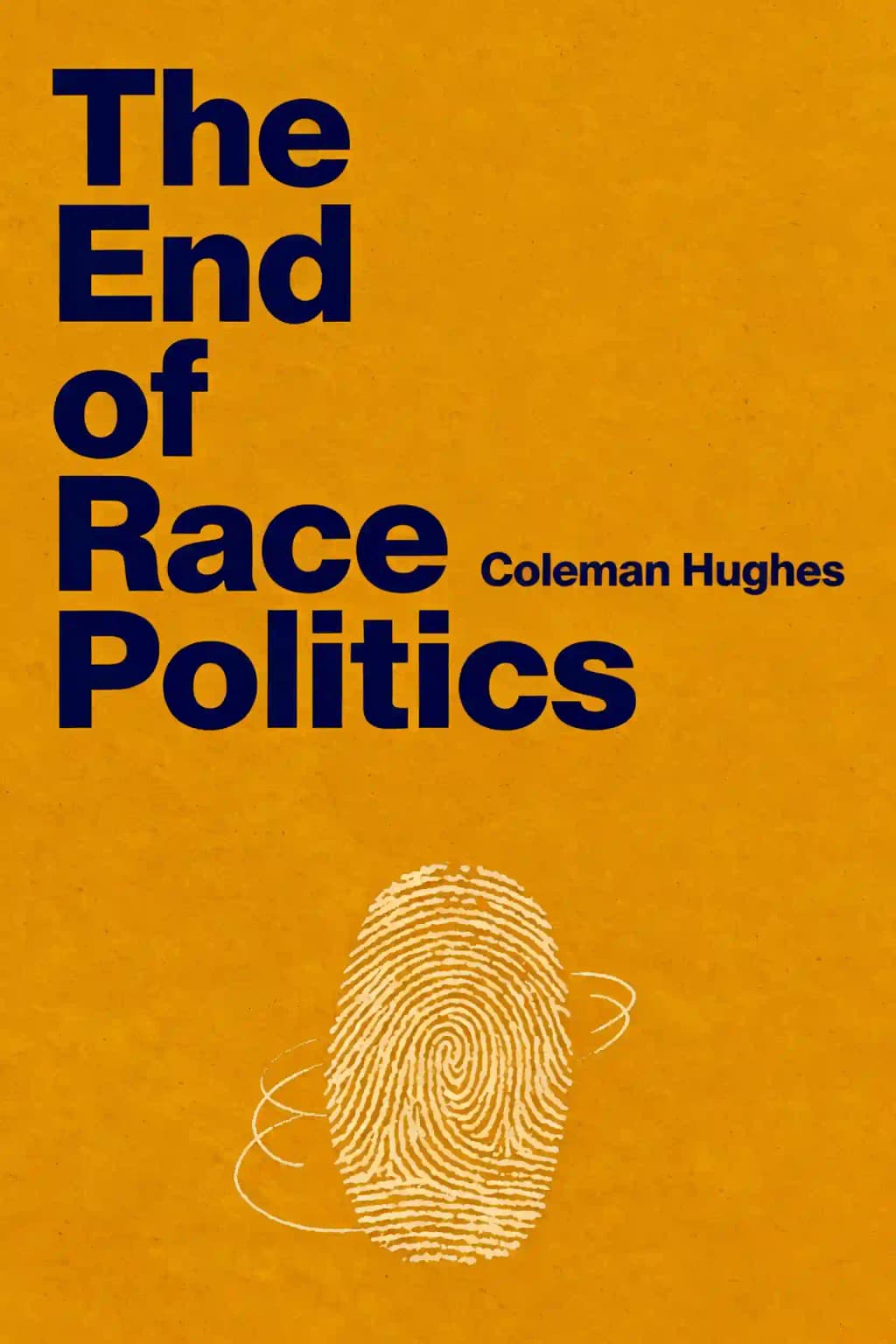
Coleman Hughes is no stranger to controversy. At just 27 years old, this Columbia University philosophy graduate and host of the "Conversations with Coleman" podcast has emerged as one of America's most thoughtful voices on race relations. His debut book, "The End of Race Politics," has sparked intense debate across the political spectrum, with figures ranging from Sam Harris to Glenn Loury praising its intellectual clarity. The book challenges prevailing narratives about racism in America while offering a path forward rooted in principles that once united the civil rights movement. As racial tensions continue to dominate headlines and shape policy, Hughes asks a provocative question: What if our obsession with race is making racism worse, not better?
第2章
The Paradox of Race: A Social Construct with Real Consequences
Race is simultaneously one of the most discussed and least understood concepts in American life. We use the term constantly without defining it properly. To understand race, we must first understand how concepts work.
Some concepts are natural - they map onto reality precisely, like "tree" or "mass" in physics. If these disappeared from our minds, we'd reinvent them similarly because they carve reality at its joints. Other concepts are purely socially constructed - like the seven-day week, which doesn't exist in nature but was created for social coordination.
Race falls into a third category: it's a social construct inspired by a natural phenomenon - similar to how months are social constructs inspired by the lunar cycle but don't precisely track it. The natural phenomenon underlying race comes from human evolution. When populations migrated out of Africa tens of thousands of years ago, they remained isolated in different environments, causing their gene pools to evolve differently. These genetic differences created clusters of similar genomes that are still measurable today, though with blurry boundaries and significant overlap.
But like months that no longer precisely track lunar cycles, our social concept of race has become untethered from the natural phenomenon that inspired it. The racial categories we use today are fundamentally arbitrary. Consider the income and education disparities within racial groups: the top-earning Asians make 10.7 times more than lowest-earning Asians - a wider gap than exists within any other racial group. While 72% of Indian Americans have bachelor's degrees, only 9% of Bhutanese Americans do.
These arbitrary categories profoundly impact people's access to scholarships, school admissions, and government funding - creating textbook injustice. The problem isn't fixable because arbitrariness is inherent to racial classification itself. From South Africa's pencil test (if a pencil went through your hair, you were legally white) to our own color-based terminology, all racial classification systems are fundamentally absurd.
Race is a poor proxy for what we should really care about: addressing poverty, disadvantage, and disparities of luck. Socioeconomic status - income, wealth, or combined measures - provides a far more accurate measure of privilege than racial identity ever could. When lawmakers discuss helping "disadvantaged" populations and use phrases like "blacks, Hispanics, and other disadvantaged groups," they're using race as a shorthand for disadvantage - but it's an inaccurate one.
第3章
The Dream: Colorblindness as the Path Forward
The vision of a society where race doesn't determine one's destiny isn't new - it was Martin Luther King Jr.'s dream that his children would "not be judged by the color of their skin but by the content of their character," and that "little black boys and black girls will be able to join hands with little white boys and white girls as sisters and brothers."
This dream has deep American roots, championed by historical anti-racists like Frederick Douglass, Henry Highland Garnet, Wendell Phillips, Zora Neale Hurston, A. Philip Randolph, and Bayard Rustin. Throughout history, this dream has faced opposition from those who believe race fundamentally matters to human identity.
Colorblindness is often misunderstood. It doesn't mean literally not seeing race - we all see race and can't help it. "Colorblind" is a metaphorical expression like "warmhearted" - it uses a physical metaphor to reference an abstract idea. To advocate colorblindness is to endorse an ethical principle: "We should treat people without regard to race, both in our public policy and in our private lives."
Confusion about this principle is partly the fault of its advocates who use phrases like "I don't see color." Defenders of colorblindness would communicate more clearly by saying "I try to treat people without regard to race." The aim isn't to avoid noticing race - that's impossible for most people. The aim is to consciously disregard race as a reason to treat individuals differently and as a basis for public policy.
This principle stands in stark contrast to today's "anti-racist" movement, which has become, ironically, a new form of racism - what Hughes calls "neoracism." This ideology defines itself in opposition to colorblindness and embraces racial stereotyping and discrimination in the name of social justice.
第4章
The Rise of Neoracism: A Wolf in Sheep's Clothing
The modern neoracist movement defines itself in opposition to the colorblind principle. Robin DiAngelo exemplifies this approach with her statements about "being less white," which operate using racial stereotypes. Rather than describing specific individuals, she characterizes whiteness as encompassing arrogance, ignorance about race, defensiveness, closed-mindedness, and lack of compassion toward non-white people's struggles.
These racial stereotypes reduce unique individuals to average group characteristics. Though stereotypes may reflect statistical truths about groups, they provoke justified anger when applied to individuals who feel accused of something they didn't do.
What makes neoracism insidious is that it invokes civil rights leaders while betraying their deepest convictions. While claiming race is a social construct, neoracists contradict this belief by strictly policing racial categories and enforcing rigid rules about how different races should interact. Their actions amplify our tribal instincts rather than tempering them, contrary to the vision of King, Douglass, and Hurston who fought against racial stereotyping and emphasized our common humanity.
Colorblindness has come under intense attack in contemporary society. When author Amelie Wen Zhao described oppression as "blind to skin color" in her novel Blood Heir - drawing from her knowledge of human trafficking in Asia - she faced such severe backlash that she canceled her book's publication. Online searches about colorblindness predominantly yield articles condemning it as wrongheaded or racist.
Public figures face punishment for supporting colorblindness. Bernie Sanders was mocked by Stephen Colbert for suggesting voters choose candidates based on abilities rather than skin color - despite this view aligning perfectly with Dr. King's own statement that "the basic thing in determining the best candidate is not his color but his integrity."
Research by Michael Bernstein demonstrates this hypocrisy: the same colorblind quote receives drastically different "racism ratings" depending on whether people believe it came from Dr. King or President Trump.
While white supremacists and neoracists disagree on which races are superior, they share a common racist anatomy. Using Susan Fiske's framework of categorizing "Thems" along axes of "warmth" and "competence," neoracists view white people as cold but competent - morally corrupt yet capable agents of evil - while viewing people of color as morally pure.
Evidence of this race supremacy appears in mainstream outlets like The Cut, which published a video asking "What Are White People Superior At?" with answers including "violence," "genocide," and "lack of empathy." At Harvard, during a debate on affirmative action, when lawyer Adam Mortara sarcastically questioned whether African Americans and Hispanics "just have much better objective personal qualities than white and Asian applicants," multiple students shouted their agreement.
第5章
The Hidden History of Colorblindness
America was founded on a contradiction - preaching freedom while denying it to millions of African descent. But there's another, more recent contradiction: the colorblind principle that formed the core of the fight against slavery and Jim Crow was suddenly abandoned at the moment of its greatest victory.
In the half century since, celebrated scholars have written a false history claiming colorblindness was created by white racists and conservatives, not the anti-racist activists who actually championed it. Kimberle Crenshaw criticizes the "color-blind view of civil rights" as developed in "neoconservative 'think tanks'," while George Lipsitz calls it part of a "long-standing historical whiteness protection program."
The truth is that colorblindness was a key goal of the anti-slavery movement and the main goal of the civil rights movement, invented by the most radical anti-racist activists of their eras. The earliest expressions of colorblindness came from the radical wing of the abolitionist movement, particularly from Wendell Phillips, known as "abolition's golden trumpet" for his oratorical skills.
As head of America's most important abolitionist organization, Phillips proposed a fourteenth constitutional amendment that would prohibit all state action based on race - creating "a government color-blind." For nine months, every edition of the ASA's weekly newspaper included his proposed amendment stating "NO STATE SHALL MAKE ANY DISTINCTION IN CIVIL RIGHTS AND PRIVILEGES... ON ACCOUNT OF RACE, COLOR, OR DESCENT."
For Phillips, abolition's true goal wasn't simply ending slavery but destroying the government's ability to make any race-based distinctions among citizens. In an 1867 speech, he declared the anti-slavery movement would be accomplished only when "there shall be no recognition of race by the United States or by State law."
The constitutionality of segregation was challenged in the 1896 Supreme Court case Plessy v. Ferguson. Justice John Marshall Harlan wrote the lone dissent, containing the most famous reference to colorblindness in American law: "Our Constitution is color-blind, and neither knows nor tolerates classes among citizens. In respect of civil rights, all citizens are equal before the law." Though his arguments didn't persuade the court, they inspired the generation of activists who would eventually bring down Jim Crow. Thurgood Marshall's aide recalled how Marshall would read passages from Harlan's dissent during his most depressed moments, calling "Our Constitution is color-blind" their "basic creed."
One of the first major victories against segregation came from A. Philip Randolph, who threatened a March on Washington in 1941 if Roosevelt didn't take action against racism. Randolph's March on Washington movement demanded "the abrogation of every law which makes a distinction in treatment between citizens based on religion, creed, color, or national origin" - nearly identical to Wendell Phillips's proposed constitutional amendment from seventy-five years earlier.
第6章
How Neoracism Captured America's Elite Institutions
Neoracist ideology has infiltrated America's elite institutions, from universities and mainstream media to government. These institutions apply clear double standards based on race, as exemplified by The New York Times' defense of Sarah Jeong's anti-white tweets - statements that would have been career-ending had they targeted any other racial group.
Government at all levels has implemented explicitly race-based policies that discriminate against whites. The American Rescue Plan included $4 billion in aid exclusively for non-white farmers with debt, leaving white farmers with identical financial struggles ineligible for assistance. When these farmers successfully sued over this unconstitutional racial discrimination, media coverage portrayed them as angry conservatives disrupting a noble program.
Race-based policies extended to life-and-death medical decisions during the COVID-19 pandemic. CDC officials initially recommended prioritizing "essential workers" over the elderly for vaccines primarily because the elderly population wasn't racially diverse enough - a recommendation that would have resulted in thousands of unnecessary deaths before public outcry forced a reversal.
Higher education has become a hospitable environment for neoracist ideology. Yale University's Child Study Center invited psychiatrist Aruna Khilanani to deliver a lecture titled "The Psychopathic Problem of the White Mind," where she described fantasies about murdering white people, stating: "I had fantasies of unloading a revolver into the head of any white person that got in my way, burying their body and wiping my bloody hands as I walked away relatively guiltless with a bounce in my step, like I did the world a fucking favor."
Yale administrators expressed concerns about the talk's "extreme hostility, imagery of violence, and profanity," but conspicuously omitted any mention of racism in their critique. This selective outrage reveals a double standard - had Khilanani targeted any other racial group, racism would surely have been condemned alongside the other concerns.
Another troubling trend is the reintroduction of racial segregation on college campuses. A National Association of Scholars report found that 43 percent of surveyed colleges offered racially segregated dorms, 46 percent had segregated orientation programs, and 72 percent held segregated graduation ceremonies. This directly contradicts the integration goals of the civil rights movement and ironically aligns with white nationalist thinking about racial separation.
第7章
Why Neoracism Is Spreading: Technology and Social Contagion
Gallup polling reveals a shocking decline in perceived race relations after 2013, when both black and white Americans' positive views plummeted after years of steady improvement. This decline can't be attributed to Obama's presidency (which saw five years of good relations), Trump's election (the decline began three years earlier), or actual increases in racism (white supremacy support and police shootings have declined for decades).
The real culprit is the convergence of camera-enabled smartphones and social media around 2013, which dramatically accelerated information spread. Content appealing to tribal identities and grievances travels exponentially faster than rational analysis or fact-checking. The Ferguson incident demonstrates this: the false "hands up, don't shoot" narrative spread virally while the factual account (that Michael Brown attacked the officer) traveled slowly.
This technological shift gave competitive advantage to divisive ideologies like neoracism. Social media exposure correlates with higher perceived discrimination among black Americans, as users consume a media diet skewed toward emotionally charged racism stories rather than the millions of unremarkable non-racist daily interactions. The result is a widespread misperception of racism's prevalence in America.
Many would-be anti-racists believe talking more about race will eliminate racism, but this assumption lacks evidence. Constantly discussing race increases racial awareness but doesn't necessarily reduce racist attitudes. Morgan Freeman suggested the opposite in a 2005 interview: "Stop talking about it. I'm going to stop calling you a white man. And I'm going to ask you to stop calling me a black man."
This counterintuitive insight makes sense when compared to other group identities. Just as increasing baseball's prominence in society wouldn't reduce Yankees-Red Sox rivalry (and might intensify it), heightening racial awareness could amplify interracial tensions rather than diminish them. The dramatic increase in media mentions of race has coincided with declining perceptions of race relations.
第8章
The Five Myths of Neoracism
Neoracism builds a seductive but harmful narrative from grains of truth: that white people created oppressive systems like slavery and Jim Crow, that America has made little progress redressing these wrongs, that racial disparities everywhere indicate racism, that white Americans remain oblivious to the suffering they cause, and that preferential treatment for people of color is the only path to justice.
The "Disparity Fallacy" refers to the neoracist pattern of reasoning that automatically attributes any racial disparity to racism. This fallacy assumes all disparities are malignant, when in fact disparities are like tumors - they can be either malignant (caused by discrimination) or benign (arising naturally from cultural and demographic differences).
Demographic differences alone create benign disparities. The median white American is forty-three years old while the median black American is only thirty-three, affecting income and crime statistics. Geographic differences also matter - a Washington Post analysis found that credit scores were uniformly low across the South regardless of racial composition.
Culture powerfully shapes outcomes. Chinese people comprise 80% of the world's pianists despite being only 18% of the population because piano mastery is highly valued in Chinese culture. Different ethnic groups naturally specialize in particular sectors based on cultural values, not discrimination.
Neoracists justify discrimination by claiming to remedy historical wrongs, but this approach only creates new injustice rather than healing old wounds. Kendi explicitly endorses this eye-for-an-eye logic: "The only remedy to past discrimination is present discrimination." But history shows this approach creates endless cycles of ethnic violence and retaliation.
Neoracists falsely claim America has made little progress against racism since the civil rights movement. In reality, numerous indicators show tremendous advancement. Approval of interracial marriage rose from 4% in 1958 to 94% in 2021. Black representation in Congress increased from 5 members in 1965 to 57 by 2021. Black incarceration rates for young men have fallen by more than half since 2001, while teenage birth rates among Black women declined 63% between 2001-2017.
White supremacy has dramatically declined in America, contrary to neoracist narratives. The 2018 "Unite the Right" rally in Washington drew only 25 white supremacists, compared to thousands of counter-protesters. The KKK has approximately 3,000 members nationwide - comparable to the Flat Earth Society's membership and a fraction of its million-strong membership a century ago.
第9章
Rebuilding a Colorblind Society: Practical Solutions
To combat neoracism, we must establish consistent standards in how society responds to all forms of racial prejudice. Currently, racial slurs and discriminatory language against Black people face immediate and severe social consequences, while similar expressions targeting white, Asian, or other groups often receive less scrutiny or condemnation. This inconsistency not only creates resentment but undermines the fundamental principle of equal treatment. The solution lies in developing universal standards - either consistently stigmatizing all racist expressions or uniformly reducing their social impact, with most evidence suggesting that maintaining strong stigmas against all racist behavior is the more effective approach.
Blind evaluation processes have emerged as powerful tools for reducing discrimination. Studies of anonymous grading systems in universities show significant reductions in grading disparities across racial groups. In labor markets, "blind" resume screening, where identifying information is removed, has increased interview rates for minorities by 25-40%. Research reveals widespread discrimination affects various groups - Chinese women face a 260% callback penalty in certain industries, while Indian job applicants must send 60% more applications for equal consideration. Surprisingly, studies show minority evaluators exhibit similar rates of unconscious bias against minority candidates as majority evaluators, highlighting how deeply ingrained these biases are.
The terminology around diversity initiatives often masks their true nature and impact. "Affirmative action" serves as a sanitizing euphemism for race-based selection processes, much like how "enhanced interrogation" softened the reality of torture. Internal documents from university admissions offices reveal concerning practices - from UNC's leaked chat logs showing racial coding of applicants to Harvard's "personality ratings" that consistently ranked Asian applicants lower. Quantitative analysis reveals stark disparities: Asian-American applicants need SAT scores approximately 450 points higher than Black applicants for equal admission chances at elite institutions, while white students require 310 points higher.
Rather than perpetuating systems that create an illusion of equality, institutions could redirect their substantial resources toward addressing root causes of educational disparities. Roland Fryer's comprehensive research identified five critical factors that correlate with academic success: frequent and specific teacher feedback (at least weekly), data-driven instruction with regular assessment, intensive tutoring (preferably one-on-one or small groups), extended learning time (including longer school days and years), and a culture emphasizing high expectations for all students. His experimental implementation in Houston schools demonstrated remarkable results - students receiving this integrated approach showed 0.7 standard deviation improvements in math scores, equivalent to closing roughly one-third of the achievement gap between low-income and high-income students. Similar programs in Chicago and Boston have replicated these results, suggesting a scalable model for genuine educational equity.
第10章
Two Paths Forward: Endless Conflict or Common Humanity
We stand at a crossroads in American race relations. Neoracists thrive on perpetuating racial strife, exaggerating white supremacy threats, and keeping old wounds fresh to maintain their cultural power and relevance. Their path leads to a grim future where racial groups eternally swap roles as oppressor and oppressed, with whites developing legitimate grievances against discriminatory policies just as blacks once did against segregation.
The alternative follows the true principles of the civil rights movement: belief in our common humanity and colorblindness in both policy and private life. Instead of the neoracist nightmare of endless racial conflict, we could build a nation without second-class citizens, where democracy prevails, education develops essential skills, economic growth is steady, healthcare is universal, neighborhoods are safe, technological innovation serves people, and disagreements are resolved through speech rather than violence - a nation where future generations marvel at our progress.
True anti-racists reject racial discrimination and stereotyping in all forms. Unlike neoracists who co-opt the anti-racist label while contradicting its principles, genuine anti-racists remain committed to the explicit principles of civil rights leaders like Martin Luther King Jr. They oppose racial discrimination, stereotypes, prejudice, hatred, and hostility directed at people because of their race. They reject any attempt to justify discrimination through racial stereotypes, embrace our common humanity, reject race supremacy, support policies that can actually eliminate racism, and prioritize the well-being of concrete people over abstract ideology.
The colorblind principle offers the only sustainable path forward in a multiracial democracy. By treating each person as an individual rather than a representative of their race, we honor the legacy of those who fought against slavery and segregation. We also create the conditions for genuine social harmony - not through forced diversity initiatives or racial quotas, but through the natural human connections that form when we see each other simply as fellow human beings, each with our own unique story, strengths, and struggles.