第1章
Transforming Parenthood Through Mindfulness and Presence
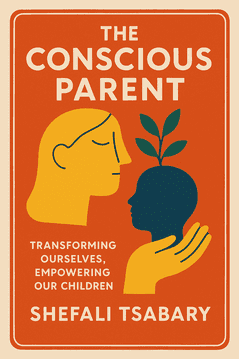
When Oprah Winfrey first discovered Dr. Shefali Tsabary's revolutionary approach to parenting, she declared it "the most profound book on parenting I've ever encountered" and invited her onto her show five times. Endorsed by the Dalai Lama himself, "The Conscious Parent" has transformed millions of parent-child relationships worldwide by challenging our fundamental understanding of the parental role. Rather than viewing children as entities to be molded and controlled, Dr. Tsabary presents a radical idea: our children come to us not for us to shape them, but for them to shape us. This paradigm-shifting book, which blends Eastern mindfulness with Western psychology, has become a touchstone for celebrities like Gwyneth Paltrow and everyday parents alike who seek deeper connection with their children while nurturing their authentic selves.
Traditional parenting operates on the assumption that children are extensions of ourselves-blank slates waiting to be filled with our wisdom, expectations, and dreams. This fundamental misconception lies at the heart of many parent-child conflicts. Children arrive in our lives as distinct spirits with their own unique signatures and destinies. They engage with life unconcerned with adult preoccupations like social appearances or achievement, plunging headfirst into experiences with uninhibited joy and curiosity.
When my daughter was six, she received a dollar from the tooth fairy and proudly presented me with half of it, torn in two. My immediate impulse was to teach her about money's value, but I paused, recognizing this moment as a crossroads. I could either impose an adult lesson or honor her generous spirit. I chose the latter, and her eyes sparkled with delight at being truly seen.
Most of us parent unconsciously, never examining our beliefs about child-rearing. Whether super-successful or struggling, we project our own experiences onto our children, forgetting they have their own destinies to fulfill. We approach parenting with less strategic planning than we would a business venture. While we'd craft a careful mission for a billion-dollar organization, few of us develop a thoughtful parenting philosophy.
The traditional hierarchical approach to parenting-with parents governing from the top down-stems from our assumption that we're entitled to control our children because they're smaller and know less. This approach rigidifies our ego with delusions of power. To truly connect with your child, you must set aside any sense of superiority and engage them as a real person like yourself.
Conscious parenting embodies our longing to experience oneness in the parent-child relationship-a partnership rather than dominance. This path leads through discovering communion with your own forgotten self. As awareness disintegrates the parent-child hierarchy, it equalizes your family's playing field. Though children appear moldable, they invite us to mold ourselves into their spiritual partners, releasing our need for control.
第2章
The Spiritual Purpose and Transformation of Parenting
Despite evidence that many parenting strategies don't work or even backfire, most of us cling to unconscious approaches that created difficulties with our children in the first place. To shift to more effective relationships with our children, we must resolve issues stemming from how we ourselves were parented. Only when we're attuned to our own being can we help our children connect with their unique essence.
The relationship between parent and child exists primarily for the parent's transformation and only secondarily for raising the child. Our children come to us so we may recognize our psychic wounds and find courage to transcend our limitations. They mirror our unconsciousness, offering opportunities to awaken from slumber.
Children enter our lives with their unique challenges to help us become aware of how much we need to grow. They evoke deeply unconscious feelings, taking us into the remnants of our emotional past. Unless we consciously integrate unresolved aspects of our childhood, these patterns inevitably reincarnate in our present and show up in our children.
Jessica's story illustrates this principle. Her daughter Anya's rebellion mirrored Jessica's own suppressed childhood wounds. When we understand that our children's inappropriate behavior is a call to increased consciousness on our part, we can look within instead of reacting. Our children generously become receptacles for our misplaced emotions so we can ultimately set ourselves free.
A conscious parent doesn't look outside the relationship for answers but finds them within the parent-child dynamic itself. This approach isn't learned through books offering quick fixes or technique-focused classes, but through the actual experience of relating to our children. Using the present moment as a living laboratory, everyday interactions become opportunities to nurture self-definition, resilience, tolerance, and connectedness.
Because parenting is a moment-by-moment energetic exchange between our psyche and our children's, consciousness requires becoming astute observers of our own behavior. We must witness our unconscious scripts as they arise. Despite our best intentions, we may repeat patterns of unconscious behavior, which can be discouraging. The truth is that becoming conscious is a lifelong practice of witnessing our own unconsciousness.
Since our parenting reflects who we are at our core, changing how we raise our children requires understanding our fundamental worldview. How we react when life doesn't follow our plans reveals whether we believe life happens outside of us-as an inexplicable force beyond our control, or as our spiritual partner on a journey toward authenticity.
Whether we see life as fundamentally good or threatening depends on our upbringing, but rarely are we raised to understand that life is essentially wise. This perspective revolutionizes our parenting approach-we begin to see all circumstances as opportunities to access our higher selves. Our children's behavior doesn't happen in a void but responds to our energy.
When we trust that life's messengers come with secrets about our true nature, we embrace our children for the lessons they bring us. Like Elizabeth, who recognized how her two very different sons-high-achieving David and nontraditional Deacon-each taught her valuable lessons. While her husband Matthew felt pride with one son and humiliation with the other, Elizabeth understood that David solidified her ego while Deacon crumbled it, helping her become more accepting of differences.
第3章
Acceptance and Approval: Breaking the Chains of Conditional Love
Without realizing it, we bind our children to us by tying them to our approval, making them slaves to our judgments. Either we starve them of approval or make them dependent on it. Every child deserves to know they're unconditionally accepted for who they fundamentally are-not for what they do. By simply existing, children have the right to express their minds, feelings, and embody their spirit.
Both disapproval AND approval can become tentacles of control. Whether our children are artistic, academic, introverted, gay, religious, or manifest any number of traits, it isn't our place to approve or disapprove of their core being. Children need to grow up knowing their essence is worthy of celebration-not for their accomplishments, but for simply being.
Accepting our children in their as-is state requires surrendering our ideas of who they "should" be-a surrender akin to psychic death-allowing us to enter pure communion with them. As we die to ourselves, we're birthed anew alongside our children's budding spirits. Our children become our gurus if we're open to this transformation.
Anthony and Tina's story illustrates the cost of non-acceptance-their inability to accept their son's learning disabilities led to belittling, abuse, and family breakdown. They projected their anxieties onto their son, making him the vessel of their anguish. Only when they confronted their inability to accept him did transformation begin.
Acceptance isn't passive but a highly active, intensely alive process involving our entire heart and mind. John and Alexis demonstrated this with their son Jake, who showed typically feminine rather than masculine traits. Though they sometimes struggled with wanting him to be like other boys, they nurtured his love of music and dance. Because they accepted him unconditionally from the start, he developed his authentic self without condition, judgment, or guilt.
Our ability to accept our children directly mirrors our self-acceptance. We cannot raise free-thinking children if we ourselves aren't free-thinkers. When we struggle to embrace our children as they are, it's because they trigger old wounds, threatening our ego-attachments. Any barrier to fully accepting our children stems from our own conditioning.
Our society believes trust must be earned, but our children deserve our implicit trust simply through their presence. This requires parents to display a fundamental reverence for life itself. The subtle ways we communicate trust or distrust-through constant checking, hovering, making decisions without their input-all transmit our own anxiety or confidence.
Life itself is neutral-neither good nor bad. We choose how to interpret our experiences based on ingrained patterns from childhood. When we understand that life holds transformational lessons, we no longer avoid difficult experiences but recognize we may have drawn them to us for spiritual growth.
第4章
The Ego's Role in Parenting Challenges
Giving children total acceptance requires losing our ego-the hardest spiritual challenge for parents. Most of us parent from ego, seeing children as extensions of ourselves and taking personal ownership of their achievements and failures. Many become parents to fulfill personal longings, using children to heal our broken selves or provide us with worth.
Ego functions as blind attachment to our self-image, governing our thoughts, emotions, and actions. When challenged to change for our children's benefit, we resist, preferring to blame external factors rather than acknowledge our contribution to negativity. Our identity feels threatened by change.
When our children misbehave, we often react as if our own competence is under attack. One mother, upon learning her nine-year-old had been in a fight, became defensive and combative with school authorities, making the incident about herself rather than allowing her son to experience natural consequences. Our ego needs us to be perceived as perfect parents, so when our children's behavior threatens this image, we react emotionally.
Our attachment to perfection prevents us from embracing life's realities. Like the mother who spent $30,000 on her son's bar mitzvah only to become furious when things went wrong, we impose our need for control on everyone around us. When we present ourselves as all-knowing and flawless to our children, we foster inhibition and feelings of inadequacy in them.
When we're attached to external markers of success, we impose these rigid ideals on our children. Like the parents devastated by their son's rejection from Ivy League schools, we burden our children with our expectations, causing them to lose touch with their authentic selves. The spiritual challenge of parenthood requires abandoning the urge to make children extensions of ourselves.
Our attachment to order and conformity creates conflict when our children break the family mold. Whether it's the dreamy, emotional teenager who embarrasses her achievement-oriented parents or the "perfect" daughter whose choice of partner is rejected, we resist children who threaten our self-image.
Our children absorb all our emotional patterns-both healthy and unhealthy. Conscious parenting requires constantly asking, "Am I dealing with my child in an aware manner or am I being triggered by my past?" Parents function as mirrors, and if we can't access our own joy, our children won't be able to access theirs.
Our children provide front-row seats to our emotional immaturity, evoking powerful reactions that make us feel out of control. They don't cause these feelings but merely awaken our unresolved childhood issues. Because children are vulnerable, we often blame them rather than facing our unconsciousness.
第5章
Managing Emotional Triggers and Healing Wounds
When triggered by our children, instead of reacting from frustration, we must look within. Our triggers reveal our resistance to life's "as is" form-we're saying "I don't want this situation." This resistance stems from our ego being threatened. Consciousness means being truly awake to our experiences and responding to reality as it unfolds, accepting that "it is what it is."
Children naturally feel emotions without blocking them-they surrender to pure feeling, then release it as it passes. Adults, however, fear surrendering to uncomfortable emotions like rejection, fear, and sadness. We avoid them through burying, resisting, or displacing them onto others. When we don't honor our own feelings, we teach our children to squelch theirs.
When our children hurt, we instinctively want to rescue them, partly driven by our own helplessness. But rushing to call principals, yell at teachers, or confront other parents only solidifies their pain and fosters an inability to tolerate difficult emotions. To help children master emotions, we must teach them to surrender to their experiences-creating space for their pain to have presence.
Becoming nonreactive begins with awareness that our habitual reactions aren't who we truly are, but products of unconsciousness. Progress is gradual-perhaps yelling for eight minutes instead of ten because midway through we catch ourselves. The conscious parent expects to be triggered occasionally but uses these moments to evolve.
When parents remain wrapped in their own pain, unable to respond to their children's needs appropriately, children grow up feeling empty and fragmented because their essential self never develops. These children spend their lives searching for validation, often falling into depression that manifests as withdrawal or addiction.
Those who grow up feeling inadequate often develop compensatory grandiosity, projecting an energy that treats others as lesser while hiding their lack of self-worth. Like Jonathan, who despite intelligence can't maintain employment, they create scenarios where betrayal is inevitable, imposing impossible standards on others. Such parents pressure their children to excel in parent-approved activities while judging their performance harshly.
Children raised by parents who sidestep authenticity learn to become pleasers, catering to others' needs for approval while harboring resentment beneath. When parents seek their children's approval by overindulging them, they create narcissists who believe the world revolves around them. Without healthy boundaries, children fail to learn that life sometimes says "no."
Children wounded by self-absorbed parents adopt personas to gain attention, never expressing their authentic voice. Growing up, they become parents unable to allow their own children authenticity. Like Martha, who felt shortchanged among eight siblings and later smothered her son Nate with attention, they create martyrdom dynamics that trap their children in guilt.
None of your pain or brokenness, whatever form it takes, represents your essential being. Your past experiences don't have to define who you are today. Despite life's pain, your true being with its inherent loving joyfulness remains intact, though often buried beneath layers of hurt. The parent-child relationship offers a perfect opportunity to uncover your essential being and integrate unresolved aspects of your psyche.
第6章
The Developmental Journey: From Infancy to Adolescence
The parent-child relationship creates a profound dance of mutual influence, with each developmental stage offering growth opportunities for both. When we view our children's stages through a spiritual lens rather than just measuring developmental milestones, we discover our own journey of conscious evolution alongside theirs.
The transition to parenthood demands a complete identity transformation as we surrender to serving our infant's needs. In this stage of oneness and togetherness, our deepest bonding occurs as parent and child synchronize physically and psychologically. Everything we are-our mindset, fears, courage, reactions-registers in our infant at a cellular level.
Parenthood shatters our fantasies as we discover our life is no longer our own. The intimate energetic dance with our infant takes us to our core, revealing both our highest and lowest selves-our capacity to love and serve alongside our desire for control and perfection. Infants, living purely in the moment without agenda, force us to abandon expectations and surrender to unpredictability.
Infancy invites us to abandon our adult patterns of intellectualizing and performing, entering instead a dreamlike realm where traditional communication doesn't work. We must recover a lost rhythm of life-slowing down, being fully present in each moment. Success becomes measured in tiny developments: a smile, a leg shake, holding a rattle.
Toddlerhood exists in its own chaotic universe-emotionally volatile, unpredictable, and often maddeningly inconsolable. Children swing between angelic sweetness and raving tantrums in moments, with reactions emerging from nowhere. Everything is over-the-top-frustration, excitement, fears that seem real though imagined. This phase marks the blossoming of the child's sense of self as they explore creativity, curiosity and independence.
While allowing toddlers their adventure and exploration, we must also provide understanding of limits. This stage knows no logic-everything occurs instinctually with impulses running wild. Here we must plant the first real seeds of containment. Toddlers constantly test boundaries, discovering how far they can push before we yield. The first "no" introduces the concept of acceptable versus unacceptable behavior, setting the stage for all future behavioral dynamics.
The early school years bring tremendous learning for children-sometimes overwhelming, sometimes liberating. Children oscillate between clinging to parents and rejecting them for peers, between neediness and autonomy, rebellion and obedience. This is when they learn to navigate friendships, school norms, curriculum, and emotional regulation without parental intervention.
Middle school represents a painful transition as children's identity undergoes dramatic overhaul. Their bodies develop without regard for psychological readiness, leaving them mentally unprepared for physical maturity. Hormonal surges and insecurities leave them groundless, no longer seeing the world in black and white. Parents must transition from dominance to partnership, becoming ever-present without leading the way.
As children mature into high school, parents witness the effects of their upbringing, sometimes with humiliation and outrage. Teens don't transform overnight-they're the same people, just with more personality and self-assertion. If parents were too strict, teens break free; if too permissive, they go wild; if neglectful, they disconnect.
The teen years demand trust despite the emotional maelstrom of development, relationships, and independence. More than ever, teens need acceptance. Parents must resist control, occupying space in the wings while teens manifest the values instilled in them. The relationship must shift to partnership and kinship.
第7章
From Control to Connection: The Path to Authentic Relationship
Conscious parenting embraces both the wonder and madness of raising children, acknowledging the profound psychological, emotional, and spiritual transformation required. Parenting brings out our best and worst, altering our self-understanding forever. No one adequately explains how life-changing becoming a parent will be-how it tears open our hearts, evaporates our old identity, and leaves us rebuilding who we are.
While both parents transform during childrearing, mothers experience a uniquely intense bond from housing the child within their bodies. This nine-month gestation creates a symbiotic relationship as mothers witness their identity alter, understanding their life is no longer solely their own. Post-birth, many mothers feel lost between identities-purposeful in motherhood but disconnected from their intrinsic selves.
Learning to surrender to life with children requires patience as children naturally test our limits. This isn't just about waiting for them to finish tasks but represents an opportunity to surrender to the present moment by dropping our agenda and appreciating what's before us. Children's naturally slower tempo offers us a priceless jewel-a rhythm closer to our soul than most adults maintain.
The early childhood years from birth to six are precious times when children need leisure to explore through play rather than pressure to achieve. This is when they should be allowed to discover themselves through idle play, creative exploration, and following their hearts. They need unstructured time to dress up, make mistakes, and try various activities to see which ones naturally take root.
As children develop mentally, they need to become comfortable with quiet aloneness to avoid becoming strangers to themselves. Without learning to rest in stillness, they may feel desperately lonely when left alone. Daily car rides provide excellent opportunities for creating quiet space without gadgets. Around age eight, children can begin learning meditation practices, with ten-minute family sessions introducing consciousness deepening.
Children seek coherent, meaningful lives and count on us to help make sense of their reality. We create narrative through our presence, which brings continuity to their experiences. By weaving together their memories ("Remember when you were eight..."), we help them interpret their lives. Storytelling provides a framework for understanding-sharing stories about how they came to be, their qualities, and their place in the family.
Gratitude is one of the most powerful parenting techniques. Creating rituals where family members express thankfulness helps children develop reflective skills and extract beauty from life. By appreciating small elements of existence, children learn not to take anything for granted. Importantly, we must express gratitude to our children just for being who they are, looking them in the eye and sincerely saying "thank you"-this expands their sense of value exponentially.
第8章
Being Over Doing: Creating Space for Authenticity
As adults, we're consumed by constant activity, basing our self-worth on what we do, earn, how we look, and our social connections. Children don't naturally operate this way until we teach them. Conscious parenting means measuring a child's success differently-allowing them to live in the moment rather than drowning them in activities and pressure.
Anxiety represents one of our most common forms of "doing" that masks our inability to simply be. When parents react with doubt, hesitation, or distrust, children adopt the same orientation to life. Anxiety often manifests as perfectionism, a need to fix ourselves, or a compulsion to control. Worrying gives us the illusion of doing something, but since it focuses on the future, it prevents us from taking positive action in the present.
Many of us fear sitting with ourselves and experiencing true solitude. This terror of facing our aloneness drives us to fill our days with projects, gadgets, and excessive involvement in our children's lives. At its root lies our fear of death-a reality we're unprepared to accept. Until we come to terms with our mortality, we create noise and drama to feel "alive."
The great ailment of modern society is our inability to be with ourselves-disconnected from our essence, we're anxious and lacking peace. When we live from being rather than doing, we relinquish control for a sense of oneness and personal empowerment. Conscious parents understand that childhood is the time to plant seeds, not rush fruit to fruition, trusting their children's intuition about their own destiny.
Our children won't stay with us forever, so these few years are our chance to help them awaken to their inner fullness. Connection flourishes not in special moments like vacations, but in ordinary daily interactions-giving baths, driving in the car, waiting in line. True connection means giving our full attention when children speak to us, greeting them in the mornings, engaging playfully during rushed moments, and treating bedtime as sacred.
Many parents mistake the business of parenting-cooking, homework, transportation-with being truly present. Meeting children's need for connection requires listening without fixing or lecturing, observing their body language with awakened receptivity. Often we ask children to relate to our state of being rather than bringing our energy to them.
The moment our children try to speak, we rush to advise, critique or label their experiences. This comes from our own inability to simply be and allow. When we constantly interject with unsolicited opinions, our children disengage and begin hiding things from us. Even our well-intentioned reflective statements like "I see you are upset" can sound patronizing if they come from our ego's need to control rather than genuine acceptance.
True empathy means allowing children to experience their feelings in their own way while we bear witness. This doesn't mean agreeing with everything they feel, but acknowledging their right to those feelings without trying to deny, shape or change them. When children express difficult emotions like fear, our instinct is often to dismiss them with phrases like "Don't be scared." Instead, we should validate their emotions: "Of course you're scared. I am too. But this is the whole point-to shiver and tremble, and still go on the adventure."
When we simply witness our children's emotional states without analyzing or pigeonholing them, we create space for self-reflection and help them develop their own inner witness. Rather than jumping in with explanations, sometimes responding with "I don't know" or "Let's discover the answer together" nurtures initiative and resourcefulness. By valuing questions over answers, we teach children to connect with wonder and curiosity.
第9章
Beyond Achievement: Embracing Ordinariness and Learning from Mistakes
We all want our children to be special because it makes us feel special, but this comes at a cost. We push them to excel, seeking validation through their achievements and measuring them against peers. Children learn early they're part of a competitive world divided between performers and non-performers, where their worth depends on external criteria.
Parents who were denied ordinariness in their own childhood often cannot tolerate it in their children, pushing them to always be extraordinary at the cost of authenticity. While encouraging exploration honors a child's being, their sense of worth shouldn't depend on achievement. When we deny our children's ordinariness, we teach them to value only the grand and fabulous.
When we lack grounding in our essence, we compensate by making everything a "big deal." Without intrinsic value, we exaggerate and overanalyze. Our children grow addicted to drama over simplicity, unable to rest in the ordinary. They need space to sit with themselves and discover their authentic voice amid the din of "doing."
Children naturally flow between states of being without needing constant distraction. When we fill their lives with endless activities and trinkets, we rob them of imagination and self-created pleasure. By emptying our lives of clutter and creating space, we open ourselves to transcendent moments-like being captivated by a sunset where all urgency dissolves into awe and connection.
Reduce screen time-not because technology is inherently harmful, but because using it to soothe boredom teaches dependency on external aids. Exchange purchases for experiences: a trip to the zoo instead of a gadget, a bicycle ride instead of a video game. Our attention is more valuable than anything money can buy.
When our children make mistakes, we must approach them with the same compassion and forgiveness we'd want for ourselves. Mistakes should be viewed not as reasons for punishment but as windows for learning. Despite our own imperfections as adults, we often hold children to impossible standards.
When we presume to understand our children's motivations and judge them negatively, we trigger helplessness in them. Through shame-inducing statements, we pile feelings of inadequacy upon them-comparing them to others, ridiculing them, or putting them down. These judgments cause children to wall us out emotionally. If they internalize this shame, they retreat into shells believing they're "bad"; if they externalize it, they may become bullies.
Children learn to handle emotions by watching us during stressful times. Every day offers opportunities to model being at ease with our imperfections. When children see that life's messes can be mined for emotional and spiritual gold, they're freed from fear of failure. Instead of lecturing or punishing, we should wait until emotions settle, then compassionately process the mistake without judgment, helping them extract lessons.
In our family, we play a dinner game where each person shares their biggest mistake of the week, trying to outdo each other with sillier mistakes, then discussing what we learned. This approach teaches children that mistakes aren't shameful but opportunities for growth. When my daughter confesses mistakes, I praise her bravery and help her learn from them.
第10章
Releasing Expectations and Nurturing Authentic Paths
I'm often puzzled when asked what I want my child to be when she grows up, because I have no predetermined answer. I simply want her to know her own wholeness flowing from inner stillness. Children come to us full of what is, not what isn't. When we focus on what they lack or have yet to become, we teach them they're incomplete.
We easily superimpose expectations on our children that have nothing to do with who they truly are. When we're preoccupied with success, finances, and achievements, we communicate this anxious approach to our children, pushing them as extensions of our ego while telling ourselves it's "for their own good."
Many parents believe setting high expectations helps children develop high standards for themselves. But setting the bar too high too early undercuts a child's potential, making them feel inadequate. Our children have the power to manifest realities we haven't imagined, and limiting them to our vision-whether for education, career, or relationships-restricts their development.
You have the right to expect three things from your children: respect for themselves, for others, and for their safety. Beyond these basics, your children own the right to manifest who they want to be. Hope that they'll be good learners rather than achievers; that they'll respect rather than merely obey you; that they'll create their own vision rather than follow yours.
Worrying about our children's future survival often drives us to push them toward becoming star achievers. We teach them early that activities are about mastery rather than pleasure, focusing on where they're going instead of where they are. By shifting our perspective from future to present, we free children from performance anxiety and allow them to learn without inhibition.
The conscious parent doesn't look outside the relationship for answers but finds them within the parent-child dynamic itself. This approach isn't learned through books offering quick fixes or technique-focused classes, but through the actual experience of relating to our children. Using the present moment as a living laboratory, everyday interactions become opportunities to nurture self-definition, resilience, tolerance, and connectedness.
Our children won't stay with us forever, so these few years are our chance to help them awaken to their inner fullness. Connection flourishes not in special moments like vacations, but in ordinary daily interactions-giving baths, driving in the car, waiting in line. True connection means giving our full attention when children speak to us, greeting them in the mornings, engaging playfully during rushed moments, and treating bedtime as sacred.
When we trust that life's messengers come with secrets about our true nature, we embrace our children for the lessons they bring us. The relationship between parent and child exists primarily for the parent's transformation and only secondarily for raising the child. Our children come to us so we may recognize our psychic wounds and find courage to transcend our limitations. They mirror our unconsciousness, offering opportunities to awaken from slumber.