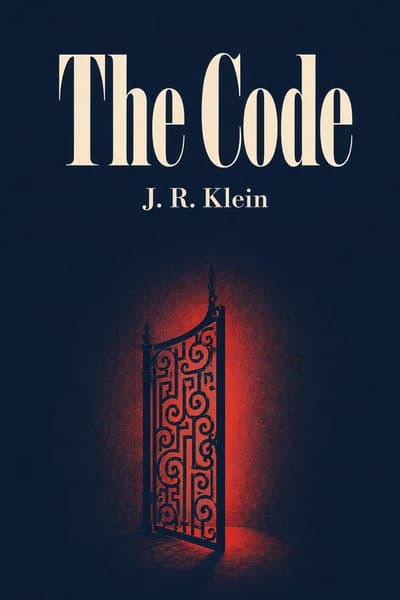
The Code
『The Code』の概要
Beneath Graebner College lies a terrifying secret - an underground altar chamber harboring medieval alchemy and sorcery. "The Code" delivers a fast-paced horror masterpiece that reviewers call "outstanding" and "suspenseful." What ancient ritual awaits when curiosity leads you below?
『The Code』の主要テーマ
- academic cults
- clandestine campus societies
- forbidden knowledge
- institutional corruption
- indoctrination rituals
『The Code』の名言
The pursuit of knowledge can lead down dark and treacherous paths.
The rituals become more intense, the demands more severe.
The Code isn't just a secret society – it's a cult.
The Code may be fictional, but the lessons it teaches are all too real.
Question everything, trust your instincts.
『The Code』の登場人物
- Katy MaloneAn ambitious freshman student at Graebner
- Nick SanchezAn intelligent freshman investigating The Code
- LenoreThe enigmatic assistant to Professor Sam
The Codeの要約をダウンロード
The Codeの要約をPDFまたはEPUBで無料でダウンロード。印刷やオフラインでいつでもお読みいただけます。
この本に関するよくある質問
The Code is a supernatural thriller about the Felton family, who unknowingly purchase a malevolent farmhouse in rural Texas. The story intertwines psychological suspense, military intelligence investigations, and existential themes as the family confronts the house’s dark soul and a dire message for humanity. Blending cosmic horror with literary introspection, it explores how unseen forces manipulate human lives.
Fans of genre-defying mysteries and literary horror will appreciate this novel. Ideal for readers who enjoy atmospheric narratives (à la Shirley Jackson) or philosophical suspense (like Paul Tremblay). Its lyrical prose and focus on existential themes also cater to those drawn to speculative fiction with psychological depth.
Yes—the novel won the 2022 Feathered Quill Silver Medal for Mystery & Suspense and has been praised for its “courageously non-genre” approach. Reviewers highlight its haunting prose, exploration of human fragility, and seamless fusion of supernatural elements with military intrigue, making it a standout for readers seeking intellectually provocative horror.
The farmhouse embodies a sinister, sentient force that mirrors humanity’s capacity for self-destruction. Its “dark soul” serves as a metaphor for unresolved historical traumas and the ecological consequences of human arrogance, echoing themes of cosmic indifference found in Lovecraftian horror.
A clandestine military unit investigates paranormal phenomena tied to the farmhouse, revealing government awareness of its lethal energy. This subplot critiques institutional secrecy and bridges speculative fiction with technothriller tropes, adding geopolitical stakes to the family’s survival struggle.
Some readers may find its pacing deliberate compared to conventional thrillers, and its abstract themes (e.g., the house’s “soul”) could alienate those preferring straightforward horror. However, critics argue these choices deepen its philosophical resonance.
Through the Feltons’ ordeal, Klein examines themes of free will versus predestination, the fragility of sanity, and humanity’s ecological hubris. The novel asks whether people can evolve beyond self-destructive patterns—a question amplified by the farmhouse’s ancient malice.
- “A house, like a man, can harbor ghosts of its own making.”
- “The darkness wasn’t in the walls—it was in us all along.”
These lines underscore the novel’s focus on internal and external corruption, blending Gothic imagery with psychological insight.
Its themes of environmental reckoning and institutional distrust resonate amid climate crises and AI ethics debates. The farmhouse’s “message for humanity” parallels contemporary fears about unsustainable growth, making it a allegory for 21st-century existential risks.
Unlike his autobiographical travel memoir TO FIND, The Code embraces speculative fiction. However, both share lyrical prose and existential inquiries, cementing Klein’s signature focus on journeys—physical and metaphysical.
The house operates as a sentient archive of humanity’s sins, weaponizing time and memory against its victims. This concept reframes the haunted house trope by linking its malice to collective human history rather than individual tragedies.
Yes—the Feltons’ battle against the house mirrors overcoming self-sabotage or societal pressures. Klein suggests that confronting “darkness” requires acknowledging complicity in destructive systems, offering a bleak but actionable metaphor for personal growth.