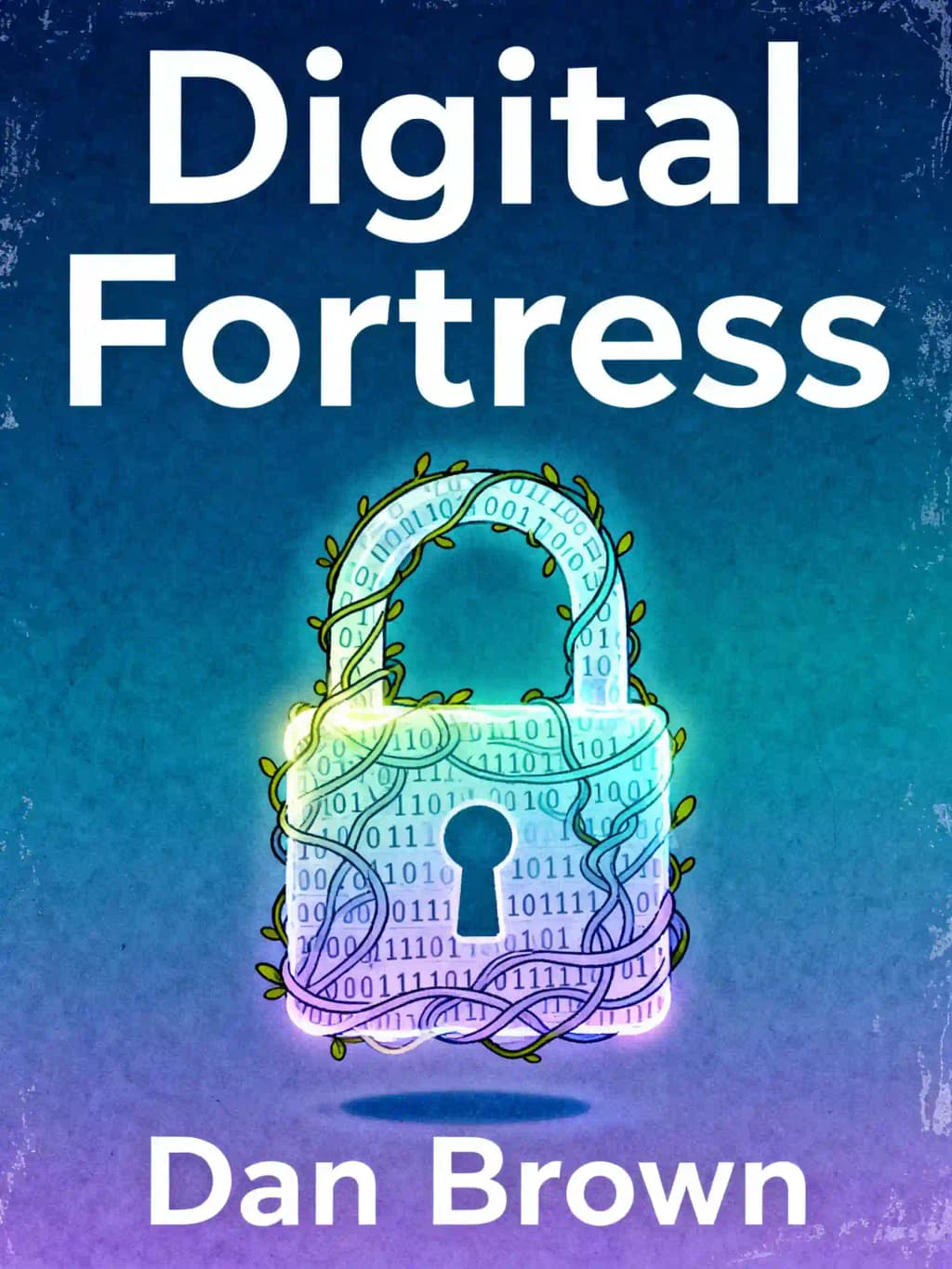
When NSA's unbreakable code is threatened, cryptographer Susan Fletcher races against time in a deadly game of digital espionage. Dan Brown's debut thriller explores surveillance ethics with "chillingly current" realism that U.S. intelligence analysts called "utterly plausible." What digital secrets are you willing to die for?
Dan Brown, the #1 New York Times bestselling author of Digital Fortress, is renowned for crafting meticulously researched thrillers that blend cutting-edge technology, historical secrets, and ethical dilemmas.
Born in 1964 in Exeter, New Hampshire, to a mathematics professor and church organist, Brown’s upbringing at Phillips Exeter Academy—where he later taught English—fueled his fascination with cryptography and institutional power dynamics central to his novels.
His debut techno-thriller Digital Fortress (1998) explores NSA codebreaking and digital privacy, themes that foreshadowed his global phenomenon The Da Vinci Code (2003) and its Robert Langdon series sequels like Angels & Demons and Inferno.
Brown’s books, translated into 57 languages, have sold over 200 million copies worldwide, with film adaptations starring Tom Langdon amplifying his cultural impact. His work consistently probes the tension between science and religion, informed by his dual heritage of academic rigor and artistic sensibility.
Digital Fortress follows NSA cryptographer Susan Fletcher and linguist David Becker as they race to stop a rogue algorithm threatening global security. When ex-NSA employee Ensei Tankado creates an unbreakable encryption program, the NSA’s supercomputer TRANSLTR faces collapse, risking exposure of classified data. Themes of privacy vs. surveillance, betrayal, and technological ethics drive this technothriller’s high-stakes plot.
Fans of fast-paced technothrillers and readers interested in cryptography, government surveillance, or cybersecurity will enjoy this novel. It appeals to those who appreciate intricate plots with moral dilemmas, though its complex technical details may challenge casual readers.
Yes, for enthusiasts of suspense-driven stories with tech themes. While criticized for convoluted plotting and underdeveloped characters, its exploration of privacy debates and relentless pacing make it a compelling read for genre fans.
The novel examines tensions between national security and individual privacy, the ethics of mass surveillance, and the dangers of unchecked technological power. It questions whether governments should prioritize safety over civil liberties, reflecting post-9/11 anxieties about digital espionage.
TRANSLTR is the NSA’s brute-force decryption supercomputer, designed to crack codes by testing every possible key. Its inability to break Tankado’s Digital Fortress algorithm triggers the crisis, exposing vulnerabilities in relying on technology for absolute security.
Tankado’s ring contains a passcode to disable Digital Fortress. David Becker’s hunt for it in Seville drives the plot, as the NSA believes recovering it will prevent the algorithm’s release. The ring symbolizes the clash between human ingenuity and systemic control.
A disgruntled former NSA cryptographer, Tankado creates Digital Fortress to expose the agency’s surveillance overreach. His death sparks a global crisis, forcing characters to confront his legacy: a weaponized algorithm challenging governmental dominance.
The novel critiques the NSA’s secrecy and invasive practices, depicting TRANSLTR as a tool for mass data collection. Strathmore’s ambition to control Digital Fortress mirrors real debates about balancing security with privacy rights.
Yes, including Greg Hale’s betrayal as Tankado’s collaborator, Strathmore’s hidden agenda, and the virus-triggered collapse of TRANSLTR. Twists underscore themes of deception and the unintended consequences of arrogance.
Unlike The Da Vinci Code’s historical focus, this thriller emphasizes tech and cryptography. It shares Brown’s signature pacing but is darker, with fewer academic references and more critique of institutional power.
Critics note overly technical jargon, a convoluted climax, and underdeveloped characters. Some plot elements, like TRANSLTR’s sudden failure, strain believability, though the premise remains engaging for genre enthusiasts.
Yes. Its themes of data privacy, encryption, and state surveillance align with modern debates about AI, cybersecurity, and laws like GDPR. The novel’s warnings about technology outpacing ethics remain timely.
著者の声を通じて本を感じる
知識を魅力的で例が豊富な洞察に変換
キーアイデアを瞬時にキャプチャして素早く学習
楽しく魅力的な方法で本を楽しむ
We all have a right to keep secrets.
This code is unbreakable.
『Digital Fortress』の核心的なアイデアを分かりやすいポイントに分解し、革新的なチームがどのように創造、協力、成長するかを理解します。
『Digital Fortress』を素早い記憶のヒントに凝縮し、率直さ、チームワーク、創造的な回復力の主要原則を強調します。

鮮やかなストーリーテリングを通じて『Digital Fortress』を体験し、イノベーションのレッスンを記憶に残り、応用できる瞬間に変えます。
何でも質問し、声を選び、本当にあなたに響く洞察を一緒に作り出しましょう。

"Instead of endless scrolling, I just hit play on BeFreed. It saves me so much time."
"I never knew where to start with nonfiction—BeFreed’s book lists turned into podcasts gave me a clear path."
"Perfect balance between learning and entertainment. Finished ‘Thinking, Fast and Slow’ on my commute this week."
"Crazy how much I learned while walking the dog. BeFreed = small habits → big gains."
"Reading used to feel like a chore. Now it’s just part of my lifestyle."
"Feels effortless compared to reading. I’ve finished 6 books this month already."
"BeFreed turned my guilty doomscrolling into something that feels productive and inspiring."
"BeFreed turned my commute into learning time. 20-min podcasts are perfect for finishing books I never had time for."
"BeFreed replaced my podcast queue. Imagine Spotify for books — that’s it. 🙌"
"It is great for me to learn something from the book without reading it."
"The themed book list podcasts help me connect ideas across authors—like a guided audio journey."
"Makes me feel smarter every time before going to work"

Digital Fortressの要約をPDFまたはEPUBで無料でダウンロード。印刷やオフラインでいつでもお読みいただけます。
In the heart of the National Security Agency lies TRANSLTR - a technological marvel unlike any other. Rising twenty-three feet above the floor with 90% of its mass extending six stories underground, this $1.9 billion quantum computing behemoth was designed for one purpose: to crack any encryption code in the world. As the internet revolution transformed intelligence gathering, encryption software allowed anyone from business executives to terrorists to communicate in complete secrecy. TRANSLTR's response? Processing an astounding thirty million encryption keys per second, breaking codes that would take traditional computers decades to solve. For years, this silent guardian protected America by deciphering terrorist plots and foreign threats, all while the public remained blissfully unaware of its existence. But what happens when an unbreakable code emerges? What happens when the watchers can no longer watch?