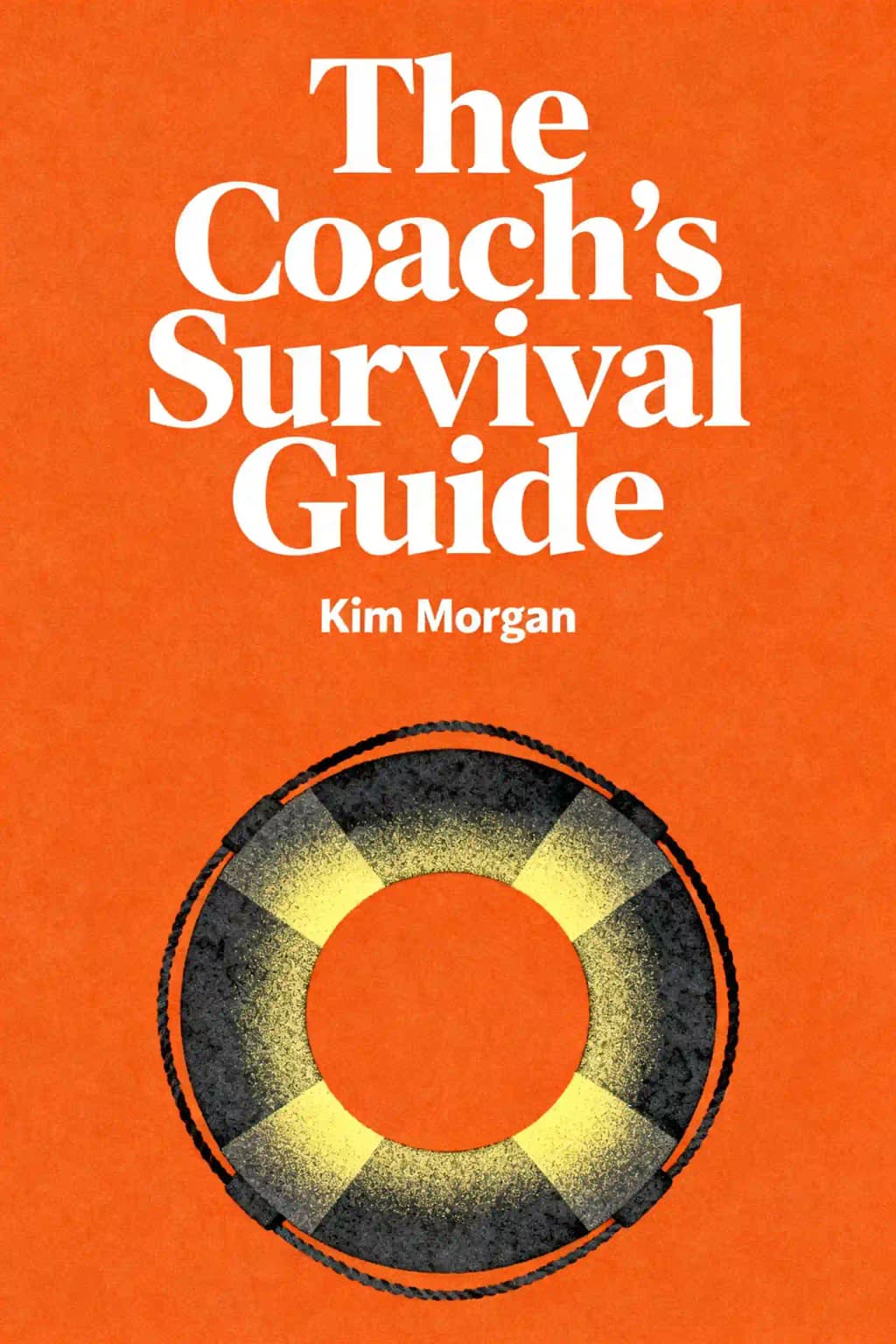
Kim Morgan's "The Coach's Survival Guide" tackles impostor syndrome and boundary-setting with warmth and wit. Endorsed by Professor Damian Hughes as "illuminating," it's the secret weapon that normalizes coaching insecurities while offering practical strategies. What's your biggest coaching challenge?
Kim Morgan, celebrated screenwriter and co-author of the Oscar-nominated Nightmare Alley, channels her expertise in storytelling and creative leadership into The Coach’s Survival Guide.
With a background spanning film criticism, screenwriting, and collaboration with industry icons like Guillermo del Toro, Morgan translates her insights on human motivation and resilience into actionable strategies for coaches.
Her work for The Criterion Collection, Sight & Sound, and as a Sundance Film Festival juror underscores her analytical rigor, while her acclaimed adaptations demonstrate her ability to distill complex narratives into compelling frameworks. The Coach’s Survival Guide merges Morgan’s signature blend of psychological depth and practical wisdom, offering tools for fostering trust and navigating high-stakes environments.
The book has been integrated into professional development programs at film studios and educational institutions, leveraging Morgan’s unique perspective to bridge creative and coaching disciplines.
The Coach's Survival Guide by Kim Morgan provides practical strategies for overcoming common coaching challenges, building client trust, and applying adaptable techniques to foster professional growth. It emphasizes creating collaborative environments, maintaining ethical standards, and balancing client needs with personal well-being, supported by real-world case studies.
This book is ideal for new coaches navigating their first clients, seasoned professionals refining their skills, and entrepreneurs building a coaching business. It addresses insecurities, business realities, and strategies for sustaining confidence while managing demanding schedules.
Key concepts include fostering empathy-driven client relationships, tailoring coaching methods to individual needs, and prioritizing accountability. The book also stresses ethical practices, self-care to avoid burnout, and navigating the challenges of running a coaching practice.
Morgan emphasizes trust and open communication as foundations for effective coaching. The guide offers frameworks for understanding client goals, aligning techniques to their strengths, and empowering them to take ownership of their growth journey.
Morgan highlights the sedentary nature of coaching and urges professionals to prioritize physical health. She advises visualizing long-term well-being to motivate lifestyle changes, ensuring coaches remain energized and focused.
The book underscores maintaining professionalism in all interactions, including confidentiality, boundary-setting, and transparency. It provides guidelines for navigating complex client dynamics while upholding integrity.
Practical tips include structuring initial client assessments, using reflective questioning techniques, and developing personalized action plans. Morgan also shares strategies for marketing services and managing time efficiently.
Morgan advocates regular movement breaks, ergonomic workspace setups, and integrating exercise into daily routines. She links physical vitality to sustained mental clarity and client impact.
The book includes tools for goal-setting, accountability tracking, and client feedback loops. It also explores methods for resolving conflicts, adapting to diverse learning styles, and measuring coaching outcomes.
Morgan covers pricing strategies, client retention tips, and scalable systems for administrative tasks. The guide also addresses niche positioning, networking, and leveraging testimonials for growth.
Core lessons include prioritizing client autonomy, cultivating resilience through self-care, and continuously refining coaching skills. The book reinforces the importance of ethical practice and adaptability in a evolving profession.
Yes, this guide is a valuable resource for coaches at any career stage, offering actionable steps to enhance effectiveness while avoiding burnout. Its blend of theory, case studies, and practical frameworks makes it a comprehensive toolkit.
著者の声を通じて本を感じる
キーアイデアを瞬時にキャプチャして素早く学習
Remember, clients want to see that you have practical knowledge in their area of interest.
Almost every coach experiences this at some point.
Some coaches even avoid taking bathroom breaks during sessions!
Coaching should be a partnership.
The field of coaching is always evolving, and so should we.
『The Coach's Survival Guide』の核心的なアイデアを分かりやすいポイントに分解し、革新的なチームがどのように創造、協力、成長するかを理解します。
何でも質問し、学習スタイルを選び、自分に本当に響くインサイトを一緒に作れます。

"Instead of endless scrolling, I just hit play on BeFreed. It saves me so much time."
"I never knew where to start with nonfiction—BeFreed’s book lists turned into podcasts gave me a clear path."
"Perfect balance between learning and entertainment. Finished ‘Thinking, Fast and Slow’ on my commute this week."
"Crazy how much I learned while walking the dog. BeFreed = small habits → big gains."
"Reading used to feel like a chore. Now it’s just part of my lifestyle."
"Feels effortless compared to reading. I’ve finished 6 books this month already."
"BeFreed turned my guilty doomscrolling into something that feels productive and inspiring."
"BeFreed turned my commute into learning time. 20-min podcasts are perfect for finishing books I never had time for."
"BeFreed replaced my podcast queue. Imagine Spotify for books — that’s it. 🙌"
"It is great for me to learn something from the book without reading it."
"The themed book list podcasts help me connect ideas across authors—like a guided audio journey."
"Makes me feel smarter every time before going to work"

The Coach's Survival Guideの要約をPDFまたはEPUBで無料でダウンロード。印刷やオフラインでいつでもお読みいただけます。
Hello, I'm Kim Morgan, and I'm thrilled to share with you the insights from my book, "The Coach's Survival Guide." As a coach myself, I understand the unique challenges and rewards that come with this profession. In this guide, I'll take you through the essential aspects of coaching, from building credibility to managing your own well-being. Whether you're just starting out or looking to refine your skills, this book is designed to help you thrive in your coaching career.
Let's start by talking about credibility. Many new coaches believe that certification alone is enough to establish themselves in the field. However, I've found that true credibility comes from a combination of factors. Take Simon, for example. He left his government job, excited about the prospect of high-paying executive coaching gigs. But after getting certified, he found himself stuck coaching only within the local government sector. Why? Because that's where his experience lay. To build credibility in your desired field, you need to demonstrate relevant experience. This might mean offering free sessions to your target audience in exchange for testimonials. Or, like Doreen, you might discover that your personal experiences – such as going through divorce and remarriage – make you particularly well-suited to relationship coaching. Remember, clients want to see that you have practical knowledge in their area of interest. Your life experiences can be just as valuable as your formal training when it comes to establishing credibility.
Now, let's address a common issue that many coaches face: imposter syndrome. This is the feeling that you're not qualified enough, despite evidence to the contrary. I once worked with Lauren, a certified coach with three years of experience. Despite her qualifications, she struggled to take on paying clients, always referring them to other coaches she believed were more capable. This is a classic case of imposter syndrome. If you're dealing with these feelings, remember that you're not alone. Almost every coach experiences this at some point. The key is to recognize these thoughts for what they are – unfounded doubts – and to challenge them. Remind yourself of your training and experiences. Reflect on the positive feedback you've received from clients. And if necessary, don't hesitate to seek support from a mentor or therapist. Remember, overcoming imposter syndrome is crucial not just for your success, but for your ability to serve your clients effectively.
As coaches, we're often so passionate about our work that we risk letting it consume our lives. This leads me to an important point: the necessity of maintaining a healthy work-life balance. I once knew a coach named Sam who was incredibly dedicated to her clients. She helped jobless women find new careers, and her clients loved her so much that they kept in touch years after their coaching ended. Sounds great, right? But there was a downside. Sam spent so much time reconnecting with old clients that the rest of her life began to suffer. It's easy to fall into the trap of putting your clients' needs above your own. Some coaches even avoid taking bathroom breaks during sessions! But this kind of self-sacrifice isn't sustainable, and it doesn't serve you or your clients in the long run. To maintain balance, start by working on your self-esteem. Many of us feel useless when we're not working, which leads to overwork. Find hobbies and passions outside of coaching. Remember what you enjoyed as a child, and try to incorporate some of those activities into your adult life. When you have a healthy work-life balance, you'll have more energy and insight to offer your clients. You'll be modeling the kind of balanced, fulfilling life that many of your clients are striving for.
Now, let's talk about a mindset shift that can dramatically improve your coaching: moving from "trying hard" to being "easeful." Many of us were taught from a young age to always try our hardest. While this can be beneficial in many areas of life, it can actually hinder our effectiveness as coaches. Coaching should be a partnership, where the coach holds the process that enables new thinking, and the client does the hard work of thinking and moving forward. When we as coaches try too hard, we risk taking on too much responsibility for the client's progress. Instead, aim for a state of easeful coaching. This doesn't mean being lazy or disengaged. Rather, it means being fully present and responsive without straining or pushing. It's about trusting the process and the client's ability to find their own solutions. To cultivate this easeful approach, start by letting go of the need to know all the answers or to achieve a specific outcome in each session. Get comfortable with not knowing where the session is going. Trust that by holding space and asking the right questions, you're creating the conditions for your client's growth and insight.
Finally, I want to emphasize the importance of continuous growth as a coach. The field of coaching is always evolving, and so should we. This doesn't mean constantly chasing new certifications or techniques. Instead, it's about deepening our understanding of human nature, refining our skills, and expanding our self-awareness. One way to grow is through regular reflection on your coaching practice. After each session, take a few minutes to consider what went well and what you might do differently next time. Pay attention to patterns in your coaching – are there certain types of clients or issues that you find particularly challenging or rewarding? Another powerful tool for growth is seeking feedback – from clients, peers, and mentors. This can be uncomfortable at times, but it's invaluable for your development as a coach. Remember, feedback is not a judgment of your worth as a person or a coach. It's simply information that you can use to refine your skills and better serve your clients. Lastly, don't forget to invest in your own personal development. The more we understand ourselves, the better equipped we are to help others. This might involve your own therapy or coaching, meditation practice, or exploring new areas of interest outside of coaching.
As we wrap up, I want to remind you that becoming a great coach is a journey, not a destination. There will be challenges along the way, but with the right mindset and tools, you can navigate them successfully. Remember to build your credibility, battle imposter syndrome, maintain work-life balance, cultivate easeful coaching, and embrace continuous growth. Thank you for joining me on this exploration of "The Coach's Survival Guide." I hope these insights will support you in your coaching journey, helping you to not just survive, but truly thrive in this rewarding profession. Here's to your success as a coach!