第1章
The Champion's Blueprint for Thriving in Every Arena
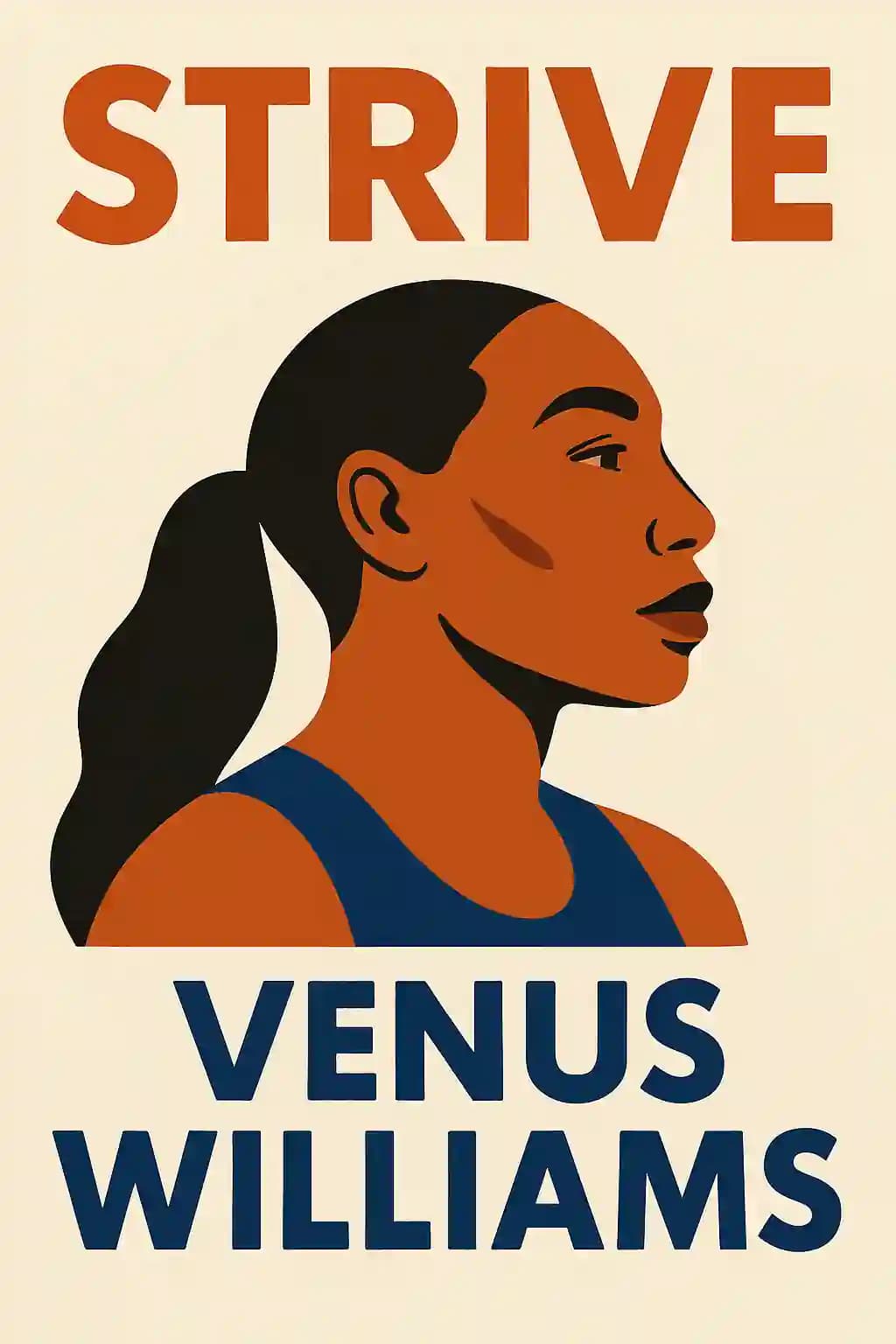
Venus Williams isn't just a tennis icon with seven Grand Slam titles-she's a business mogul, fashion designer, and interior decorator whose influence extends far beyond the court. Her book "STRIVE" arrives at a perfect cultural moment when wellness has become both a personal priority and a $1.5 trillion industry. What makes this book stand out in the crowded self-help landscape is Williams' refreshingly honest approach to health and achievement. Unlike the perfection-obsessed gurus dominating social media, Williams admits she doesn't "do it all" perfectly. Her philosophy-make it easy, make it enjoyable, make it exciting-has resonated with everyone from Michelle Obama (who called it "a game-changer") to Serena Williams, who credits her sister's approach with helping her navigate her own post-tennis transition. As burnout rates reach record highs across professions, Williams' accessible framework offers a timely alternative to the "no pain, no gain" mentality that has dominated fitness culture for decades.
第2章
The STRIVE Solution: Eight Actions That Transform Habits into Lifestyle
When Venus Williams was diagnosed with Sjogren's syndrome in 2011, the autoimmune disorder threatened to end her tennis career with its debilitating symptoms of pain, fatigue, and numbness. This crisis forced her to completely rethink her approach to health and wellness. During an intensive three-week wellness program, Williams had a profound realization: everything we bring to and put into our bodies determines how difficult it is for disease to exist within us.
This epiphany led to the development of the STRIVE solution-eight daily actions that transform smart health decisions into sustainable habits. The beauty of this approach lies in its simplicity and flexibility. Unlike rigid programs that demand perfection, STRIVE acknowledges that balance is imperfect and that small, consistent efforts yield tremendous results over time.
The eight actions form an easy-to-remember acronym: Observe everyone and everything around you; Appreciate all blessings; accept that Balance is imperfect; Enrich your life with growth opportunities; Soothe your body and mind; Believe in yourself; seek what Inspires you; and always STRIVE toward meaningful goals.
Williams explains that these aren't complicated tasks requiring hours of dedication. They're tiny but essential actions that, when practiced daily, create momentum toward lasting change. The genius of the system is its focus on mindset rather than specific activities-it's about approaching health decisions with awareness and intention.
The program begins with a simple morning ritual: reciting "Observe. Appreciate. Balance. Enrich. Soothe. Believe. Inspire. STRIVE." This verbal affirmation sets your intention for the day ahead. Throughout the day, you apply each action to four key areas: diet, activities, environment, and yourself. Before bed, you reflect on how you honored each action, creating a feedback loop that reinforces positive choices.
What makes STRIVE different from other wellness approaches is its emphasis on making health decisions enjoyable rather than punishing. Williams insists that if you can truthfully say you honored all eight actions each day-even in small ways-you've won that day, creating momentum for continued success without the burnout that comes from pursuing perfection.
第3章
Honest Observation: The Foundation of Lasting Change
The first pillar of the STRIVE method is observation-a practice of developing honest self-awareness by thoughtfully examining your choices, surroundings, and inner self. Williams credits her renowned calm under pressure not to some innate ability to handle stress differently, but to her practice of analyzing situations before reacting. This approach requires complete honesty with yourself, avoiding the temptation to "fudge the facts" about your habits or challenges.
Effective observation begins with recognizing patterns without judgment. Williams admits she's a late-night eater, which isn't ideal for an athlete. But by acknowledging this habit, she becomes more aware when it happens and can often make better choices. The goal isn't perfection but awareness-noticing what triggers certain behaviors so you can address them constructively.
When observing your diet, Williams suggests questioning what's truly behind your food choices: Are you eating as a reward? Because you're tired? To fit in with others? From stress? Or are you actually thirsty rather than hungry? After eating, pay attention to how your body responds-does the food make you feel energetic or sluggish? Happy or disappointed? These observations reveal patterns that influence your health journey.
For physical activity, Williams recommends tracking your daily movement patterns without trying to change them during the observation period. Notice barriers to exercise-uncomfortable workout clothes, lack of equipment, or needing workout partners. Examine your habits before, during, and after workouts: Do you have a clear plan? Are you choosing the smartest time for exercise? Are you pushing yourself enough?
Perhaps most importantly, Williams emphasizes observing your social environment. "Every relationship is an investment of time that should work for you, not against you," she writes. She suggests taking inventory of the optimists versus pessimists in your life, noticing which people genuinely make you happy, who lets you be authentic, whose behaviors you unconsciously mirror, and who helps you grow.
Self-observation extends to your physical environment as well. Notice which objects lift your spirits and which bring you down. Pay attention to items that make you anxious (like unfinished projects) or proud (like awards or children's artwork). Even your sleep environment deserves attention-beyond obvious factors like noise and light, observe how all your senses respond to your bedroom.
The most challenging aspect is honest self-observation. Many avoid truly seeing themselves to escape confronting uncomfortable truths. Yet without this honest self-assessment, meaningful change remains impossible. Williams encourages examining yourself objectively, not judgmentally, noting everything from physical sensations to how you divide your time and whether you're truly invested in your goals.
第4章
The Transformative Power of Appreciation
Appreciation isn't just about gratitude-it's about recognizing progress and potential in yourself and others. Williams shares a pivotal moment from a US Open quarterfinal match where her inability to appreciate her performance cost her the match. Despite winning the first set 6-2 and leading 3-1 in the second, she focused only on perceived flaws in her play, thinking "I'm playing so horribly." This negative mindset ultimately led to defeat. Only years later did she realize she had actually been "killing it," but her failure to appreciate her performance in the moment became a self-fulfilling prophecy.
This experience taught Williams that appreciating your achievements, even amid mistakes, is crucial for growth. Growing up as a Jehovah's Witness, she learned to stay true to her word and herself, remaining grateful for successes despite criticism about her body or playing style. This foundation helped her develop resilience that served her both on and off the court.
Williams offers three key reflections for genuine appreciation: First, identify what brings you personal pride rather than just impressing others. Second, recognize which positive choices exist in your life because of your own decisions-proof of your capability. Third, consider how to build upon existing healthy habits to make them even better.
When it comes to diet, Williams emphasizes appreciating what you're already doing right with nutrition rather than criticizing mistakes. Recognizing existing healthy habits proves your capability and shows you're not starting from zero. She encourages appreciating every nutrient in healthy foods-like acknowledging not just vitamin C in oranges but also their fiber and water content.
For physical activity, Williams reframes post-exercise discomfort as something to appreciate-a reminder you're doing what's best for your body. This attitude shift transforms temporary discomfort into evidence of self-investment. She encourages appreciating physical activity resources available to you, whether nearby parks with running trails, building gyms, or employer-provided memberships.
Perhaps most powerfully, Williams advocates appreciating failure. After losing an Olympic mixed doubles final despite leading 6-0, she dwelled on missing her fifth gold medal for years. Eventually, she realized the lesson: she couldn't have tried harder-it came down to a single point. Now, instead of letting losses get her down, she breaks them down to extract valuable lessons. Appreciating failure isn't about self-criticism but understanding that everyone experiences setbacks and identifying what can be improved next time.
Williams also challenges the "never quit" mentality by suggesting we should appreciate when certain approaches aren't working. Rather than forcing yourself to eat healthy foods you hate or do exercises you struggle with, focus on what you enjoy and can sustain. Don't worry about what you can't do yet-appreciate what you can do now. Progress in manageable areas will eventually build confidence to tackle more challenging changes later.
第5章
Finding Balance in an Unbalanced World
Venus Williams offers an unconventional perspective on balance-acknowledging that life is inherently unbalanced, especially when striving for achievement. Rather than seeking perfect equilibrium, she creates "moments of balance" within the imbalance. This approach reduces stress when things aren't perfect and allows for adaptation when healthy routines get disrupted.
Williams offers three principles for approaching balance: First, succeeding at balancing one aspect today doesn't mean you must maintain it perfectly tomorrow-experiment with different techniques until they become natural. Second, when choosing just one thing to balance, target a bad habit, as unhealthy behaviors often steal time from potential healthy ones. Finally, focus on quality over quantity-finding moments of balance without creating stress, which can undermine health benefits.
For dietary balance, Williams advocates meals with three key components: lean protein, healthy fat, and complex carbohydrates. This combination provides steady energy throughout the day, prevents hunger between meals, and stabilizes blood sugar levels. When meals contain mostly simple carbohydrates, they quickly convert to sugar, triggering insulin release that increases fat storage. She emphasizes staying hydrated by drinking at least 64 ounces daily, starting with water first thing in the morning.
Physical activity balance requires both resistance training and cardiovascular exercise. Williams recommends a 20-minute circuit including six multi-joint exercises done back-to-back with minimal rest: dumbbell squats, burpees, dumbbell deadlifts, push-ups, dumbbell lunges, and dumbbell rows. This routine should be performed three times weekly, with each exercise offering modifications for beginners or added challenges for advanced exercisers. For cardiovascular balance, the CDC recommends 150 minutes weekly at moderate intensity, ideally broken into five 30-minute sessions of varied activities to challenge different muscle groups.
Social balance requires maintaining relationships that add value to our lives. While some relationships are seasonal, those in our inner circle must provide mutual benefit. Maintaining this balance sometimes means distancing ourselves from toxic individuals, even when they're people we can't completely avoid like family or coworkers. Williams suggests staying true to your values, rationing time with negative influences, and having honest conversations with well-meaning but unhealthy friends.
Personal balance requires recognizing that time is our most precious resource. Williams encourages assessing your responsibilities by "taking away two plates"-identify tasks you can delegate or eliminate by asking if you must handle them alone, could delegate them, or if they'd continue without your attention. Conversely, some need to "add two plates" by taking on meaningful challenges they've been avoiding. Balance also requires sufficient sleep (7-9 hours) with consistent sleep/wake times, a cool environment, and avoiding stimulation before bed.
Perhaps most importantly, Williams emphasizes balancing by living for today-don't wait for retirement to enjoy life. Create memories now by starting your bucket list immediately and dividing dreams based on how long they'll take to accomplish.
第6章
Enrichment: Elevating Your Health Through Continuous Growth
If something's too easy, you're probably not growing from it. Living your best life means constantly moving forward rather than settling, even if it's just improving slightly on what you're already doing well. Like how cars evolved from the basic Model T to today's sophisticated vehicles, we must continually enhance our healthy choices to avoid stagnation.
Venus Williams emphasizes that even small enhancements deserve respect as they can have significant impacts. She encourages patience with changes-don't expect instant results or keep intensifying your efforts prematurely. Give any change at least a few weeks before evaluating its impact. The goal is tailoring enrichment to your personal journey.
For dietary enrichment, Williams suggests making simple swaps: choose meats with fewer legs (fish over poultry over beef); eat the healthiest foods on your plate first; put utensils down between bites or use chopsticks to slow eating; choose perishable foods over those with preservatives; rotate favorite foods to get diverse nutrients; select products with fewer ingredients; and make unhealthy foods harder to access by cooking them yourself, choosing distant restaurants, or storing treats inconveniently.
When it comes to physical activity, Williams notes that it doesn't matter what activities you choose-eventually you'll need to add something extra to see continued results and avoid boredom. When you stick with the same workout too long, your body adapts, burning fewer calories and creating potential muscular imbalances. Small tweaks can keep your muscles engaged: adjust tempo (speed up or slow down movements), reduce rest time between exercises, vary repetition counts, change the number of sets, reorder exercises, or completely switch your routine every 4-6 weeks.
Enrichment extends beyond yourself to those around you. Williams encourages sharing your passions with others, noting that everyone is good at something they're passionate about-whether it's sports, gardening, or changing oil-and sharing these talents can indirectly help others discover their own passions. Her interest in art began watching her mother sew, which led her to explore many artistic pursuits before focusing on interior design and founding V Starr Interiors.
For personal enrichment, Williams suggests organizing spaces where you waste time looking for things, optimizing your sleep position using pillows for proper support, reducing toxin exposure by choosing brown paper products over chlorine-bleached white ones and avoiding nonstick cookware, and rewarding yourself appropriately when you achieve goals-not with unhealthy meals but with "needle movers" like new workout gear or guilt-free pleasures.
第7章
The Healing Power of Soothing Practices
Most people don't recognize the importance of soothing themselves until it's too late, putting all their energy into pushing forward without making time for recovery. Venus Williams learned this lesson the hard way when diagnosed with Sjogren's syndrome, which forced her to consider every source of stress-not just physical activity but diet, environment, leisure activities, and social circles.
Williams emphasizes that effective soothing requires a smart approach and understanding of your body to minimize soreness, reduce fatigue, and prevent injuries. Don't wait until something hurts to take action-many people only stretch after muscles feel tight or meditate after a stressful day. By soothing yourself daily in multiple ways, you maintain a constant state of healing, preventing problems before they arise.
For dietary soothing, Williams suggests a plant-based alkaline diet, which balances your body's pH levels by limiting acid-forming foods and increasing alkaline ones. The theory suggests certain cancers thrive in acidic environments, and changing your diet can potentially lower cancer risk while improving overall health. Williams follows an 80/20 approach-four-fifths alkaline foods (vegetables, legumes, grains) and one-fifth acidic foods (bread, cheese). Other soothing dietary practices include curbing nighttime eating, avoiding fatty or spicy foods before sleep, and consuming stress-reducing foods rich in vitamin C, magnesium, L-tryptophan, and omega-3 fatty acids.
Physical soothing includes taking breaks from intense activity to prevent overtraining. Warning signs include persistent fatigue, decreased performance, and frequent illness. Williams recommends specific stretches for different body parts: twisting your torso while seated to release your lower back; lacing fingers and extending arms forward to loosen your upper back; "spider crawling" fingers up a wall for shoulder relief; sitting on heels with palms behind you to stretch quadriceps; reaching toward feet while seated for hamstrings; rocking hips side-to-side on all fours for hip mobility; stepping forward with one foot while straightening the other for calf stretches; and pressing up from a prone position to stretch abdominals and spine.
Meditation is another powerful soothing practice that alleviates stress, lowers blood pressure, improves sleep quality, and boosts immune function. For effective mindfulness meditation, Williams suggests wearing comfortable clothing, finding a distraction-free spot, choosing an optimal time, starting with at least ten minutes, sitting comfortably, and focusing on slow breathing without overthinking the process.
Relationship soothing is equally important. When disagreements arise, Williams advises avoiding immediate emotional reactions by sitting on your feelings momentarily. Let others fully express themselves, then repeat back what you heard to show you're actively listening. This defuses tension by making them feel heard, even if you disagree. When someone close to you is in a negative mood, directly but kindly address how their energy affects others, offering support to help shift their perspective.
Finally, Williams emphasizes that taking time for yourself isn't selfish-it's essential for healing. She recommends scheduling weekly "just say no" nights as preventative medicine against burnout rather than waiting until you're depleted. Practice deep breathing every hour (six or seven breaths) to energize your entire body, as every cell requires oxygen. When possible, take strategic 10-30 minute naps in the early afternoon for rejuvenation. Most importantly, be a friend to yourself when you make mistakes-treat yourself with the same kindness you'd show others rather than beating yourself up for failures.
第8章
Believe: The Mind-Body Connection That Powers Progress
Embracing who you are and remaining confident in your direction is the essence of belief. This action focuses on trusting yourself and the steps you're taking, recognizing the powerful mind-body connection that affects your physical wellbeing. Even if you're skeptical, your brain remains the control center for everything in your body.
Venus Williams emphasizes developing belief requires approaching change with excitement rather than fear, understanding that like athletes, you'll build habits through repetition-starting average, becoming good, then great. Let go of past failures that prevent you from moving forward, as everyone has the ability to make better choices.
When it comes to diet, Williams shares her experience as a yo-yo dieter, learning that falling off track is inevitable-the key is getting back on immediately rather than letting things spiral for weeks. She encourages believing in the power of fiber (which reduces risk of diabetes, heart disease and certain cancers), embracing healthy fats (unsaturated fats that regulate body temperature, reduce inflammation, and protect cells), and trusting in hydration, which supports every bodily system. Even losing just 1% of your body weight in water can disrupt metabolism and reduce oxygen delivery by 10-20%.
For physical activity, Williams reminds readers what's happening in your body to strengthen your belief in staying active. Regular resistance training reverses aging by preventing muscle loss (3-5% per decade after 30), boosting metabolism by 15%, stabilizing joints, improving mobility, building bone density, and reducing heart disease risk. Cardio exercise (150 minutes weekly) can add five years to your life by conditioning your heart, reducing blood pressure, increasing good cholesterol, and lowering cancer risk. Even meditation, which seems deceptively simple, reduces stress, lowers blood pressure, boosts cognitive function, reduces inflammation, and manages chronic pain.
Social connections deserve belief too-having meaningful relationships reduces risk of medical issues like high blood pressure, cardiovascular disease, obesity, and cancer while lowering inflammation that could lead to stroke and arthritis. Friends make you mentally strong by preventing mental decline, improving memory, boosting brain power, and easing pain response. Having supportive listeners who bend an ear makes people more resilient to cognitive diseases including Alzheimer's and dementia. The social benefits are so powerful that research shows having strong social networks lowers risk of premature death even more than diet and exercise alone, potentially extending life by seven and a half years.
Perhaps most importantly, Williams encourages believing in yourself. When her tennis grip mysteriously changed at nineteen, she had to painfully work for two months to correct it mid-season. This experience taught her that believing in herself and the process brings results, even if they're not quick. When coming back from injuries, she developed a mental strategy called "Reset, Reload, Recharge" to counter negative thoughts. After any failure, she resets by letting go of the mistake, reloads by reminding herself what she wants to accomplish, and recharges by focusing on the task ahead. This retrains your mind to minimize stress and replace it with hope.
第9章
Finding Fresh Inspiration to Fuel Your Journey
Inspiration fuels progress, but most people wait for it rather than actively seeking it. Venus Williams found something new to inspire her for every major championship she won. No matter how motivating something is initially, your mind eventually becomes too familiar with it, demanding fresh stimulation. Inspiration is the secret sauce missing from most lifestyle programs-it transforms things you have to do into things you want and need to do.
Williams emphasizes that finding inspiration doesn't have to be complicated. It doesn't need to be uniquely yours-borrowing what inspires others is perfectly fine. Don't wait for the perfect inspiration; even something as simple as a single word can be powerful. Remember that all inspiration eventually loses its effectiveness, so be prepared to find new sources when you feel the current ones fading.
For dietary inspiration, Williams reminds herself that unhealthy food choices are just momentary pleasures with long-lasting negative effects. She asks herself if that brief moment will be worth the extra gym time or guilt afterward. She suggests letting the seasons guide your food choices by prioritizing in-season produce, which naturally rotates your nutrient intake throughout the year. Another technique is taking photos of your meals and reviewing them at day's end, challenging yourself to improve your choices with each meal. You can even turn this into a friendly competition with others to see who ate the healthiest meals.
Finding inspiration in your activities doesn't require much effort-sometimes just changing your environment makes all the difference. Try exercising at different times of day, using different equipment, or simply facing a different direction. Move your workout outside when possible, as research shows being around green space reduces stress and lowers risk of serious health conditions. The true test of commitment is being active when it's least convenient. Williams has faced countless moments when training was the last thing she wanted to do, but she did it anyway because progress takes persistence.
Being a positive force around others creates a ripple effect-when you inspire others to pursue their goals, they often return that energy. Sometimes you inspire without speaking or even knowing the person affected by your actions. Think about people who've inspired you-how many actually know the impact they had? Now it's your turn to be that person for someone else. The key is maintaining positivity even during difficult times. When you're miserable, remember that tough moments are temporary, but the negative impact you have on others can linger.
For personal inspiration, Williams suggests removing what no longer moves you-replace old inspirational pieces with fresh ones that truly motivate you. Find new mantras often-words have power, but as we grow, the phrases that inspire us should evolve too. Create simple mantras like "I am dynamic" or "I deserve to be strong." Wear clothes that make you feel confident and powerful-Williams once wore suits to business meetings until she realized they stifled her creativity. Finally, remember what really matters-don't just focus on numbers or aesthetics. Every pound lost means more opportunities, better health numbers mean a longer, fuller life, and fitness opens doors to experiences with people you love.
第10章
STRIVE: The Ultimate Expression of Continuous Growth
Venus Williams has always worked toward goals, believing there's always room to grow no matter how far you've come. Many people feel irrelevant because they fail to try-staying relevant requires continuous striving. When she pursued degrees in fashion design and business administration mid-tennis career, people thought she was crazy to divide her focus. But she knew continuous learning fuels growth across all areas of life.
To STRIVE effectively, Williams advises never doubting how much you can tackle. Don't ask "how little can I do?" but rather "how much can I do and still do well?"-and then push a bit further. However, don't take on more than you can handle. We all have breaking points, and feeling overwhelmed signals you've reached yours. Williams believes in focusing on 3-5 goals at most at one time-a standard successful companies apply that works equally well in personal life.
Williams doesn't talk about diets-that's a four-letter word she never says or does. Instead, she focuses on nutritional goals that challenge you just enough without being extreme. In 2022, preparing for the Oscars after King Richard was nominated, she challenged herself to go completely snack-free for January. Her friends teased her with their singsongy "snack free... Janu-erreee!" It was incredibly difficult at first, especially during nighttime cravings. But by mid-February, she realized something remarkable-she'd unconsciously broken her lifelong snacking habit!
When it comes to activities, Williams encourages trying new things beyond your comfort zone. Growing up, her dad stressed exploring options beyond tennis, celebrating and encouraging diverse interests. Whatever you love or excel at now, it's important to seek different activities and build upon what you're currently doing as you become healthier. This reminds you and others that you're not a one-dimensional person, but someone who can bring that same fighting spirit to anything you set your mind to.
For relationships, Williams suggests challenging yourself to work on even tight-knit friendships. Ask those closest to you if there's something about yourself that you're not acknowledging-something you could actually improve. Consider finding someone to forgive, as holding onto resentment only takes time away from moving your life in a healthier direction. Challenge yourself to talk instead of type-while texting is convenient, it's less meaningful than actual conversation.
Life is all about change-wherever you start is not where you have to end. Once you realize one goal, immediately have a new one in place. The very definition of "strive" is to reach for something above and beyond. You don't need to take huge risks or change everything. Most entrepreneurs, like Madam C. J. Walker (America's first female Black self-made millionaire), built their businesses while keeping their day jobs.
Another way to STRIVE is by overcoming a fear-something safe but that makes you anxious or uncomfortable. It could be an activity where you're afraid of looking foolish or failing. When you succeed at something you didn't want to do, you prove to yourself that you're capable of more than you thought, creating confidence to embrace future healthy opportunities.
The choices you make to stay fit, eat right, and maintain healthy relationships are yours-but we often choose what's comfortable. Knowing you can overcome anything gives you confidence to walk toward, not away from, the next healthy opportunity. Whatever you choose to bring to STRIVE, make it easy, make it enjoyable, but-most of all-make it exciting.
第11章
Putting It All Together: The STRIVE Strategy in Action
The magic of STRIVE lies in applying the eight actions to the four major areas of your life. While Venus Williams doesn't expect you to observe, appreciate, balance, enrich, soothe, believe, inspire, and STRIVE in all four areas every single day, this program offers flexibility to choose how you want to STRIVE each day, with endless combinations that deliver amazing results.
Williams offers three different approaches to implementing STRIVE. Short STRIVING means succeeding if, before sleep, you can say you observed, appreciated, balanced, enriched, soothed, believed, inspired, and strove toward something that day. You can pick which areas of life to impact-diet, activities, who and what's around you, or yourself. As long as you complete all eight actions, you're STRIVING! It's the bare minimum but still effective, perfect for beginners or busy days.
Strict STRIVING focuses all eight actions on just one area of your life. For example, if you choose activities, you'll observe, appreciate, balance, enrich, soothe, believe, inspire, and STRIVE with your activities that day-no exceptions and no skipping any action. You can attempt to Strict STRIVE in more than one area simultaneously if it still feels easy, enjoyable, and exciting.
Serious STRIVING is the most challenging approach, requiring checking off every box in all four areas of your life in a single day-a total of thirty-two tasks. Though demanding, there are ways to make this more manageable. Remember: even if you don't complete all thirty-two, you've still succeeded by doing healthy things you wouldn't have otherwise. Don't attempt this just to see quick results-trust the process and don't rush. Even Short STRIVING will improve your life.
When asked about repeating tasks, Williams encourages maintaining positive habits while adding new ones as old ones become second nature. Once you reach a goal, celebrate your achievement, but remember STRIVE is about continuously improving your entire life, not just fixing one issue. Never skip any of the eight actions-they're all interconnected and build upon each other. As you adopt healthier habits in one area, it becomes easier to develop them in others.
STRIVE offers various approaches, but you can create your own methods. The program serves as a guide-a jumping-off point that can grow alongside you. Williams is excited not just about how STRIVE will transform you, but where you'll take the program next. The real key to a better life is following the road map of observing, appreciating, balancing, enriching, soothing, believing, inspiring, and STRIVING every day. Whatever you choose to bring to STRIVE, make it easy, make it enjoyable, but-most of all-make it exciting.