第1章
A Family Haunted by History's Ghosts
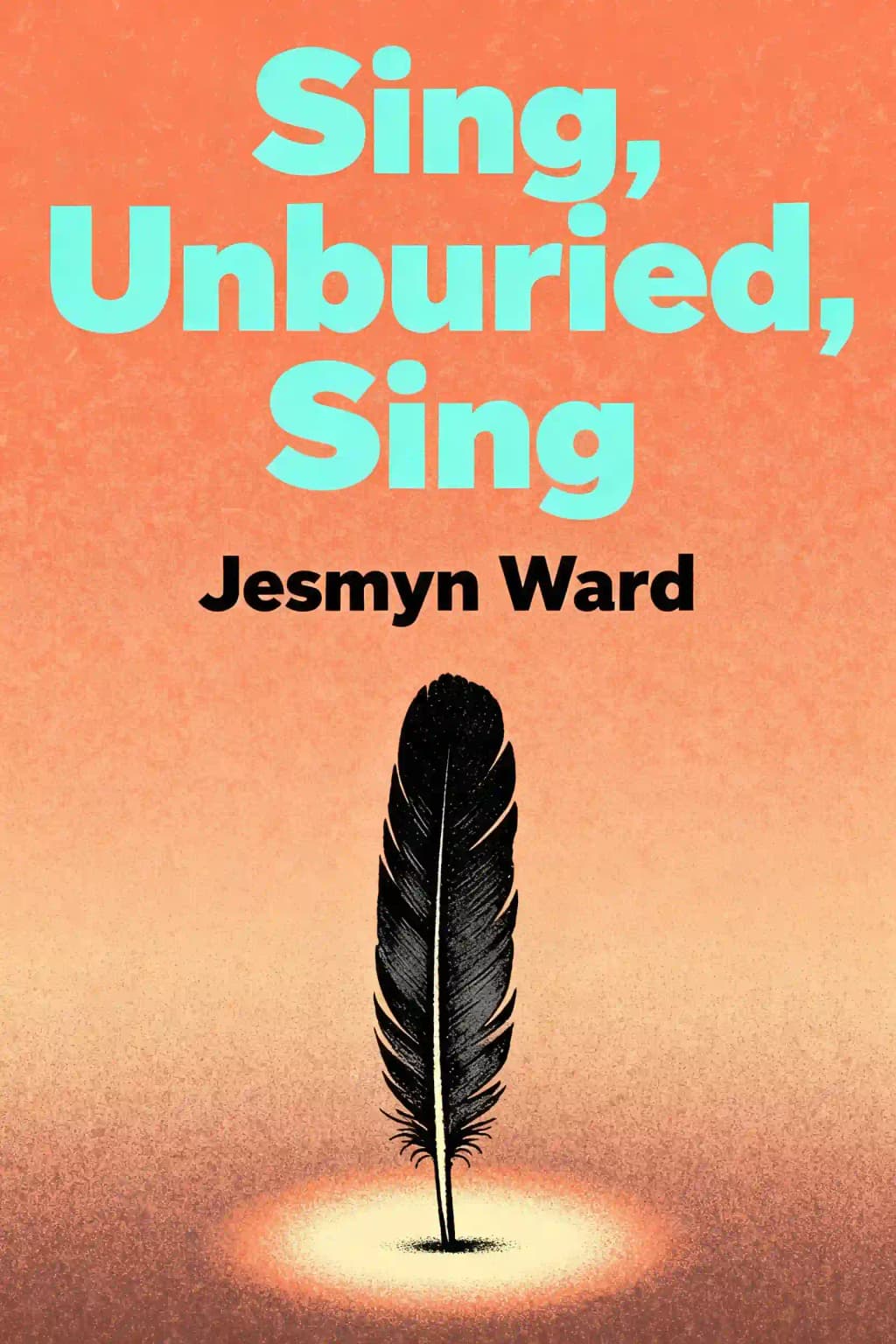
In the quiet woods of rural Mississippi, ghosts walk among the living. Jesmyn Ward's "Sing, Unburied, Sing" swept through the literary world like a hurricane when it was published in 2017, earning Ward her second National Book Award. Oprah Winfrey selected it for her book club, calling it "a road trip through Mississippi's past and present that will leave you haunted." The novel has been compared to Toni Morrison's work in its lyrical exploration of family bonds, racial trauma, and the supernatural. Ward's ability to weave together the mundane and the mystical creates a story that feels both timeless and urgently contemporary. What makes this book particularly striking is how it captures the way historical trauma lives on in the present-not as distant memory, but as active, breathing entities that demand acknowledgment.
第2章
Coming of Age Through Blood and Bone
Thirteen-year-old Jojo stands beside his grandfather (Pop) as they prepare to slaughter a goat on his birthday, the Mississippi heat pressing down on them like a heavy blanket. This visceral opening scene establishes the novel's unflinching approach to life's harsh realities. Jojo desperately wants to prove his manhood, to "walk like him - back straight, shoulders even as a hanger," showing Pop he's "ready to get bloody." The boy studies every movement of Pop's weathered hands, trying to memorize the precise way he holds the knife, the exact angle of his stance. Yet when the moment comes and Pop slits the goat's throat, Jojo can't bear the "stink of death" and rushes outside to vomit, his shame burning hotter than the summer air.
This tension between wanting to be grown and still being a child defines Jojo's character throughout the narrative. He's forced into premature maturity by his mother Leonie's neglect and drug addiction, spending his days navigating adult responsibilities while his peers attend school dances and play video games. While Leonie disappears for days, leaving only the lingering scent of cigarettes and empty promises, Jojo becomes the primary caretaker for his three-year-old sister Kayla. She calls for him instead of their mother when she needs comfort, when nightmares shake her awake, when fever burns through her small body. "She smells like hay, warm milk, and baby powder," Jojo observes tenderly about Kayla, revealing the nurturing instinct that his own mother lacks. He learns to braid her hair, to check for monsters under the bed, to interpret her toddler language when no one else can.
The relationship between Jojo and Pop forms the emotional backbone of the novel, a masterclass in unspoken love and generational wisdom. Pop teaches Jojo practical skills like changing tires and checking oil, but more importantly, he passes down stories - particularly about his own imprisonment at Parchman Farm when he was just fifteen. These stories flow between them like a dark river, connecting Jojo to a painful family history while preparing him for the harsh realities of being a young Black man in Mississippi. Pop's tales are filled with careful lessons about survival, dignity, and the weight of memory. When Pop says, "You a man, you hear?" his eyes communicate what remains unspoken: "I love you, boy. I love you." Their bond is built in quiet moments: sharing morning coffee on the porch, tending to the chickens together, Pop's calloused hand resting briefly on Jojo's shoulder.
This coming-of-age journey culminates when Jojo faces a police officer who draws a gun on him during a traffic stop. The moment stretches like pulled taffy, every second charged with the accumulated weight of Pop's stories, of generations of Black men who faced similar moments. In this terrifying instant, Jojo experiences firsthand the threat of violence that has shaped his family for generations. He feels the cold metal of the car against his palms, hears Kayla's frightened whimpers from the backseat, remembers every warning Pop ever whispered. The incident leaves him forever changed, understanding that his childhood innocence has been irretrievably lost - not in the goat's blood or his mother's absence, but in the recognition of how the world truly sees him.
第3章
A Mother's Fractured Love
Leonie's character embodies the devastating complexity of a woman torn between addiction, generational grief, and the demands of motherhood. Her relationship with her children reveals deep fractures in maternal bonding - most notably in how she addresses her daughter by the formal "Michaela" (after the child's white father), while everyone else uses the intimate "Kayla." This seemingly small detail illuminates how Leonie consistently prioritizes her connection to Michael over her maternal responsibilities, positioning herself more as Michael's lover than her children's mother.
The depth of Leonie's maternal disconnection becomes painfully apparent during Jojo's thirteenth birthday. She brings him a store-bought cake decorated with baby shower motifs - "blue shoes on the side" - a choice that demonstrates her fundamental inability to see her son as a growing adolescent with his own identity. Jojo's hollow laugh at this inappropriate gift echoes years of disappointment and emotional neglect. The scene reaches its tragic crescendo when Michael calls from prison announcing his release, and Leonie immediately abandons Jojo's celebration, taking the birthday cake with her to the phone, leaving her son to mark his passage into teenage years in solitude.
What elevates Leonie beyond a simple antagonist is her acute, torturous self-awareness. She recognizes her failures as a mother but appears trapped in patterns of destructive behavior she cannot break. During her drug-induced states, she encounters the ghost of her murdered brother Given - suggesting her addiction serves as both escape and spiritual communion. These supernatural visitations add layers of complexity to her character; her drug use becomes not merely self-destructive behavior but a misguided attempt at healing generational wounds and maintaining family connections, however destructive the means.
The novel delves deep into how trauma can severely damage maternal instinct and bonding. Through Mam's devastating assessment - "Leonie ain't got the mothering instinct" - we see how this failure manifests in everyday moments of neglect. The memory of Leonie buying herself food while Jojo hungers beside her serves as a powerful metaphor for her broader maternal failures. Yet Mam's insight goes deeper, telling Jojo: "No, she love you. She don't know how to show it. And her love for herself and her love for Michael - well, it gets in the way." This observation suggests that Leonie's capacity for love exists but is fatally misdirected, consumed by self-preservation and romantic obsession.
Through Leonie's character, the novel poses profound questions about the nature of maternal love and responsibility. Can genuine love exist without consistent care and attention? How does intergenerational trauma corrupt natural bonds? Is the mere presence of feeling enough to constitute true maternal love, or must it be accompanied by action and sacrifice? These questions resonate throughout the narrative, forcing readers to confront uncomfortable truths about the complexity of family bonds and the ways love can be present yet fundamentally broken.
第4章
The Prison That Never Releases
Parchman Farm, the Mississippi State Penitentiary, looms over the narrative like a malevolent force. More than just a physical location, it represents the enduring legacy of slavery and racial oppression in the American South. Pop describes it as "a massive prison farm spanning fifty thousand acres with no walls, just barbed wire fences," where inmates worked "sunup to sundown in cotton fields under baking heat."
The prison "tricked you with its open fields and visible fences, making escape seem possible," but the armed guards-called "trusty shooters"-and sergeants "bred from generations of overseers who treated prisoners like animals" ensured that freedom remained an illusion. This description explicitly connects Parchman to the plantation system that preceded it, suggesting that imprisonment simply replaced slavery as a means of controlling Black bodies.
When Jojo, Leonie, and Kayla travel to Parchman to pick up Michael upon his release, the prison's supernatural dimension is revealed. Looking out at the fields, Jojo momentarily glimpses ghostly figures "bent at the waist, row after row, picking at the ground like crows." One shorter man-later revealed to be Richie, a boy imprisoned with Pop decades earlier-stands and looks directly at Jojo. This vision suggests that Parchman exists outside normal time, trapping souls across generations.
Richie's ghost explains that Parchman holds him in death as it did in life: "I woke in a stand of young pine trees on a cloudy day with no memory of how I got there." He describes how time at Parchman is "a vast ocean" where everything happens simultaneously-he witnesses the modern prison, then its construction, then Native men hunting the land before the prison existed. This collapsing of time emphasizes how institutions of racial oppression continue to exert power long after their official practices have changed.
The novel suggests that prisons don't just incarcerate individuals but entire families and communities. Michael's imprisonment affects everyone around him-Leonie's addiction worsens, Jojo becomes a surrogate parent to Kayla, and even after Michael's release, the family remains trapped in cycles of dysfunction. Freedom, the novel implies, is not simply a matter of physical release but requires healing from generational trauma.
第5章
The Supernatural Current
Supernatural elements flow through the narrative like an underground river, occasionally surfacing in startling ways that transform the story's realism into something more mysterious and profound. The novel's structure deliberately mirrors this supernatural dimension - chapters alternate between living narrators (Jojo and Leonie) and the ghost Richie, creating an intricate conversation between the living and the dead that blurs temporal boundaries and challenges conventional storytelling.
Mam, the family matriarch and practiced root worker, explains to Leonie that their family possesses a powerful gift - "the ability to see and hear things others can't." This talent "ran in our blood 'like silt in river water,' passed down through generations" from their African ancestors. For Leonie, this inheritance manifests in vivid, haunting visions of her dead brother Given, who appears to her specifically when she's high on drugs, serving as both tormentor and reminder of her past. For thirteen-year-old Jojo, the gift reveals itself through his ability to see Richie's ghost, a young boy who died decades ago at Parchman Prison, and eventually leads him to witness a massive gathering of spirits - "men, women, children of all ages perched like birds" in a tree, each one carrying the weight of historical violence.
These supernatural elements serve as more than mere magical flourishes; they function as complex metaphors for intergenerational trauma and unresolved historical injustices. The ghosts embody the way violence and racism continue to haunt contemporary American life, particularly in the South. Richie's specific predicament - unable to cross over to the afterlife until he learns the devastating truth about his death - illustrates how buried histories demand acknowledgment. When the truth finally emerges that Pop mercifully killed him to prevent a more brutal death at the hands of a white mob, it suggests that healing requires confronting painful truths rather than allowing them to fester in silence.
The novel's evocative title, "Sing, Unburied, Sing," becomes both a command and a plea for acknowledgment of these forgotten souls who died unjust deaths. The climactic moment when three-year-old Kayla faces the tree of ghosts and tells them "Go home," before breaking into "a garbled song" that makes them "lean forward in relief," demonstrates the transformative power of recognition and remembrance. Her innocent song, though incomprehensible to the living, offers what the accumulated dead most desperately desire - to be heard, to be mourned, to be released from their earthly tethers. This moment suggests that even the youngest generation has the power to help heal historical wounds through acknowledgment and ritual.
Throughout the narrative, these supernatural elements create a rich tapestry that connects past and present, suggesting that the dead and living exist in constant conversation, and that true reconciliation requires facing both personal and collective histories with courage and compassion.
第6章
Racial Boundaries and Forbidden Love
The relationship between Leonie (who is Black) and Michael (who is white) forms a central conflict in the novel. Their love exists against a backdrop of racial hostility embodied by Michael's father, Big Joseph, who has never accepted their relationship or acknowledged his mixed-race grandchildren.
When Leonie attempts to leave a note in Big Joseph's mailbox about Michael's release from prison, the man charges toward her on his lawn mower, pointing at a "No Trespassing" sign and grabbing a rifle. This violent rejection illustrates how racial boundaries are still fiercely enforced in their Mississippi community.
The novel explores how racism poisons even intimate relationships. Michael warns Leonie early in their relationship that his father "believes in niggers," but she tells herself "the father was not the son," even as she notices "how Michael might one day grow to resemble Big Joseph." This observation suggests that racial prejudice can be inherited like a genetic trait, passed down through generations.
The tragic irony of their relationship is that Given, Leonie's brother, was murdered by Michael's cousin during a hunting trip. Though the court ruled it an "accident," it was clearly a racially motivated killing sparked when Given won a bet against the cousin. This history of violence lurks beneath Leonie and Michael's relationship, creating an unspoken tension.
When the family visits Big Joseph's house after Michael's release, the simmering hostility explodes into violence. Big Joseph makes racist comments about Leonie's family, calling them "bad blood" and using slurs. Michael head-butts his father, leading to a physical struggle while Michael's mother beats him with a broom. Throughout this chaos, Jojo looks at Leonie with unprecedented hatred, "like I'm a water moccasin and I just bit him," revealing how children bear the emotional burden of their parents' choices.
The novel suggests that interracial relationships, while not inherently problematic, cannot escape the historical context of racial violence in America. Leonie and Michael's love doesn't transcend racial divisions-instead, it becomes another battlefield where these divisions play out.
第7章
The Sacred Power of Storytelling
Throughout the novel, stories function as vessels of knowledge, history, and healing, serving as crucial conduits for intergenerational wisdom and trauma. Pop's stories about Parchman prison serve multiple purposes - they preserve historical memory, prepare Jojo for the harsh realities of racism, and eventually provide closure for Richie's ghost. These narratives become a form of oral history, documenting experiences that official records might overlook or deliberately exclude, particularly in the context of the American South's complex racial dynamics.
Pop's storytelling style is distinctively fragmented, reflecting the nature of traumatic memory itself. Mam explains that "Pop doesn't know how to tell a story straight - he tells the beginning without the end, or leaves out something important in the middle." This approach mirrors how the mind processes and stores traumatic experiences - in disconnected pieces, with certain memories remaining too painful to access immediately. The gaps in Pop's narratives often speak as loudly as the details he includes, suggesting that what remains unsaid can be as significant as what is explicitly shared.
When Pop finally completes Richie's story, revealing that he mercifully killed the boy to prevent him from being tortured by a white mob, the truth has transformative power. This confession serves multiple purposes: it releases Pop from decades of guilt, provides Richie's ghost with understanding and peace, and helps Jojo comprehend the depths of love and sacrifice. Richie's ghost, who has been haunting the narrative, finally disappears - "a black hole in the middle of the yard" that vanishes completely. This moment illustrates how truth-telling can break cycles of haunting and trauma that persist across generations.
The novel itself employs multiple narrators to create a polyphonic storytelling tradition that echoes African and African American oral traditions. By giving voice to both the living and the dead - including Leonie, Jojo, Richie, and others - Ward creates a narrative tapestry that transcends individual perspective. This chorus of voices suggests that truth is inherently multifaceted, emerging from the intersection of various experiences and viewpoints rather than from any single authoritative source.
In the final scene, Kayla's "garbled song" soothes the restless ghosts in the tree, demonstrating the power of non-verbal storytelling. Though she's only three and barely verbal, her intuitive music speaks directly to the spirits' pain, suggesting a deeper form of communication that transcends conventional language. This moment reinforces the novel's broader theme that healing can occur through various forms of expression - whether through traditional narrative, song, or simple presence. The power of storytelling extends beyond mere words to encompass all forms of human connection and understanding, particularly in addressing historical trauma and fostering healing across generations.
第8章
The Medicine of Memory
Healing-both physical and spiritual-forms a central theme in the novel, weaving together traditional knowledge, familial bonds, and the power of remembrance. Mam, who is slowly succumbing to cancer, serves as the family's repository of traditional herbal medicine, knowledge carefully preserved and passed down through generations of Black women in the South. Her expertise extends beyond simple remedies to encompass a deep understanding of the spiritual properties of plants, the timing of harvests, and the sacred rituals of preparation.
When Kayla becomes violently ill during the harrowing journey to Parchman, Leonie desperately attempts to gather blackberry leaves as her mother once taught her. However, her fragmented recall of the preparation method-whether to boil or steep, how long to let it rest, which prayers to whisper over the mixture-reveals the tragic erosion of this ancestral knowledge. This failure symbolizes a broader cultural loss, illustrating how traditions fade when they aren't actively practiced and properly transmitted across generations. Leonie's incomplete knowledge becomes a painful reminder of her disconnection from her heritage and her mother's teachings.
Pop's relationship with traditional medicine offers a striking contrast to Leonie's struggles. His understanding manifests most powerfully in the leather pouch he secretly gives to Jojo-a carefully crafted gris-gris bag containing protective items: "a tiny white feather tipped with blue and black, a sharp animal tooth lined with black in its grooves, a small gray river rock," accompanied by a note reading "Keep this close." Each item carries specific spiritual significance, chosen with deliberate purpose. This protective talisman represents not only Pop's deep knowledge of folk traditions but also his fierce desire to shield Jojo when physical presence isn't possible.
As Mam's condition deteriorates, she initiates a profound spiritual preparation for death, requesting Leonie's help in gathering specific items: cemetery rocks charged with ancestral energy, pure cotton symbolizing cleansing, cornmeal for sustenance in the spirit world, and rum to summon Maman Brigitte, "the mother of the dead." This Vodou ritual represents a different dimension of healing-not aimed at preserving the physical body but at ensuring the spirit's peaceful transition to the afterlife. The ceremony connects the family to centuries of African and Caribbean spiritual practices, offering comfort through ancient wisdom.
The novel ultimately suggests that memory itself functions as a powerful medicine, capable of healing wounds that physical remedies cannot touch. When Mam tells Jojo she hopes she "fed" him enough-both literally and metaphorically-to sustain him after her passing, she describes this nurturing as an eternal resource: "Like a well, Jojo. Pull that water up when you need it." This profound metaphor suggests that memories of love, wisdom, and cultural heritage can serve as a healing balm, providing strength and guidance long after our loved ones have departed. The act of remembering becomes a form of medicine, offering sustenance through life's darkest moments and maintaining vital connections to family and tradition.
第9章
Finding Home in a Broken World
The search for home-both literal and spiritual-drives many characters' actions. For Richie's ghost, "home" represents the afterlife he cannot reach until he learns the truth about his death. He explains to Jojo that home isn't always about a place but about "the earth" opening up to you, and that finding his way home means becoming "part of the song."
For Leonie and Michael, "home" remains elusive. They dream of establishing their own household away from their families' complicated histories. Misty encourages Leonie to transport drugs by saying, "You and Michael could have enough for a deposit. Y'all could get your own place." This dream of domestic stability proves impossible as their addiction worsens.
For Jojo and Kayla, home exists in their relationship with each other and with Pop. After Mam's death and Leonie's effective abandonment, they create a family unit based on mutual care and protection. When Kayla faces the tree of ghosts at the novel's end, telling them "Go home" before comforting Jojo "like I'm the child," she demonstrates remarkable emotional intelligence. The novel's final words-the ghosts whispering "Home, home"-suggest that home is not just a physical place but a state of acceptance and belonging.
The novel ultimately suggests that finding home requires reconciling with the past rather than escaping it. Characters who try to run from their history-like Leonie and Michael with their drug use-remain perpetually displaced. Those who confront painful truths-like Pop when he finally tells Richie's complete story-find a measure of peace despite their losses.
Through its intertwining of the supernatural and the everyday, "Sing, Unburied, Sing" offers a profound meditation on how we carry our ancestors with us-their traumas, their resilience, their unfinished business. The novel suggests that true belonging comes not from forgetting the past but from singing it into the present, acknowledging both its pain and its wisdom. In a world where historical injustices continue to shape contemporary lives, Ward's novel reminds us that the dead are never truly gone-they walk beside us, waiting for their stories to be told.