第1章
The Untold Story of Human Sexuality
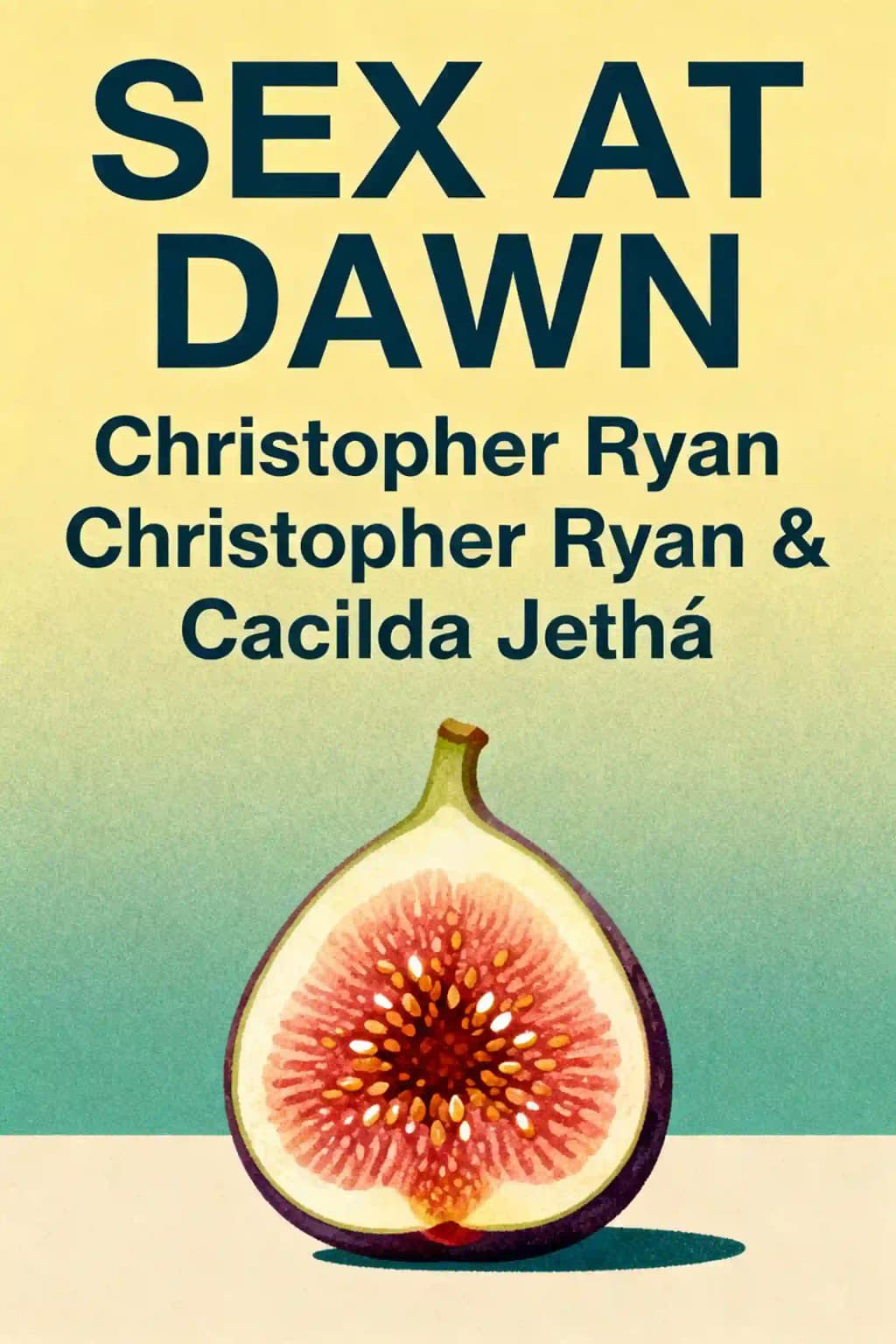
Ever wondered why half of marriages end in divorce? Why sexual scandals regularly plague the most vocal defenders of "traditional values"? In Sex at Dawn, anthropologist Christopher Ryan and psychiatrist Cacilda Jetha present a revolutionary thesis: humans didn't evolve to be sexually monogamous. This New York Times bestseller, endorsed by Dan Savage and recommended by Newsweek as essential reading, has sparked heated debates among evolutionary psychologists since its 2010 publication. The book challenges our fundamental assumptions about human sexuality, suggesting that our bodies and minds are designed for multiple partners-not lifelong monogamy. With over 300,000 copies sold and translations in more than 15 languages, Sex at Dawn continues to influence how we understand relationships, jealousy, and the disconnect between our cultural ideals and biological realities.
第2章
Challenging the Standard Narrative of Human Sexuality
The conventional wisdom about human sexuality-what Ryan and Jetha call "the standard narrative"-tells us that men evolved to spread their seed widely while women evolved to be sexually selective, trading sexual fidelity for male protection and resources. This narrative portrays human mating as essentially a marketplace where men guard their "property" (women) while women secretly seek superior genes through infidelity.
But what if this entire framework is wrong? What if it's not based on scientific evidence but rather on cultural assumptions projected onto our prehistoric past?
The authors argue that this narrative emerged from Victorian-era thinking and was inadvertently reinforced by Darwin himself, who operated with limited knowledge about human prehistory. Growing up in sexually repressed Victorian England, where women were simultaneously idealized as pure and exploited as prostitutes, Darwin developed complicated views about sexuality. His own sexual experience was limited to his proper wife (also his cousin), and he even considered marriage in clinical terms, wondering if a dog might provide better companionship.
This cultural context colored Darwin's interpretation of human sexual nature, leading to a narrative that portrays men and women as having opposing sexual strategies. The authors call this projection of contemporary values onto prehistory "Flintstonization"-like the cartoon where Stone Age characters live essentially modern lives with stone-age props.
Modern evolutionary psychology often perpetuates these assumptions, reducing human interactions to self-interest and claiming our nature drives us to wage war, deceive spouses, and abuse stepchildren. Yet there's a central contradiction in this narrative: despite insistence that females are naturally "coy" and uninterested in sex (as Darwin believed), cultures worldwide have gone to extraordinary lengths to control female sexuality-suggesting women's libido might actually be far more powerful than acknowledged.
第3章
Our Promiscuous Primate Heritage
We humans didn't descend from apes-we ARE apes, sharing ancestors with bonobos and chimpanzees just five million years ago. Our DNA differs from theirs by just 1.6 percent, making us closer to them than many closely related species are to each other. This genetic similarity is reflected in numerous shared physical traits, cognitive abilities, and social behaviors that distinguish the great apes from other primates.
While chimpanzees are often used as models for understanding human evolution-with their hierarchical, sometimes violent social structures-bonobos offer a strikingly different picture. Bonobos form "cohesive communities" where "sex is almost a daily pastime" with females copulating throughout their menstrual cycles. They use sex to ease tension, stimulate sharing, reduce stress while traveling, and reaffirm friendships-essentially a "make love, not war" scheme. This sexual openness extends beyond reproduction to include same-sex interactions, group activities, and non-penetrative sexual contact, all serving important social functions.
Humans and bonobos share numerous unique traits absent in chimps: copulation throughout the menstrual cycle, face-to-face sex, deep kissing during sex, slower infant development, front-facing vulvas, food sharing linked to sexual activity, and using sex for social purposes beyond reproduction. These remarkable similarities suggest our sexual nature may be more bonobo-like than we care to admit. Additionally, both species exhibit strong mother-child bonds, extended adolescence periods, and sophisticated emotional intelligence that facilitates complex social relationships.
Despite these profound similarities, many evolutionary psychologists paradoxically reject bonobos as a model for human ancestors, labeling their shared traits with humans as "extremes of primate sexuality." This reveals circular reasoning: theorists begin by assuming long-term sexual monogamy is natural for humans, then dismiss evidence contradicting this assumption. This bias has led to decades of research focusing primarily on chimpanzee behavior as a model for human evolution, potentially overlooking crucial insights about our social and sexual nature.
As primatologist Frans de Waal notes, had we discovered bonobos before chimps, discussions of human evolution might center on "sexuality, empathy, caring, and cooperation" rather than "violence, warfare, and male dominance." This observation highlights how our understanding of human nature has been shaped by which primate models we choose to study and emphasize. Recent research has begun to challenge this bias, revealing that human sexuality and social behavior likely evolved through a complex interplay of both chimpanzee-like and bonobo-like traits, suggesting our ancestors may have exhibited a broader range of social and sexual behaviors than previously assumed.
The implications of our close genetic relationship with both chimps and bonobos extend beyond sexuality to areas such as conflict resolution, social bonding, and community structure. Understanding these connections helps explain many aspects of human behavior that seem paradoxical when viewed through the lens of strict evolutionary psychology models based solely on chimpanzee comparisons.
第4章
Bodies Don't Lie: Anatomical Evidence of Our Promiscuous Past
Our bodies tell detailed stories about our evolutionary past, with each anatomical feature serving as a biological record of our ancestors' mating patterns. Body-size dimorphism (the difference in size between males and females) reveals crucial information about historical mating systems. While intense male competition produces large size differences in species like gorillas, where males are twice the size of females, humans show relatively modest dimorphism of just 10-20%. This suggests limited direct male competition throughout our evolutionary history, contrasting sharply with the extreme dimorphism seen in highly competitive species.
When males don't fight directly for mating opportunities, competition shifts dramatically to the cellular level through sperm competition. In species where females regularly mate with multiple males, males develop larger testicles housed in external scrotums to produce more sperm, while females evolve sophisticated mechanisms to test and select sperm quality. This phenomenon is particularly evident in primates like chimpanzees, where females mate with multiple males during estrus.
Human males have moderately large, external testicles-placing us between highly promiscuous bonobos (with relatively large testes) and harem-keeping gorillas (with smaller testes) on the sperm competition spectrum. Our ejaculate contains complex chemicals that serve dual purposes: protecting sperm from rival males' seminal fluid while simultaneously attacking competitors' sperm. These biochemical weapons include proteins that form protective barriers and enzymes that specifically target rival sperm-clear evidence of evolutionary adaptation to regular sperm competition.
The human penis shows remarkable specialization compared to other primates. Its distinctive features include above-average size relative to body mass, a prominently flared glans forming a coronal ridge, and unique vascular structures enabling sustained thrusting. These characteristics create a vacuum effect that can physically displace previously deposited semen-a sophisticated adaptation for sperm competition that would serve no purpose in a strictly monogamous species. The penis's shape and size specifically optimize this displacement function, suggesting regular competition between multiple males' sperm throughout our evolution.
Female anatomy presents equally compelling evidence for our promiscuous past. Women's capacity for multiple orgasms-rare among mammals-suggests adaptation to mating with multiple partners in quick succession. Their distinctive copulatory vocalizations, being universally recognized as the louder partner during heterosexual sex, may have evolved to attract additional mates. The female orgasm appears precisely engineered to assist conception through multiple mechanisms: changes in vaginal acidity that favor sperm survival, uterine contractions that aid sperm transport, and cervical dipping that facilitates sperm retention. These features suggest sophisticated adaptation to multi-male mating scenarios.
The cervix itself shows signs of evolutionary adaptation to sperm selection, with its complex architecture serving as a testing ground for sperm fitness. The positioning of the vaginal canal and cervix creates what scientists call a "hostile environment" that only the fittest sperm can navigate, suggesting an evolutionary history of female choice among multiple males' sperm.
These anatomical features make little evolutionary sense if humans evolved as monogamous pairs for millions of years, but become perfectly logical when viewed as relics of promiscuous group sexuality. The evidence written in our bodies points clearly toward a complex sexual past involving multiple partners and sophisticated mechanisms for post-copulatory mate choice.
第5章
Prehistoric Paradise: The Way We Weren't
Thomas Hobbes famously characterized prehistoric human life as "solitary, poor, nasty, brutish, and short." This grim view has persisted for centuries, but archaeological and anthropological evidence suggests a very different reality.
Far from being solitary, our ancestors lived in small, highly cooperative bands where sharing was mandatory. Rather than poor, they enjoyed abundant resources in a sparsely populated world-the !Kung San averaged 2,140 calories daily despite living in the harsh Kalahari, and spent just fifteen hours weekly gathering food.
Instead of nasty and brutish competition, foraging societies were remarkably egalitarian. Without the ability to control access to food or prevent people from leaving, no one could dominate others. Leaders were simply those whose judgment earned respect, not those who commanded obedience.
And contrary to the "short" life expectancy myth, our ancestors typically lived 60-90 years when they survived childhood. The misleading average life expectancy statistics are skewed by high infant mortality rates. Archaeological evidence shows prehistoric humans were often taller than medieval Europeans and sometimes even modern populations, with fewer signs of nutritional stress than later agricultural societies.
The shift to agriculture about 10,000 years ago-representing only 5% of human existence-dramatically changed human society. At Dickson Mounds, the shift to corn farming around 1200 AD brought a 50% increase in chronic malnutrition and triple the infectious diseases compared to foragers. As Jared Diamond notes, agriculture may have been "the worst mistake in human history," plunging us into nutritional decline we've yet to fully recover from.
With agriculture came private property, transforming women from respected members of society to possessions alongside houses and livestock. This shift fundamentally changed human sexuality from sharing-based to "voyeuristic, repressive, homophobic, and focused on reproduction."
第6章
Sexual Generosity: The Forgotten Social Glue
Many South American societies share a belief in "partible paternity"-the idea that a fetus is formed from accumulated semen from multiple men. Rather than causing jealousy, this understanding creates beneficial social structures. Women seek sex with various men possessing different desirable traits, hoping their children will absorb these qualities. Children with multiple recognized fathers often have better survival rates, as they benefit from having several men invested in their welfare.
The authors formalize this as "Socio-Erotic Exchanges" (S.E.Ex.), which create "a crucial, durable web of affection, affiliation, and mutual obligation" in interdependent groups. Such networks were evolutionarily vital, enabling our species to survive through flexible social groups that cared communally for children.
Evidence of such libidinous behavior appears worldwide throughout history, from ancient Mohave women to Caesar's observations in Iron Age Britain to Captain Cook's accounts of Tahiti, where locals "gratified every appetite and passion before witnesses."
The Mosuo of China provide a living example of an alternative system. Their women enjoy complete sexual autonomy through their private "flower rooms" with doors to both the inner courtyard and street. Their only rule is lovers must leave by sunrise. Children are raised communally in the mother's house with help from brothers and the community. As Yang Erche Namu explains, "Every adult was responsible for every child," creating a society where "there's no such thing as a broken home."
Parental responsibility in foraging societies extends far beyond biological parents, creating intersecting webs of care that benefit both children and the community. Among the Kulina, nursing duties are shared among multiple women, all considered mothers to the child. Similarly, in African villages like those of the Dagara, children freely wander between homes, receiving care from many adults, creating a strong sense of belonging and psychological security.
第7章
The War Against Female Sexuality
Throughout history, female sexuality has been systematically pathologized and suppressed across cultures and continents. The medical diagnosis of "hysteria" - from the Greek word for uterus - exemplifies this pattern, being treated by doctors manually stimulating women to "nervous paroxysm" (orgasm) from Hippocrates' time until the 1920s. This extraordinarily lucrative practice, which filled doctors' waiting rooms, ultimately led to the invention of mechanical vibrators. By 1902, these devices became the fifth electrical appliance approved for home use, appearing in Sears catalogs before electric irons and vacuum cleaners.
The medical establishment's approach to female sexuality was riddled with contradictions. While treating "hysteria" with orgasms, they simultaneously condemned female masturbation as deeply dangerous, with prominent physicians warning of catastrophic consequences including blindness, insanity, spinal deterioration, and death. Medical authorities like Isaac Baker Brown, a prominent 19th-century gynecologist, performed clitorectomies to "cure" everything from epilepsy to promiscuity, while paradoxically maintaining that "normal" women had little sexual interest. These procedures continued well into the 20th century in some regions.
Medieval Europe represented perhaps the darkest period for female sexuality, when it was demonized to terrifying extremes. The Malleus Maleficarum (The Hammer of Witches), a witch-hunter's handbook from 1486, provided detailed accounts of women supposedly having intercourse with the Devil. Physical features like enlarged clitorises were condemned as "devil's teats" - sufficient evidence for torture and execution. This period saw thousands of women killed for perceived sexual transgressions.
The authors frame female sexuality's suppression as humanity's longest-running war - one waged against an unstoppable natural force. They draw on historical texts like The Kama Sutra, which compares female desire to an all-consuming fire "never sated by any amount of logs" and vast oceans never filled by rivers. This metaphorical war, they argue, has claimed billions of victims throughout history, with women who dared challenge the prescribed narrative of the "coy female" facing brutal punishment across virtually all cultures.
Modern scientific research has revealed female sexuality to be far more complex and nuanced than traditional models suggest. Groundbreaking studies by researcher Meredith Chivers demonstrated that women's physical arousal patterns, measured through genital blood flow, responded to virtually all sexual imagery regardless of their stated sexual orientation. This contrasted sharply with men, whose physical and reported arousal aligned precisely with their stated orientation. These findings suggest fundamental differences in how male and female sexuality operates at a biological level.
This documented disconnect between women's physical responses and conscious awareness may help explain the difficulties many women report with sexual desire in modern society. Further research has revealed that women's attraction patterns shift significantly throughout their menstrual cycle, with birth control pills potentially altering natural mate preferences by disrupting evolutionary-based scent preferences. These findings highlight how modern interventions may be inadvertently affecting women's sexual experience in ways we're only beginning to understand.
第8章
The Masculine Dilemma: Monotony and Testosterone
Male sexual desire remains stubbornly fixed once established, resistant to religious dictates, legal consequences, family pressure, or common sense-responding primarily to testosterone levels. This biological imperative proves remarkably consistent across cultures and time periods, suggesting deep evolutionary roots. A man who temporarily lost testosterone through medical treatment described losing not just his libido, but his fundamental ambition, humor, and sense of self, though he gained unexpected humility and emotional sensitivity. This dramatic transformation reveals how profoundly testosterone shapes male psychology and behavior.
The "Coolidge effect," named after a revealing incident involving President Calvin Coolidge at a poultry farm, refers to males' renewed sexual interest when presented with new partners. The president's wife, noting a rooster's frequent mating, asked how often this occurred. "Dozens of times a day," was the response. "Tell that to the President," she said. The President asked, "Same hen every time?" "No, sir, different hens." "Tell that to Mrs. Coolidge," he replied. This phenomenon has been extensively documented across many mammal species, from rats to primates, suggesting its deep evolutionary origins.
For most men, sexual monogamy leads inevitably to monotony ("monotomy"), regardless of their partner's attractiveness or the depth of their love. This biological response occurs independently of relationship satisfaction or emotional connection. Studies show married men have lower testosterone levels than single men, while those having affairs show significantly higher levels - sometimes approaching their peak younger years. Even brief interactions with attractive new women can raise men's testosterone by 14%, affecting mood, energy, and cognitive function. This explains why many men report feeling "more alive" during new relationships.
When men mistake testosterone surges from sexual novelty for love, tragedy often follows. Many middle-aged men, experiencing declining testosterone levels naturally, misinterpret the renewed vitality from a new partner as finding their "soul mate," leading them to abandon long-term relationships and families. The aftermath proves devastating when they realize the hormone high inevitably fades - usually within six months to two years - and the woman they left behind was actually a better match in terms of values, life goals, and compatibility.
Men facing declining testosterone (which increases depression and health risks by up to 250%) seem trapped between impossible choices: lie and get caught, damaging trust and family bonds; resign themselves to sexual monotony with antidepressants and porn, potentially leading to intimacy issues; or pursue serial monogamy that fractures families and creates lasting trauma for children. Medical interventions like testosterone replacement therapy offer some hope but come with their own risks and complications. None of these options lead to lasting happiness or fulfillment, highlighting the complex challenge of reconciling biological drives with social commitments.
第9章
Confronting the Sky Together: Finding New Paths Forward
The insistence on lifelong sexual monogamy creates unrealistic expectations that harm relationships. While passionate sex can be part of marital intimacy, it's a mistake to see it as the essence of long-term connection. Sexual desire naturally diminishes with familiarity.
Contemporary Western societies inflate sex's importance by restricting supply while increasing demand, making it unnecessarily problematic. The current marriage model's collapse is devastating-40% of American births in 2008 were to unmarried mothers, and children from single-parent homes face worse outcomes across all metrics.
If the nuclear family were truly our natural state, why does it require such extensive legal protection and social reinforcement? The percentage of nuclear family households in America has plummeted from 45% to 23.5% since the 1970s, with married couples now representing less than half of all households compared to 84% in 1930.
The authors don't advocate a return to prehistoric promiscuity but suggest we need more honest conversations about our conflicting desires for both novelty and stability. Couples might preserve or rediscover intensity by confronting uncertainty together through honest conversations about their feelings, though these discussions won't be easy.
Throughout human history, our ancestors saw the sun and moon as reflecting male and female essences-the sun's constancy representing masculinity, the moon's changeability and monthly cycles signifying femininity. Though appearing identical in size from Earth (allowing perfect solar eclipses), the sun's diameter is actually about four hundred times that of the moon, yet its distance from Earth is also four hundred times greater-creating this perfect celestial balance.
This extraordinary cosmic coincidence offers a metaphor for understanding the dance between masculine and feminine energies here on Earth-a convergence of difference and similarity, intimacy and distance, rhythmic constancy and cyclical change.
第10章
The Evolutionary Mismatch: Modern Lives, Ancient Bodies
Our modern sexual expectations create a profound evolutionary mismatch-our bodies and minds evolved for one environment but must function in a radically different one. This disconnect explains much of our sexual confusion, relationship difficulties, and the persistent gap between our biological impulses and social expectations.
For over 95% of human existence, spanning roughly 200,000 years, our ancestors lived in small, intimate bands of 50-150 individuals where resources were shared communally. In these groups, paternity was often uncertain, and sexuality served as social glue, fostering bonds between group members. Sexual relationships were fluid, multiple partnerships were common, and child-rearing was a collective responsibility. These conditions shaped our evolutionary psychology in ways that still influence us today.
Then, approximately 10,000 years ago-almost overnight in evolutionary terms-we shifted to agricultural societies with radical new concepts: private property, strict paternity concerns, and sexual restriction. This agricultural revolution brought unprecedented changes to human sexuality, introducing concepts like sexual ownership, inheritance rights, and formal marriage structures. The transition created new social pressures that our bodies and minds weren't designed to handle.
Our bodies still carry numerous anatomical and physiological markers of our promiscuous past. Men's penises are shaped for sperm competition, with research showing that the distinctive human glans evolved to displace rival male sperm. Women's capacity for multiple orgasms and extended sexual activity suggests adaptation to multiple partners. Both sexes show arousal responses to novelty and variety, reflected in universal patterns of sexual fantasy and desire for new partners.
The standard narrative of human sexuality-that humans are naturally monogamous and that sexual exclusivity is our default state-isn't just scientifically questionable; it's actively harmful. It frames normal biological urges as moral failings, creating unnecessary guilt and shame. This narrative creates impossible expectations for relationships, demanding lifetime sexual exclusivity without acknowledging our evolved tendencies toward variety. It portrays the sexes as locked in eternal conflict rather than recognizing our evolution for cooperation and mutual pleasure.
By understanding our true sexual nature, we might develop more realistic, compassionate approaches to relationships. Contemporary cultures offer various models: the Mosuo of China, who separate sexual relationships from family structures; modern polyamorous communities developing new frameworks for ethical non-monogamy; and couples experimenting with "monogamish" arrangements that acknowledge the reality of attraction to others while maintaining primary partnerships.
The authors don't prescribe specific solutions but urge honest conversations about our evolutionary inheritance. Our bodies evolved for a world of sexual abundance and sharing, not scarcity and restriction. Understanding this fundamental mismatch might help us navigate modern relationships with greater wisdom and compassion, potentially developing new relationship models that better align with both our evolved nature and our contemporary social needs. This might include more flexible arrangements, explicit discussions about attraction and desire, and relationship structures that acknowledge both our need for security and our appetite for novelty.