第1章
The Path to Unshakeable Joy in a World of Constant Change
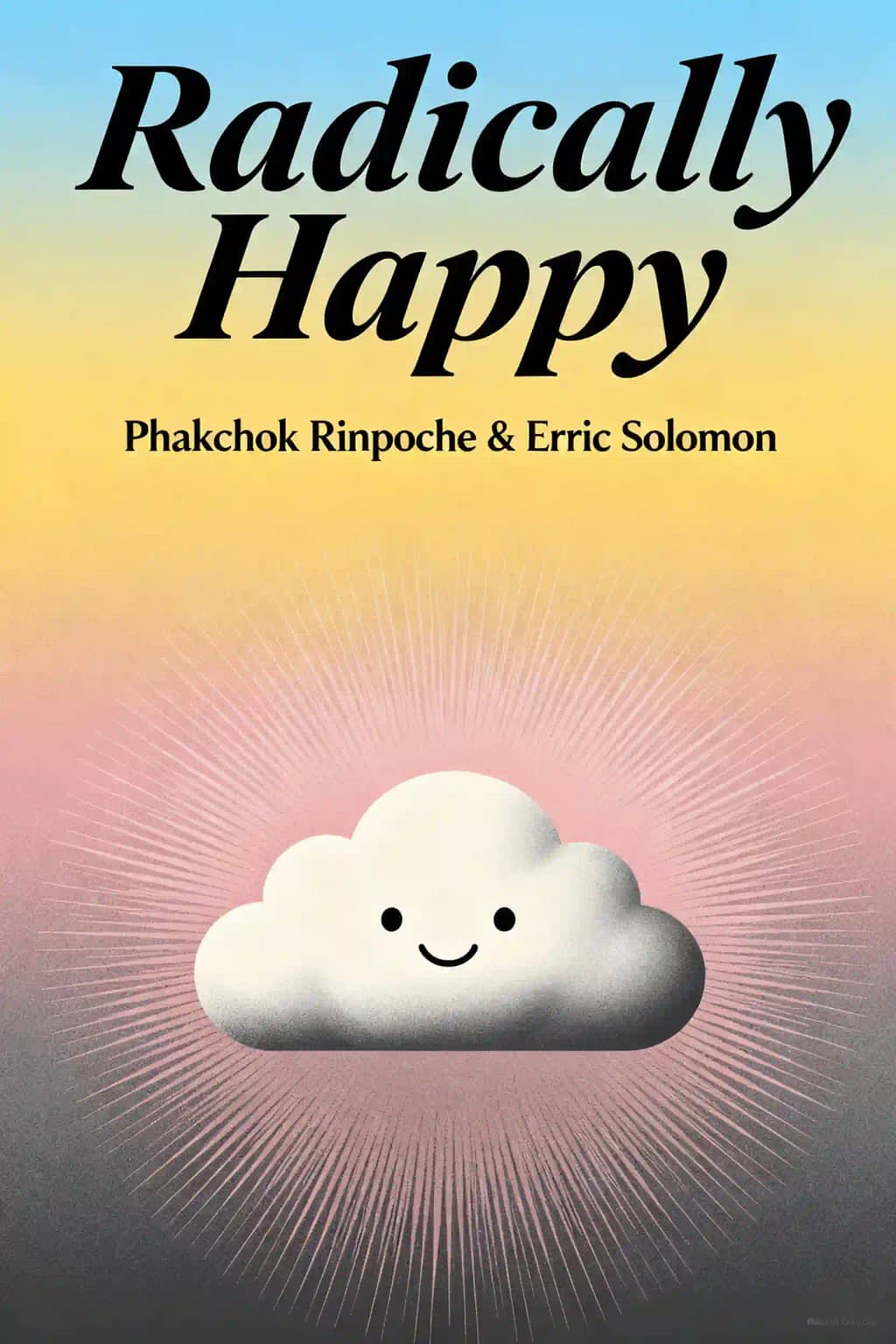
Imagine waking up each morning feeling a profound sense of well-being that doesn't depend on your circumstances. This isn't some far-fetched fantasy-it's the radical happiness that Phakchok Rinpoche and Erric Solomon reveal is available to all of us. Their book "Radically Happy" has become something of a quiet revolution among Silicon Valley executives, mindfulness practitioners, and those seeking authentic contentment in our chaotic world. What makes this work particularly powerful is the unique collaboration between its authors: a revered Tibetan Buddhist teacher and a former tech executive who brings practical Western sensibilities to ancient wisdom. Oprah Winfrey featured it as one of her "books that help you find your purpose," while neuroscientists like Richard Davidson have praised its science-backed approach to training the mind. In a world where happiness often feels just one purchase or achievement away, this book offers something truly radical-the insight that lasting joy comes not from changing our circumstances, but from transforming how we relate to them.
第2章
The Happiness Paradox: Why We Keep Looking in All the Wrong Places
We're terrible at predicting what will make us happy. Research consistently shows that even extreme circumstances-winning the lottery or suffering severe disability-result in similar happiness levels after just one year. Yet we continue behaving as if our happiness depends entirely on external circumstances, creating a fundamental contradiction in our lives.
This contradiction plays out daily as we chase comfort, experience temporary relief, then immediately seek the next thing. Even when we achieve desired circumstances, we immediately worry about maintaining them or pursue new goals. This pattern persists because circumstances are inherently fleeting and unstable, making them an impossible foundation for lasting contentment.
What's worse, we don't learn from our prediction failures. When homeowners become trapped by mortgage payments or professors denied tenure discover they aren't as devastated as expected, we tend to forget or minimize these incorrect forecasts, continuing the cycle of misguided happiness-seeking.
The pursuit of happiness through external circumstances paradoxically creates more frustration. Even when we achieve temporary happiness, it dissipates quickly and creates the basis for further discontent. Think about settling into a comfortable chair-the moment you experience comfort, you're already generating the conditions for future discomfort when you must eventually stand up.
Even in perfect moments, we struggle to fully enjoy them. During ideal days, we catch ourselves thinking "Too bad every day can't be like this," or busily documenting moments instead of experiencing them. Our enjoyment is perpetually overshadowed by subtle restlessness anticipating the end of good times.
Surprisingly, research shows we're happiest when completely absorbed in the present moment rather than caught in wandering thoughts. People stuck in terrible traffic jams report substantially higher happiness when focused on the present moment than when daydreaming about pleasant scenarios. This counterintuitive finding suggests that situating ourselves firmly in what is present-regardless of circumstances-connects directly to genuine happiness.
What keeps us from this present-moment awareness? We're continuously caught in an inner conversation about our experiences-a perpetual "sports announcer" describing and evaluating every moment. We endlessly measure, assess, and judge how well or badly things are going, then evaluate those thoughts, creating an exhausting chain of mental activity.
The rare moments when we're fully present-during intense physical activities, sex, or creative flow states-temporarily suspend this habitual measuring, bringing genuine happiness. Instead of wasting energy worrying about outcomes we can't control, we can free ourselves by retraining our attention to remain in the now.
第3章
Taming the Wild Mind: The Foundation of Basic Happiness
Our mind determines whether we find something joyful or sorrowful, entertaining or boring. While external circumstances contribute to our experiences, it's our mind's interpretation that ultimately determines their quality and impact on our well-being. This fundamental truth reveals why two people can experience the same event differently - one finding delight where another sees despair. To achieve basic happiness, we must work with this ultimate shaper of all experience, learning to guide it rather than being pulled along by its whims.
When attempting to observe our thoughts, we're often surprised by how little control we have over our own minds. Like a puppy that constantly wanders from its training mat, our attention darts from thought to thought. We become so engrossed in thinking about our thoughts that we forget our intention to simply notice them. This wild, wandering mind constantly pulls us away from the present moment, creating elaborate stories about the past or future while missing the reality before us. Since we taught ourselves the habit of chasing after thoughts and emotions - a pattern often developed since childhood - we can develop the alternative habit of being present through consistent practice and gentle persistence.
Our minds often become overwhelmed by problems, causing our perspective to shrink as we loop through the same worries repeatedly. This mental constriction can transform minor setbacks into seemingly insurmountable obstacles. Creating mental space allows thoughts and emotions to appear without defining our entire state of mind - like watching clouds pass through a vast sky rather than becoming lost in the storm. By imagining boundless space, we interrupt habitual thought patterns and experience relief from tension. This practice of mental expansion helps us see our challenges in proper proportion.
When we're stressed, we feel constricted-physically and mentally-but spaciousness gives our mind room to see more possibilities and make better decisions. The mind works best when it's relaxed and open, much like how creativity flows more freely during a peaceful walk than under pressure. History's greatest insights often came during moments of relaxation-from Archimedes in his bath to Newton under his apple tree, from Einstein's thought experiments while working as a patent clerk to Buddha's enlightenment under the Bodhi tree. By calming your mind daily through simple practices like meditation or mindful breathing, you'll discover more space not just mentally but in your life, leading to clearer thinking and better choices.
The path to basic happiness rests on three key principles: reacting to all thoughts the same way through meditation practice - whether pleasant or unpleasant, treating them as passing phenomena; relaxing our habit of constant comparison that creates unnecessary suffering through "better than," "worse than," or "equal to" judgments; and being fully present in each moment rather than constantly seeking the next experience. By mastering these elements through patient practice, we can experience contentment regardless of circumstances, finding peace in the simple act of being aware.
第4章
The Art of Meditation: Training the Mind to Stay Present
In everyday life, we constantly react differently to each thought-pursuing pleasant ones and avoiding unpleasant ones. Through meditation, we learn to react to every thought identically by maintaining attention on the present moment rather than following chains of thought.
Meditation works by giving our naturally open mind a job to focus on. We don't need to block out or cultivate anything-we just need to practice remaining present with whatever arises without becoming distracted. Like a skilled host managing a difficult guest, we don't fight with our monkey mind but instead give it something pleasant to do.
In beginning meditation practice, we discipline ourselves to bring attention to an object and leave it there. When distracted, we simply return to the object. This interrupts our habit of following every thought and emotion. We can use various objects for meditation-breath, space, sights, sounds, sensations, or even thoughts.
While beginners often prefer meditating with eyes closed, learning to meditate with eyes open is crucial. Since the goal is to bring non-distraction into daily life, we must learn to remain present amid visual stimuli. Rather than avoiding visual sensations, we can use them to support our practice by resting our gaze on a pleasant object.
What we typically consider distractions can become powerful supports for meditation. Phakchok Rinpoche shares how as a teenager in Kathmandu, he was driven crazy by construction noise until his teacher suggested using sound as a meditation support. After practicing this approach, sounds that once annoyed him began strengthening his mindfulness.
Using physical sensations as meditation supports can help reconnect us to our bodies, especially valuable for those whose jobs require extensive mental activity. The body scan practice moves attention systematically from the crown of the head downward, noticing sensations without judgment.
Rather than seeing discomfort during meditation as a distraction to avoid or ignore, we can transform it into an object of meditation itself. By making the sensation itself the focus of attention, we counteract our tendency to seek happiness only in pleasant circumstances.
While the variety of meditation methods might seem confusing, the key is not to flit between techniques but to choose one that suits your situation. The essential method remains consistent across all approaches: resting attention lightly on your chosen object and gently returning to it whenever distracted.
第5章
Beyond Comparison: Finding Contentment in What Is
When we constantly compare our circumstances against others' more fortunate situations or idealized versions of what our lives should be, we rob ourselves of joy and contentment. This involuntary habit of evaluation distracts us from being present and appreciating even life's simplest pleasures.
Improving aspects of our lives becomes easier and more fruitful when approached with gratitude rather than obsessive comparison. While some comparison is necessary for daily functioning (like selecting fresh vegetables), we need to break the unconscious habit of constant evaluation that steals our well-being.
Through a series of progressive exercises-from affirming "I am happy with who I am and what I have" during meditation, to appreciating specific qualities or possessions, to celebrating circumstances without comparing to others' misfortunes-we can cultivate genuine gratitude. Maintaining a gratitude journal enhances this practice by creating a collection of appreciation moments to reflect upon weekly.
Most meditators fall into the trap of constantly evaluating their practice-rating sessions as "good" or "bad." This habit of comparison is precisely what meditation aims to free us from. Instead of evaluating during practice, we should simply return to our meditation object whenever thoughts arise.
The very desire to meditate "correctly" often becomes an impediment, as we remain caught in the cycle of achievement and avoidance. True meditation requires the courage to remain present with whatever arises without agenda. While we may begin with goals like stress reduction or happiness, authentic meditation transcends these objectives, offering a contentment independent of circumstances.
By cultivating gratitude alongside agendaless meditation, we naturally relax our habit of constant evaluation, developing equanimity that persists through life's ups and downs. Paradoxically, the benefits we initially seek from meditation increase when we abandon our attachment to attaining them.
第6章
Bringing Mindfulness into Daily Life: The Practice of Presence
As Lincoln noted in his quote about being more concerned with what his grandson would become than who his grandfather was, we must bring our awareness of the present moment from meditation into everyday experiences. This is how we effectively transcend our habit of constantly evaluating our experiences.
While starting each day with meditation practices like Focus on the Breath or Creating Space can transform your day, the awareness of being present often vanishes once we step out the door. To counter this, we need to take mindful mini-breaks throughout the day-moments when we stop whatever we're doing, drop whatever we're thinking about, and simply be present.
When anxiety and stress become overwhelming-precisely when we most need a mini-break-these five approaches can help: 1) Simply remembering the word "meditation" can be enough to start establishing the habit; 2) Creating space in any environment (even a bathroom stall can work); 3) Recalling the feeling of peace from a particularly calm meditation session; 4) Cultivating gratitude by focusing on something you appreciate; and 5) Using anxiety itself as the object of meditation by precisely identifying how it manifests without judgment or commentary.
To overcome forgetting to take mini-breaks, we can establish specific "triggers"-common events that prompt us to pause and be present. These might include waiting for transportation, the end of meetings, or specific sounds like a lunch truck horn.
Though many assume meditation itself is boring, it actually serves as an antidote to boredom. When the thought "this is boring" arises during meditation, we can playfully investigate the source of this discomfort. Is there something inherently awful about sitting quietly, or is it just the thought itself creating anxiousness?
Nearly everyone struggles with establishing a regular meditation practice, much like gym resolutions that start strong but fade. The key lies in cultivating both enthusiasm and consistency. Enthusiasm means developing a positive attitude toward being fully present, which naturally follows from contemplating the benefits of creating space, gratitude, and meditation.
For consistency, start with an achievable commitment-even just a few minutes each day for a short period-and gradually build up. Morning meditation is recommended by most experienced practitioners, so setting the alarm just five minutes earlier can create space for practice.
第7章
The Web of Connection: Discovering Interconnected Happiness
Interconnected happiness arises through our interactions with others, recognizing the interdependent web that connects all beings. Though we intellectually understand this interdependence, we often live out of accord with this knowledge.
Our decisions, which we often pride ourselves on, are usually reflections of our conditioning rather than unique expressions of individuality. The example of choosing a wine bottle demonstrates how seemingly personal choices depend on countless interconnected factors-from agricultural innovations to transportation systems to cultural preferences.
Harvard's seventy-five-year study concluded that "happiness is love" and that warm relationships throughout life have the greatest positive impact on life satisfaction. People with warm relationships lived longer, earned more money, had better marriages, and found greater satisfaction. The practical application isn't about abstract notions of love but about basic human kindness and care.
When we strengthen our sense of connection to others, we naturally live with more kindness and caring-the foundation of interconnected happiness. To experience this, we must see through the illusion of separateness and recognize interconnection as a fundamental aspect of reality. Living out of harmony with this truth distorts our worldview, making us act on false assumptions.
Through exercises like "Interconnectedness on the Table" and "Interconnectedness at Work," we're encouraged to trace the countless people involved in bringing food to our tables or creating our workplaces-from farmers to truck drivers, from architects to builders-revealing the vast, often invisible web of human connection supporting our daily lives.
Building on the gratitude practice from basic happiness, these exercises extend appreciation to everyday objects and the people behind them. In "The Kindness of Things," we thank objects themselves-like refrigerators preserving our food or plants producing oxygen. "Remembering the Kindness We've Received" has us list everyone who's shown us care, from childhood caregivers to mentors.
第8章
The Heart of Connection: Moving Beyond Judgment to Compassion
We make quick judgments about people within milliseconds that are difficult to change even with new information. These mental shortcuts can lead to false assumptions and bad decisions, like France's Maginot Line that failed because generals assumed future wars would be like past ones.
Rather than struggling against judging, we can learn to relax our attitude about judgments. By cultivating warmheartedness and interconnectedness, we remain open and flexible, able to receive new data and not take our judgments so seriously.
The key to understanding others' needs is realizing we are all fundamentally similar-different permutations of human existence, but all wanting happiness and avoiding suffering. The more we identify with this basic commonality, the easier it is to cultivate warm relations by considering others as just another version of ourselves.
The "Considering the Equality of All" exercise asks us to notice how each person in our web of connections both received kindness and gave kindness to others. We contemplate how everyone's support networks overlap and connect through time, all filled with people who-while wanting happiness and avoiding suffering-still found time to care for others.
The "Exchanging Yourself for Others" practice involves thinking of someone who is suffering greatly and imagining as vividly as possible how it would feel if that suffering were yours. You consider how you would want people to treat you and what you would need from them in that situation.
The joy-sharing practice expands to include people you don't know and even those who have harmed you. Starting with strangers like people seen on the street, practitioners invite them into an orb of light where tension is released and joy is shared. The practice then progresses to including people who annoy you, and ultimately even enemies or those who have done real harm.
At the end of each practice, we make aspirations for everyone to be happy, have the causes of happiness, and be free from suffering. As you exhale, imagine the universe touched by warm light radiating from your warmhearted feeling, bathing all beings in its glow. While some criticize this as merely feeling good without action, every meaningful action begins with a thought. A single thought of kindness can create a tsunami of positive results.
第9章
Living with Attentiveness: The Four Joyful Supports
Attentiveness transforms daily interactions into powerful supports for warmheartedness, increasing life satisfaction while benefiting everyone we meet. By paying attention to others and reacting with care-like an experienced host attending to difficult guests-we approach others in harmony with the interconnected nature of reality.
To keep ourselves from unnecessary preoccupation with self-protective behaviors-the enemy of interconnected happiness-we can practice four joyful supports: generosity, patience, consistency, and commitment. These help us care for others while nurturing ourselves, bringing more humor and joy into our lives while creating greater satisfaction and meaning.
Generosity means freely giving good things to others to enhance their well-being. It's not limited to money and possessions but includes time, attention, aid, encouragement, emotional availability, and respect. As a natural expression of living in harmony with interconnectedness, generosity acknowledges that your well-being is intimately tied to mine.
Patience is essential for interconnected happiness-without it, even generous people will drive others away. True patience isn't suppressing anger behind a smile, which only allows negative emotions to grow internally. Instead, patience comes from recognizing that anger never solves problems and usually makes things worse. When patient, you remain clearheaded and make better decisions, benefiting both yourself and others.
Generosity and patience require consistent application to be effective. Just as mastering any skill demands regular practice regardless of mood, developing kindness requires enthusiastic consistency-doing something enjoyable that benefits both yourself and others with positive motivation.
To consistently live in harmony with interconnectedness requires commitment to self-improvement. True discipline means honestly recognizing and accepting your faults rather than becoming defensive, asking yourself if there's truth in criticism. This self-examination creates growth opportunities. Commitment also involves ethical behavior-speaking and acting with kindness and consideration.
第10章
The Lion's Way: Discovering Radical Happiness
Radical happiness emerges when we stop chasing thoughts like dogs and instead become like lions-turning our attention to the source of thoughts themselves. When stones are thrown, a lion doesn't chase them but looks directly at the thrower. This mastery of dignity begins with cultivating quiet self-confidence in meditative practices, developing conviction that these methods establish basic and interconnected happiness, from which radical happiness naturally emerges.
Dignity emerges from the confidence that mindfulness practices can transform your mind. When you bring basic happiness (present-moment awareness) and interconnected happiness (consideration for others) together, they enhance each other. This confidence comes through understanding, exercising, and experiencing.
Basic happiness and interconnected happiness must be practiced together to achieve radical happiness. Like a bird needs two wings to fly, we need both present-moment awareness and present-moment warmheartedness to soar into radical happiness. By practicing them simultaneously, we overcome subtle attachments: the fondness for meditation's peace and the attachment to recognition for helping others.
Clinging to thoughts and emotions often causes us to react to current situations based on past trauma, sometimes even inherited from our parents. To achieve radical happiness, we must learn to relax our subtle holding onto thoughts, hidden agendas, and emotions. When we relax this clinging, we become more fearless in chaos and more fully present, making our efforts to help others and ourselves more effective.
Rather than seeing thoughts as enemies of present-moment awareness, we can use them as supports for meditation. By observing thoughts without engaging them-like noticing activities at a beach without participating-thoughts lose their power to distract us. When we turn our attention toward a thought without clinging, it dissolves, creating a space between thoughts.
Turning from looking at thoughts to looking at the knower of thoughts marks the transition from being like a dog chasing stones to becoming like a lion looking at the stone thrower. Instead of focusing on thoughts themselves, we look toward awareness itself. In that moment of letting go, we rest in mind's nature-awareness itself, which is always available whether there's a thought to be known or not.
Through practice, you become familiar with awareness-the nature of mind that remains unaltered by whatever appears to it. Like a sky unharmed by storms, or a washcloth that remains fundamentally clean despite surface dirt, the knowing quality of mind doesn't change regardless of what thoughts or emotions arise. This stainless quality of awareness is something you can gain confidence in-a fundamental part of you that's never touched or harmed.
Being radically happy isn't reaching a nirvanic realm but engaging enthusiastically with our mind, heart, and world. By experiencing the present moment of warmhearted awareness, we uncover the joy we already possess. Like a snow globe that settles when left untouched, our minds naturally become clear when we don't disturb them. The more we live by radically happy principles, the more we discover a natural lightness that infuses all our actions and makes us truly alive.