第1章
The Quest for Authentic Joy: A Buddhist Monk's Roadmap
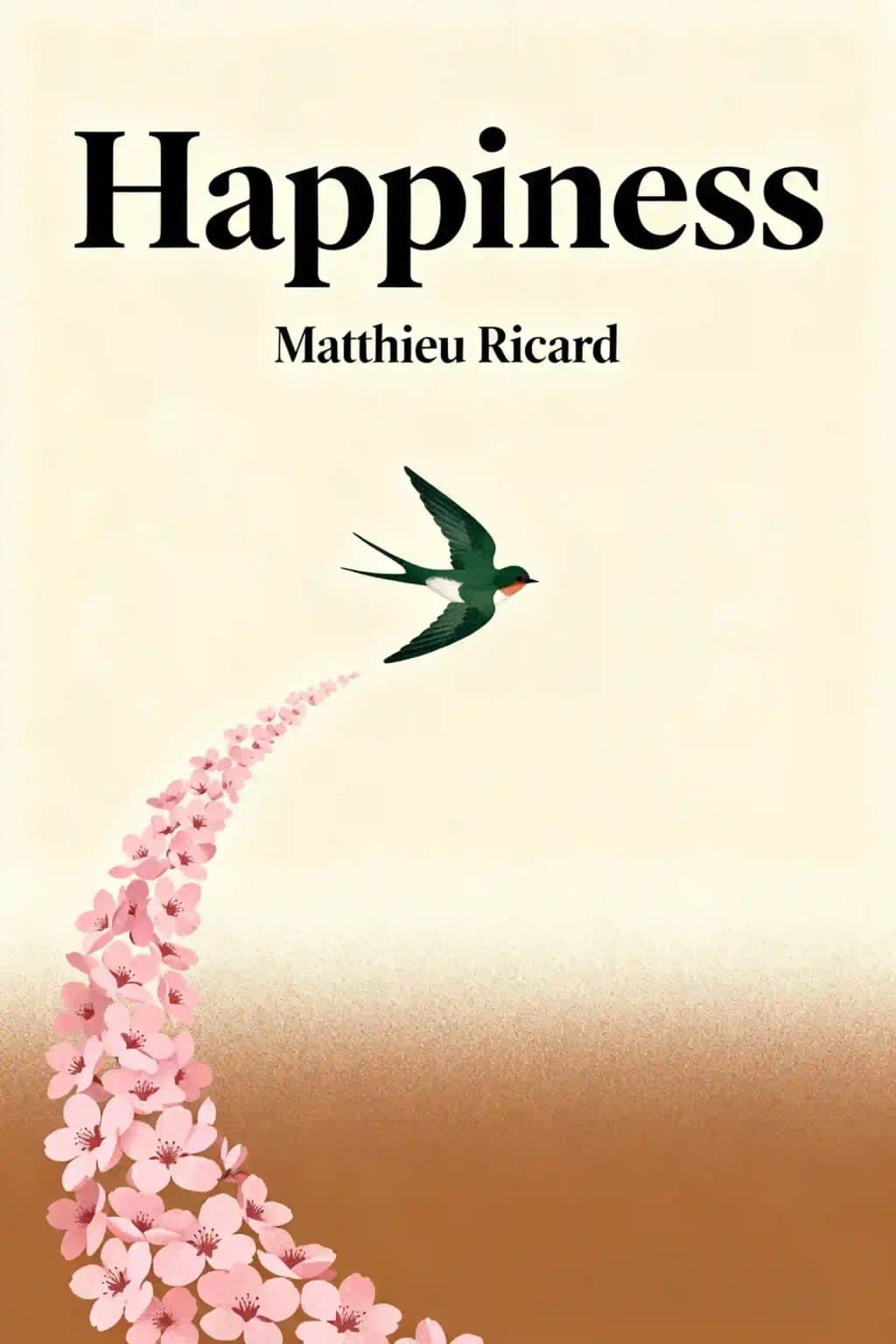
When Matthieu Ricard enters a room, something extraordinary happens. The air seems to shift, not from any dramatic gesture, but from the palpable sense of equanimity he carries. This isn't mere charisma-it's the living embodiment of what researchers at the University of Wisconsin discovered when they placed his brain under an fMRI scanner: the highest levels of positive emotions ever recorded in a laboratory setting. Dubbed "the happiest man in the world" by popular media (a title he modestly dismisses), Ricard represents something increasingly rare in our anxious age-genuine, sustainable well-being that remains unshaken by external circumstances. His journey from promising molecular geneticist at the Pasteur Institute to Buddhist monk in the Himalayas has captivated millions worldwide, including tech titans like Mark Zuckerberg and celebrities like Emma Watson, who cite his work as transformative. In "Happiness," Ricard doesn't just theorize about contentment-he offers a practical roadmap based on 35+ years of contemplative practice, grounded in both ancient wisdom and cutting-edge neuroscience.
第2章
Distinguishing Happiness from Its Imposters
We live in a world that constantly confuses pleasure with happiness. The difference is profound: pleasure is fleeting, dependent on circumstances, and exhausts itself through repetition-like a candle consuming itself. True happiness (sukha) is an underlying state of well-being that persists regardless of external conditions.
Consider how we respond to a beautiful sunset. The pleasure-seeker frantically photographs it, anxious to capture and possess the moment, already worried about its passing. The person experiencing genuine happiness simply absorbs the beauty, allowing it to deepen their appreciation of life's wonder. One experience creates anxiety alongside enjoyment; the other brings serene joy.
This distinction matters enormously because mistaking pleasure for happiness leads to perpetual dissatisfaction. We chase increasingly intense sensations that inevitably fade, leaving us empty and craving more. The hedonic treadmill accelerates-we work harder for bigger houses, faster cars, and more exotic vacations, yet happiness levels remain unchanged or even decline. Studies confirm this paradox: despite real income more than doubling in the United States since 1949, the percentage of people describing themselves as "very happy" has slightly decreased.
Even joyful experiences differ in quality. There are unhealthy joys far removed from serenity-like vengeance or gloating over others' misfortunes-that momentarily excite but ultimately poison our mental ecosystem. True joy emerges from inner clarity, loving-kindness, and freedom from selfish fixations. It radiates outward naturally, creating a continuum of appreciation that infuses everyday experiences with meaning.
Our modern obsession with "living it up" often amounts to compulsive hyperactivity-a desperate avoidance of inner silence. We fear gaps in our schedules, believing life would be insipid without constant stimulation. Yet this feverish search for intense experiences rarely leads to lasting enrichment. True fulfillment offers a different intensity-a sparkling inner well-being where each moment shines with beauty, whether we're engaged in meaningful work or simply watching clouds drift across the sky.
第3章
The Veils of the Ego: Our Greatest Obstacle
At the heart of our struggle for happiness lies a fundamental misconception: the belief in a permanent, autonomous self that must be protected and promoted at all costs. This ego-which Buddhism identifies as our primary delusion-creates an artificial boundary between "me" and "everything else," turning life into an exhausting campaign to defend and enhance this fictional entity.
Consider how differently we react when someone deliberately bumps our boat versus discovering an empty vessel drifted into us. The physical impact might be identical, but the psychological response differs dramatically. In the first case, our ego feels attacked and demands justice; in the second, we simply adjust and continue our day. The suffering comes not from the event itself but from our ego's interpretation.
This self-importance distorts our entire worldview. We insist our perspective prevail, magnify slights against us while minimizing those we inflict on others, and expend enormous energy maintaining an image that exists primarily in our imagination. The ego represents a fearful withdrawal that actually magnifies suffering rather than protecting us from it.
When we examine this "self" closely, we discover something remarkable: it cannot be found. Is it our body? But which part-our heart, our brain, our left hand? Is it our consciousness? But consciousness is merely a continuous flow of perceptions, emotions, and thoughts, constantly changing. Is it our history? But that's just memories of what's gone. Our name? Merely grouped letters. The self exists only as a label, a convention-yet this label believes it's real.
Contrary to common fears, transcending ego doesn't mean ceasing to exist as a person. Buddhism distinguishes between ego and self-confidence-the ego builds contrived confidence on external attributes, while genuine self-confidence emerges naturally when we recognize our inherent potential for wisdom and compassion. Those who've freed themselves from ego's control act with spontaneous freedom, unlike the constant paranoia of self-importance.
When the ego dominates, the mind resembles a bird repeatedly hitting an invisible glass wall-a wall that doesn't truly exist but constrains our world. Our attachment to ego fundamentally connects to our suffering and the suffering we cause others. Renouncing fixation on our self-image grants incredible inner freedom, allowing us to approach every situation with natural ease, benevolence, and serenity.
第4章
Taming the River of Emotions
Emotions flow through our minds like an unruly river, determining countless states of happiness and unhappiness. Rather than distinguishing between emotions and thoughts, Buddhism focuses on which mental activities promote wellbeing and which cause harm. This aligns with cognitive science findings that emotion and cognition share brain circuitry with no separate "emotion centers."
The impact of emotions is profound-they condition the mind to adopt particular perspectives. Positive emotions strengthen inner peace and seek others' good; negative emotions shatter serenity and intend harm. As Tibetan poet Shabkar said: "One with compassion is kind even when angry; one without compassion will kill even as he smiles."
Disturbing emotions act as enemies within us, enslaving us despite having "neither hands nor feet" nor being "brave nor intelligent." The challenge is neutralizing these emotions without becoming insensitive to life's richness. Simply repressing them into the unconscious ensures they'll resurface with renewed force. The ideal approach allows negative emotions to form and dissipate without leaving traces in the mind.
Studies contradict the notion that venting emotions relieves tension; systematically expressing negative emotions creates habits that make us increasingly vulnerable. Those who regularly indulge anger develop bad tempers and chronic suffering, with physiological consequences like increased arterial tension. Conversely, those who balance their emotions without repressing them show greater selflessness toward others' suffering.
Though negative emotions seem intrinsic to consciousness, the fundamental aspect of mind-its pure faculty of knowing or "luminous" quality-contains no hatred or desire at its core. Like a mirror reflecting various faces without being affected by them, the mind's fundamental nature allows thoughts to arise without being defined by them.
Buddhism offers three approaches to managing disturbing emotions. First, specific antidotes neutralize particular emotions-altruistic love counters hatred, inner freedom addresses greed, and patience neutralizes anger. Second, the liberation approach examines emotions directly to discover they're dynamic flows without inherent substance. When overwhelmed by anger, look closely and see it's merely a thought, temporary like fever. The more you observe anger this way, the more it evaporates under your gaze. Finally, the subtlest approach recognizes that emotions contain potentially useful elements-anger includes clarity and focus; desire contains bliss distinct from attachment. What makes emotions harmful is our identification with and clinging to them.
With practice, we can learn to anticipate negative emotions before they surface, extinguishing emotional sparks before they become infernos. Eventually, we can deal with emotions as they arise, "liberating" them before they cause confusion. This freedom doesn't lead to apathy but mastery-not tyrannical control but genuine liberation where wisdom and compassion guide our interactions.
第5章
The Alchemy of Suffering
Suffering is universal-as a Persian prince was told after commissioning a history of humanity: "They suffer, Majesty." Yet Buddhism teaches that while suffering will always exist as a phenomenon, every individual has potential for liberation from it. Suffering arises from impermanent causes like envy, animosity, and ignorance, so it too is subject to change. There is neither primordial nor eternal suffering.
Buddhism identifies three types of suffering: pervasive suffering (like a ripening fruit), suffering of change (pleasure turning to pain), and multiplicity of suffering (pain increasing). These correspond to invisible suffering (stemming from our own ignorance and self-centeredness), hidden suffering (concealed beneath pleasure), and visible suffering (evident everywhere).
When facing tragedies like a child's death or civilian war victims, the sage differs from ordinary people by maintaining unconditional love without losing serenity. The text shares stories of the Buddha comforting a grieving mother and a Tibetan master accepting his wife's death with equanimity. Obsessive grief shows not affection but attachment that helps neither oneself nor others.
Though never desirable, inevitable suffering can become a profound teacher, revealing the superficiality of daily concerns and what truly matters. Guy Corneau, a Canadian psychiatrist who lived months near death in terrible pain, describes how "letting go" of fighting pain opened him to "nameless beatitude" and understanding that "love was the very fabric of this universe."
When dealing with physical pain, we must distinguish between physiological pain and the mental suffering it triggers. Our emotional reactions to pain vary significantly between individuals, with anxiety about suppressing pain often intensifying the sensation. Rather than trying to escape unavoidable pain, embracing it while maintaining resilience and dignity makes a crucial difference.
Buddhism traditionally uses mental imagery-what modern psychology calls visualization-to modify pain perception. Scientific research confirms this approach: studies of fifty scientific articles show mental methods enhance pain endurance in 85% of cases, with imagery proving most effective. Compassion offers another powerful method for managing both emotional and physical suffering. By recognizing that others endure similar or worse hardships, we stop asking "Why me?" and transform our relationship with pain.
The author shares remarkable examples: Tenzin Choedrak, the Dalai Lama's physician, survived twenty years in Chinese labor camps without developing post-traumatic stress syndrome; Ani Pachen, a Tibetan nun imprisoned for twenty-one years including nine months in total darkness, maintained inner peace through meditation; and a man in Bhutan born without arms or legs who radiates such joy that villagers seek his company and advice. These examples prove it's possible to maintain authentic happiness even under extreme suffering.
第6章
Desire, Attachment, and Authentic Love
Desire naturally motivates our lives, but a crucial distinction exists between deep aspirations and obsessive craving. When desire matures into selfless aspiration, it fuels our greatest qualities and accomplishments. When egocentric or negative, it creates endless preoccupation and potential devastation.
Desire becomes toxic when it transforms into obsession or attachment, misconstruing objects or people as absolutely desirable and necessary. Such possession remains precarious, momentary, and ultimately illusory. Craving for pleasant sensations easily takes root because pleasure seems so accommodating and attractive. The initial breeziness of pursuing pleasure quickly yields to disappointment and sensory satiation, making lasting happiness elusive.
Obsessive desire transforms pleasure into servitude by continuously reinforcing mental imagery that intrudes and constrains us. Like drinking salt water, the more we satisfy desires, the thirstier we become, eventually leading to addiction and dependency. Studies show we can reach the point of "wanting without liking"-continuing to pursue what no longer pleases us, like rats pressing a pleasure-stimulating bar until death from exhaustion.
True love differs fundamentally from possessive attachment-it's like a crystal's pure tone versus the finger that stifles the sound. Altruistic love means sharing joy with others and contributing to their happiness without self-centered distortion. Instead of anxiously awaiting gratification, we receive reciprocal love joyfully while feeling responsible for others' well-being.
This love extends universally, even to enemies, based on recognizing that all beings wish to avoid suffering. Like the sun shining impartially yet warming those nearest, we can develop goodness embracing all beings while maintaining special relationships. The limitation of love to only certain people creates attachment, which restricts love's natural expansiveness and generates suffering. Selfless love represents human nature unclouded by ego, opening an inner door that renders self-importance inoperative.
第7章
Hatred: The Most Toxic Mental Poison
Hatred is the most destructive mental poison, driving all violence and assaults on human dignity. When attacked, our instinct demands retaliation, perpetuating an endless cycle of resentment and suffering. "If hatred responds to hatred, hatred will never end," taught Buddha.
Negative anger precedes hatred, pushing aside anyone blocking what the self demands. Hatred exaggerates others' faults while ignoring their good qualities, trapping the mind in what Aaron Beck calls "the prison of the mind." We focus exclusively on negative aspects, failing to see the broader context of causes and conditions. By solidifying "evil" attributes as permanent traits, we justify animosity and retaliation, obscuring our basic benevolence.
We can oppose injustice, cruelty, and oppression without succumbing to hatred. Someone in hatred's clutches should be viewed as a sick patient needing healing, not punishment-like a doctor controlling an insane patient without reciprocal hatred. We must distinguish between repulsion for despicable behavior and condemnation of a person. Even the cruelest torturer wasn't born cruel and can change, as evidenced by a violent inmate who transformed through meditation.
Forgiveness acknowledges human transformation rather than indulging past deeds. After the Oklahoma City bombing, a victim's father said, "Another death isn't going to ease my sorrow." A monk who spent 25 years in Chinese labor camps told the Dalai Lama his greatest fear was "hating my torturers, for in so doing I would have destroyed myself." Vengeance offers no consolation and only fuels further violence. As Gandhi said, "If we practice an eye for an eye and a tooth for a tooth, soon the whole world will be blind and toothless."
The only legitimate target of our resentment should be hatred itself-a deceitful, relentless enemy that destroys lives. While patience toward those we consider enemies is appropriate, we must show no patience toward hatred itself. As Khyentse Rinpoche advised: "Redirect hatred away from its usual targets and toward itself. Hatred is your real enemy."
Evil is essentially a pathological condition, and societies consumed by blind fury are collections of individuals alienated by ignorance and hatred. When enough individuals accomplish inner transformation, society can evolve toward more humane attitudes-abolishing the death penalty and promoting human rights. Yet there can be no outer disarmament without inner disarmament, and this process must begin with oneself.
第8章
The Great Leap to Freedom
True freedom means mastering oneself, not merely having freedom of action or following every impulse. The Western notion that freedom means doing whatever we want actually makes us slaves to our disturbing thoughts. Inner freedom means liberation from the dictatorship of "me" and "mine"-the ego that fights what it dislikes and desperately grasps what it covets.
Like a sailor taking the helm rather than drifting aimlessly, freedom means directing one's life purposefully. Having direction is essential; just as Himalayan trekkers endure hardships joyfully when moving toward their goal but despair when lost, life's anxieties often stem from lacking direction and failing to recognize our potential for change.
For many, renunciation suggests depressing asceticism and restriction, but true renunciation is like a bird soaring when its cage opens. It's not about depriving ourselves of joy but abandoning what causes relentless distress. Like weary travelers sorting through heavy bags to discard stones, we must identify and become mindful of suffering's causes.
A wise Tibetan sage, while calmly roasting potatoes, once asked a visitor lamenting past misfortunes and future fears: "What's the point of worrying about things that no longer exist and things that do not yet exist?" Inner freedom allows us to savor the present moment's lucid simplicity. This doesn't mean we can't learn from experience or approach the future clearly, but it saves us from pointless fretting.
"Our life is frittered away by detail... Simplify, simplify," wrote Thoreau. True simplicity means purging the superfluous from our actions, speech, and thoughts. It's not laziness but freedom from trivial distractions. Simplifying speech means curtailing pointless talk and avoiding hurtful remarks. A simple mind isn't simpleminded but clear-like water that reveals the lake bottom, simplicity reveals the mind's true nature behind restless thoughts.
Patrul Rinpoche, a 19th-century Tibetan hermit, owned only a walking stick, a cloth bag with an earthenware pot and a book, and his clothes. Once while teaching thousands in a meadow, an old man left him a silver ingot. Later, when a thief followed and searched him for the silver, Patrul directed him back to the teaching site where he'd left the ingot untouched. Finding it there, the thief was so moved by Patrul's detachment that he returned, begging forgiveness and to become his disciple. Patrul simply advised him: "Be generous, invoke the Buddha, and practice his teaching."
第9章
The Science of Happiness
Psychology traditionally focused on mental illness rather than well-being, but recent research in cognitive sciences and "positive psychology" has examined what helps humans flourish. Studies across seventy countries reveal three key findings: external conditions account for only 10-15% of happiness; genes determine about 25% of our happiness potential; and most importantly, we can significantly influence our happiness through how we live, think, and respond to life.
While money brings legitimate satisfaction to those lacking basic necessities, beyond a relatively low threshold of wealth, happiness levels remain unchanged despite increasing income. In the United States, real income has more than doubled since 1949, yet the percentage of "very happy" people has slightly decreased. Much discontent stems from comparing ourselves to others-East Germans felt worse after reunification despite improved living standards because they began comparing themselves to West Germans.
Is happiness genetically predetermined? Studies of identical twins separated at birth suggest genetics plays a significant role, with some researchers claiming happiness is 45% inheritable. However, others argue this interpretation is extreme, suggesting genetic influence doesn't exceed 25% and represents merely potential. Michael Meaney's fascinating rat experiments demonstrate that nurturing can override genetic predispositions to anxiety-when genetically anxious rat pups received attentive mothering, genes regulating stress response remained unexpressed throughout their lives.
Happiness shows no significant correlation with IQ, physical beauty, sex, or ethnicity, but is strongly linked to "emotional intelligence"-the ability to perceive others' feelings and identify one's own emotions. Happy people tend to be extroverted, empathetic, and believe they can control their lives, while unhappy individuals often see themselves as destiny's playthings.
A remarkable study of 178 Catholic nuns with nearly identical living conditions revealed striking connections between happiness and longevity. Researchers analyzed autobiographical accounts written before the nuns took their vows, categorizing them by expressed positive emotions. The results were stunning: 90% of nuns in the "most happy" quarter were still alive at age 85, compared to just 34% in the "least happy" quarter.
Neuroscience has dramatically shifted from believing adult brains have little capacity for change to recognizing significant neuroplasticity-the brain's ability to evolve through experience by establishing new connections, strengthening existing ones, and creating new neurons. Fred Gage's research showed rats in enriched environments grew 15% more hippocampal neurons in just 45 days, even in older subjects. Human studies confirmed neurogenesis continues throughout life, with MRI research showing musicians' brains physically change in areas controlling finger movements.
Research exploring meditation's impact on the brain began when leading neuroscientists and psychologists gathered with the Dalai Lama in 2000 for a dialogue on "destructive emotions." Using EEG and fMRI technologies, researchers found striking differences between expert meditators and novices. During compassion meditation, experienced practitioners showed unprecedented increases in gamma wave activity with superior neural synchronization. Most significantly, monks with the most years of practice generated the highest gamma levels, suggesting meditation produces permanent brain changes.
第10章
Happiness and Altruism: The Virtuous Circle
Altruism and happiness are deeply interconnected. Studies on hundreds of students reveal that those who consider themselves happiest are also the most altruistic. When we're happy, our self-importance diminishes, making us more open to others. People who've experienced a happy event in the past hour are more likely to help strangers.
Conversely, depression makes it difficult to feel and express love, while giving and receiving love aids healing. Martin Seligman's research shows that acts of disinterested kindness provide profound satisfaction that outlasts pleasurable activities like socializing or entertainment. When performing spontaneous kind acts, people noticed improved social interactions throughout their day.
While philosophers like Thomas Hobbes believed humans are fundamentally selfish, seeing altruism as merely disguised self-interest, contemporary research paints a more optimistic picture. Though evolutionary theorists long argued that selfish genes have survival advantages, recent models show that cooperative altruists who group together have evolutionary advantages over selfish individuals who fight amongst themselves.
Psychologist Daniel Batson's extensive research supports the existence of genuine altruism motivated solely by concern for others. His experiments distinguish between "false altruists" who help to reduce their own distress or gain approval, and "true altruists" who assist even when they could easily avoid involvement without being noticed. True altruists-about 15% of Western populations-care about results rather than personal satisfaction.
When examining our mind, we find that its primal nature is a basic cognitive awareness that illuminates phenomena without being fundamentally changed by them. Negative emotions like anger are transient responses to specific triggers, while altruism and compassion can exist as enduring states independent of particular objects.
Anger, while occasionally useful for overcoming obstacles, must remain episodic. Chronically angry people become dysfunctional. Love and affection, however, are essential for survival-from infancy through old age. After angry outbursts, we often say "I wasn't myself," but acts of kindness make us feel in harmony with our true nature.
Destructive emotions merely veil our essential goodness. As Father Pierre Ceyrac observed after caring for thousands of Indian children: "No one can resist the call of love" and "man is intrinsically good." Kindness dispels suffering and brings fulfillment, while happiness naturally fosters kindness-they engender and reinforce each other.
第11章
The Path to Lasting Happiness
We must approach life as explorers, burning with desire to live without regrets. The key to spiritual practice is gaining control over our mind through training. Our aim is self-transformation to help others free themselves from suffering. The true measure of our practice is whether we become better people who contribute to others' happiness.
The spiritual path follows stages like any apprenticeship. First, we learn teachings; then we deeply consider their meaning, testing them as "the goldsmith examines gold by cutting, heating, and hammering." Finally, we integrate this understanding through meditation-familiarization with a new way of being. Meditation helps us develop positive qualities until they become second nature. Whether focusing on an object to develop concentration, cultivating qualities like kindness, or directly contemplating the nature of mind itself, meditation requires resolve, sincerity and patience more than intellectual brilliance.
Sometimes we need solitude to stabilize and develop our practice, like a wounded stag retreating to the forest to heal. This withdrawal isn't about losing interest in others-rather, it gives us perspective and helps us understand the dynamics of happiness and suffering more clearly. These periods of solitude are valuable only if the understanding we gain holds up against life's storms, both in adversity and success.
While most people seek happiness, few actively pursue enlightenment-that state of ultimate freedom arising from complete elimination of delusion and mental toxins. In enlightenment, the divide between subject and object vanishes in understanding the interdependence of all phenomena. Though this state seems distant from daily concerns, it's not beyond reach-it's so close we can't see it, "hidden because of its simplicity and familiarity." We all carry this potential within us, but like milk that must be churned to produce butter, we must actively transform ourselves.
As Matthieu Ricard himself attests: "I can honestly say I am a happy man. This wasn't always so-as a child and teenager, happiness wasn't part of my vocabulary despite studying, loving nature, music, and family. The sense of flourishing I now feel was constructed over time through understanding the causes of happiness and suffering. Meeting wise, compassionate people was decisive, as they showed me what's possible. When among friends, I share their lives joyfully; when alone, every moment is a delight."