第1章
When Fear Becomes a Deadly Game
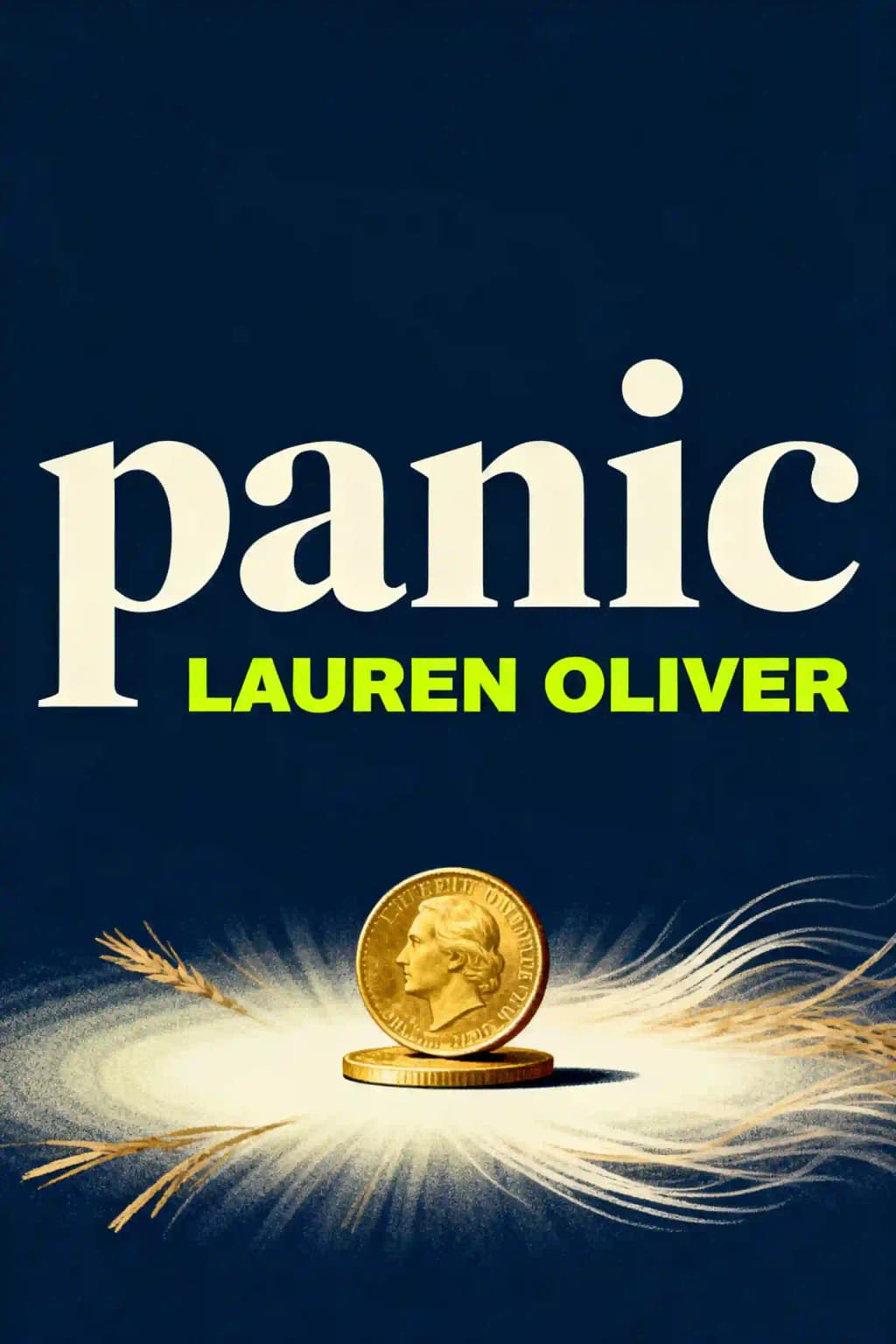
In the sleepy, economically depressed town of Carp, New York, graduating seniors have created their own twisted tradition to break the monotony of endless summer days. They call it Panic-a series of increasingly dangerous challenges with a life-changing prize. Lauren Oliver's gripping novel has captivated readers since its 2014 publication, even attracting Hollywood's attention with Amazon Studios adapting it into a television series in 2021. The book resonates particularly with young adults who recognize the desperate measures people might take when trapped by circumstance. As Emma Watson once noted in an interview, "Panic perfectly captures that moment when you're young and feel like you'd risk everything just for a chance to escape." With its raw portrayal of adolescent desperation and the lengths people will go for a better life, Oliver's work stands as a chilling examination of how fear can become both a weapon and a tool for transformation.
第2章
A Dangerous Game in a Forgotten Town
In Carp, New York - a town so small it barely registers on state maps - desperation hangs as heavy as the summer humidity. With shuttered storefronts lining Main Street and a median income well below the poverty line, most residents view their hometown as a trap rather than a community. Here, graduating seniors participate in a secret tradition called Panic, a game that has evolved from teenage rebellion into something far more dangerous. The competition consists of increasingly risky challenges throughout summer, with the winner claiming a prize pot that has swelled to $67,000 this year - more money than most Carp families see in a year.
The rules of Panic are deceptively simple but potentially lethal: only graduating seniors can compete, two anonymous judges orchestrate the challenges, and players face elimination until a single victor remains. Each student contributes mandatory dues throughout the school year, building the prize pool dollar by dollar. In the seven years since Panic's inception, three participants have died - their names spoken in whispers as both cautionary tales and legends. Yet each year, more seniors step forward, driven by desperation, ambition, or something darker.
The game begins with the Opening Jump - a forty-foot plunge from a limestone ridge into the murky waters of the abandoned quarry. This year, Heather Nill stands among the spectators, her world already crumbling after her boyfriend Matt's unexpected betrayal with another girl. Living in a run-down trailer park with an unreliable mother and a younger sister who depends on her, Heather makes an impulsive decision that will change everything. Despite having no preparation and wearing jeans that will weigh her down in the water, she pushes through the crowd and climbs the ridge. Her best friends Natalie and Bishop watch in horror as she announces her name to the chanting crowd below, their voices echoing off the quarry walls.
Meanwhile, Dodge Mason observes from the shadows, his own participation carefully planned for months. Tall and wiry, with a quiet demeanor that makes him easy to overlook, Dodge is dismissed as weak by his classmates. But beneath his reserved exterior lies a calculated determination fueled by a personal vendetta. His sister's participation in Panic two years ago left her paralyzed, and Dodge's fearlessness stems not from courage but from a singular focus on revenge.
What started as a reckless summer diversion has morphed into something far more sinister. Previous winners have used their windfall in ways that reflect Carp's desperate circumstances - some squandering it on short-term pleasures like gambling and cosmetic surgery, others investing in escape routes through college tuition or, more dubiously, drug manufacturing operations. For many in Carp, where minimum wage jobs and mobile homes represent the most common future, Panic represents their only chance at transformation. But as the challenges escalate from dangerous to deadly, and alliances form and shatter, the line between playing a game and fighting for survival becomes increasingly blurred.
第3章
Facing Fears on a Forty-Foot Plank
The first real challenge of Panic unfolds at the abandoned water towers on the outskirts of Carp, where contestants must cross a narrow wooden plank stretched fifty feet in the air between two rusting structures. The plank - barely eight inches wide - wobbles slightly in the summer breeze. There's no safety net, no harness, no protection of any kind. A fall from this height would mean certain death. As Heather stares up at the beam, moonlight glinting off the metal towers, she feels a wave of nausea crawl up her throat, wondering what temporary insanity led her to enter this game. The $50,000 prize suddenly seems insignificant compared to the void below.
The crowd of local teenagers buzzes with nervous excitement as players take their turns. Some spectators film on their phones while others place last-minute bets on who'll make it across. When Natalie attempts the crossing, she makes it halfway before freezing completely, her whole body trembling visibly even from the ground. That's when Dodge - the quiet new kid with watchful eyes - does something unexpected. He starts talking to her in a low, steady voice, coaching her step by step until she reaches the other side. This small act of kindness creates an unexpected connection between them, one that neither anticipated. Heather, still raw from seeing Matt wrapped around his new girlfriend Delaney at the summer bonfire last week, channels her heartbreak and anger into fierce determination. She crosses the beam with mechanical precision, refusing to let her ex see her falter.
After the challenge, the remaining players receive an ominous email from judgment@panic.com. The message is brief but clear: speak about the game to outsiders, and face elimination - or worse. This enforced secrecy is part of what makes Panic both thrilling and dangerous - it exists in the shadows, beyond adult supervision or legal constraints. The email serves as a reminder that they've entered a world with its own rules and consequences, governed by unseen judges who seem to know everything about them.
The water tower challenge reveals the first genuine glimpses of each character's true nature beneath their carefully maintained facades. Dodge shows unexpected compassion despite his mysterious agenda and usually guarded demeanor. Heather discovers a reservoir of courage she didn't know she possessed, finding strength in the very emotions that threatened to break her. Natalie demonstrates both vulnerability and resilience - traits that will be tested repeatedly as the increasingly dangerous game progresses.
What makes this challenge particularly effective is how it forces each participant to confront their most primal fear - falling - while surrounded by peers whose respect they desperately crave. The challenge serves as a perfect metaphor for adolescence itself: attempting to navigate a precarious path while everyone watches, knowing a single misstep could be catastrophic. The water towers loom over Carp like silent sentinels, marking the point where ordinary teenage life ends and the real game of Panic begins.
第4章
Tigers, Guns, and Unexpected Allies
Seeking distraction from Panic, Heather takes a job at Anne's farm, where she discovers an extraordinary secret-Anne illegally houses two rescued tigers from the black market. Despite her initial fear, Heather finds unexpected peace working with the animals, mucking stables and tending to horses. The farm becomes her sanctuary from the mounting pressures of the game.
Meanwhile, the second Panic challenge requires players to enter the property of "Trigger-Happy Jack" Donahue, a reclusive man known for shooting trespassers. They must steal something from his house, with a bonus for finding what's hidden in his gun room. As midnight strikes, players scatter across the property while Jack emerges cursing and firing his rifle into the darkness.
Inside the house, Heather discovers a gun in the desk drawer-the bonus item. When Dodge confronts her, accusing her of abandoning her post to claim the prize, their argument is interrupted by Donahue's return. They escape through a smashed window, with Heather suffering cuts from broken glass. The adrenaline of their narrow escape creates an unexpected bond between them.
The aftermath of the challenge brings new complications. Police notices appear throughout town threatening criminal prosecution for Panic participants. When rumors spread that someone informed authorities, the community turns violent-targeting suspected informants by smashing car windows and vandalizing homes. Despite the warnings, everyone knows Panic will continue as it always has.
This section reveals how the game has become woven into the fabric of Carp itself. It's not just a contest but a cultural institution-one that operates with its own moral code and system of justice. The violence directed at suspected informants demonstrates how Panic has created a parallel society with its own rules of loyalty and punishment. For the players, the game has become more than a path to prize money-it's become a test of character, revealing who they truly are when faced with danger and difficult choices.
第5章
Secrets, Lies, and Hidden Motives
As Panic progresses, the web of relationships between players grows increasingly complicated. Natalie and Dodge begin a tentative romance, with Dodge falling hard despite his focus on winning the game. During a Fourth of July celebration, Natalie proposes they become allies, sharing information and splitting the prize money if either wins. Though Dodge has no intention of letting anyone else win, having a different goal entirely, he agrees to the partnership.
Meanwhile, Heather struggles with complicated feelings for her longtime friend Bishop. Their playful banter and comfortable familiarity suggest something deeper, but neither seems ready to acknowledge it. When Bishop expresses concern about her safety in Panic, it creates an unexpected tension between them.
The game takes a deadly turn when the Graybill house challenge-spending the night in a supposedly haunted local landmark-ends in tragedy. The house catches fire, trapping Heather, Natalie, and Dodge inside. Though they escape, they later learn that Bill "Little" Kelly, a troubled veteran no one knew was in the basement, died in the blaze. Police begin investigating the fire as arson, not an accident as part of the game.
In the aftermath, Dodge reveals his true motivation for playing Panic-revenge against Ray Hanrahan, whose brother Luke was responsible for an accident that left Dodge's sister Dayna paralyzed. This revelation shifts the dynamics between players, as personal vendettas now threaten to overshadow the game itself.
The mounting tensions come to a head during a highway challenge where players must cross a busy road blindfolded. Dodge completes it in nineteen seconds, while Heather shows newfound confidence and focus, crossing in seventeen seconds-the fastest time. Natalie, however, freezes up and takes over a minute, eliminating her from the game. Throughout the challenge, Dodge notices a strange connection forming between himself and the other players, particularly Heather, who has transformed from awkward to focused during the course of Panic.
As the game progresses, it becomes clear that everyone is playing for different reasons-some for escape, others for revenge, and some simply to prove something to themselves. These competing motivations create a volatile mixture that threatens to explode as the final challenges approach.
第6章
When Games Turn Deadly Serious
The stakes of Panic escalate dramatically when Heather's challenge turns out to be Russian roulette. Paralyzed with fear but determined to continue for her sister Lily's sake, she prepares to place the gun against her temple. In a shocking moment, Dodge bursts in, checks the gun, and returns it to her. When Heather pulls the trigger, she hears only a click. Later, she discovers Dodge secretly removed the bullet, ensuring her safety.
This act of protection creates a complicated bond between them, especially as Heather's home life deteriorates. After discovering her mother Krista doing drugs with friends on her little sister's plate, Heather packs essential belongings and leaves with Lily, taking her mother's car. Now living in the vehicle and moving between parking lots at night to avoid detection, Heather recommits to Panic with renewed determination-she's playing for Lily now, for a chance at a better life.
The game's impact extends beyond the challenges themselves. Relationships fracture under the pressure, as when Dodge discovers Natalie has been seeing Kevin, an older man who promised to help with her modeling career. Their painful confrontation leaves both wounded, with Dodge saying cruel things he instantly regrets.
As August's heat wave intensifies, so does the danger. Natalie's challenge involves Anne's tigers, drawing spectators despite police surveillance. When the tigers later escape because Heather forgot to secure their enclosure, one is shot twelve times by a local man after it attacks his dog. The tragedy leads to a shocking revelation: Bishop confesses he's a Panic judge, claiming responsibility for the challenges and the Graybill fire that killed Little Kelly.
The game has transformed from teenage recklessness to something with real-world consequences-death, destruction, and broken trust. What began as a way to escape boredom has become a force that shapes their lives in ways none of them anticipated. The players are no longer just risking their lives in the challenges; they're risking their futures, their relationships, and their moral integrity.
第7章
The Price of Desperation
As Panic approaches its final stages, only four players remain: Dodge, Heather, Natalie, and Ray. The mounting pressure reveals the true cost of the game-not just in physical danger, but in the moral compromises each player makes.
Dodge's obsession with revenge has consumed him, leading him to rig a car with homemade napalm for the final Joust challenge. His plan is to ensure Ray drives the sabotaged vehicle, which will explode when pushed to high speeds. Though he justifies this as justice for his sister Dayna, the line between vengeance and murder has blurred beyond recognition.
Heather, meanwhile, has found unexpected sanctuary at Anne's farm. When her mother arrives drunk and is arrested for assaulting a police officer, Heather feels both relief and vindication. Yet her agreement to deliberately lose against Dodge in the final challenge weighs on her, especially as she begins to suspect his darker intentions.
Natalie, learning of Dodge's deadly plan, takes desperate measures. She lures him to her basement where he's ambushed and restrained with duct tape. To his shock, Luke Hanrahan-the very person Dodge has been plotting against-is present. Nat takes his keys and phone, leaving him bound as they head to prevent tragedy at the Joust challenge.
The final challenge takes place near the gully and old train tracks, relocated from its traditional runway location due to police presence. As Heather races toward Ray in the Joust, her car erupts in flames. Blinded by smoke and fire, she slams on the brakes as Ray swerves to avoid something in the road, crashing into the trees. Heather jumps from her burning car as it flips into the woods and explodes.
Standing in the middle of the road is the escaped tiger, watching her with ancient, sorrowful eyes. In this final moment of the game, Heather feels no fear-only understanding. She walks to the tiger, places her hand gently on its head, and wins Panic.
The price of desperation has been high-a death, broken relationships, and moral compromises that will haunt them. Yet through the crucible of Panic, each character has discovered truths about themselves they might never have otherwise learned. The game has stripped away pretenses, revealing who they truly are when pushed to their limits.
第8章
Beyond the Game: Finding Courage in Chaos
Months after Panic's dramatic conclusion, Heather takes Lily, Bishop, Natalie, and Dodge swimming at the estuary - the same murky waters where the dangerous game first took root. The prize money, carefully divided between Heather, Natalie, and Dodge, has become less about escape and more about transformation. Dodge invested his share in creating a serene memorial garden for Little Kelly, complete with her favorite yellow roses and a small fountain. Natalie enrolled in prestigious acting classes in Albany, commuting twice weekly to chase her dreams on her own terms. Heather, surprising even herself, put her portion toward veterinary courses at the local community college, with plans to eventually transfer to Cornell's program.
The game's aftermath rippled through their lives in unexpected ways. Heather, who once saw Carp as nothing more than a cage to break free from, discovered deeper roots growing beneath the surface. Working alongside Anne at the animal shelter opened her eyes to the power of healing - both for the abandoned creatures she tends to and for herself. The makeshift family she's built with Anne and Lily provides the stability she never had growing up, teaching her that sometimes the bravest act is staying rather than running. Her daily work with injured animals shows her that recovery isn't linear - some days are harder than others, but progress comes in small, steady steps.
Dodge's evolution proved equally profound. The burning rage that drove him to enter Panic has cooled into something more constructive. Beyond building the memorial, he's become an advocate for safer driving in Carp, organizing workshops at the high school and working with local officials to improve dangerous intersections. His relationship with his sister Ray has deepened as they navigate her recovery together, finding strength in their shared resilience.
Natalie's transformation challenges the town's superficial assumptions about her. The former beauty queen now teaches drama to middle school students, using her platform to build confidence in young girls who, like her younger self, struggle with self-worth. Her decision to stop Dodge's revenge plot - choosing moral courage over romantic love - marked a turning point in her understanding of her own character.
Bishop's journey toward redemption required facing uncomfortable truths about his role in perpetuating Panic's dangerous cycle. His confession about being a judge led to meaningful changes in how the game operated, potentially saving future lives. He now mentors at-risk youth, sharing his experiences to help others avoid similar pitfalls.
As they gather at the estuary, watching Lily fearlessly leap from the same rocks that once tested Panic players, there's a palpable sense of change. Her innocent courage suggests a different future for Carp's youth - one where worth isn't measured by dangerous stunts or desperate gambles. Heather observes how the water below remains constant while everything else transforms, understanding that change itself is the only permanent thing.
The group's ultimate victory transcends the game's monetary prize. They've discovered that true courage manifests in daily choices: choosing hope over despair, growth over stagnation, and forgiveness over bitterness. In Carp, where limitations often feel permanent, they've proven that the real prize is the power to reimagine one's future - not despite their beginnings, but because of what those challenges taught them about resilience, community, and the quiet strength found in moving forward together.
第9章
The Courage to Face What Comes Next
Lauren Oliver's "Panic" ultimately reveals itself as more than a story about a dangerous game - it's a profound exploration of how people respond when trapped by circumstance and limited choices. The titular panic isn't just the name of the game; it's the visceral emotion driving each character's decisions, whether it's Heather's desperate need to escape her toxic home life with her neglectful mother, Dodge's all-consuming desire for revenge against those who paralyzed his sister, or Natalie's paralyzing fear of remaining invisible in a town that seems to swallow dreams whole.
The genius of the novel lies in how it transforms external challenges into internal revelations, creating a psychological landscape as treacherous as any physical obstacle. Each Panic task forces participants to confront not just physical dangers but their own limitations, deeply rooted fears, and shifting moral boundaries. When Heather places her hand on the tiger's head in the novel's climactic moments - choosing connection and trust over instinctual fear - she embodies the book's central message: true courage isn't the absence of fear but the willingness to move forward while acknowledging one's terror.
The economic desperation of Carp serves as more than mere backdrop; it's a character in its own right, shaping everyone within its boundaries through its oppressive atmosphere of limited opportunity and generational poverty. The $67,000 prize represents different things to different players - for Heather, it's escape from her mother's trailer; for Dodge, it's the means to achieve justice; for Natalie, it's validation of her worth - but for all, it symbolizes the tantalizing possibility of choice in a place where options seem permanently foreclosed.
Perhaps most poignantly, the novel suggests that the most dangerous traps aren't external circumstances but those we construct in our own minds. Heather's breakthrough realization that she "wants things to be bad" so she has "an excuse to fail" marks her true turning point - more significant than any physical game challenge she overcomes. This insight forces her to confront how she's been complicit in her own stagnation, using Carp's limitations as a shield against taking real risks.
The novel's conclusion at the quarry, where the characters gather months after the game's end, reinforces that courage isn't a single dramatic act but a daily choice to face what comes next. The quarry water that once represented their desperate leap into Panic now symbolizes something more nuanced: the fluidity of life itself, always moving forward, always offering new beginnings for those brave enough to dive in. Their shared experience has taught them that while circumstances may be beyond their control, their response to those circumstances remains their choice. This understanding - that courage is as much about small daily decisions as it is about grand gestures - becomes their true prize, worth more than any amount of money could offer.