第1章
When Pain Becomes Political: How America's Healthcare Crisis Threatens Our Freedom
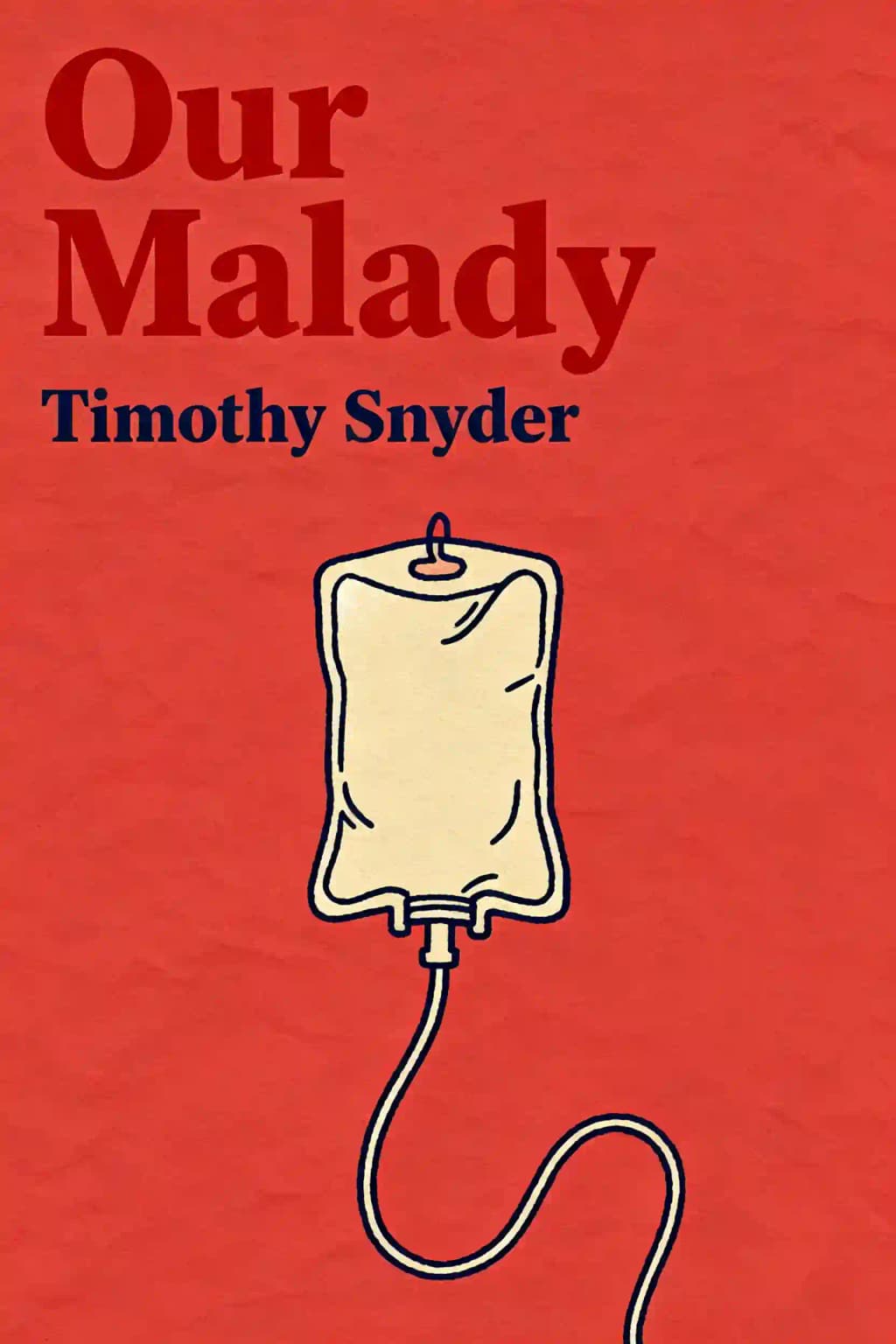
In December 2019, as I lay in the emergency room at midnight with an abscess in my liver and infection flooding my bloodstream, I used the word "malaise" to describe my condition. Little did I know how prophetic that word choice would be. The old words "malaise" and "malady" once meant both illness and tyranny-a connection that would become painfully clear during my medical ordeal. Timothy Snyder's "Our Malady" has become a cultural touchstone for healthcare reform advocates, praised by figures from Bernie Sanders to Samantha Power for its unflinching examination of America's broken system. The book gained particular resonance during the COVID-19 pandemic, when the flaws Snyder identified became impossible to ignore. What begins as a personal medical nightmare evolves into a profound meditation on freedom, democracy, and what we owe each other as citizens.
第2章
A Near-Death Experience Reveals America's Healthcare Crisis
When I was admitted to the emergency room at Yale New Haven Hospital, I was fighting for my life. My condition had deteriorated over weeks, beginning with overlooked appendicitis in Germany that led to a burst appendix and a liver infection American doctors had neglected. What followed was a harrowing journey through five hospitals over three months, where I observed firsthand the profound dysfunction of American healthcare, a system that prioritizes profit over patient care at every turn.
In those critical hours of December 29th, my body received shockingly inadequate care. Though fluids slightly raised my blood pressure from a dangerous 60/40 to a still-concerning 90/60, no meaningful treatment occurred as distracted medical staff could barely spare moments for me. Two weeks earlier, doctors had noted but neglected a liver lesion during my appendectomy, discharging me with insufficient antibiotics and no information about this second infection. The standard protocol would have required immediate treatment and monitoring of such a serious condition.
The New Haven doctors performed an unnecessary spinal tap while distracted by their cell phones-the resident even jumped when her phone rang while the needle was in my spine, a procedure that requires absolute precision and focus. I remained in sepsis for eight hours before receiving antibiotics, far beyond Britain's NHS recommendation of treatment within one hour - a delay that significantly increases mortality risk. Only after nine more hours did someone finally examine my previous scans, discovering the neglected liver abscess had grown to the size of a baseball, threatening multiple organ systems.
After three urgent drainage procedures and six weeks of hospitalization, I was released with nine new holes in my body and lingering nerve damage that would affect my mobility for months to come. This experience revealed our broader societal malady-when healthcare is a privilege rather than a right, it creates a collective of pain where even the advantaged receive worse care. The fragmentation of care between different providers and facilities meant critical information was lost in transition, nearly costing me my life.
Despite having excellent insurance through my employer, connections at Yale, and the cultural and educational capital to advocate for myself, I nearly died from medical neglect. My personal ordeal exposed a stark reality: American healthcare fails at every stage of life. Maternal care is grossly inadequate, with Black women dying in childbirth at rates three to four times higher than white women - worse than in Albania or Kazakhstan. Millennials face shorter lives while spending an average of $7,100 annually on healthcare, double what their parents spent at the same age. Middle-aged white Americans are committing suicide and dying from drugs in alarming numbers, with deaths of despair reaching epidemic proportions.
Our commercial medical system resembles a numbers racket-less healthcare than wealth transfer that incidentally provides some care. The average American family now spends over $20,000 annually on healthcare premiums and out-of-pocket expenses. Americans die younger than people in twenty-three European countries, several Asian nations, and other countries with British settlement histories. The gap between U.S. life expectancy and comparable countries grew from one year in 1980 to four years by 2020, with Americans now living an average of 76.1 years compared to 82.4 years in comparable nations. This disparity represents millions of lives cut unnecessarily short by a system that puts profits before people.
第3章
Health Care as a Fundamental Human Right
After organizing my office during recovery, I reflected on how my shelves of books on Nazi Germany and the Holocaust revealed a profound historical truth: the deliberate deprivation of health is among humanity's greatest harms. Hitler's first antisemitic letter referred to Jews as "racial tuberculosis," dehumanizing them as disease carriers rather than humans deserving treatment. The Nazis confined Jews in ghettos without medical care, then used their resulting illness as justification for killing them. This systematic denial of healthcare became a cornerstone of the Holocaust, with Nazi doctors perverting their healing mission into one of elimination.
Similarly, Stalin's Gulag distributed healthcare based on calculations about prisoner productivity-stronger prisoners might receive care while weaker ones were discarded. The camp system's medical units operated on purely utilitarian principles, viewing inmates as labor units rather than human beings. Those who could still work received minimal treatment, while the elderly, disabled, or severely ill were left to perish. These historical horrors demonstrate why healthcare must be recognized as a universal right rather than allocated by productivity or profit potential.
Ironically, Americans helped establish healthcare as a human right globally after World War II. The World Health Organization's 1946 constitution and the 1948 Universal Declaration of Human Rights both articulate this right, with American diplomats playing key roles in drafting both documents. Most nations' constitutions, including those of Japan and Germany (influenced by postwar American guidance), enshrine healthcare rights. Today, citizens of these countries live longer, healthier lives than Americans, with lower infant mortality rates and better health outcomes across most metrics.
My rural upbringing in farming country instilled a stoicism about pain that ultimately proved dangerous. My farmer grandfathers never complained despite arthritis, injuries, and the physical toll of agricultural labor. I internalized this approach, rarely seeking treatment for numerous injuries throughout my life - from sports injuries to workplace accidents. This diffidence about pain led me to downplay my abdominal symptoms to German doctors, who thought I merely had a viral infection. After my appendix burst, I continued to ignore the severity, believing the pain was expected. I flew home with a perforated appendix, and only days later sought treatment. By then, the infection had spread to my liver-something American doctors overlooked after performing the appendectomy.
Without proper medical care or someone to talk to, Americans often slip from silently enduring pain to silently taking pills, leading to addiction. This pattern is particularly evident in rural and working-class communities where seeking help is often seen as a sign of weakness. In the hospital, I refused oxycodone after my surgeries, wary of opioids after previous experiences and mindful of their devastating impact across Appalachia and the Midwest, where entire communities have been ravaged by prescription drug abuse. The opioid crisis exemplifies how our broken healthcare system and cultural attitudes toward pain have created a perfect storm of suffering.
第4章
How Children Reveal Our Healthcare System's True Values
In my hospital diary, I kept detailed notes about my children's activities while separated from them. When too ill for visits, my wife would tell me about their daily routines - their breakfast choices, playground adventures, and bedtime stories. They sent drawings filled with bright colors and hopeful messages that I carefully taped to my sterile hospital wall. Eventually they visited one at a time, with my son climbing onto the edge of my bed, his voice trembling as he confessed, "Daddy, I keep dreaming you die." That moment crystallized how deeply children absorb healthcare crises.
The stark contrast between my children's births in Vienna and America revealed profound differences in healthcare systems. In Vienna, we paid almost nothing beyond modest insurance premiums of about 80 euros monthly. My wife carried a comprehensive "mother-child passport" meticulously recording every medical detail from conception through early childhood. We attended state-subsidized birthing classes in comfortable facilities where we made lasting friendships with other expectant parents. The Austrian system centered entirely on child welfare rather than profit margins. After birth, mother and baby remained hospitalized for ninety-six hours in private rooms, with daily structured sessions teaching new parents everything from diapering to infant development. Experienced nurses provided round-the-clock support ensuring successful breastfeeding initiation. During our stay, fathers gathered in common areas to discuss their generous two-year parental leave options, which explained why men walking with babies in carriers became such a normalized sight in Vienna's parks and cafes.
Our American experience felt jarringly different, dominated by computer programs focused on billing codes rather than human needs. After birth, we were quickly expelled from the maternity ward barely 48 hours later, armed only with xeroxed breastfeeding instructions and a phone number for a lactation consultant that required premium insurance to access. This systemic inequality affects babies' biology from their first hours, creating disparities that can last lifetimes.
When we left the Austrian hospital, we received a substantial care package with baby supplies and a comprehensive guide to Vienna's free services. This included regular home visits from family support workers, access to public childcare centers, and quality schools - all provided at no cost if parents committed to taking children for recommended pediatric visits and vaccinations. Later, when we moved back to Austria, our children attended an excellent public preschool in a working-class neighborhood for just forty euros monthly, which covered locally-sourced organic lunches. When our son's dedicated teacher realized we'd be returning to America, she wept, knowing the dramatic difference in early childhood support he would face.
In America, parents frequently express feeling isolated and overwhelmed - "at the end of the day we are doing this alone" as one exhausted mother explained to me. In Vienna, the culture of support extended beyond institutions - strangers routinely held doors for strollers, subway passengers automatically made room for families, and restaurants welcomed children as valued guests. These weren't one-way gifts but rather "an infrastructure of solidarity" making people feel genuinely connected to their community.
America's celebrated story about individual freedom fails dramatically at birth, when heroic individualism becomes impossible. True freedom requires solidarity - children need intense attention during their crucial first five years, borrowing time from adults they can only repay to future generations. This reality exposes how our healthcare system's values either nurture or neglect society's youngest members.
第5章
Truth as the Foundation of Public Health
In the hospital, I shared a room with an older Chinese man who spoke minimal English. Through translation services, I learned he was fourteen years older than me, worked as a busboy in a local restaurant, spoke Cantonese, and was withdrawing from decades of heavy smoking and alcohol consumption. Despite these significant challenges and obvious discomfort, he remained remarkably friendly and considerate throughout his stay. He had arrived on New Year's Day, just after returning from visiting family in China, and notably, the day after Chinese authorities there had officially confirmed the presence of the novel coronavirus in Wuhan.
I developed increasingly concerning respiratory problems - partially collapsed lungs that doctors initially attributed to liver inflammation, though detailed CT scans revealed my left lung was significantly more compromised than my right. My roommate also struggled with respiratory issues but showed steady improvement. I carefully observed how doctors approached his case through two distinct methodologies: first, by meticulously piecing together his medical history and symptoms despite formidable language barriers, and second, through systematic, methodical testing protocols. When comprehensive testing finally ruled out cancer as a possibility, I experienced my first genuine moment of joy during my hospital stay. Before our respective discharges, we exchanged heartfelt well-wishes through the hospital's translation service.
In early 2020, our federal government demonstrated catastrophic failures in both crucial aspects: coherent storytelling and comprehensive testing. There was no rational, coordinated discussion of pandemic history or lessons learned from previous outbreaks, and no established procedure to test for the emerging disease. The administration had systematically dismantled epidemic response teams at both the National Security Council and Department of Homeland Security, withdrawn embedded health experts from locations worldwide, and recalled the last CDC officer from China mere months before the outbreak began. Despite implementing severe budget cuts to critical public health institutions, on February 1st, the Surgeon General confidently tweeted that coronavirus risk remained low - a dangerous assertion made without any substantial testing data to support it.
Throughout January and February, coronavirus spread silently and exponentially through American communities while the president repeatedly praised China's response and ignored increasingly urgent warnings from health officials. When infected Americans were evacuated from the Diamond Princess cruise ship, they were inexplicably flown back alongside uninfected passengers, virtually guaranteeing disease transmission. Trump spoke repeatedly of a "miracle" that would save us while his Commerce Secretary optimistically predicted the virus would bring manufacturing jobs back to America - even as we continued exporting critical protective masks to China. By late February, the U.S. had tested only 352 people while South Korea had systematically tested 75,000. This crucial lost time and opportunity could never be recovered. By April's end, South Korea had reduced new cases to fewer than ten daily while America reported 25,000, with twice as many deaths in my Connecticut county alone than in all of South Korea.
Tyrants historically resist acknowledging truth during catastrophes they've helped create or exacerbate. Trump focused obsessively on keeping infection numbers artificially low rather than addressing the actual crisis, repeatedly stating "I like the numbers being where they are" and "by doing all this testing, we make ourselves look bad." This dangerous magical thinking was simultaneously tyrannical, deeply delusional, and profoundly irresponsible - fundamentally confusing the absence of testing with the absence of infection, while precious time for effective intervention slipped away.
第6章
When Doctors Lose Control of Medicine
During my hospital stay in Florida, I watched the moon through my window all night, drawing it childishly in my diary as anxiety kept me awake. The moon became my constant companion as I grappled with uncertainty about my condition. When morning came, my view revealed a complex of hospital buildings with cheerful pastel walls ending abruptly at trash-covered black roofs - a metaphor for healthcare's superficial appearance masking deeper systemic issues. Despite entering as an emergency case with potentially lethal symptoms, I barely saw any doctors-just three minutes with one who described possible spectacular death, another during my spinal tap, and brief encounters with others. These fleeting interactions left me with more questions than answers, highlighting a disturbing trend in modern healthcare where meaningful doctor-patient relationships have become increasingly rare.
The pandemic brutally exposed how doctors have lost authority in our healthcare system. While physicians worked extraordinarily hard treating COVID patients, often pulling 24-hour shifts and sleeping in their cars to avoid infecting their families, they had little say in policy decisions. Hospital administrators and government officials, many without medical backgrounds, made crucial decisions about patient care protocols and resource allocation. The government spent two trillion dollars without securing essential supplies like tests, masks, and ventilators, leaving frontline workers scrambling. Doctors and nurses faced severe shortages of protective equipment-some even fired for bringing their own gear or speaking out about conditions-and many were silenced by gag orders from hospital employers protecting their corporate brands. Medical personnel got sick and died across the country while treating patients, with some hospitals reporting infection rates of up to 20% among their staff.
Commercial medicine treats patients as widgets, with hospitals having financial incentives to discharge patients quickly rather than ensure complete recovery. Medicare's diagnosis-related group (DRG) payment system encourages shorter hospital stays, while insurance companies' preauthorization requirements often delay necessary treatments. This profit-driven system ensures we're always unprepared for epidemics, as maintaining reserve beds and equipment costs money - the average hospital aims for 85-95% bed occupancy to maximize revenue. Though many individual healthcare workers genuinely care about patients, spending extra time with them and advocating for better care, the system pits hospital algorithms against insurance company algorithms in a battle over profits rather than health outcomes. Electronic health records, designed more for billing than patient care, further reduce doctor-patient interaction time, with studies showing physicians now spend more time on paperwork than with patients.
第7章
Between Solitude and Solidarity: Finding a Path Forward
We see our malady only vaguely, obscured by an endless stream of hospital billboards and pharmaceutical advertisements that emphasize procedures and drugs rather than addressing fundamental human needs: comprehensive medical knowledge, lasting relationships with trusted doctors, quality time with our children during illness, and basic healthcare rights. The stark reality remains unavoidable: Americans pay a premium price to die younger than citizens of other developed nations, with life expectancy consistently falling behind peer countries.
The medical industrial complex vigorously defends this broken system, claiming that meaningful change would be prohibitively expensive. This is a calculated deception. Our commercial medicine isn't even economically efficient - Americans pay roughly twice as much for healthcare as other developed nations while achieving worse outcomes in infant mortality, chronic disease management, and preventable deaths. The coronavirus epidemic, which cost the U.S. economy over $16 trillion and devastated small businesses nationwide, definitively proved that allowing illness to spread unchecked is ultimately far more expensive than prevention.
Nearly half of Americans regularly avoid or delay medical treatment due to cost concerns, often waiting until conditions become severe and more expensive to treat. During the pandemic, an estimated 27 million Americans lost their health insurance along with their jobs, creating a devastating cascade of untreated conditions and preventable deaths. Our nation's inadequate sick leave policies forced countless ill workers to choose between financial survival and public health, accelerating disease transmission in workplaces, particularly among essential workers.
We need to fundamentally rebalance the relationship between solitude and solidarity in American healthcare. Universal healthcare would provide not just better medical treatment but create a more equitable society where everyone can meaningfully participate in public life. Our extreme wealth inequality increasingly separates the lived experiences of a tiny privileged group from everyone else, effectively transforming democracy into oligarchy. Even as millions lost jobs and health coverage during the pandemic, American billionaires increased their collective wealth by $282 billion in just three weeks of March 2020.
The real question isn't how much reform would cost, but how enormous the societal gains would be. Robust public health infrastructure consistently lowers long-term medical costs and reduces pandemic risks through prevention and early intervention. The private insurance industry merely collects rents from disease "like trolls on a bridge," adding complexity without improving care. We urgently need a single-payer system with private insurance regulated to the margins, as thousands of doctors have repeatedly advocated through organizations like Physicians for a National Health Program. Even market economist Friedrich Hayek, often cited by opponents of government involvement in healthcare, supported comprehensive social insurance, seeing no fundamental contradiction between state-provided security and individual freedom. The evidence from other developed nations demonstrates that universal coverage and market economies can successfully coexist.
第8章
Healing Through Rage and Empathy
Even after my infection subsided, recovery was slow and unpredictable. Hospital nights stretched endlessly, with tingling limbs and surgical pain keeping me awake in the sterile darkness. The constant beeping of monitors and whispered conversations in hallways became my nocturnal soundtrack. I found unexpected comfort in familiar music, listening to Lucinda Williams through broken earphones, her song "Car Wheels on a Gravel Road" connecting my hospital bed to vivid memories of rural America. The music transported me beyond the confining walls, each note bridging the gap between illness and health.
Now home in New Haven, I'm alive but fundamentally changed. This book began as desperate diary notes scribbled while raging against the twin specters of potential loneliness and death. My body bears constellation-like scars - a map of survival etched across my skin. My feet still tingle with ghost sensations, and my recovery remains incomplete in ways both subtle and profound. My vocabulary, once lost to infection, returned in unexpected bursts like spring flowers breaking through frost. My hair grew back with surprising patches of different colors - silver mixed with brown, creating a physical reminder of transformation. Even my taste buds revolted, turning my once-beloved dark roast coffee into something unpalatable, forcing me to discover new morning rituals.
Recovery, I've learned, isn't about returning to how things were-it's about becoming something new and often unexpected. I remain angry, not just for my own struggles but for all Americans denied the fundamental freedom that comes with effective healthcare. From rural communities to urban centers, from the elderly to the young, millions face impossible choices between health and financial survival. Our medical system should begin from the basic premise that healthcare is a fundamental human right, serving people wherever they live, whether in high-rise apartments or on dusty gravel roads.
We are not mere statistics or case numbers but people who thrive when treated with dignity and compassion. Each of us carries both a torch raging against the darkness of death and serves as a vital plank in the collective raft that carries us through life's turbulent waters. Health represents our shared vulnerability and our greatest opportunity to grow freer together. Healing our national malady would not only save lives but enrich them, extend true liberty beyond the privileged few, and allow us all to pursue happiness in both solitude and solidarity. The scars we bear, both personal and societal, remind us of our shared humanity and the urgent need for change.