第1章
The American Healthcare Crisis: A System in Need of Healing
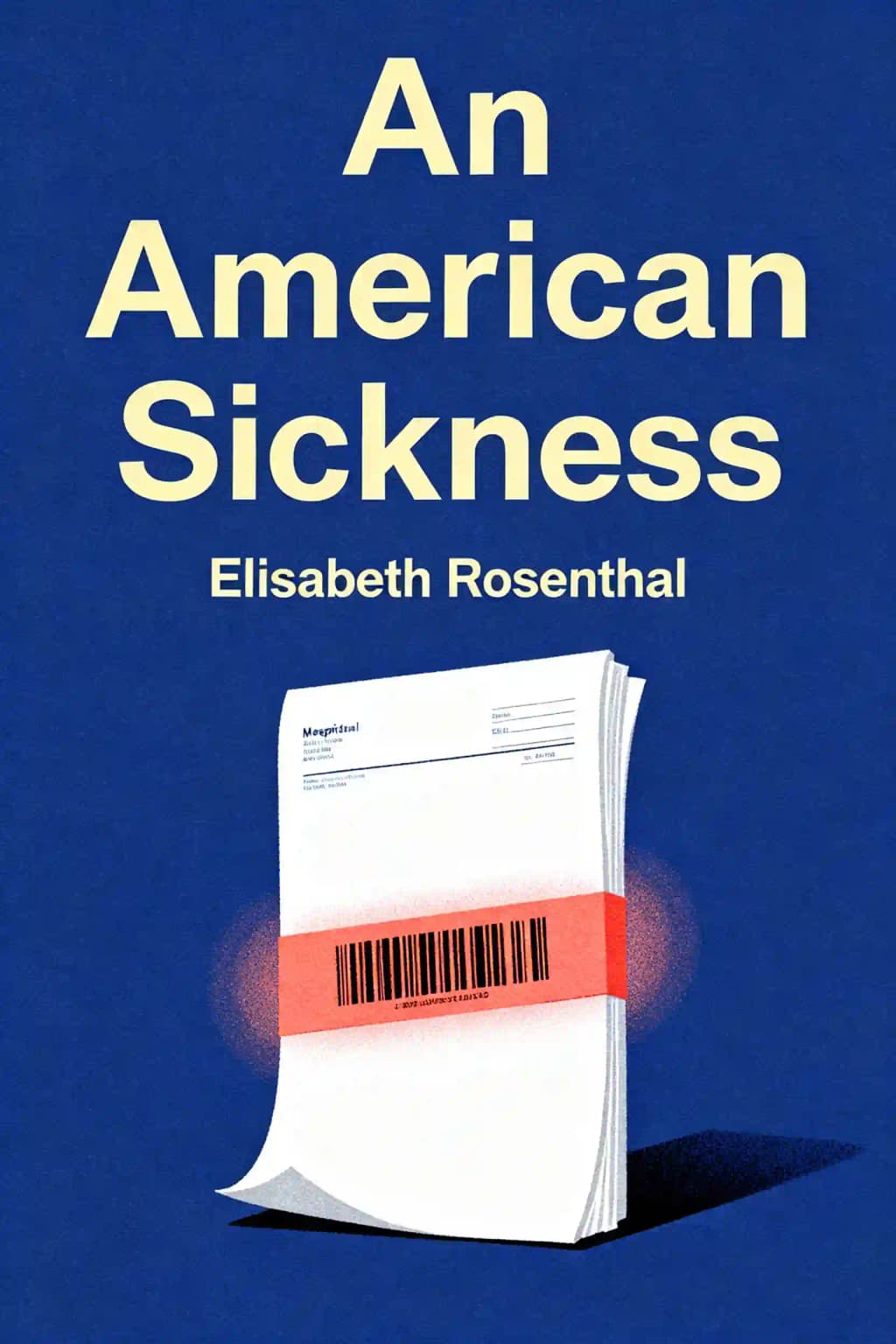
Have you ever wondered why a simple ER visit for three stitches could cost $2,000? Or why your prescription that costs $20 in Canada runs $300 in the United States? Elisabeth Rosenthal's groundbreaking expose "An American Sickness" reveals the shocking truth behind America's dysfunctional healthcare system. As a Harvard-trained physician turned investigative journalist, Rosenthal combines medical expertise with journalistic rigor to dissect how our healthcare transformed from a caring service into a predatory business. The book has become required reading in medical schools nationwide and caught the attention of policymakers across the political spectrum. Even Warren Buffett cited its insights when announcing his healthcare initiative with Amazon and JP Morgan. What makes this book particularly powerful is how it transforms complex healthcare economics into a gripping narrative that reads like a medical thriller-one where the villain is the system itself.
第2章
How Our Healthcare System Lost Its Way
The American healthcare system operates under dysfunctional economic rules that defy normal market principles. In healthy markets, competition drives prices down-but in healthcare, it mysteriously drives them up. A stark example is MRI pricing, where facilities in the same city might charge anywhere from $400 to $4,000 for identical scans. Prices rise arbitrarily with little connection to actual costs, and billing lacks any standardization, with hospitals using different codes and pricing structures for the same procedures.
The transformation began after World War II when health insurance evolved from a safety net into a profit-driven industry. During the war, the government imposed wage controls to prevent inflation, leading companies to attract workers by offering tax-exempt health benefits. These early "major medical" policies covered catastrophic care but not routine visits-they were designed to prevent financial disasters from serious illness, never to make healthcare cheap or control costs. A typical policy might cover hospital stays over $100 but leave routine doctor visits completely uncovered.
Between 1940 and 1955, Americans with health insurance grew dramatically from 10% to over 60%. Initially, Blue Cross/Blue Shield operated as nonprofits with a community-rating system, accepting everyone at equal rates regardless of health status. Their model emphasized accessibility and affordability, charging the same premiums to all subscribers within a geographic area. But this created an opportunity for profit-seeking insurers like Aetna and Cigna, who entered the market by cherry-picking younger, healthier patients through "experience rating" - offering lower rates to low-risk groups while avoiding older or sicker individuals.
By 1994, the Blues were hemorrhaging money after being left with the sickest patients and were allowed to become for-profit, abandoning their noble-minded mission. Today's insurers prioritize shareholders over patients, spending around 80 cents per premium dollar on actual care compared to 95 cents in 1993. Administrative costs have skyrocketed, with some estimates suggesting that paperwork consumes 30% of healthcare spending. Rather than bargaining for reasonable prices, insurers cultivate customer loyalty through misleading messaging about "savings" while passing costs to consumers through higher premiums, increased deductibles, and expanded copayments.
This shift from service to business rippled through the entire healthcare ecosystem, transforming hospitals, physicians, pharmaceutical companies, and every other component of American medicine into profit-maximizing enterprises. Hospitals began employing sophisticated pricing strategies, pharmaceutical companies started spending more on marketing than research, and medical practices consolidated into large corporate groups focused on efficiency and profitability rather than patient care. The result is a system where a simple emergency room visit can generate bills from multiple providers, each operating independently with their own pricing structures and profit margins.
第3章
The Hospital Transformation: From Charity to Corporation
Hospitals have undergone perhaps the most dramatic metamorphosis in American healthcare. What were once charitable institutions run by religious orders and community foundations are now aggressive profit centers with costs growing faster than any other healthcare sector.
Providence Portland Medical Center exemplifies this transformation. In the 1960s, Dr. Albert Starr revolutionized heart disease treatment there by developing the first successful artificial heart valve. Despite being a medical celebrity, marketing was considered unethical-"I never saw him on a billboard," noted Dr. McCullar.
By the 1980s, everything changed. With Medicare's arrival and widespread insurance coverage, hospitals began charging more for each service rather than weekly rates. Administrators multiplied rapidly, modifying Providence's core values to include "stewardship" alongside traditional principles like compassion and justice. Professional coders were hired to maximize billing revenue, and doctors received monthly statements comparing their revenue generation against colleagues.
By the late 1990s, Providence treated doctors as independent contractors while requiring them to attend "charm school" marketing seminars. The hospital underwent lavish renovations with marble columns, fountains, and expensive art-"It became like the Providence Marriott," Dr. McCullar lamented. Providence Health & Services grew into America's third-largest nonprofit hospital system with $2.6 billion in revenues by 2013, while still describing itself as "a not-for-profit Catholic health care ministry"-a strange hybrid of "Mother Teresa and Goldman Sachs."
Hospital consultants taught facilities how to maximize revenue through "strategic pricing" that completely decoupled the billed price of medical items from actual costs. They also implemented corporate restructuring, closing traditionally money-losing departments like emergency rooms and clinics in poorer neighborhoods unless they could carry their financial weight.
Meanwhile, hospitals enhanced their most profitable offerings: orthopedics, cardiac care, stroke centers, and cancer treatment. Equipment purchases became driven by financial calculations rather than medical necessity-like proton beam therapy machines costing over $100 million that were rapidly adopted despite little evidence of superiority over cheaper options.
第4章
When Doctors Become Businesspeople
The medical profession has not been immune to this transformation. Dr. Michael Canning's 1990 American College of Surgeons pledge contained ethical commitments that have since been watered down. The original pledge required surgeons to "set fees commensurate with services rendered" and avoid "fee splitting or itinerant surgery" that might compromise patient welfare. By 2004, these specific ethical limitations were removed, mirroring similar dilutions in the American Medical Association's code of ethics.
American physicians earn substantially more than their international counterparts, particularly specialists. While U.S. primary care doctors make about 40% more than German peers, American orthopedic surgeons earn more than twice what similar German specialists make. The highest-paid American doctors aren't necessarily those with the longest training or hardest work, but those most skilled at healthcare business. Over 27% of U.S. physicians fall into America's top 1% income bracket-a higher percentage than lawyers or managers.
As Medicare physician payments decreased following implementation of new payment systems, doctors developed creative business strategies to maintain income. Many opened ambulatory surgery centers where they could charge facility fees-essentially room rentals for their procedures. Each specialty found its niche: ENT doctors opened sinus centers, orthopedists created arthroscopy centers, gastroenterologists established colonoscopy centers, and neurologists launched sleep centers billing $5,000-$10,000 per night.
Pathologists, anesthesiologists, radiologists and emergency medicine physicians-sometimes called the "no patient contact" specialists-transformed from hospital employees into independent contractors. Originally hospital staff with services bundled into hospital charges, these specialists now operate as limited liability companies selling their services back to hospitals. By 2014, 65% of hospitals had contracted out their emergency department staffing. This arrangement benefited both parties: hospitals avoided providing benefits and managing schedules, while doctors gained billing autonomy. However, patients now received separate bills from mysterious companies with distant return addresses.
Around 2010, many of these physician groups at in-network hospitals stopped contracting with insurers entirely, leaving patients with massive surprise bills. Since patients typically choose in-network hospitals but rarely consider the network status of doctors they never meet, they found themselves financially vulnerable.
第5章
The Pharmaceutical Price Explosion
Hope Marcus has spent much of her adult life dependent on mesalamine, a decades-old drug for ulcerative colitis. She began tracking the drug's pricing in 2005 when her husband lost his job. The oral form, Asacol, was patented in 1983 and had been sold from company to company, with Procter & Gamble charging $500 monthly by 2005. The rectal formulation initially cost $700, but when Teva introduced a generic version, the price dropped to $167 monthly.
In 2011, Marcus found a Medicare plan covering generic medicines without copays and looked forward to Asacol's patent expiration in 2013. However, Warner Chilcott, which had acquired the rights to Asacol, preemptively introduced two "new" products with fresh patents: Asacol HD and Delzicol. They then discontinued the original 400mg Asacol, forcing patients onto these newly patented formulations.
One patient discovered Delzicol was simply the original Asacol tablet inside a new coating-a minimal modification designed solely to "offset the generic threat." With branded products approaching $800 monthly, Marcus resorted to importing generic mesalamine from India via Canada for about $55 monthly.
By 2015, the price of Marcus's generic rectal preparation had skyrocketed to $700 monthly, with the brand version exceeding $1,200-a dramatic increase from the $167 she paid a decade earlier. Meanwhile, Dr. John Mayberry, a gastroenterology professor in England, noted the same drugs cost about 40 ($55) monthly in the UK.
For most of medical history through the 1980s, drugs remained affordable-vaccines cost pennies, antibiotics and epinephrine shots were a few dollars, and even exotic medicines rarely exceeded a few hundred dollars per dose. However, the HIV/AIDS crisis permanently transformed the drug industry's business model. When Burroughs Wellcome priced AZT at $670 monthly ($1,343 in 2016 dollars), it became "the most expensive prescription drug in history." This pricing shift, coupled with relaxed FDA approval standards allowing "surrogate measures" instead of proven long-term benefits, fundamentally changed pharmaceutical economics.
Today's pharmaceutical companies employ sophisticated strategies to maintain monopoly pricing, including minor reformulations to extend patents, combining existing medications into expensive "new" drugs, and paying competitors to delay generic competition through "pay-for-delay" settlements that cost consumers and taxpayers $3.5 billion annually according to the FTC.
第6章
The Medical Device Markup Machine
The medical device sector operates with minimal scrutiny despite generating enormous costs that significantly impact healthcare spending. Unlike pharmaceuticals, which face strict pricing oversight, medical devices have essentially no fixed prices, with markups occurring at every step from manufacturing to implantation. A device costing $350 to manufacture might be billed at $36,800, while a $65 spinal screw could end up costing patients $4,500. These markups occur through a complex chain of distributors, sales representatives, hospitals, and surgeons, each adding their own margin.
Unlike drugs, medical devices historically followed a much easier path to market approval. The 1976 amendments to the Food, Drug, and Cosmetic Act created three device classes with varying levels of scrutiny. Class 1 devices like tongue depressors and bandages needed minimal review, while Class 3 included life-sustaining devices like pacemakers and artificial hearts requiring extensive testing. However, Class 2 devices could gain market access through the 510(k) program by claiming "substantial equivalence" to existing products-a vague standard that companies exploited to fast-track approval for increasingly complex devices.
This expedited process required only about 20 hours of FDA evaluation compared to 1,200 hours for Class 3 devices, creating a massive disparity in scrutiny. Companies increasingly classified their products as Class 2 to avoid rigorous testing, even for implantable devices like artificial joints and surgical mesh. By 2011, there were 3,000-4,000 Class 2 submissions annually but only 30-50 Class 3 applications, with the FDA clearing 85% of devices through the "substantially equivalent" pathway. This created a daisy chain effect where new devices could claim equivalence to previously approved devices that themselves had minimal testing.
Barbara Baxter's experience with hip replacements starkly reveals the dark side of this system. After receiving a Stryker Rejuvenate hip in 2009 at Scripps Health, she later needed her other hip replaced in 2013. Two weeks after that surgery, she heard a loud "pop"-the implant had fractured her greater trochanter, leading to months of painful recovery and additional surgeries.
Worse still, her first hip implant had been recalled six months earlier without direct notification to patients, leaving many unaware of potential dangers. The Stryker Rejuvenate, marketed as more durable in 2008, had a metal-on-metal design that leached chromium, cobalt and titanium into surrounding tissue, causing severe complications in many patients. It had entered the market through the FDA's 510(k) program as "substantially equivalent" to prior implants without rigorous testing of its novel metal composition. This case exemplified how the loose regulatory framework allowed potentially dangerous devices to reach patients without adequate safety verification, while generating substantial profits for manufacturers and healthcare providers.
The lack of price transparency combined with minimal regulatory oversight created a perfect storm where medical device companies could both rush products to market and charge extreme markups, leaving patients vulnerable both medically and financially. Industry lobbyists have successfully resisted reforms that would require more stringent testing or price controls, arguing that innovation would be stifled.
第7章
The Rise of Healthcare Conglomerates
Hospital systems across America have merged into massive regional conglomerates, fundamentally changing healthcare economics. By 2016, networks like NewYork-Presbyterian (8 hospitals, 6,000+ affiliated doctors) and North Shore-LIJ/Northwell Health (19 hospitals, 2,500+ physicians) dominated their regions. With 95 hospital mergers in 2014 alone-the highest in a decade-more than half of America's 306 geographic health markets are now "highly concentrated," often with one dominant system. These mergers have created healthcare behemoths that control entire metropolitan areas, with some systems managing over 40% of hospital admissions in their regions. The trend accelerated after the Affordable Care Act, as hospitals sought economies of scale and greater bargaining power with insurance companies.
Sutter Health transformed from humble beginnings serving Gold Rush miners into California's dominant healthcare empire through aggressive acquisition and strategic business deals. The system expanded rapidly by rescuing financially troubled hospitals, acquiring essential services like maternity wards in isolated regions, and imposing all-or-nothing contracts on insurers. By 2014, Sutter controlled 24 hospitals, 34 outpatient centers, 9 cancer centers, and thousands of physician practices, creating monopolies in many California regions. Their expansion strategy specifically targeted crucial service lines like emergency care and women's health, making them indispensable to both patients and insurers. In Northern California, Sutter's presence became so dominant that they effectively controlled healthcare pricing across entire counties.
Their market dominance allows them to charge astronomical prices-forcing even competitors to raise rates, with Professor Glenn Melnick describing Sutter as "the tallest Sequoia and everyone goes up just underneath them." Studies showed Sutter's prices were 25-35% higher than competitors in areas where they held market power. For example, a basic C-section delivery at a Sutter facility could cost $20,000 more than at neighboring hospitals, yet insurers had no choice but to include Sutter in their networks due to their regional dominance.
Despite $19 billion in government incentives to develop electronic medical records (EMRs) for better patient care, healthcare conglomerates weaponized this technology to protect market share. Sutter's $50 million EMR system, Sutter Community Connect, subtly directed patient care to Sutter facilities by defaulting to their labs and services. Independent doctors using the system faced hurdles when trying to refer patients elsewhere, while outside providers like Peninsula Diagnostic Imaging (offering radiology at one-sixth Sutter's prices) couldn't input results directly into Sutter's EMR. The system created artificial barriers through complex interfaces and limited interoperability, effectively locking patients into the Sutter network. This technical manipulation extended beyond mere convenience issues - it created a digital moat that protected Sutter's market position while appearing to comply with federal requirements for electronic health record adoption.
第8章
The Affordable Care Act: Progress and Pitfalls
The Affordable Care Act established the revolutionary principle that decent healthcare for every American is a government responsibility. It created important patient protections-barring insurers from denying coverage for preexisting conditions, banning lifetime coverage limits, capping annual out-of-pocket expenses, and mandating essential health benefits.
However, the ACA did little to directly control runaway healthcare spending. To win support from powerful industry groups like PhRMA and the AMA, the administration abandoned proposals like national pharmaceutical price negotiation. While the law promoted cost-effective programs like accountable care organizations, the healthcare industry quickly found ways to dance around these well-intentioned reforms to maximize profits.
Health insurance cooperatives established by the ACA were meant to be member-owned, not-for-profit insurers focused solely on delivering cost-effective healthcare. Many experts viewed them as a poor substitute for the "public option" President Obama initially promised but abandoned due to insurance industry opposition. These co-ops were hastily formed, small start-ups operating in limited areas without the bargaining power or financial reserves of large commercial insurers.
Congress repeatedly undermined them by cutting seed funding by more than half and offering loans instead of grants. The final blow came when Congress failed to deliver promised "risk corridor payments," providing only 12.5% of the funds in 2015. By July 2016, only seven of the original twenty-three co-ops remained operational, leaving hundreds of thousands without coverage.
Facing increased scrutiny of premiums, insurers shifted costs to patients through higher co-pays and deductibles, claiming this would encourage cost-conscious choices. In reality, a $3,000 co-payment on top of $1,000 monthly premiums isn't "skin in the game"-it's financial devastation. High-deductible plans spread rapidly under the ACA, with enrollment rising from 10% to 50% of Americans between 2006 and 2015. Studies showed patients with these plans didn't become smarter shoppers; they simply avoided medical care altogether.
第9章
Reclaiming Our Healthcare System
The American healthcare system is "rigged" against ordinary citizens, with even well-insured people one illness away from financial disaster. Medical debt remains the leading cause of bankruptcy in the United States, affecting approximately 530,000 families annually. Discussions about serious illnesses often focus more on bills than symptoms or survival odds, with patients reporting spending hours negotiating with insurance companies rather than focusing on their recovery.
Americans have become healthcare refugees in their own country, with some middle-class professionals even relocating abroad to afford medical care. A growing number of Americans travel to countries like Mexico, Thailand, and Costa Rica for major procedures, saving 40-80% on medical costs. Every other developed nation delivers healthcare for a fraction of U.S. costs using various approaches: fee schedules that set national prices for medical services (as in Germany and Japan), single-payer systems that eliminate administrative waste (like Canada and the UK), and market-based tools like Singapore's "highly calibrated capitalism" which combines public hospitals with transparency and competition, resulting in healthcare costs that are one-third of U.S. levels.
Patients must become more "difficult"-questioning costs and treatments rather than being passively "compliant." When selecting doctors, ask critical questions about their business structure: whether the practice is hospital-owned (which may trigger facility fees adding thousands to bills), if they'll refer only to in-network specialists, whether they use affordable labs for testing (independent labs often charge 70-90% less than hospital labs), if they charge for phone advice, and if they personally see hospitalized patients or defer to hospitalists.
During appointments, always ask about costs, how tests will change treatment, which specific tests are being ordered and why, whether cheaper alternatives exist, where procedures will be performed, and who else might bill you. For example, an MRI might cost $3,000 at a hospital but only $400 at an independent imaging center. The author emphasizes the value of "watchful waiting" for non-urgent conditions, noting that American medicine's "Do something!" approach drives unnecessary treatments and costs. Studies show that up to 30% of medical procedures may be unnecessary, representing billions in wasteful spending.
When facing outrageous medical bills, negotiate immediately-even low-level clerks can often approve discounts of 20-50%. Request complete itemization of charges, check for errors (studies show 50-90% of hospital bills contain mistakes, such as charges for medications never administered or procedures never performed), and protest unreasonable charges in writing with copies to regulatory agencies and medical societies. Arm yourself with Medicare payment rates and use online pricing tools like Healthcare Bluebook or FAIR Health to determine reasonable charges. For example, a hospital might bill $15,000 for a procedure that Medicare pays $3,000 for, providing leverage for negotiation. Document all communication and be persistent - studies show that patients who challenge bills save an average of 40% through negotiation.
第10章
A Path Forward
American healthcare has rapidly descended into an age of decadence characterized by wealth-seeking, selfishness, and loss of duty. The noble reputation earned by medical pioneers like Frederick Banting who gave away his insulin patent for $1, Jonas Salk who refused to patent the polio vaccine, and Thomas Starzl who revolutionized organ transplantation has been squandered as commerce increasingly dictates treatment and pricing. Today's system bears little resemblance to these selfless foundations, with profit motives infiltrating every aspect of care delivery.
No single player created our $3 trillion medical mess. Insurance companies implement byzantine payment systems and deny legitimate claims. Hospitals mark up basic supplies by 400% or more while building luxury facilities. Pharmaceutical companies manipulate patent laws to maintain monopoly pricing. Device manufacturers push expensive new models with marginal benefits. Private equity firms buy medical practices and demand higher patient volumes. Politicians accept lobbying money to maintain the status quo. Even adjacent industries like banking, tech, and consulting extract their share through financing, software, and advisory fees.
To reclaim healthcare, patients must become more engaged and demanding consumers. This means understanding common profit-generating tactics: unnecessary tests ordered defensively, facility fees that double the cost of outpatient visits, consultations arranged primarily for billing purposes, and amenities that drive up overhead costs. Armed with this knowledge, patients can question charges, challenge denials, and demand price transparency.
Despite current challenges, medicine remains fundamentally noble. Many doctors, nurses, and other professionals entered healthcare to help others and still strive to provide evidence-based care at reasonable prices. They feel trapped in a system that often prevents them from practicing medicine according to their values and training. Supporting these ethical practitioners while pushing back against profit-driven policies is crucial.
The path forward requires collective action. Patients must consistently demand price transparency, question unnecessary care, appeal improper denials, and support clinicians who prioritize appropriate care over profits. We must remind hospital boards, insurance executives, and elected officials that healthcare is a vital service, not just another business opportunity. When faced with the industry's false choice between financial security and health, we must unite to reject this premise and fight for a system that serves patients first.