第1章
When Questioning Becomes a Way of Life
Have you ever noticed that nagging question in the back of your mind-the one you're carefully avoiding right now? Even as you read these words, you're skillfully sidestepping it. You tell yourself you don't have time, focusing instead on the immediate future, the next fifteen minutes of your day. Between life's necessities and pleasures, your schedule is packed solid. If you keep stacking these fifteen-minute increments one after another, eventually they'll add up to a life. But something feels missing. You're carefully policing the boundaries of your thinking, ensuring your questions about how life should go don't wander too far from how it's already going. What exactly are you afraid of?
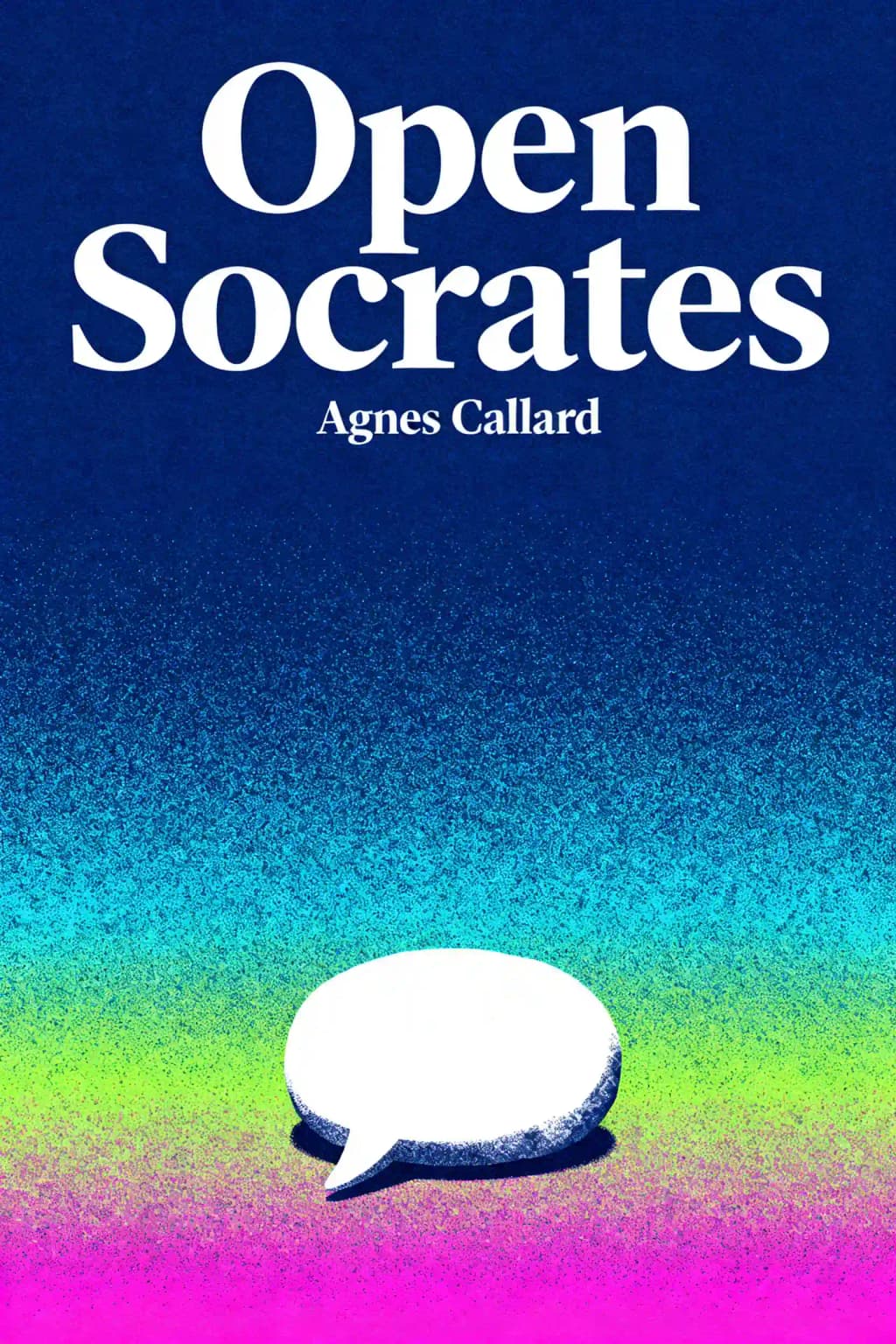
This fear lies at the heart of Agnes Callard's "Open Socrates," a book that has become something of a philosophical sensation since its publication. Praised by figures from academic philosophers to Silicon Valley executives for its accessibility and depth, Callard's work has been described by The New Yorker as "philosophy that doesn't feel like homework." The book has sparked reading groups across universities and tech companies alike, with many citing its practical approach to ancient wisdom as particularly relevant in our age of distraction and shallow thinking.
第2章
The Tolstoy Problem: When Life's Questions Come Too Late
Leo Tolstoy, at the height of his powers-wealthy, famous, surrounded by a loving family-found himself suddenly paralyzed by questions he couldn't answer. "Why am I doing any of this?" he would ask himself when managing his estate, educating his children, or writing his novels. These questions led him to contemplate suicide, as he described in his work "Confession." Though he eventually found refuge in religious faith, this was merely setting the questions aside rather than answering them.
What Tolstoy experienced was the crisis of confronting what Callard calls "untimely questions"-those fundamental inquiries that arrive after we've already been living according to their answers. These questions are difficult precisely because we're already using their answers as foundations for our daily lives. We cannot simultaneously use an answer and genuinely question it.
Consider someone who actively campaigns against genetic engineering. Can they truly open-mindedly ask "Is genetic engineering ethical?" Their entire activism depends on having already answered this question. Their question is closed before it's even asked.
Tolstoy's problem wasn't that he tried and failed to answer life's fundamental questions-it was that he never truly engaged with them philosophically. He jumped from acknowledging their importance to declaring them unanswerable without the intermediate step of investigation. He concluded life was meaningless but lacked the "strength" to end it, describing himself as among the "weakest, most illogical" people who continue living despite this conclusion.
Socrates offers a contrasting approach. When he encounters Hippocrates rushing to meet the sophist Protagoras, Socrates criticizes him for acting "as if you had thought it all out" when he hadn't questioned what he was seeking. This leads to what Socrates calls "wavering"-inconsistent actions that undo earlier confident decisions. Unlike others who hurry away from inquiry to "get on with life," Socrates sees wavering as evidence that more investigation is needed.
第3章
Load-Bearing Answers: The Hidden Structure of Our Lives
Our lives rest upon answers to questions we've never properly asked. These "load-bearing answers" support the weight of our existence but often collapse under scrutiny. When Socrates questioned figures like Euthyphro (who was prosecuting his own father for impiety), he revealed how people initially treat profound questions as simple, offering self-affirming responses that merely justify their current behavior.
The truly philosophical questions are those we cannot pause to consider without disrupting our forward momentum in life. When Socrates asks interlocutors about virtue or piety, they respond with confident answers that merely affirm their own behavior. These answers aren't the product of reflection but of demonstration-they're showing rather than explaining their commitments.
Our investment in these questions explains why they become so contentious. As Socrates observes, people fight over questions of justice but not health, even when health matters are life-or-death. We can disagree peacefully about medical treatments because we can evaluate evidence dispassionately. With justice, however, we cannot create space for reasonable disagreement because our answers are actively in use, structuring our lives and actions.
When these fundamental answers are threatened, we experience powerful negative emotions. Unlike casual opinions, we cannot simply disengage from activities that matter deeply-loving someone who died or caring about a lost job. Our load-bearing answers generate predictions about what must remain true for our lives to continue functioning. This is why people getting married resist questioning whether their marriage will last, and parents avoid probabilistic thinking about their children's futures.
Without such load-bearing answers, we would be invulnerable-free from fights, despair, grief, and rage-but also unable to live meaningfully. The challenge becomes: how do we question answers we're currently using to guide our lives?
第4章
Savage Commands: The Invisible Forces Shaping Our Choices
All around us, invisible yet powerfully felt commands shape our lives. These commands manifest physically-through pain, heart pounding, breath catching-and promise relief if obeyed or suffering if ignored. Even sophisticated commands like ambition or jealousy have physical manifestations, while basic ones like hunger come with mental images of potential actions.
These "savage commands" employ the torturer's tools-pain, fear, and the temporary pleasure of relief-to compel obedience despite being unreliable guides. We obey not because any single command overwhelms us, but because we have no other options. These commands become our answers to life's fundamental questions, established from our earliest moments when we were forced to start living before knowing how.
Socrates identifies two primary sources of these commands: the body and kinship. The bodily command operates through pleasure and pain, while kinship commands work through status, honor, affection and the fear of exclusion. They represent different existential threats: biological versus social existence.
When these commands lead us astray, we engage in elaborate self-deception. What we call "weakness of will" is actually wavering between contradictory judgments. When eating a cookie we'll later regret, we don't simultaneously know it's a mistake while choosing it-rather, our judgment wavers over time. Similarly, revenge represents wavering in our kinship commands-being ordered to hurt by the command to help.
Socrates proposes an alternative: "persuade or be persuaded." Rather than following commands blindly, we should engage in reasoned dialogue. When Crito attempts to convince Socrates to escape prison using arguments about family welfare and personal safety, Socrates dismisses these as merely appealing to the savage commands of kinship and body. The only valid consideration is whether escaping would be right or wrong.
The Socratic method exposes the weakness of savage commands. When forced to articulate and defend our positions, contradictions emerge. Liberation begins with questions.
第5章
Socratic Intellectualism: Unifying Justice and Advantage
Socrates presents a radical challenge to our deeply ingrained distinction between justice and personal advantage. While conventional wisdom treats these as potentially competing values-often pitting individual success against moral duty-Socrates argues that this perceived conflict reveals our confusion rather than a genuine dilemma. When Alcibiades, his ambitious young student, claims "the just differs from the advantageous," he's actually highlighting the tension between kinship demands (social obligations and communal expectations) and bodily demands (self-preservation and material prosperity)-a distinction that Socrates sees as fundamentally misguided.
For Socrates, humans have erroneously projected their internal cognitive dissonance onto the nature of reality itself, manufacturing an artificial division between personal and collective goods. This projection stems from our limited understanding rather than reflecting any true opposition in the world. The reality, Socrates insists, is more elegant: all people naturally seek good things and avoid bad ones. What we variously label as "self-interest," "happiness," and "advantage" are simply different terms describing the same ultimate good that we also call "duty," "morality," and "justice." This unity becomes apparent when we achieve genuine understanding.
Subsequent ethical traditions attempted to systematize and rationalize these competing intuitions. Epicureanism evolved into modern Utilitarianism, which sought to resolve ethical dilemmas through systematic calculation of pleasure and pain across all affected parties. Stoicism developed into Kantian deontology, attempting to ground social obligations in universal rational principles that any thinking being would necessarily accept. Virtue Ethics, particularly in its Aristotelian form, offered an alternative approach, suggesting that a properly cultivated character would naturally respond appropriately to each situation without experiencing internal conflict between personal and social goods.
Socrates' intellectual approach differs fundamentally from all three traditions in its radical epistemic humility. His intellectualism rests on three distinctive features: (1) we currently lack genuine knowledge of ethical truths-our confident pronouncements mask deep uncertainty; (2) if we achieved true knowledge, we would inevitably act on it-ethical failure stems from ignorance rather than weakness of will; and (3) rigorous philosophical conversation represents the primary path toward becoming a good person-neither rules nor habits can substitute for understanding.
The widespread resistance to Socratic intellectualism stems from humanity's desperate need to believe we already possess adequate knowledge for living well. Other ethical theories cater to this psychological need by claiming to provide clear formulas or decision procedures for right action. Socrates challenges this comforting illusion, asking us to accept the destabilizing truth that we must navigate our entire lives without achieving absolute certainty about our choices. This position demands both intellectual honesty and moral courage-acknowledging our ignorance while continuing to seek understanding through dialogue and reflection.
第6章
The Gadfly-Midwife Paradox: How Thinking Really Works
When grappling with a complex problem, Heinrich von Kleist made a profound observation: the act of explaining something to another person often leads to our own enlightenment. This process works not because we're teaching them, but because articulating our thoughts to others crystallizes our own understanding. This Socratic insight - that we can give others more than we seem to possess - fundamentally challenges our deeply held assumption that thinking is a private, internal activity.
Socrates pushed this concept even further than Kleist, proposing that we can actively construct thoughts through dialogue with others, not merely clarify pre-existing ideas in their presence. This collaborative thinking process explains why breakthrough moments often occur during conversation rather than solitary contemplation. The presence of another mind creates a dynamic environment where ideas can be tested, refined, and expanded in real time.
This framework helps resolve what appears to be a paradoxical character in Socrates: How could he simultaneously be the stinging gadfly who deliberately confused people and the gentle midwife who helped birth their ideas? How did he reconcile being both the humble philosopher who claimed to "know nothing" with the formidable debater who consistently outmaneuvered Athens' most celebrated intellectuals? These seemingly contradictory aspects reflect different facets of his method rather than inconsistencies in his character.
The resolution emerges from understanding that Socrates rejected the common notion that learning proceeds in neat, sequential stages - first identifying errors, then discovering truth. Instead, he conceived of learning as an inherently social activity where participants take on complementary roles: one person actively pursues truth through questioning and speculation, while the other focuses on identifying and avoiding errors through critical examination. This dynamic interplay forms the essence of the Socratic method.
While Socratic dialogue may appear confrontational on the surface, it differs fundamentally from truly adversarial systems like legal proceedings between prosecutors and defense attorneys. In adversarial settings, participants have genuinely opposing interests and require an impartial judge to adjudicate. Socrates repeatedly emphasized that his method needed no moderator because there was no underlying conflict of interest - only two complementary roles working toward a shared goal of understanding.
The apparent tension between pursuing truth and avoiding error dissolves when these functions are distributed across two people working in concert. However, many interlocutors instinctively resist this division of labor because they view thinking as a private, indivisible activity - something they should be able to accomplish alone. This misunderstanding persists in modern contexts, where we often retreat from challenging conversations to "think things through" in isolation, failing to recognize that genuine intellectual progress typically occurs during those uncomfortable moments when others question our assumptions and correct our errors. The most productive thinking emerges not from solitary reflection but from the dynamic interaction between minds engaged in collaborative inquiry.
第7章
Moore's Paradox: The Blind Spot in Self-Knowledge
Moore's Paradox explores our inability to recognize when we're currently wrong. While we can easily acknowledge past mistakes (which merely confirms our present rightness), recognizing current errors presents a fundamental challenge. This paradox reveals how our errors function as blind spots-when you catch yourself in a mistake, you immediately stop making it.
When Socrates confronted the ambitious young Alcibiades, he revealed to him his hidden desire to rule not just Athens, but the entire world. Through their dialogue, Alcibiades came to recognize his unfitness to rule and even accepted the shocking implication that he, an aristocratic Greek, deserved to be a slave due to his ignorance of justice.
Moore's Paradox concerns sentences like "It's raining, but I don't believe it"-statements that can be true but seemingly impossible to sincerely assert. While we can acknowledge others' mistaken beliefs or our own past errors, we cannot simultaneously hold a belief and recognize it as false.
Yet Socrates shows these sentences can indeed be asserted, as when he gets Alcibiades to admit "I don't understand justice and injustice-though I think I do." This represents the crucial moment of philosophical refutation-when one confronts the instability of one's own beliefs.
This self-blindness extends beyond Moore sentences to parental praise (parents can't objectively evaluate their children), the paradox of modesty (a modest person can't praise their own modesty without undermining it), and self-promising (where we struggle to distinguish between breaking and releasing ourselves from promises to ourselves).
Socrates examines the Delphic injunction "Know thyself" through a visual metaphor: just as an eye cannot see itself directly but needs a reflective surface like another's pupil, the soul cannot know itself without another person's help. Self-knowledge requires looking at "that region in which what makes a soul good, wisdom, occurs."
第8章
Meno's Paradox: The Search for What We Don't Know
When Socrates asks "What is virtue?", Meno offers several answers that Socrates refutes. After multiple failed attempts, Meno explodes with frustration: "How will you look for something when you don't know what it is? If you found it, how would you recognize it?"
This paradox emerges only after Meno's initial confidence in answering the question fails. Originally, Meno thought defining virtue was simple, offering examples of different virtues for different people, but Socrates wanted the essence that makes all virtues "virtue."
The distinction between questions and problems illuminates this paradox. Most searches aim not at pure knowledge but at solving well-defined problems-finding keys to continue what we were doing. Questions, however, require searching wherever necessary, even without knowing how to proceed.
Socrates demonstrates his method using geometry, asking Meno's slave about finding the line that produces a square double the area of the original. Through questioning, Socrates helps him discover the answer-without teaching him directly. This demonstrates how even false answers become useful stepping stones when subjected to examination.
Socrates calls this recognition power "recollection" and links it to the soul's immortality-suggesting we're remembering knowledge from past lives. Later philosophers maintained this special "a priori knowledge" without embracing reincarnation.
Thinking, paradigmatically, is a social quest for better answers to questions that appear already answered. It has knowledge as its endpoint and operates by resolving disagreements between people. Unlike stipulative or dictionary definitions, this Socratic definition emerges from inquiry itself. The Socratic method allows us to think about anything, even without algorithms or decision procedures, because we have other people to keep us honest.
第9章
Politics: Justice and Liberty Through Philosophical Dialogue
When examining past societies, certain political fictions become apparent: divine right of kings, myths of autochthony, caste systems, sanctioned slavery, and restrictions based on gender, race, or religion. These "political" fictions address not just how people live together, but whose ideas about living together count and to what degree.
Socrates, who claimed both to withdraw from politics and to be Athens' preeminent politician, understood conventional politics as merely a stage where philosophical disagreement gets dramatized. True politics is philosophy-navigating disagreements about how to live together.
Politicization occurs when disagreement shifts from argumentation to a zero-sum context where one party's win means another's loss. It converts questions about correctness into competitions between parties' interests. Socrates was uniquely allergic to this phenomenon, fearing his interlocutors would misinterpret his questioning as combative tactics aimed at "winning."
Fighting is essentially politicized arguing. When we fight, we displace disagreements from their proper home in reasoned debate into symbolic contests where one party must win and another must lose. In the Alcibiades and Euthyphro, Socrates identifies hostility and war as arising from disagreements over justice and injustice.
Freedom of speech extends beyond constitutional protections against government interference. As John Dewey noted, the true locus of freedom is in our conversations between citizens. When topics central to a person's life become open for discussion with others, we can truly "live together" in a substantive sense.
True freedom is not independence (being left alone), but rather living under shared agreements about how to live together-including agreements about what we don't need to agree about. Freedom is fundamentally a political idea, and political activity is communicative activity.
第10章
Socratic Love: Philosophical Inquiry as the Highest Form of Relationship
There's a stark contrast between our fairy-tale ideals of romance and the reality of love in our lives. Even "good" relationships often settle into unromantic routines far from our passionate ideals. Could this seemingly unachievable ideal be displaced from its true home rather than simply mistaken?
In the Symposium, Aristophanes describes lovers as seeking their other halves, suggesting what humans truly want is to merge completely with their beloved. Socrates rejects this view, arguing that lovers seek neither half nor whole unless it's good. What everyone truly loves, he concludes, is nothing other than the good itself.
The problem of love presents a paradox: if I love someone for their qualities, I seem to love the qualities rather than the person; if I love them irrespective of qualities, it's unclear how my love is specifically directed at them. We want lovers to both accept us as we are and admire us for what we are.
Socrates resolves this by rejecting two assumptions: that love's object is the individual person, and that love is satisfied with its object. For Socrates, love manifests as philosophical dissatisfaction rather than admiring acceptance. He makes his most radical claim: we don't actually love human beings. What we love is the good itself.
Socratic love, being philosophical inquiry, is inherently nonexclusive. Socrates engages in "love affairs" (philosophical encounters) of varying durations and depths. His love is additive, accumulating regular associates who benefit from philosophical interaction with both Socrates and each other.
Many newcomers to philosophy perceive Socrates as a jerk-someone who deceptively conceals his views while mocking his conversation partners. Yet the Greek term eironeia was entirely negative in Socrates' time-a term of blame for deceptive insincerity. Remarkably, centuries later with Cicero and Quintilian, "irony" transformed into a compliment for Socrates-an elegant stylistic flourish or noble humility.
Socrates' most remarkable quality wasn't hidden wisdom but his naked vulnerability in treating others as genuine sources of answers. Socrates explicitly rejected the kind of kinship relation constructed by readers who position themselves in an inner circle of those who "truly understand" him.
第11章
Death: The Ultimate Philosophical Test
Unlike what Socrates predicted in the Phaedo, being a philosopher doesn't necessarily make dealing with death easier-it can make it harder. Socrates claimed that "a man who has truly spent his life in philosophy is probably right to be of good cheer in the face of death" and described philosophy as "preparation for dying." Yet our philosophical connections can intensify rather than soothe our grief.
In Tolstoy's "The Death of Ivan Ilyich," we see what happens when someone is utterly unprepared for death. Ivan, a successful Russian official, falls ill and gradually realizes he's dying while everyone around him maintains the pretense that he'll recover. For the first time, Ivan considers "that he had not lived his life as he should have done" and recognizes that his choices were dictated by social conformity rather than genuine values.
Socrates draws a crucial connection between misology (hatred of argument) and misanthropy (hatred of people). Unlike Pierre, Ivan, and Tolstoy, whose existential crises led them to withdraw into themselves, Socrates demonstrates that meaningful thinking is essentially social. Love of argument requires loving other people-and since refutation is the highest favor one can do another, the converse is also true.
The climactic moment of the Phaedo comes when Socrates shows great love for his friends by instructing them to "give but little thought to Socrates but much more to the truth," and great courage in subjecting to refutation the claim on which his ability to confront death rests.
There are two distinct fears of death. The first is FOMO (fear of missing out)-the bodily command's savage insistence on protecting itself, fearing the deprivation of future pleasures. The second is FONA (fear of never arriving)-the dread that life will end before we complete our essential tasks.
Socrates rejects FOMO to focus entirely on FONA. When Crito asks about his final wishes, Socrates instructs his friends only to "live following the tracks" of their discussions and continue his philosophical inquiries. His philosophical approach requires taking one's eye off the clock entirely-tackling questions too big for a lifetime.
What fortified Socrates against death wasn't unshakable belief in soul immortality but his argumentative, inquisitive practice examining that belief with others. Philosophy is preparation for death-facing questions too big to answer in conversations inevitably cut short, then beginning again the next day.





![A Brief Outline of the World's Philosophies [33+ Schools of Thought] - Philosophy Buzz](/_next/image?url=https%3A%2F%2Fd1y2du6z1jfm9e.cloudfront.net%2Fassets%2Fpodcast%2Fpurple.png&w=1024&q=50)


![[the-consolations-of-philosophy-by-alain-de-botton:c0000] The Consolations of Philosophy p1-1](/_next/image?url=https%3A%2F%2Fd1y2du6z1jfm9e.cloudfront.net%2Fassets%2Fpodcast%2Fyellow.png&w=1024&q=50)
![[the-consolations-of-philosophy-by-alain-de-botton:c0001] The Consolations of Philosophy p1-1](/_next/image?url=https%3A%2F%2Fd1y2du6z1jfm9e.cloudfront.net%2Fassets%2Fpodcast%2Fblue.png&w=1024&q=50)