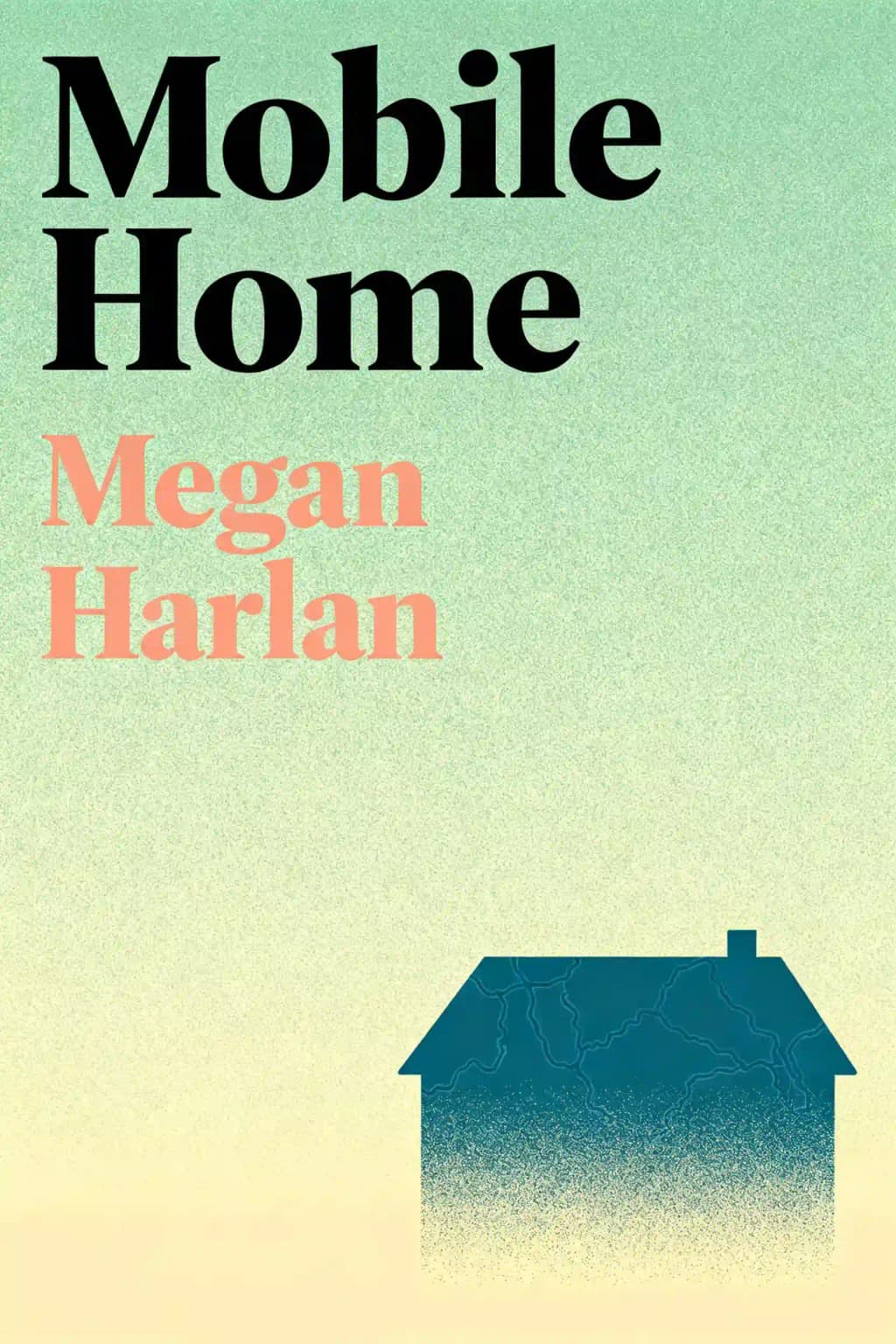
In "Mobile Home," award-winning author Megan Harlan transforms her nomadic childhood across seventeen homes on four continents into a lyrical exploration of belonging. Critics compare her to Annie Dillard, praising how she redefines "home" beyond physical spaces. What anchors us when everything keeps changing?
Megan Harlan is the award-winning author of Mobile Home: A Memoir in Essays, celebrated for her lyrical exploration of place, identity, and belonging.
A memoir blending travelogue and family history, the book draws from Harlan’s nomadic upbringing across the Middle East, Latin America, and the San Francisco Bay Area.
Her debut poetry collection, Mapmaking, won the John Ciardi Prize and was hailed as a “miracle of invention” by poet Alice Fulton.
Harlan’s essays, repeatedly cited in Best American Essays, have appeared in The New York Times, AGNI, and Colorado Review. She holds an MFA from NYU and writes The France House newsletter, chronicling life between California and Brittany.
Mobile Home received the AWP Award for Creative Nonfiction and the Independent Book Publisher Gold Medal, with The New York Times praising its “big-hearted and thoughtful” prose.
Mobile Home explores Megan Harlan’s nomadic childhood across 17 homes on four continents—from Alaska to Saudi Arabia—interweaving personal stories with cultural histories of place. Through ten linked essays, it examines themes of family, addiction, and the fluid concept of "home," blending memoir with insights into nomadic traditions, suburban housing, and architectural landmarks.
Fans of literary memoirs, travel writing, or unconventional family narratives will appreciate this book. It resonates with readers interested in themes of identity, belonging, and how environments shape personal growth. Critics praise its elegant prose and rich research, making it ideal for lovers of hybrid memoir-essay forms.
Key themes include the malleability of "home," the impact of constant relocation on identity, and familial legacies of addiction and creativity. Harlan contrasts her mother’s obsession with renovating houses against her father’s wanderlust, while exploring global nomadic traditions and modern mobility.
Harlan juxtaposes her family’s experiences with broader cultural contexts, such as Bedouin nomadism, trailer-park communities, and the symbolism of landmarks like Stonehenge. These connections highlight how personal and collective understandings of place intersect.
Her mother’s relentless home renovations and her father’s alcoholism-fueled wanderlust drive the memoir’s exploration of rootlessness. Their contrasting approaches to "home" frame Harlan’s reflections on stability and transience.
The memoir portrays identity as shaped by displacement, arguing that belonging is a creative act rather than a fixed location. Harlan’s global upbringing underscores how adaptability and memory forge selfhood.
Some reviewers note a tension between meticulous research and emotional reserve, with one essay critiqued for prioritizing historical detail over deeper familial vulnerability. However, most praise its originality and lyrical prose.
Unlike linear travel narratives, Harlan’s essayistic structure layers geography with introspection, offering a fragmented yet cohesive meditation on place. It stands out for blending autobiography with architectural and anthropological insights.
Essays span the Alaskan tundra, a Colombian jungle, a London flat, and a Saudi Arabian trailer. Each setting becomes a metaphor for impermanence, reflecting Harlan’s family dynamics and cultural observations.
Her prose is lyrical yet unsentimental, combining vivid scene-building with scholarly digressions. This hybrid style mirrors the book’s themes of mobility and reinvention, earning acclaim for its intellectual depth and accessibility.
Yes. By linking her childhood to Bedouin traditions and modern mobile homes, Harlan reframes nomadism as a conscious, creative choice rather than a rootless existence. The memoir offers a nuanced perspective on intentional mobility.
The book depicts family as both anchor and burden, shaped by her father’s addiction and her mother’s aesthetic idealism. Harlan’s journey to create stability for her son adds generational depth to this exploration.
著者の声を通じて本を感じる
知識を魅力的で例が豊富な洞察に変換
キーアイデアを瞬時にキャプチャして素早く学習
楽しく魅力的な方法で本を楽しむ
Freedom is safety.
Togetherness outweighed location.
Home is portable.
Home as a fixed, immutable space.
Impermanence might be a feature rather than a flaw.
『Mobile Home』の核心的なアイデアを分かりやすいポイントに分解し、革新的なチームがどのように創造、協力、成長するかを理解します。
『Mobile Home』を素早い記憶のヒントに凝縮し、率直さ、チームワーク、創造的な回復力の主要原則を強調します。

鮮やかなストーリーテリングを通じて『Mobile Home』を体験し、イノベーションのレッスンを記憶に残り、応用できる瞬間に変えます。
何でも質問し、声を選び、本当にあなたに響く洞察を一緒に作り出しましょう。

"Instead of endless scrolling, I just hit play on BeFreed. It saves me so much time."
"I never knew where to start with nonfiction—BeFreed’s book lists turned into podcasts gave me a clear path."
"Perfect balance between learning and entertainment. Finished ‘Thinking, Fast and Slow’ on my commute this week."
"Crazy how much I learned while walking the dog. BeFreed = small habits → big gains."
"Reading used to feel like a chore. Now it’s just part of my lifestyle."
"Feels effortless compared to reading. I’ve finished 6 books this month already."
"BeFreed turned my guilty doomscrolling into something that feels productive and inspiring."
"BeFreed turned my commute into learning time. 20-min podcasts are perfect for finishing books I never had time for."
"BeFreed replaced my podcast queue. Imagine Spotify for books — that’s it. 🙌"
"It is great for me to learn something from the book without reading it."
"The themed book list podcasts help me connect ideas across authors—like a guided audio journey."
"Makes me feel smarter every time before going to work"

Mobile Homeの要約をPDFまたはEPUBで無料でダウンロード。印刷やオフラインでいつでもお読みいただけます。
What does "home" mean when you've lived in seventeen different houses across four continents before turning seventeen? This question forms the beating heart of Megan Harlan's extraordinary journey through a childhood defined by perpetual movement. Unlike traditional nomads who follow ancestral patterns, Harlan's family relocated almost yearly, propelled by her father's engineering career on massive global construction projects. From Saudi Arabian deserts to Scottish highlands, each transition brought radical shifts in climate, culture, and daily rhythms. This created a unique perspective-one where only the very intimate (thoughts, family) or the vastly expansive ("London," "astronomy," "poetry") felt tangible, while the middle ground of neighborhood connections and community ties remained perpetually out of reach. Their American tradition of westward movement transformed into an international odyssey, turning the frontier into a global experience where cardboard boxes-meticulously managed by her homemaker mother-became both anchors and sails, containing fragments of past lives while facilitating movement toward future ones.