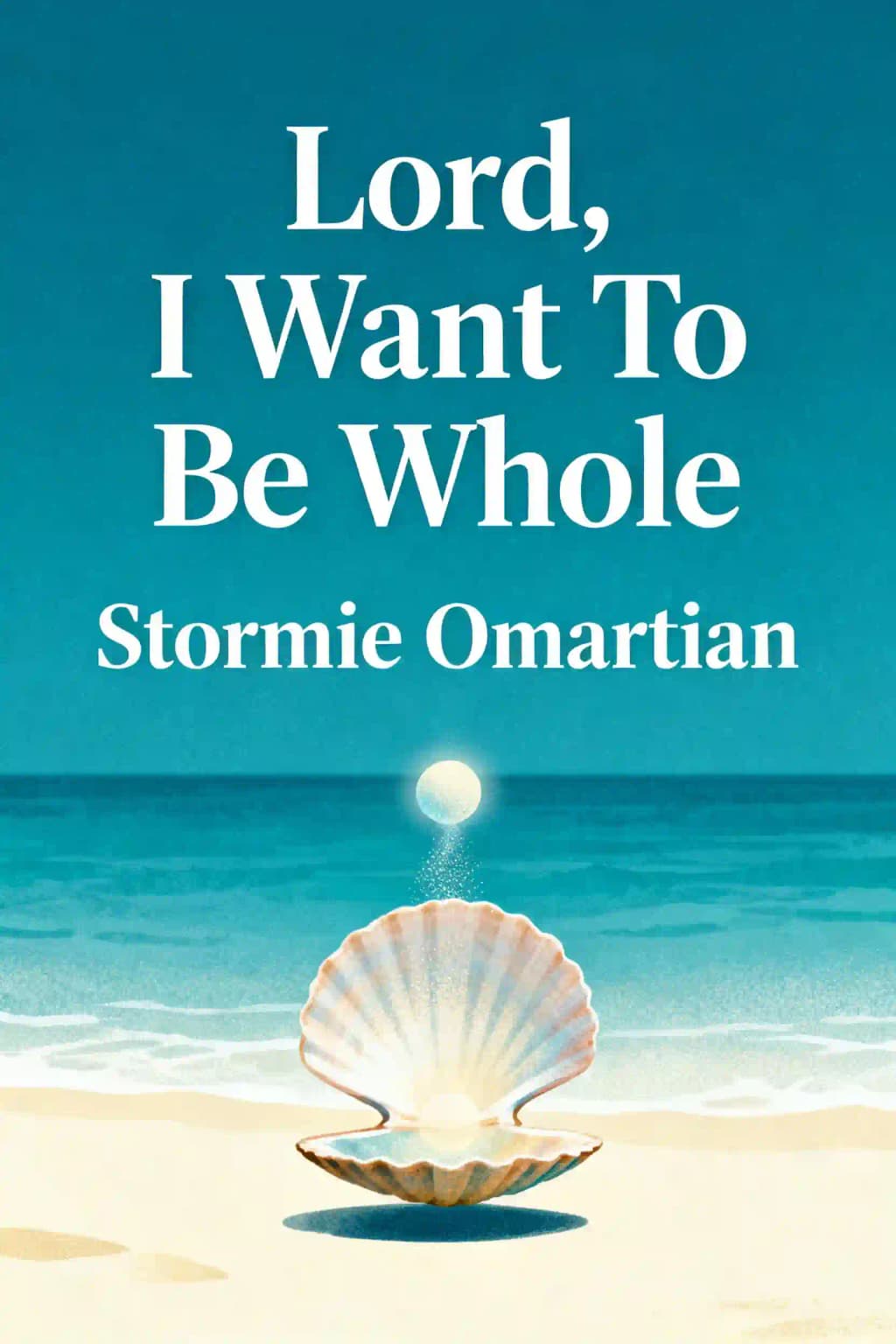
In "Lord, I Want to Be Whole," bestselling author Stormie Omartian shares her journey from abuse and depression to healing through faith. Part of her 34-million-copy collection that broke a 21-year industry record, this guide offers readers a path from darkness into light.
Stormie Omartian, bestselling Christian author of Lord, I Want to Be Whole, is renowned for her transformative works on prayer and spiritual growth.
A former singer and actress who performed with artists like Glen Campbell and Neil Diamond, Omartian shifted focus to faith-based writing after overcoming personal struggles detailed in her memoirs.
Her books, including the Power of a Praying® series—The Power of a Praying Wife (10 million copies sold) and The Power of a Praying Parent—blend biblical principles with relatable storytelling to address themes of healing, relationships, and divine purpose.
A frequent speaker and media guest featured on programs like The 700 Club, Omartian has sold over 38 million books worldwide. Her works are translated into multiple languages and remain staples in Christian households, churches, and study groups.
Lord, I Want to Be Whole is a Christian self-help book offering a seven-step roadmap to emotional healing through prayer, scripture, and confronting past trauma. Stormie Omartian draws from her own experiences overcoming childhood abuse and clinical depression, emphasizing forgiveness, spiritual deliverance, and aligning with God’s purpose to achieve wholeness.
This book targets Christian women grappling with emotional pain, unresolved trauma, or spiritual stagnation. It’s particularly relevant for those seeking faith-based strategies to overcome depression, release bitterness, or deepen their prayer life, with reviewers noting its value for group Bible studies or personal healing journeys.
Omartian outlines seven steps:
She shares her personal story of maternal abuse (including being locked in closets) and demonstrates how scriptural prayer helped her reframe self-worth, release anger, and break cycles of pain. The workbook companion provides journal prompts for readers to apply these methods.
Key scriptures include Psalm 139:14 (“I am fearfully and wonderfully made”) for self-worth restoration and Ephesians 6:12 (“struggle not against flesh and blood”) for spiritual warfare. Omartian integrates over 50 verses to reinforce each healing step.
With 4.7/5 stars from 36+ reviews, readers praise its life-changing impact on emotional healing and faith growth. Critics note its heavy church-centric framing may limit appeal to secular audiences. Ideal for those open to Christian counseling approaches.
While both emphasize prayer, Lord, I Want to Be Whole focuses inward on personal healing rather than marital relationships. It delves deeper into psychological recovery techniques, whereas Power of a Praying Wife offers外向型 strategies for intercessory prayer.
Some reviewers critique Omartian’s caution against yoga and mindfulness practices unrelated to Christianity, viewing it as overly restrictive. Others find her trauma recovery timeline unrealistic for severe cases.
The 257-page companion guide provides weekly prayer journals, scripture meditation exercises, and group discussion questions. It breaks the book’s concepts into five progressive stages: acknowledgment, surrender, renewal, action, and maintenance.
“Forgiveness leads to life. Unforgiveness is a slow death… It means you can’t have all that God has for you.” This encapsulates Omartian’s thesis that emotional freedom requires releasing bitterness.
Omartian frames depression as both a spiritual battle and biochemical condition, advocating prayer alongside practical health steps like nutrition and sleep. Critics suggest supplementing with professional therapy for severe cases.
Its focus on post-pandemic emotional recovery, faith-based resilience, and prayer-driven mindset shifts aligns with current searches for “Christian mental health resources” and “healing from relational trauma”.
著者の声を通じて本を感じる
知識を魅力的で例が豊富な洞察に変換
キーアイデアを瞬時にキャプチャして素早く学習
楽しく魅力的な方法で本を楽しむ
When you know better, you do better.
Forgiveness doesn't require feeling forgiving-it's something done out of obedience to God.
Unforgiveness keeps emotional pain alive, while forgiveness leads to life.
We can never be emotionally healed while losing mental battles.
『LORD, I WANT TO BE WHOLE』の核心的なアイデアを分かりやすいポイントに分解し、革新的なチームがどのように創造、協力、成長するかを理解します。
『LORD, I WANT TO BE WHOLE』を素早い記憶のヒントに凝縮し、率直さ、チームワーク、創造的な回復力の主要原則を強調します。

鮮やかなストーリーテリングを通じて『LORD, I WANT TO BE WHOLE』を体験し、イノベーションのレッスンを記憶に残り、応用できる瞬間に変えます。
何でも質問し、声を選び、本当にあなたに響く洞察を一緒に作り出しましょう。

"Instead of endless scrolling, I just hit play on BeFreed. It saves me so much time."
"I never knew where to start with nonfiction—BeFreed’s book lists turned into podcasts gave me a clear path."
"Perfect balance between learning and entertainment. Finished ‘Thinking, Fast and Slow’ on my commute this week."
"Crazy how much I learned while walking the dog. BeFreed = small habits → big gains."
"Reading used to feel like a chore. Now it’s just part of my lifestyle."
"Feels effortless compared to reading. I’ve finished 6 books this month already."
"BeFreed turned my guilty doomscrolling into something that feels productive and inspiring."
"BeFreed turned my commute into learning time. 20-min podcasts are perfect for finishing books I never had time for."
"BeFreed replaced my podcast queue. Imagine Spotify for books — that’s it. 🙌"
"It is great for me to learn something from the book without reading it."
"The themed book list podcasts help me connect ideas across authors—like a guided audio journey."
"Makes me feel smarter every time before going to work"

LORD, I WANT TO BE WHOLEの要約をPDFまたはEPUBで無料でダウンロード。印刷やオフラインでいつでもお読みいただけます。
A woman stands at the edge of a cliff, ready to end her life at twenty-eight. She's tried everything-meditation, therapy, relationships, substances-yet nothing has freed her from the relentless voice in her head repeating, "You're worthless." This was Stormie Omartian's reality before discovering a pathway out of emotional prison that would eventually transform millions of lives. What she learned challenges our assumption that emotional wounds simply heal with time. They don't. They require intentional, deliberate action-and her story maps the way forward. Picture being locked in a closet under the stairs by your own mother, hearing her screams that you're stupid, worthless, nothing. These weren't isolated incidents but the daily soundtrack of childhood. When trauma becomes your normal, it doesn't stay in the past-it constructs an invisible prison that travels with you into adulthood. This explains why Omartian's depression, suicidal thoughts, and self-destructive patterns persisted despite desperate attempts at relief. The bars of her prison weren't made of steel but of deeply embedded beliefs about herself and the world. Unlike a broken bone that gets immediate medical attention, emotional injuries often remain untreated for decades, quietly destroying us from within.