第1章
A Voice for Justice in the Islamic Republic
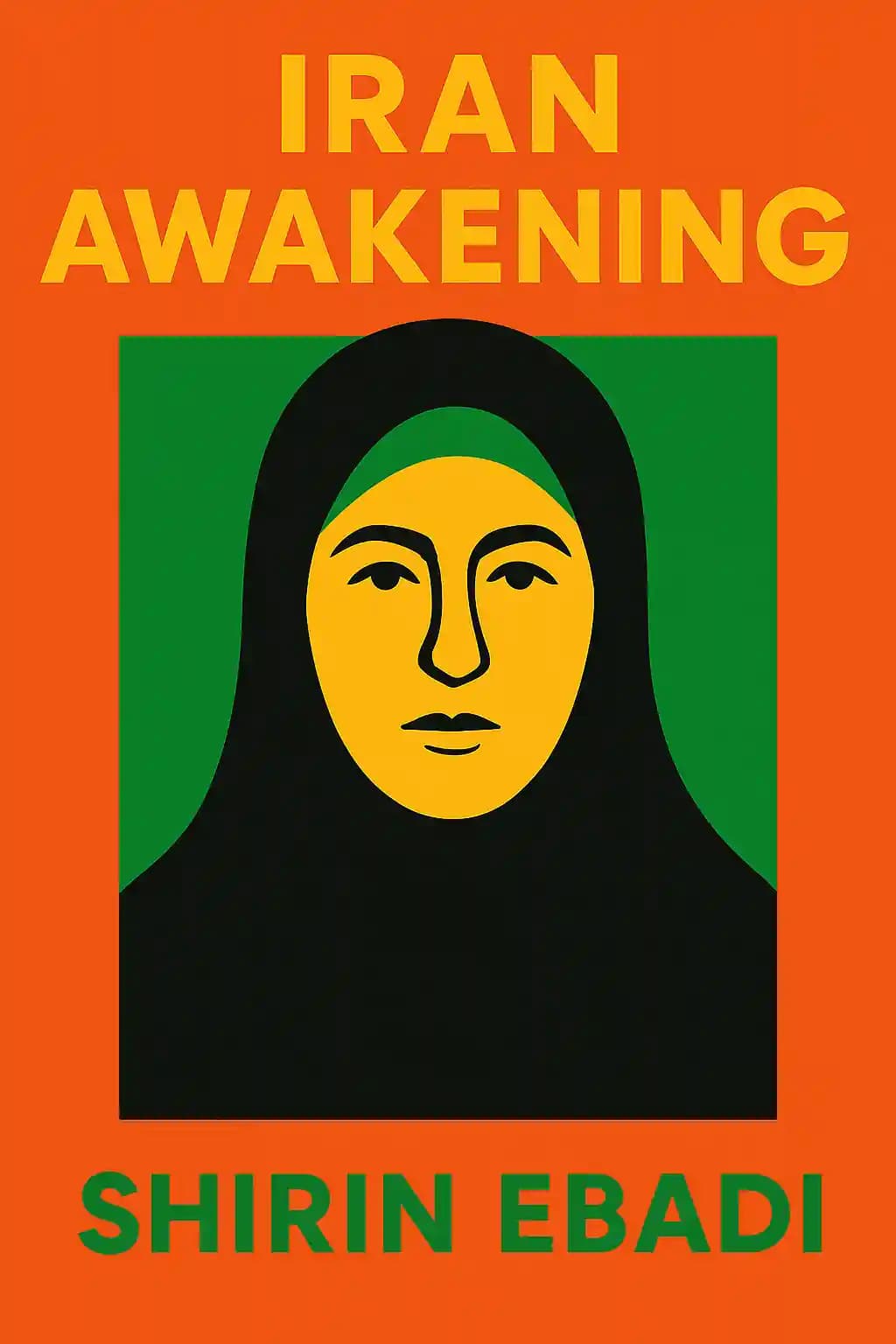
When I discovered that my name was next on an assassination list, I reacted with stunned disbelief. It was 2000, and I had spent nearly a decade defending victims of violence in Iran's courts. While reviewing files for a case involving the systematic killings of intellectuals, I found a chilling sentence: "The next person to be killed is Shirin Ebadi." My would-be assassin had requested permission from the intelligence minister to execute me, justifying the killing of intellectuals like myself as a religious duty, considering our blood "halal." Only after returning home, showering for an hour to rinse away the psychological filth, and ensuring my daughters were asleep, did I tell my husband, beginning casually: "So, something interesting happened to me at work today." This moment encapsulates the extraordinary journey chronicled in "Iran Awakening," Shirin Ebadi's powerful memoir that won international acclaim and became a New York Times bestseller. As the first Muslim woman to receive the Nobel Peace Prize, Ebadi offers a rare insider's perspective on Iran's complex evolution from monarchy through revolution to theocracy.
第2章
From Privilege to Revolution: A Tehran Childhood
My first political memory came on August 19, 1953, when my usually indulgent grandmother snapped at us children to be quiet. The adults huddled around the radio, listening to news that Prime Minister Mohammad Mossadegh had been toppled in a CIA-orchestrated coup. This profound national trauma restored the unpopular Shah Mohammad Reza Pahlavi to power, a humiliating moment that convinced many Iranians that politics was a dirty game where ordinary people were merely pawns.
I was born in 1947 into an upper-middle-class Tehran family that defied traditional gender norms. Unlike most Iranian households where boys enjoyed exalted status, my progressive father treated my brother and sisters equally. This gender equality, impressed on me by example, spared me from the low self-esteem and learned dependence I later observed in women from traditional homes. My father, a senior government official who supported Mossadegh, lost his position after the coup and subsequently banned politics from our home, insisting his children should grow up untainted by interest in processes they couldn't affect.
This sheltered upbringing left me largely oblivious to politics when I entered Tehran University's law school in 1965. While the campus buzzed with revolutionary energy and SAVAK (the shah's secret police) monitored for dissidents, I attended protests more for their confrontational energy than specific causes. My friends and I balanced this politically charged atmosphere with normal college activities-gossiping, visiting cafes, and saving for occasional restaurant splurges.
In March 1970, at just twenty-three, I became a judge after completing my law internships. Though the shah's regime was increasingly unpopular, the judiciary remained respected and separate from the military courts that prosecuted political dissidents. Despite my promising career, being a female judge frightened away potential suitors, as even supposedly modern Iranian men preferred wives they could dominate. Then I met Javad Tavassolian, an electrical engineer who, unlike most Iranian men, championed my career and independence. We married in 1975 in a traditional ceremony, though household responsibilities remained entirely mine-a compromise I willingly accepted.
第3章
Revolution and Disillusionment: The Birth of the Islamic Republic
By 1977, political tensions were rising across Iran. When Ayatollah Khomeini instructed people to expel ministers from their offices, I enthusiastically joined other judges storming the Justice Minister's office. When questioned about supporting those who might take my job, I boldly replied, "I'd rather be a free Iranian than an enslaved attorney." My office became a center for revolutionary debates as I participated in protests, signed letters, removed the Shah's portrait, and continued working even during strikes.
On January 16, 1979, the Shah fled Iran, ending two millennia of Persian kingship. When Ayatollah Khomeini returned on February 1, we watched transfixed as he declared "I have no feeling" upon his arrival. Following his instructions, we joined thousands on rooftops each night shouting "Allaho akbar." The revolution was declared victorious on February 22 when the military surrendered. I felt proud then, not realizing I had enthusiastically participated in my own demise as a woman.
The revolution's true nature for women revealed itself quickly. Just days after victory, when visiting the new Justice Ministry overseer Fathollah Bani-Sadr, he suggested I cover my hair out of respect for Imam Khomeini. I refused, stating it would be hypocritical since I'd never worn a headscarf. Despite growing concerns, my husband and I traveled to New York in April for fertility treatments. Returning less than a month later, I found Tehran transformed-streets renamed after Shia imams, ministry staff wearing plain clothes instead of suits, and cologne scents vanished from corridors. Most distressing were rumors that Islam barred women from being judges.
In late 1980, six months pregnant, I faced the purging committee that would strip me of my judgeship. The men, including judges who had once been my juniors, didn't even offer me a seat. They tossed me a paper indicating my demotion to a clerk position, dismissively mentioning my maternity leave. Then they began speaking about women judges as though I weren't present-calling us disorganized, distracted, and unmotivated. I left in rage, somehow making it home with a bloody knee, collapsing into tears only when my sister embraced me.
第4章
War and Repression: Iran Under Siege
On September 22, 1980, Saddam Hussein launched a full-scale invasion of Iran. Iraqi warplanes attacked Tehran's Mehrabad Airport and other cities while six army divisions advanced into Iranian territory on three fronts. Normal life halted as Iranians rushed home early to take shelter from potential air raids. People carried radios to hear alerts when venturing out for necessities. Basic goods became scarce, requiring a rationing system with lines that stretched for blocks. Gradually, we adapted to wartime conditions as restaurants reopened and social gatherings resumed.
The Iran-Iraq War became inextricably intertwined with the revolution, forging its ideology through the cult of martyrdom. Young recruits, many barely teenagers, boarded buses wearing red bandannas and carrying "keys to heaven" and funeral shrouds. The Iranian command used these youths as human minesweepers across Iraqi minefields. The defense of homeland became defa-e moqaddas (sacred defense) with operations named after religious figures. Despite being freshly wounded by revolution, Iranians put aside grievances as nationalism was inflamed by images of young soldiers fighting Saddam's better-armed forces.
Working as a "specialist" in the Guardianship Office of Minors and the Mentally Ill, I witnessed mass funerals for war dead from my office window. The courtyard opposite filled with coffins draped in Iranian flags, surrounded by keening relatives and elderly grandparents of the young soldiers. The loudspeakers blared funeral marches and prayers of mourning daily. I would hide my face and turn to the wall so my secretary wouldn't see my tears.
On April 30, 1982, forty thousand Iranian soldiers crossed the Arvand River to recapture Khorramshahr, the strategic port city Saddam had taken. Iranian forces pushed through heavy air raids and finally marched triumphantly through the city on May 24. This victory should have ended the war, as Saddam offered a truce the following month, but radical elements convinced Khomeini to push toward Baghdad instead, transforming what could have been the end of suffering into six more years of bloodshed.
Meanwhile, Tehran remained in a state of suspended semi-anarchy with the Mojahedin-e Khalgh Organization (MKO) fighting Khomeini's regime. The government responded with brutal crackdowns. I found myself burning politically objectionable books in our garden as newspapers announced firing-squad executions of suspected leftist sympathizers. Mere possession of targeted groups' literature became a crime punishable by imprisonment.
第5章
The War of the Cities and Its Aftermath
Two years after the headscarf became compulsory, I still occasionally forgot to wear it, once walking down the block before a neighbor reminded me. My friend had an even more desperate solution when she found herself driving without her hejab-pulling her skirt up over her head. Eventually, I hung a veil on a hallway tack as a reminder. Though many Iranian women would have chosen to go bareheaded if allowed, the war years demanded endurance rather than reflection.
In 1983, our second daughter Nargess was born, named after a winter-blooming flower. A year later, I retired from the ministry after fifteen years of service, knowing the system wouldn't change and my rebellious personality made continuing impossible. My retirement year marked a turning point when women had to decide how to navigate the new regime. While I chose retirement over compromise, some friends embraced their demotions, abandoning our friendship when I criticized their capitulation.
The mid-eighties were defined by living room memories as our family struggled financially. I had retired, and Javad's firm was shut down for alleged Communist infiltration. With two children and high inflation, we cut all luxuries. When the girls clamored to eat out, I created "Shirin's Restaurant" by moving our dining table to a different corner and pretending to take their orders, hoping to teach them to create opportunities from what they had.
In 1984, Saddam Hussein unleashed chemical weapons against Iranian troops, first using odorless sarin nerve gas that killed within minutes, then switching to mustard gas, which caused excruciating deaths as soldiers' skin blistered, darkened to purple, and fell off in patches. The world largely remained silent. The United States even assisted Iraq with satellite images of Iranian troop deployments and battle planning, despite knowing about the chemical weapons use.
As the war dragged on, a massive wave of Iranians fled the country. I watched my dearest friends leave one by one, feeling as though I lived in a decaying, abandoned house with ghosts. Though I understood their personal decisions, I fought against their departures, believing in staying in Iran as an ethical and political stand.
During the War of the Cities in 1988, Iraqi airstrikes became a daily occurrence in Tehran. After nearly being killed in a missile strike while waiting for a taxi, I took the children to northern Iran near the Caspian Sea. When the government announced the end of the War of the Cities, we returned to Tehran. In July 1988, after an American warship shot down an Iranian civilian airliner killing 290 people, Ayatollah Khomeini finally accepted a UN cease-fire resolution, likening it to "drinking a chalice of poison."
第6章
Finding My Voice as a Human Rights Defender
The morality police (komiteh) harassed all Iranians but targeted women with special zeal. We adapted by monitoring our behavior, appearance, and opinions, though the harassment remained arbitrary and deeply wounding. Poet Ahmad Shamlou captured this era in his poem where each stanza ends with "strange times, my darling." The post-war period felt like we were barreling into darkness, uncertain of direction but unable to slow down.
The Islamic Revolution inadvertently created educational opportunities for traditional women. Universities became "Islamic" with segregated classrooms and proper hejabs, removing patriarchs' excuses to keep daughters from education. Girls whose mothers had been confined to homes found themselves in cities reading books. By the nineties, women began outnumbering men in universities-no small achievement in a still-patriarchal Middle Eastern country. But equal access to education didn't translate into equality of rights or professional opportunity.
About two years after the war, the Islamic Republic quietly changed course. Even militant ideologues could see where their policies had led-the marginalization of women and pro-family agenda that banned contraception had created unsustainable population growth. In 1992, the judiciary relented and permitted women to practice law again. I set up an office and began taking cases, but quickly discovered a justice system corrupted beyond repair, where bribes determined outcomes and judges would adjourn court on grounds of my "bad hejabi." I chose to give up commercial law and focus exclusively on pro bono cases that could showcase the injustice of the Republic's laws against women.
In summer 1996, eleven-year-old Leila Fathi disappeared while picking wildflowers near Sanandaj. Her cousin witnessed three men rape her, kill her, and throw her body over a cliff. Under Iran's Islamic penal code, where a man's life is worth twice a woman's, the judge demanded Leila's family pay thousands of dollars in "blood money" to finance the executions. Her father sold everything they owned, including their home, but it wasn't enough. When one defendant escaped and the case was reopened, I took on their representation. Despite my efforts, the case remained unresolved, but it became a national showcase of flaws in Iranian law concerning women and children.
My article in Iran-e Farda magazine explaining women's inferior status in the penal code-where a man's testicle was worth as much as a woman's life-electrified Tehran. The issue sold out immediately, with people begging for photocopies. A hard-line parliamentarian threatened me publicly, making me realize the system might actually fear me and my work's growing public resonance.
第7章
Confronting the System Through High-Profile Cases
In summer 1997, I discovered a newspaper story about nine-year-old Arian Golshani, who died in hospital after suffering repeated head trauma. The photo showed a small girl with thin limbs covered in cigarette burns. After her parents' divorce, custody was granted to her father, a brutal man with a police record. Despite neighbors reporting her dungeon-like conditions, her thirty-three-pound weight, repeatedly broken arms, and cigarette burns, the court denied her mother custody.
I organized a memorial ceremony at Al-Ghadir mosque that became a protest against child custody laws. When Arian's mother arrived, confused by the crowd, I gently seated her at the front. A cleric gave a moving speech, and the atmosphere became charged. I took the microphone and declared we must reform the law, leading to chants and flower petals scattered through nearby streets. The case generated enormous publicity, with universities holding seminars on child abuse and women's custody rights becoming central to public discourse.
At trial, I represented Arian's mother, essentially putting the law-not just the defendants-on trial. The judge sentenced her stepbrother to death and her father to one year in prison, though her mother compassionately stayed the execution. CNN covered the story, bringing international attention to our custody laws. I realized then that I had become well-known, which proved useful for my human rights work, allowing me to be an unofficial ambassador for Iranians' true hopes and perceptions to the world.
A new wave of terror had begun targeting Iranian intellectuals and writers. Many targeted individuals belonged to the Writers Association of Iran, which gathered monthly to discuss literature, censorship, and freedom of expression. I had joined the association and signed an open letter in 1994 with 134 other writers protesting censorship. After its publication, signatories began disappearing or dying mysteriously. We took elaborate precautions for meetings, changing taxis multiple times en route and meeting at different locations across Tehran.
The Islamic Republic's methods differed markedly from the shah's SAVAK, which had targeted specific political opponents using traditional torture. The regime's intelligence apparatus now cast a wider net, targeting even translators of French literature. By the early 1990s, after international condemnation of mass executions, the system changed tactics. No longer comfortable with public trials and executions, they moved to covert operations. Assassins varied their techniques-staged accidents, fake robberies, stabbings, and potassium injections causing heart attacks.
第8章
The Reform Movement and Its Limitations
On May 23, 1997, twenty-two million Iranians voted to give the Islamic Republic a second chance by electing Mohammad Khatami president. Under spring skies, they lined up at polling stations across the country, filled with hope that this dark-horse candidate might improve their lives. Unlike the establishment candidate, Khatami promised to transform Iran into an Islamic democracy governed by rule of law and better relations with neighbors and the world.
Khatami's victory shocked everyone from neighborhood residents to the clerical establishment. This former culture minister lacked the usual credentials for power in the Islamic Republic-revolutionary record and ties to power-broker ayatollahs. His genuine smile, elegant robes, and polished leather loafers contrasted sharply with the unkempt appearance of typical revolutionary leaders.
His refinement appealed to Iranians who had grown to despise clerical hypocrisy, as they watched revolutionaries who had displaced the shah's cronies slip into their places, enriching themselves through oil wealth while ordinary citizens struggled. Despite revolutionary promises of economic solutions, real per capita income declined while clerics established themselves in luxurious north Tehran homes and expensive foreign cars.
In 1998-1999, Iran experienced a flowering of open debate and press freedom some optimistically called a "Tehran Spring." Khatami's Culture Ministry freely issued press permits for new publications, creating a brief period of relative media independence that transformed morning routines. I regularly bought five or six newspapers, savoring this civilizing ritual of national conversation over tea.
The hard-line establishment's tolerance didn't last long. On July 7, 1999, the judiciary shut down the popular independent newspaper Salaam for "violating national security" after it linked senior officials to dissident killings. Students gathered at Tehran University to protest. That evening, about 400 plainclothes paramilitaries attacked a university dormitory while police stood by. They kicked down doors, grabbed female students by their hair, set rooms on fire, beat students with batons, and threw some from third-floor balconies.
The unrest spread to provincial cities, erupting into five days of rioting that became the worst mass disturbance in the Islamic Republic's twenty-year history. Tehran transformed into a battlefield with scenes reminiscent of the 1979 revolution-burned buses, smashed storefronts, and running street battles. On the sixth day, President Khatami stunned student activists by turning against them, warning protesters would be "repressed with force and determination." After that summer, Khatami became permanently wary of pushing boundaries, shifting his focus from changing Iran to preventing further bloodshed.
第9章
Imprisonment and International Recognition
After representing families of victims killed during the student protests, I was arrested in 2000 following my involvement in videotaping testimony about paramilitary violence. Upon arrival at Evin Prison, I was placed in a filthy cell with no running water. After three days, I was moved to solitary confinement. Time distorted in solitary-the lightbulb remained constantly lit with no windows to mark day from night. I prayed five times daily and attempted exercise to pass time. After initial claustrophobia, I found strange comfort in the simplicity of prison life-no responsibilities, no work deadlines, no household chores.
My interrogations took place in a small room with a dilapidated wooden table. Both the judge and my interrogator remained courteous, though the questions were repetitive. In my final days at Evin, I began hallucinating. My physical ailments flared-hip pains, hypertension, heart palpitations, even my childhood stutter. I carved into the cell wall: "We are born to suffer because we are born in the Third World." After twenty-five days, I was released on bail.
Planning a birthday party in 2003 was far easier than in the nineties. The reform era under President Khatami had relaxed daily life considerably. The morality police, while still present, had become more a periodic nuisance than omnipresent invaders. Public culture in Tehran revived with new cafes, park concerts, and galleries. The Internet connected young people through chat rooms and Weblogs. Though smog still hung over the city and paramilitaries occasionally intimidated youth, Tehran had become more vibrant and tolerant than in the early nineties.
In September 2003, while attending a seminar in Paris, I received a call from the Nobel Peace Prize committee. Disbelieving at first, I soon found myself in a whirlwind of interviews and a hastily arranged press conference. The Iranian embassy, expecting me to denounce the Islamic Republic, sent representatives with a Koran when they realized my pronouncements remained measured and civil.
Returning to Tehran, I was greeted by an astonishing welcome-a crowd stretching as far as I could see, with Ayatollah Khomeini's granddaughter placing orchids around my neck. To avoid being crushed, I shouted "Allaho akbar!" creating a moment for police to form a protective ring. From a makeshift platform, I witnessed hundreds of thousands of people, mostly women with flowers, who had walked miles after roads became jammed. University students sang "Yar-e Dabestani," the pro-democracy anthem, giving me hope as they sang "Whose hands but mine and yours can pull back these curtains?" Among the crowd, one woman's sign captured the moment perfectly: "This is Iran."
第10章
A Legacy of Courage and Hope
A political cartoon on my desk in Tehran shows a woman in a battle helmet writing with a pen-symbolizing how Iranian women throughout history have used the written word as protection against tyrants and restrictive traditions. Though I've faced harassment, threats and imprisonment defending human rights in Iran, I wanted to write this memoir to correct Western stereotypes about Islam, especially regarding Muslim women, and to illustrate Iran's subtle changes-where 65 percent of university students and 43 percent of salaried workers are now women.
After receiving the Nobel Prize, I hoped to publish my story in the West, but discovered that U.S. Treasury Department sanctions made it virtually impossible. Despite America's free speech principles, regulations prohibited publishing "materials not fully created and in existence" from embargoed countries. Rather than seeking special treatment, I filed a lawsuit with my agent against the Treasury Department, arguing these regulations violated Americans' First Amendment rights. On December 16, 2004, the Treasury Department revised its regulations rather than face a constitutional challenge.
Iran must peacefully transition to democracy, as Iranians are tired of violence but willing to risk imprisonment for their dissent. The West must use diplomacy rather than military threats, which only strengthen the regime's position and undermine civil society. I know the price of transforming Iran peacefully may include my own life, as threats have increased since receiving the Nobel Prize. Yet I refuse to leave Iran-what good would I be abroad? The greatest threat is our own fear. Though I sometimes contemplate slowing down, having missed enjoying my daughters' childhoods, I will continue my work until Iran changes and people like me are no longer needed to protect Iranians from their government.