第1章
The Wiring That Makes Us Who We Are
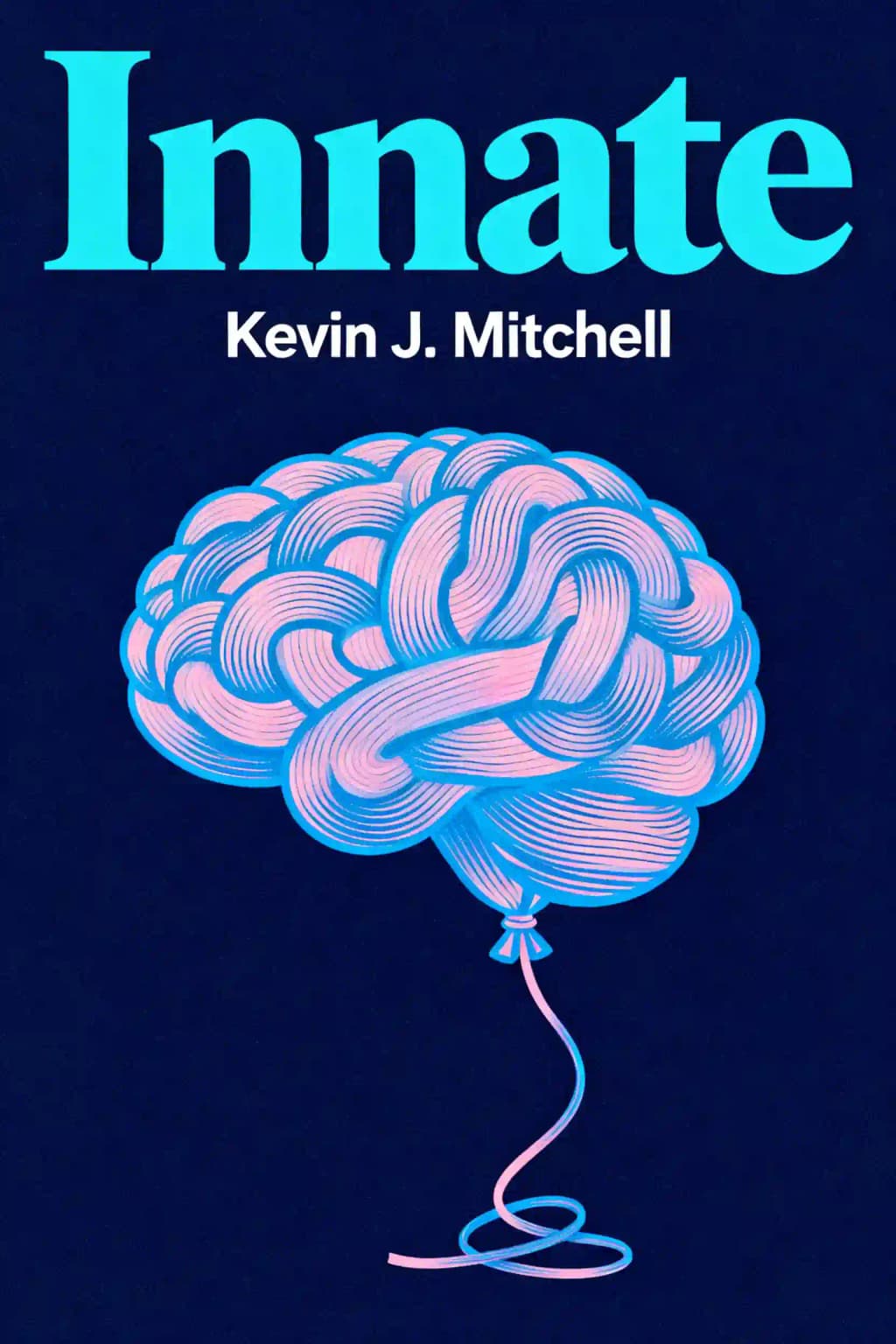
Have you ever wondered why your sibling-raised in the same home, by the same parents-seems to navigate life with such different instincts and tendencies? Or why identical twins, despite sharing identical DNA, still develop distinct personalities? The answers lie deep within the intricate wiring of our brains, a fascinating frontier explored in Kevin J. Mitchell's groundbreaking work "Innate." As a neurodevelopmental geneticist at Trinity College Dublin, Mitchell brings scientific rigor to the age-old nature-nurture debate, offering compelling evidence that many of our psychological differences are present from birth-not because of some mystical predestination, but through concrete biological mechanisms that shape our neural architecture.
The book has garnered attention from neuroscientists and psychologists worldwide, with figures like Steven Pinker praising its balanced approach to human individuality. Its publication coincided with revolutionary advances in genomic science that have transformed our understanding of how genes influence brain development. Unlike deterministic views of the past, Mitchell presents a nuanced perspective on innate differences that acknowledges both genetic influence and the remarkable role of chance in making each of us unique.
第2章
The Blueprint and the Building Process
The human genome isn't a detailed blueprint with a one-to-one correspondence between genes and body parts or behaviors. Rather, it's more like a developmental algorithm-a set of biochemical operations that, when executed in the proper cellular environment, produces a human being. This algorithm doesn't specify every detail of the finished product but instead establishes parameters within which development unfolds. Think of it as a recipe that provides general instructions but allows for variation in the final result, much like how following the same cake recipe can produce slightly different cakes each time.
Our genetic code contains approximately 20,000 genes, yet this relatively small number orchestrates the development of trillions of cells and countless complex behaviors. The genome achieves this through sophisticated regulatory networks, where genes interact with each other and environmental signals in intricate feedback loops. For example, a single gene might influence the development of multiple traits, while multiple genes often work together to shape a single characteristic.
What makes us different from other species isn't a set of uniquely human behaviors but rather our distinctive combination of behavioral capacities and tendencies. We're bipedal, diurnal, gregarious, and omnivorous-traits shared with some other animals but collectively defining us as human. Our capacities for language, abstract thought, and complex problem-solving are vastly more developed than in other species, reflecting differences in our brain properties-size, organization, connections, and neurochemistry-all encoded in our DNA. The human brain, with its roughly 86 billion neurons and quadrillion synapses, exemplifies how genetic instructions can create extraordinary complexity through iterative developmental processes.
Genetic variation accumulates naturally through copying errors when DNA replicates to make sperm or egg cells. These mutations, if not immediately lethal, spread through populations, creating variation in traits including behavior. The domestication of wolves into dogs provides a striking example of how selecting for behavioral traits like tameness produced animals with natures distinct from their ancestors. Modern dog breeds, selected for specific behavioral traits like herding or retrieving, further demonstrate how behavior has genetic foundations. Consider the Border Collie's innate herding instincts or the Pointer's natural tendency to freeze and indicate prey-behaviors shaped by centuries of selective breeding.
But genetics is only half the story. The processes of brain wiring contain inherent randomness at the molecular level, meaning even identical genetic instructions produce different outcomes. Like the subtle differences in identical twins' faces, the physical structure of their brains differs, especially at the cellular level. This developmental noise, combined with genetic differences, creates our unique psychological makeups. Studies of identical twins raised apart show remarkable similarities in personality and cognitive abilities, yet also significant differences, highlighting how both genetic and environmental factors shape who we become.
The interplay between genes and environment continues throughout life, as our experiences trigger changes in gene expression through epigenetic mechanisms. This dynamic interaction means our genetic blueprint is more like a living document than a static set of instructions, constantly adapting to environmental demands while maintaining our core biological identity.
第3章
The Evidence for Innate Differences
Twin and adoption studies provide compelling evidence for the genetic basis of psychological traits. By comparing people with different degrees of genetic similarity but similar environments, researchers can separate nature from nurture. If environment were the only factor influencing traits, identical (monozygotic/MZ) and fraternal (dizygotic/DZ) twins should be equally similar. If genetics matters, MZ twins should be more similar than DZ twins.
The findings are remarkably consistent across studies: adopted siblings show only modest correlations in psychological traits that often disappear in adulthood, while biological siblings maintain stronger correlations throughout life. Identical twins are much more similar than fraternal twins for most psychological traits, even when raised apart. This demonstrates that shared genes have a much stronger effect on psychological similarity than shared family environment.
Brain structure follows the same pattern. MRI scans reveal that brain structure similarity directly correlates with genetic similarity. The brains of identical twins appear remarkably similar-almost like scans of the same brain-while fraternal twins and non-twin siblings show much greater differences. Quantitative measurements confirm this visual impression, with heritability estimates ranging from 60-85% for various brain structures.
Even brain function shows strong genetic influence. Using functional MRI, researchers can track which brain areas activate together, revealing functional networks that create distinctive "neural fingerprints" unique to each individual. These functional connectivity patterns prove highly heritable-MZ twins show much more similar brain activity patterns than DZ twins.
Surprisingly, twin and adoption studies reveal remarkably small contributions (typically 10-15% or even zero) from shared family environments. Adoptive siblings generally don't resemble each other psychologically more than strangers, and identical twins raised apart remain remarkably similar. This aligns with common parental experience-children naturally display different temperaments, talents, and interests that emerge independently and resist change.
第4章
The Genetic Mechanisms Behind Our Differences
To understand how genes influence behavior, we must first understand what genes actually are-stretches of DNA that code for specific proteins. The human genome contains about 20,000 genes spread across 23 chromosomes, coding for proteins essential for cellular function. These proteins serve diverse roles, from building cellular structures to catalyzing biochemical reactions to transmitting signals between neurons in the brain. Each gene can exist in multiple forms called alleles, which contribute to the remarkable diversity we see among humans.
While we all possess the same human genes, we carry different versions with small sequence variations. These genetic differences arise through mutation-changes in DNA sequence that occur both from external factors like radiation, chemical exposure, and UV light, and from natural errors during DNA replication. Despite sophisticated proofreading mechanisms involving multiple enzymes that check for accuracy, some errors inevitably occur when copying three billion DNA letters. These copying mistakes happen roughly once every billion bases replicated, resulting in approximately three new mutations per cell division.
When new mutations arise, their destiny depends on their effects on organism fitness. Most mutations are neutral since only about 3% of the genome comprises functional genes, with much of our DNA serving regulatory or currently unknown purposes. When mutations do affect function, they're far more likely to be harmful than beneficial because random changes typically disrupt rather than improve complex systems. Severely deleterious mutations quickly disappear from populations as affected individuals fail to reproduce, while neutral mutations may spread through populations by chance through a process called genetic drift. Occasionally, beneficial mutations arise that enhance survival or reproduction, allowing them to spread rapidly through natural selection.
The connection between genetic variation and traits ranges from straightforward to highly complex. Some cases are direct: mutations in hemoglobin causing sickle-cell anemia or variants in MC1R producing red hair. Certain behavioral traits similarly have clear genetic links-leptin mutations affecting appetite or PER2 variants altering sleep patterns. The FOXP2 gene provides another example, with mutations causing severe speech and language disorders by affecting neural development. However, most psychological traits like extraversion, intelligence, or language ability aren't directly controlled by specific genes but emerge from complex neural circuitry assembled by thousands of genes working together. This complexity explains why finding genes for behavioral traits has proven challenging - most traits arise from the combined small effects of many genetic variants interacting with environmental factors.
Modern research techniques like genome-wide association studies (GWAS) have revealed that even seemingly simple traits often involve hundreds or thousands of genetic variants, each contributing a tiny effect. This "polygenic" nature of most traits helps explain both their continuous variation in populations and why they don't follow simple inheritance patterns. Understanding these complex relationships between genes and behavior requires sophisticated statistical approaches and very large sample sizes, but continues to yield new insights into human nature.
第5章
The Developmental Dance: How Brains Wire Themselves
Development begins with a single fertilized egg containing a unique human genome. Even at the first cell division, the two resulting cells already express different gene profiles. Development proceeds through cellular differentiation, with cells communicating through proteins that diffuse through the embryo at varying concentrations. These signals control which genes activate in each cell, determining its fate.
Brain development occurs through successive subdivision-first separating forebrain from midbrain, hindbrain, and spinal cord, then further subdividing each region. The brain contains hundreds of different neuron types with thousands of subtypes, each with distinct morphology, biochemistry, electrical properties, and connectivity patterns.
Once neurons settle in their proper positions, they extend dendrites and axons in highly specific patterns. Each growing axon is tipped with a growth cone-a dynamic structure that explores the environment with feelers and has its own motor to pull the axon forward. These growth cones navigate using protein signals from other cells, with each expressing distinct receptor proteins that determine its response to environmental cues.
All these developmental processes-patterning, proliferation, differentiation, migration, axon guidance, and synapse formation-rely on gene expression and protein interactions subject to molecular noise. This makes development inherently probabilistic rather than deterministic. While genomes specify approximately how much of each protein to make, they cannot control the precise location or state of every molecule. These components move randomly, interacting with probabilities rather than certainties.
Developmental noise can lead not just to quantitative variation but also to qualitatively distinct outcomes. The corpus callosum, connecting the brain's hemispheres with 250 million axons, illustrates this perfectly. Its formation depends on a small cellular bridge forming between hemispheres-a process that can fail completely due to random variation affecting just a few cells. In mice with certain mutations, some develop normal corpus callosa while others develop none, despite identical genetics.
第6章
Nature, Nurture, and Self-Organization
The nature-nurture debate is traditionally framed as a battle rather than a collaboration, with genetics opposing brain plasticity. In reality, the opposite tends to occur-initial differences are amplified through self-organizing brain development as individuals select environments and experiences based on innate predispositions.
Our brains come prewired but not hardwired, with extensive individual differences at birth due to genetic and developmental variation. Brain circuitry remains plastic, constantly changing itself to react to the environment and store memories by altering synaptic connections.
Brain development continues after initial wiring through extensive circuit refinement. Synapses strengthen when repeatedly activated through increased neurotransmitter receptors and potential growth of new connections. These mechanisms, which underlie learning and memory, also fine-tune brain circuits during development.
The refinement process naturally terminates as connections driven by sensory stimuli strengthen while conflicting patterns weaken or disappear. This positive feedback creates expertise for processing certain stimuli while losing capacity to learn others. Language perception exemplifies this: infants initially distinguish all phonemes but lose this ability as they specialize in their native language.
People's experiences are shaped by their genetic makeup in three key ways. First, children share genes with parents whose behaviors may interact with and amplify the child's own tendencies. Second, children's innate traits evoke specific responses from others-a difficult child may trigger more negative reactions from parents or teachers. Third, as children develop autonomy, they actively select experiences that suit their psychological makeup, creating self-reinforcing patterns of behavior.
These mechanisms can amplify initial differences between individuals, as seen in studies showing that heritability of intelligence increases from childhood (50%) to adulthood (80%), while shared family environment effects diminish to zero. Far from erasing initial differences, our experiences tend to reinforce them as we develop.
第7章
Personality: The Parameters of Our Decision-Making
The English language contains over 4,500 words describing personality traits, a linguistic reflection of humanity's deep recognition of individual behavioral differences. Today's dominant framework is the "Big Five": Extraversion (sociability and assertiveness), Neuroticism (emotional stability and anxiety), Conscientiousness (organization and responsibility), Agreeableness (compassion and cooperation), and Openness to Experience (curiosity and creativity). This model emerged after decades of research and factor analysis, proving remarkably consistent across cultures and languages.
Twin and adoption studies consistently show that personality traits are moderately heritable-about 40-50% of variation comes from genetic differences. For example, identical twins raised apart show striking similarities in personality profiles, while adoptive siblings living together show little resemblance. Surprisingly, shared family environment has negligible effect; being raised in the same household, attending the same schools, and sharing parents doesn't make people more similar in personality. This suggests that non-shared environmental factors - unique experiences, peer relationships, and random life events - play a more significant role in personality development.
Despite many published studies claiming associations between specific genes and personality traits, most findings have proven spurious. Early candidate gene studies, like those linking the serotonin transporter gene to anxiety, failed to replicate in larger samples. Modern genome-wide association studies (GWAS) with tens of thousands of participants have identified only a few common variants with extremely small effects on traits like Extraversion and Neuroticism. Each variant typically explains less than 1% of trait variation. This suggests the Big Five personality traits don't map neatly onto distinct genetic or neural modules but likely reflect combined effects of variation across many biological systems.
Human personalities emerge from differences in decision-making parameters, operating through complex neural circuits. Rather than fixed stimulus-response patterns, our behavior is organized through neuromodulators like dopamine (reward and motivation), serotonin (mood and social behavior), noradrenaline (arousal and attention), and various neuropeptides like oxytocin (social bonding) and vasopressin (aggression). These chemicals dynamically regulate neural signaling, altering how circuits respond to inputs by changing their "gain" or sensitivity. For instance, higher dopamine sensitivity might make someone more responsive to potential rewards, contributing to traits like extraversion or novelty-seeking.
These neuromodulators not only organize current behavior but shape learning by gating synaptic plasticity based on subjective experience, ultimately leading to habitual behavioral patterns. When we experience success in social situations, dopamine release strengthens the neural pathways involved, making us more likely to seek similar interactions in the future. Despite their dynamic nature, the neuromodulatory circuits themselves are differently tuned across individuals, creating stable personality differences that persist across situations and time. This explains why personality traits remain relatively consistent throughout adulthood while still allowing for gradual change through sustained environmental influences or conscious effort.
第8章
Perception: Different Windows on the World
We clearly don't all see the world the same way. There exists a rich diversity of perceptual experience across all senses-from basic detection of stimuli to higher-level integration of perceptual attributes into schemas.
Each species inhabits its own perceptual bubble or "Umwelt," perceiving only elements of the environment relevant to its survival. Bees and birds detect ultraviolet patterns invisible to humans; snakes sense infrared heat signatures; bats hear ultrasonic frequencies; and dogs possess vastly superior olfactory capabilities.
Human perception varies significantly between individuals due to genetic differences affecting sensory apparatus. Approximately 1% of people have congenital hearing impairments from over 400 distinct genetic syndromes. Our sense of smell relies on roughly 1,000 different receptor genes, many nonfunctional in humans compared to animals with superior olfaction. Common mutations in these genes create individual differences in odor detection.
Color vision differences are particularly prevalent, with red-green colorblindness affecting 8% of males due to X-chromosome mutations. Some women (about 2%) are tetrachromats with four functional color channels instead of three, potentially distinguishing more color bands.
Beyond these extreme examples, subtler genetic variations affect sensory sensitivity across normal ranges. Visual cortex size varies threefold between individuals, with larger cortices providing better spatial resolution but processing smaller visual fields. Even perceptual speed differs, correlating with heritable alpha wave frequencies that determine how quickly individuals can distinguish sequential visual events.
Synesthesia-where stimulation in one sensory pathway triggers experiences in another-appears to have a strong genetic basis, with inheritance patterns suggesting single dominant mutations that differ across families. The specific pairings between inducing stimuli and synesthetic percepts develop as concepts are learned. Synesthesia occurs at higher rates (17-18%) in people with autism compared to the general population (2-4%).
第9章
Intelligence: The Clever Ape's Variations
Intelligence is humanity's defining characteristic, setting us apart from other animals and enabling our dominance across nearly all environments. At its core, intelligence is the ability to think abstractly-to draw broader lessons from specific instances and apply them to new situations through analogy.
IQ tests assess multiple factors: knowledge, quantitative reasoning, visual-spatial processing, working memory, and fluid reasoning. Performance across these seemingly unrelated tasks shows positive correlation, revealing an underlying general intelligence factor (g) that accounts for 40-50% of variation. Despite criticisms, IQ scores prove remarkably predictive of real-world outcomes including educational achievement, income, job performance, health, and even longevity.
Twin and adoption studies reveal that while both genetic relatedness and shared family environment affect intelligence, their influence changes dramatically over time. Adoptive siblings show moderate similarity as children but become no more similar than strangers as adults, while biological siblings maintain substantial similarity. The heritability of IQ shifts dramatically with age-from very low in infants to 75-80% in adults, while family environment effects diminish to zero.
Despite high heritability, intelligence is profoundly shaped by environment. The Flynn effect-consistent increases in raw IQ scores over time across countries-demonstrates this powerfully. These gains reflect improved nutrition, health, education, and society's increasing emphasis on abstract thinking, not genetic changes.
The genes implicated in intelligence are predominantly expressed in the fetal brain and involved in neural development-neuronal proliferation, migration, axon guidance, and synaptic functions. This striking finding suggests intelligence isn't linked to specific brain circuits or neurotransmitter pathways, but rather to the fundamental robustness and computational efficiency of brain networks.
Neuroimaging reveals intelligence correlates better with global brain measures than with specific regions. Overall brain volume shows a correlation of about 0.40 with IQ, with effects distributed across the cortex rather than localized. Intelligence correlates with white matter integrity throughout the brain and with network efficiency measures.
第10章
When Development Goes Awry: Neurodevelopmental Disorders
While most neurological differences between people represent normal human diversity, sometimes these differences become disorders-conditions involving suffering or functional impairment. Psychiatric illness drastically reduces life expectancy (by 20 years for schizophrenia and 30 years for autism/intellectual disability), increases suicide risk, and lowers reproductive rates.
The hereditary nature of mental disorders has been recognized for over 2,500 years. Scientific measurements show siblings of schizophrenia patients have 10 times the normal risk, with this increased risk extending across diagnostic categories. Twin studies reveal that if one identical twin has schizophrenia, the other has a ~50% chance versus only ~15% for fraternal twins, with autism showing even stronger genetic patterns (80% vs 20%).
The mutations causing neuropsychiatric disorders tend to be extremely rare-an evolutionary consequence of their negative effects on lifespan and reproduction. Studies have found autism patients carry significantly more copy number variants (CNVs) than controls, with many of these same variants also appearing in schizophrenia, epilepsy, and intellectual disability patients.
A striking revelation from genetic discoveries is that high-risk mutations don't respect psychiatric diagnostic boundaries but increase risk across multiple disorders. Despite psychiatry's efforts to define distinct categories, these conditions show significant symptom overlap and patients often drift between diagnoses over time.
Many neurodevelopmental disorders show male predominance-autism, ADHD and dyslexia have 4:1 male-to-female ratios, while schizophrenia and severe learning disabilities show 3:2 ratios. Studies reveal that female autism patients typically carry larger, more gene-disruptive CNVs than males, suggesting it takes more severe mutations to cause autism in females.
The genes implicated in neurodevelopmental disorders are strongly enriched for fetal brain expression and neural development functions. They regulate gene expression in various cell types, control neuronal migration, orchestrate brain region architecture, direct nerve fiber growth, specify synaptic connections, and mediate synaptic plasticity.
第11章
Beyond Determinism: Embracing Human Diversity
While this book presents the case for innate psychological differences arising from both genetic variation and random developmental processes, this doesn't imply genetic determinism. Our genes and brain development create behavioral predispositions-baseline tendencies and capacities-but don't determine behavior in any given circumstance.
We learn, adapt, and develop context-dependent habits influenced by but not dictated by our traits. Similarly, evidence that parenting doesn't strongly shape personality doesn't mean it doesn't affect behavior-parents influence how children adapt to the world. Our behavior reflects adaptations and societal expectations as much as underlying temperament.
The physical mechanisms underlying thoughts and feelings don't threaten autonomy or free will. The mind isn't separate from the brain but is the brain at work-thoughts and feelings are emergent phenomena with causal power in themselves. We have free will in the sense that we act for our own reasons, though some people may have more self-control than others due to biological differences.
The self-help industry promotes the idea that we can fundamentally change ourselves through various techniques, increasingly invoking neuroscience concepts like "neuroplasticity" and "epigenetics" to support these claims. While neuroplasticity is real-the brain rewires itself on a cellular scale to learn and form memories-it isn't infinitely malleable. We can change behaviors with effort, but there's little evidence we can change fundamental personality traits.
Rather than constantly pushing for change, we should embrace the diversity of human natures. People are born different, perceive the world differently, and navigate life with varying degrees of ease or difficulty. Understanding the biological basis of these differences doesn't diminish our humanity but enriches it, allowing us to appreciate the unique wiring that makes each of us who we are.