第1章
When Phoenix Fire Meets Celestial Destiny
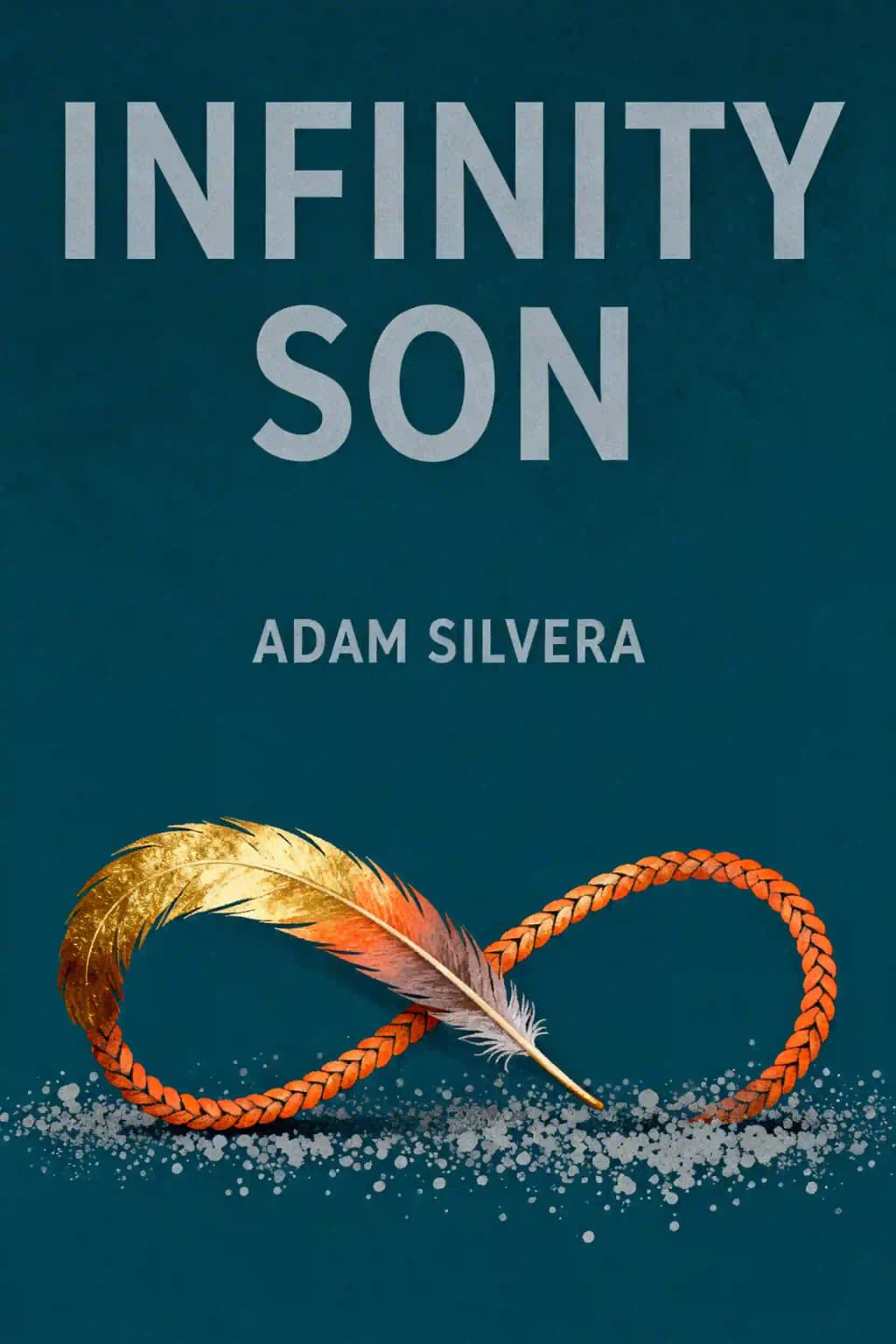
In a world where some are born with celestial powers and others hunt magical creatures to steal their abilities, twin brothers Emil and Brighton Rey stand at a crossroads of destiny. Adam Silvera's "Infinity Son" burst onto the YA fantasy scene in 2020 as the author's first venture into the genre after establishing himself with contemporary hits like "They Both Die at the End." The novel quickly became a cultural phenomenon, with celebrities like Becky Albertalli and Angie Thomas praising its fresh take on urban fantasy. What makes this book particularly significant is how it weaves LGBTQ+ representation into a magical universe, creating heroes that reflect diverse identities rarely seen in mainstream fantasy. As we dive into this tale of brotherhood, power, and sacrifice, prepare to question what truly makes a hero-is it the powers they possess, or the choices they make when facing impossible odds?
第2章
Brothers Divided by Dreams, United by Blood
Emil and Brighton Rey are approaching their eighteenth birthday with vastly different perspectives on life that reflect their divergent personalities and dreams. Emil, the practical and grounded twin, focuses on tangible goals - maintaining good grades, working his part-time job at the local bakery, and carefully planning for college. Meanwhile, Brighton lives in a world of celestial fantasies, dedicating every spare moment to tracking and documenting those born with magical powers for his YouTube channel "Celestials of New York." His videos range from shaky footage of celestial sightings to detailed theories about their origins and powers, earning him a modest but dedicated following of fellow celestial enthusiasts.
Their contrasting worldviews come into sharp focus when they witness a violent confrontation in downtown Manhattan between a phoenix-powered specter and the Spell Walkers, a vigilante group of celestials who have taken it upon themselves to protect their kind. The battle leaves several bystanders injured and significant property damage in its wake - a reality that affects each brother differently.
"Heroes shouldn't have body counts," Emil insists during a heated argument with Brighton after the encounter, his hands still shaking from what they've witnessed. "Real heroism is about saving lives, not destroying them." This fundamental disagreement about the nature of heroism reveals the philosophical rift between the brothers. While Emil values preservation of life and careful consideration of consequences, Brighton sees the world in bold strokes of good versus evil, believing that sometimes violence is necessary for the greater good - a perspective that will have devastating consequences as their story unfolds.
The twins' relationship becomes increasingly strained by Brighton's desperate pursuit of fame and powers. His YouTube channel, while moderately successful, fails to achieve the viral status he craves. When his footage of the celestial battle is overshadowed by another YouTuber's video - one with better production value but less authentic content - Brighton's frustration reveals deeper wounds. The loss of their father to a failed hydra blood treatment three years ago left an aching void that Brighton tries to fill with dreams of becoming extraordinary. His father's death wasn't just a tragedy; it became the catalyst for his obsession with celestial powers, creating a vulnerability that makes him dangerous both to himself and others.
As their eighteenth birthday arrives, both brothers gather on their apartment's fire escape, watching the Crowned Dreamer constellation that some believe determines celestial manifestation. Emil quietly hopes for nothing to happen, content with their ordinary life, while Brighton practically vibrates with anticipation. When midnight passes with no transformation, Brighton's disappointment manifests in bitter words: "We're painfully ordinary," he says, staring at his unchanged reflection in the window. What neither brother realizes is that extraordinary events are already in motion - events that will test not only their individual beliefs about heroism and power but also the very bonds of their brotherhood.
第3章
The Unexpected Hero's Awakening
Emil finds solace in his work at the Museum of Natural Creatures, particularly in the Sunroom where various phoenix species are displayed. His knowledge of these magical creatures becomes crucial when he meets Charlie, a British tourist who dismisses the importance of gray sun phoenixes. Emil's passionate defense of these creatures foreshadows his own destiny in ways he cannot imagine.
Museum curator Kirk Bennett offers Emil a special opportunity to assist with a secret gala featuring the hatching of Gravesend, a firstborn century phoenix. This invitation gives Emil purpose beyond being Brighton's sidekick, though he keeps this opportunity secret from his brother-the first of many divisions that will grow between them.
Everything changes during the Friday Dreamers Festival in Central Park. After witnessing Congresswoman Nicolette Sunstar's inspiring speech about celestial rights, the twins encounter Orton, a specter selling "Brew"-an expensive potion made with illusionist blood that creates the sensation of having powers. When Orton follows and attacks them on a subway train, Emil's life transforms forever as his fist erupts in gold and gray flames, shooting fire darts that blast Orton away.
"My fist erupted in flames. Gold and gray flames," Emil recalls of this moment, stunned by powers he never knew he possessed. These flames resemble those of a gray sun phoenix-an impossibility for a celestial. The revelation is compounded when Brighton notices Emil's eyes burned dark like a specter's, raising questions about the true nature of his abilities.
This awakening catapults Emil into unwanted fame as videos of "Fire-Wing" go viral online. Suddenly, the quiet, thoughtful brother becomes the center of attention while Brighton, who has always craved the spotlight, must watch from the sidelines. This reversal of roles creates a complex emotional landscape that tests their brotherhood and sets the stage for Brighton's eventual betrayal.
第4章
The Spell Walkers: Guardians with Secrets
When Atlas Haas of the Spell Walkers arrives to protect Emil from those hunting him, the twins are introduced to a hidden world of celestial vigilantes. The Spell Walkers operate from Nova Grace Elementary School, a sanctuary disguised as an abandoned gas station in Brooklyn. Led by Iris Simone-Chambers, the group includes Maribelle Lucero, whose parents died in the mysterious "Blackout" disaster; Wesley Young, who coordinates with other rescue groups; Eva, a healer with a rose quartz-embedded wand; and Atlas, who manages their finances.
"We're not vigilantes; we're guardians," Iris explains, though the distinction becomes increasingly blurred as the story progresses. The Spell Walkers reveal a startling truth to Emil-they believe he possesses the blood of a gray sun phoenix and is the reincarnation of Bautista de Leon, the founding Spell Walker who himself believed he was reincarnated from Keon Maximo, the first specter.
This revelation is compounded when Emil's mother admits he was adopted, found abandoned as a newborn near where Bautista died. "Every family photo is a lie," Emil thinks, his sense of identity shattered by this disclosure. The weight of this legacy becomes even heavier when Maribelle insists Emil has a responsibility to fight the Blood Casters, claiming "it's the least you can do since you technically created this evil."
The Spell Walkers' moral code-particularly their refusal to kill-becomes a central point of conflict. This principle is tested repeatedly as they face increasingly dangerous threats from the Blood Casters, a rival group of specters who kill magical creatures to steal their powers. The tension between idealism and pragmatism in their approach to heroism mirrors Emil and Brighton's own disagreement, creating parallel conflicts that drive the narrative forward.
第5章
The Blood Casters: Power at Any Cost
The Blood Casters represent the dark reflection of the Spell Walkers' ideals, operating as a ruthless organization that believes in acquiring power through any means necessary. Their base of operations - the opulent penthouse of Manhattan's Light Sky Tower - serves as both headquarters and a symbol of their aspirations for dominance. Led by Luna, a commanding presence with flowing silver hair and eyes that hold decades of accumulated magical knowledge, they have built a formidable network of enhanced individuals willing to cross moral boundaries for power.
Their inner circle consists of uniquely dangerous individuals, each transformed by forbidden blood magic. Ness, their master of deception, can alter his appearance at will - a gift he once hoped would launch his acting career before darkness claimed him. Stanton, having infused himself with basilisk blood, possesses deadly abilities that make him feared even among his allies. Dione Henri, whose body courses with hydra blood, demonstrates remarkable regenerative capabilities that render her nearly impossible to kill. Perhaps most terrifying is June, their phantom assassin, whose ability to phase through solid matter makes her an unstoppable force in combat.
"Power isn't given; it's taken," Luna frequently reminds her followers, a mantra that justifies their brutal methodology. This philosophy manifests in their systematic hunting of magical creatures, unauthorized blood rituals, and willingness to sacrifice innocent lives in pursuit of their goals. Their most ambitious project - the creation of an immortality elixir - requires three key components: phoenix blood for its life-giving properties, hydra venom for its regenerative capabilities, and the trapped spirits of Luna's parents contained within an ancient ceremonial urn.
Ness's character provides a compelling window into the moral complexity of the Blood Casters' world. Once a struggling actor in New York's competitive theater scene, he now uses his shape-shifting abilities for espionage and infiltration. His internal struggle intensifies when Luna tasks him with locating "the boy from the train" - Emil, whose unique abilities make him valuable to their cause. Ness's choice between self-preservation and moral responsibility becomes a pivotal element of the narrative, highlighting the personal costs of the Blood Casters' ruthless philosophy.
The ideological chasm between the Blood Casters and Spell Walkers emerges as the novel's central conflict. While the Spell Walkers seek to protect magical creatures and maintain balance, the Blood Casters view these same beings as resources to be harvested for power. This fundamental difference creates escalating tensions that force characters to make difficult choices with far-reaching consequences. Luna's statement to Emil - "Some of us weren't lucky enough to be born with gifts... so we make our own luck" - reveals the deep-seated resentment and determination driving their actions, suggesting that their pursuit of power stems not just from ambition, but from a place of perceived injustice and deprivation.
第6章
Identity and Transformation: The Heart of Power
At its core, "Infinity Son" explores how power transforms identity-both for those born with abilities and those who acquire them through other means. Emil struggles to reconcile his newfound phoenix powers with his peaceful nature, while Brighton's desperate desire for abilities leads him down an increasingly dark path.
"I don't want to be a weapon," Emil confesses to Ness during a vulnerable moment. This fear of becoming something he's not reflects the central question many characters face: Does power reveal who we truly are, or does it change us into something unrecognizable?
The concept of transformation extends beyond magical abilities. Ness's shape-shifting represents the ultimate identity crisis-he can become anyone but struggles to know himself. In a haunting scene, he stands before a mirror seeing the faces of all those he's hurt: "Face after face appears, some I hurt directly, others indirectly, some still alive, others dead." This visual representation of guilt illustrates how our actions shape our identity more profoundly than any innate characteristic.
Brighton's transformation is perhaps the most tragic. His obsession with becoming extraordinary blinds him to the value of his natural talents. When he drinks Brew, he experiences a powerful hallucination where he defeats the Blood Casters, only to crash back to reality with the painful reminder that "I'd consumed Brew, the street drug Ness helped create, and never had powers at all." This moment foreshadows his eventual choice to drink Luna's immortality elixir-a decision born from his inability to accept himself as he is.
The novel suggests that true identity isn't found in extraordinary abilities but in the choices we make with whatever gifts we possess. As Eva tells Brighton, "Everyone has different roles to play as a team," a lesson he tragically fails to learn until it's too late.
第7章
Brotherhood Tested by Fire and Ambition
The relationship between Emil and Brighton forms the emotional core of the story, presenting a complex exploration of sibling dynamics under extraordinary pressure. Their lifelong bond, forged through years of shared experiences and mutual support, faces its greatest test when Emil unexpectedly gains the phoenix powers that Brighton has desperately dreamed of since childhood. This supernatural twist creates a profound inversion of their established dynamic, where Brighton had always been the confident, ambitious brother who seemed destined for greatness, while Emil played the role of cautious supporter and voice of reason.
"You're not my sidekick. You're my brother," Brighton assures Emil after learning of his adoption, yet this seemingly straightforward declaration becomes increasingly loaded with unspoken tension. Brighton's struggle with jealousy manifests in subtle ways at first - a lingering glance at Emil's training sessions, a slight edge in his voice when discussing powers, an obsessive focus on documenting every moment of Emil's journey. His creation of viral videos documenting Emil's training as "Fire-Wing" serves multiple purposes: it maintains his connection to the world of Specters he desperately wants to join, channels his marketing talents productively, and allows him to share in his brother's glory, if only from behind the camera.
The brothers' divergent reactions to power illuminate their fundamental character differences. Emil, who never sought abilities, approaches his phoenix fire with reluctance and responsibility, viewing it as a burden rather than a gift. His power usage is consistently defensive, focused on protecting others rather than gaining glory. In contrast, Brighton's consuming ambition reveals a darker side of his personality. His childhood dream of becoming a Specter transforms from an innocent wish into an all-consuming obsession that gradually erodes his moral boundaries.
This contrast reaches its devastating apex when Brighton makes the ultimate choice to betray not just their cause but their brotherhood by drinking Luna's immortality elixir. The moment serves as a tragic culmination of his character arc - from supportive brother to someone willing to sacrifice everything, including family bonds, for power.
Their relationship raises profound questions about the nature of family itself. Emil's discovery of his adoption initially fractures his sense of identity and belonging, forcing him to confront whether blood ties define true family. His mother's revelation about his adoption - "We decided to raise Emil as our own, never telling him the truth to ensure he never felt out of place" - demonstrates how love and choice can create bonds as strong as any genetic connection. This unconditional acceptance stands in sharp relief against the toxic relationship between Ness and Senator Iron, where blood relation becomes a weapon of control rather than a foundation of support. Through these parallel family dynamics, the story explores how true brotherhood transcends both genetics and supernatural abilities, even as it can be tested by both.
第8章
The Price of Heroism: Sacrifice and Loss
As the conflict between the Spell Walkers and Blood Casters escalates, the cost of heroism becomes increasingly apparent. The battle at the cemetery where Luna attempts to capture her parents' ghosts marks a turning point, with Atlas being shot out of the air and Emil discovering his ability to fly with "massive wings of gray and gold flame." This newfound power comes with responsibility that separates him from Brighton, who is captured by the Blood Casters while Emil escapes with the urn containing Luna's parents' spirits.
The price of heroism extends beyond physical danger to emotional sacrifice. When Emil's mother suffers a heart attack upon learning of Brighton's capture, Emil must choose between staying with her and attempting to rescue his brother. "I promise to bring Brighton home," he vows, though the cost of keeping this promise proves higher than he imagined.
Atlas's death represents the ultimate sacrifice. When June possesses Maribelle's body and uses her hand to cast a fatal spell at Atlas, his loss devastates the team. Maribelle's grief manifests as "dark yellow flames" erupting from her body-revealing her own hidden phoenix heritage as the daughter of Bautista and Sera. This revelation comes too late to save Atlas, highlighting how secrets kept in the name of protection often lead to greater tragedy.
The novel suggests that true heroism isn't found in spectacular powers but in willingness to sacrifice for others. Emil's decision to confront Luna despite his injuries, Ness's return to help the Spell Walkers after initially fleeing, and Eva's tireless healing of the wounded all represent different forms of heroism that transcend the flashier displays of celestial abilities.
第9章
Legacy and Reincarnation: Breaking the Cycle
The concept of reincarnation weaves a complex tapestry of identity and responsibility throughout the novel. Emil's apparent role as the reincarnation of both Keon Maximo and Bautista de Leon places him in a cycle of violence that has repeated for generations - a pattern etched into the very fabric of his being. This legacy weighs heavily on him as he searches for ways to "break the phoenix cycle" and forge his own path, challenging the predetermined narrative that seems to control his destiny.
"I'm caught in an endless cycle of life and death as the Infinity Son," Emil reflects, recognizing that his predecessors' choices have shaped his destiny without his consent. Their shadows loom large over his present, manifesting in both his inherited powers and the expectations placed upon him by others. This predetermined path raises profound questions about free will and whether we can ever truly escape the patterns established by those who came before us. The blood-soaked history of his previous incarnations haunts his dreams and influences his waking choices.
The novel's title, "Infinity Son," references this cycle of rebirth and the possibility that patterns will repeat infinitely unless someone makes a different choice. Emil's resistance to violence, despite possessing the same destructive powers as Keon and Bautista, represents his conscious attempt to break this cycle. His insistence that "heroes shouldn't have body counts" directly challenges the legacy of violence he has inherited. Through small daily choices - choosing mercy over vengeance, protection over destruction - Emil attempts to rewrite the story of the phoenix bearer.
Luna's quest for immortality represents a perversion of this natural cycle, serving as a dark mirror to Emil's journey. By attempting to create an elixir that would grant eternal life, she seeks to escape the very pattern of death and rebirth that defines existence. Her experiments with celestial magic and forbidden alchemy demonstrate the lengths some will go to avoid their predetermined fate. Brighton's decision to drink this elixir in the novel's final moments suggests he too wishes to break free from cycles - not of violence, but of ordinariness. His choice represents another form of rebellion against natural order, though one driven by ambition rather than conscience.
The theme of reincarnation extends beyond mere physical rebirth, touching on how patterns of behavior, belief, and conflict perpetuate themselves through generations. Each character grapples with inherited trauma, expectations, and power in their own way - some embracing their predetermined roles, others fighting desperately to forge new paths. The novel suggests that true freedom might lie not in escaping these cycles entirely, but in consciously choosing how to respond to them.
第10章
The Final Battle: Betrayal and Transformation
The climactic confrontation at the Alpha Church brings all storylines to their explosive conclusion. Despite Emil's injuries from the infinity-ender dagger that temporarily suppressed his powers, he joins the Spell Walkers in their final attempt to stop Luna from achieving immortality. The unexpected arrival of Brighton and Maribelle-who had left the team to pursue vengeance for Atlas's death-briefly offers hope that united they might succeed.
Luna's murder of Gravesend and subsequent creation of the immortality elixir seems to signal the Blood Casters' victory. As Emil lies bleeding from Luna's attack, the ultimate betrayal occurs-Brighton seizes the elixir and drinks it himself, choosing power over principles in a moment that transforms him from victim to villain.
This betrayal represents the culmination of Brighton's character arc. His lifelong desire to be extraordinary finally overwhelms his moral compass, revealing that his earlier statement that "killing to save the world is different" was perhaps foreshadowing his willingness to sacrifice anything-including his relationship with Emil-for power.
The novel ends with this shocking reversal, leaving readers to contemplate the consequences of Brighton's choice. Will immortality transform him into a new threat, or might he find redemption in eternal life? Can Emil forgive his brother's betrayal, or has their bond been irrevocably broken? These questions hang in the air as the first installment of this saga concludes, promising further explorations of power, identity, and the true meaning of heroism in future volumes.
In a world where some are born extraordinary and others must fight for every advantage, "Infinity Son" ultimately suggests that our choices matter more than our abilities. Whether celestial or specter, hero or villain, each character's decisions reveal their true nature far more clearly than the powers they possess. As Emil discovers, sometimes the greatest heroism lies not in spectacular displays of strength but in the quiet courage to remain true to oneself when faced with impossible choices.