第1章
When Death Calls, Will You Answer?
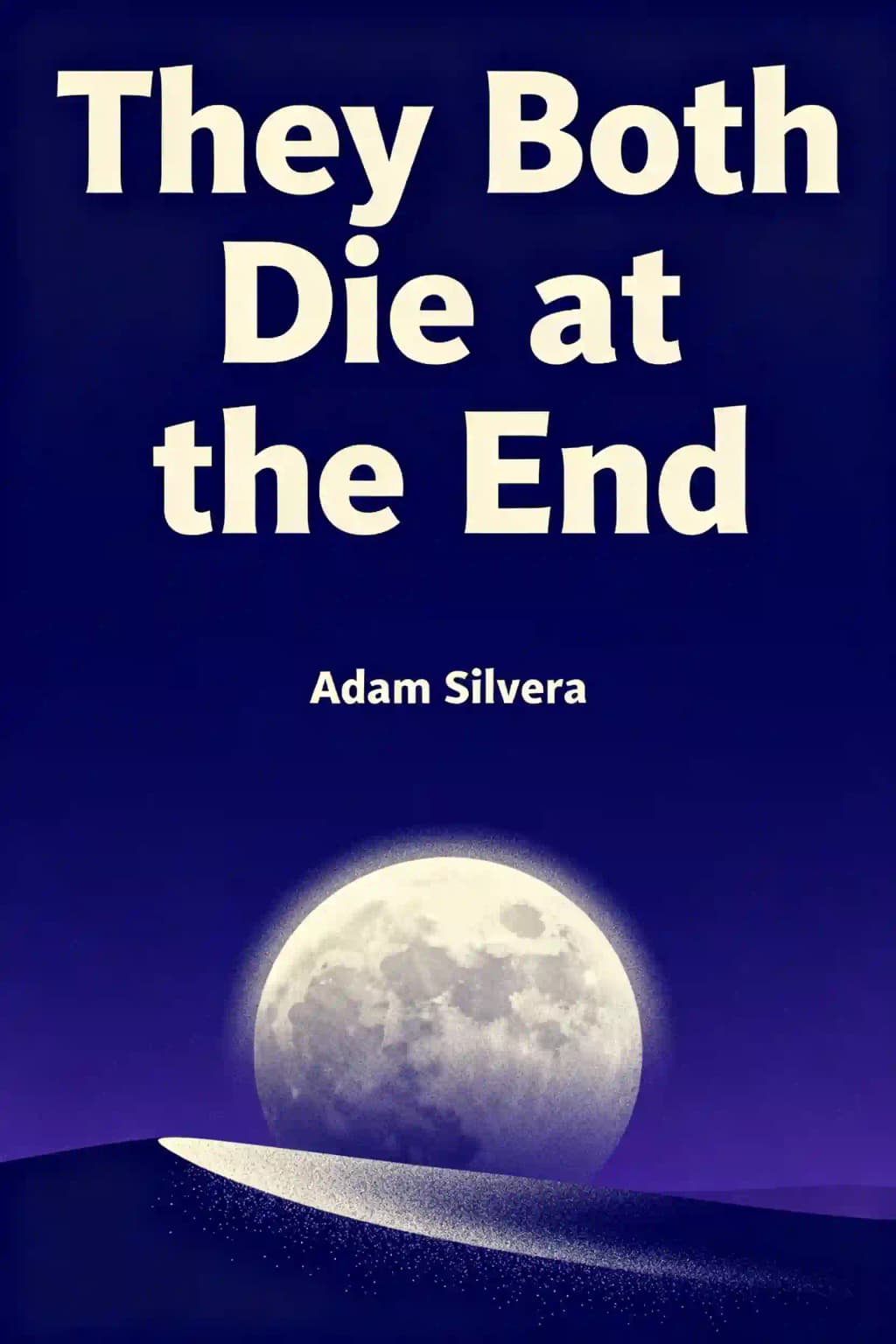
What would you do if you knew today was your last day alive? This question drives Adam Silvera's heartbreaking yet life-affirming novel "They Both Die at the End." Since its 2017 release, this YA phenomenon has captivated millions with its unique premise and emotional depth. The book exploded in popularity through BookTok in 2020, becoming a #1 New York Times bestseller three years after publication-a rare publishing achievement. Celebrities like Lil Nas X have praised its powerful message, and a Netflix adaptation is currently in development. Beyond its commercial success, the novel has sparked meaningful conversations about mortality, authenticity, and the courage to truly live. As Silvera's most celebrated work, it asks us all: if we knew exactly when our time would end, would we finally begin to live?
第2章
Death-Cast: The Call That Changes Everything
In a world identical to ours except for one crucial difference, a mysterious service called Death-Cast calls people between midnight and 3 a.m. to inform them they will die within the next 24 hours. No details about how or when-just the certainty that this is their "End Day." On September 5, 2017, two teenage boys in New York City receive this dreaded call.
Mateo Torrez, an 18-year-old Puerto Rican, gets his call at 12:22 a.m. Alone in his apartment, the shy, cautious young man faces the terrifying reality of his impending death. His father lies in a coma at the hospital, unaware his son will die before him. Mateo's life has been defined by fear-he takes online college courses rather than attending in person, rarely leaves his apartment, and has only one close friend, Lidia, who is raising her baby daughter alone after her boyfriend died on his End Day. Looking around his bedroom, Mateo realizes with crushing regret that he's lived his entire life hiding from risks, and now he has just hours to experience everything he's missed.
Across town at 1:05 a.m., 17-year-old Rufus Emeterio receives his Death-Cast call in the middle of beating up his ex-girlfriend's new boyfriend. An orphaned Cuban American foster kid, Rufus lost his entire family four months earlier when they drowned after their car plunged into the Hudson River. He alone survived. Now living at Pluto Home with his foster brothers Malcolm and Tagoe and his ex-girlfriend Aimee, Rufus has found a makeshift family. But when police arrive to arrest him for assault, Rufus flees, knowing he can't waste his final hours in jail.
Both boys, strangers to each other but united by their imminent deaths, face the same impossible question: How do you make your last day meaningful when you're too scared to truly live?
第3章
The Last Friend App: Finding Connection in Crisis
Terrified of dying alone, both Mateo and Rufus turn to technology for connection in their final hours. They download the Last Friend app, a revolutionary service designed specifically for Deckers (those who've received the Death-Cast call) to find companions for their End Day. The app, with its sleek interface and promise of connection, represents both the isolation of modern life and its potential for meaningful connection.
Mateo's first attempts at finding a Last Friend reveal the darker side of humanity even in times of crisis. He encounters users with questionable motives: some seeking casual hookups to check off their bucket lists, others looking for drug partners to numb their final hours, and a few pragmatically searching for help with mundane tasks like moving furniture. These interactions leave him feeling more isolated than before, highlighting how technology can sometimes amplify loneliness rather than cure it. Discouraged but desperate not to spend his remaining hours confined within the walls of his apartment, Mateo strategically narrows his search parameters to Deckers between sixteen and eighteen years old. Within this smaller pool of eighty-nine registered users, fate leads him to Rufus's profile.
Meanwhile, Rufus, seeking shelter between a McDonald's and a gas station after a violent confrontation, finds himself drawn to graffiti advertising the Last Friend app. Despite his usual skepticism toward social media and apps - with the exception of Instagram, where he documents life through carefully composed photographs - Rufus downloads it. His decision comes from a place of raw necessity after being forcibly separated from his foster family, the Plutos, who had become his anchor in a world that had already taken so much from him.
Their initial video chat connection becomes a powerful study in contrasts that somehow makes perfect sense. Mateo, wearing his characteristic glasses and Luigi hat, radiates nervous energy and gentle kindness through the screen. His room visible in the background speaks volumes about his careful, organized nature. Rufus, sporting a buzzed head and eyes that carry the weight of his experiences, projects a harder exterior that barely conceals his underlying vulnerability. Despite their obvious differences - Mateo's cautious introversion against Rufus's street-smart exterior - they recognize in each other a shared understanding of mortality and youth interrupted.
When Rufus playfully promises to be "the Mario to his Luigi," it's more than just a gaming reference; it's an unspoken covenant between two young men facing the unthinkable. The moment Mateo decides to let this stranger into his carefully constructed safe space marks a profound shift in both their stories. Their unlikely connection through Last Friend embodies the novel's central theme: that authentic human bonds can form in the most unexpected places and times, perhaps burning brightest against the backdrop of mortality. The technology that so often serves to isolate modern individuals becomes, in this instance, a lifeline that brings together two souls who desperately need each other on their final day. Their meeting proves that even in our most isolated moments, connection is possible - and sometimes, it's just an app away.
第4章
Breaking Out of the Shell: Mateo's Transformation
Mateo's journey from fearful recluse to someone who embraces life represents the novel's most profound transformation. When we first meet him, he's defined by caution-his apartment is his sanctuary and prison, his online classes a substitute for real-world experiences, his piano playing heard by no one. He describes himself as "a time bomb of anxiety," perpetually afraid that any risk might lead to disaster.
His first act of courage comes when he lets Rufus into his apartment. This simple decision-trusting a stranger-marks the beginning of Mateo's metamorphosis. As they visit his father in the hospital, Mateo sings Leonard Cohen's "Take This Waltz" at his bedside, revealing his beautiful voice that he's kept hidden. When they encounter a homeless man digging through trash, Mateo insists on helping despite Rufus's initial reluctance, explaining that "asking for help when you need it should be enough" and that kindness isn't about karma but about recognizing someone's humanity.
Each new experience pushes Mateo further from his comfort zone. At the World Travel Arena, he experiences simulated global wonders he never thought he'd see. In the El Yunque Rainforest Room, he makes perhaps his boldest move-jumping from a twenty-foot waterfall cliff into the pool below, hand-in-hand with Rufus. This moment symbolizes his willingness to finally take the plunge into life, even as death approaches.
Mateo's growth culminates at Clint's Graveyard, an underground club for Deckers, where he performs "American Pie" on stage with Rufus. The shy boy who once hid from the world now sings before a crowd, connecting with fellow Deckers through music. Afterward, he initiates his first kiss with Rufus, admitting feelings he would have previously kept buried. When Peck arrives with a gun threatening Rufus, Mateo-once paralyzed by fear-punches him to protect the boy he's grown to love.
By day's end, Mateo tells Rufus, "You didn't just keep me alive, you made me live." His transformation isn't about becoming someone else but about becoming fully himself-brave enough to love, to take risks, and to embrace the life he has, however brief it might be.
第5章
Survivor's Guilt: Rufus's Path to Forgiveness
While Mateo struggles with having lived too cautiously, Rufus battles the guilt of being the only survivor of his family's tragedy. Four months before his End Day, Rufus watched his parents and sister Olivia drown after their car plunged into the Hudson River. Though they helped him escape, he couldn't save them, and this trauma haunts his every moment.
Rufus's survivor's guilt manifests in self-destructive behavior. When we meet him, he's beating up his ex-girlfriend's new boyfriend-an act of displaced anger and pain. He carries his sister's childhood blanket and obsessively posts black-and-white photos on Instagram, as if color died with his family. He avoids large bodies of water and has recurring nightmares about fishing his family's skeletons from the river.
His journey toward healing begins when he meets Mateo, whose gentleness and empathy create space for Rufus to process his grief. At Chelsea Pier, Mateo takes Rufus to face the water, understanding that confronting the source of his trauma might help him find closure. There, Rufus finally breaks down, pounding the railing and releasing the emotions he's suppressed for months. He confesses his anger at his family for giving up after helping him escape, revealing the complex mix of gratitude and abandonment he feels.
A pivotal moment comes at the World Travel Arena when Mateo encourages Rufus to jump from the waterfall cliff into the pool below. Despite his fear of water, Rufus takes the plunge, describing the experience as a baptism where he ditches "anger, sadness and blame beneath the surface." This symbolic rebirth allows him to forgive himself for surviving when his family didn't.
By the end of their journey, Rufus has transformed from a young man defined by loss to one capable of love and connection. He unloads Peck's gun rather than perpetuating violence, gives away his beloved bike to a stranger, and plans to have his ashes scattered in Althea Park-his "place of change." Most significantly, he tells Mateo "I love you," embracing the vulnerability he once feared. Through Mateo's friendship, Rufus learns that surviving doesn't have to mean living with guilt; it can mean honoring those you've lost by fully embracing life.
第6章
Time's Cruel Paradox: When Death Creates Life
Throughout the novel, Silvera explores a profound paradox: the knowledge of death creates a heightened awareness of life. Both protagonists experience more authentic living in their final twenty-four hours than in all their previous years combined. This cruel irony-that we often only truly appreciate life when faced with its end-forms the philosophical heart of the story.
Death-Cast itself embodies this paradox. The service causes immense suffering by robbing people of hope, yet it also grants the gift of certainty and preparation. As Mateo observes, "Everyone is guaranteed their End Day, but not everyone gets their warning." This advance notice creates a strange liminal space-what Rufus calls "a first afterlife"-where Deckers exist between living and dying, experiencing a heightened state of awareness.
Time takes on new dimensions for Deckers. Minutes stretch and compress, insignificant moments become precious, and the arbitrary distinctions between strangers and friends collapse. Mateo and Rufus experience this temporal distortion throughout their day-their relationship developing at an accelerated pace that would seem implausible under normal circumstances. As Rufus reflects, "I began today with fists, and I'm ending it holding this boy's hand."
The novel repeatedly contrasts the expansiveness of potential with the limitations of reality. At the Travel Arena, Mateo and Rufus experience simulated global wonders they'll never actually see. On the subway, they play "Traveler," inventing elaborate shared pasts and futures they'll never have. These imagined possibilities highlight what death steals from them-not just their present lives but all their potential futures.
Yet paradoxically, their impending deaths also create a unique freedom. Knowing they'll die regardless of their choices liberates them from the paralysis of fear. As Mateo tells Rufus when deciding to leave his apartment: "No matter what choices we make, we're both going to die at the end." This certainty becomes strangely empowering, allowing them to embrace experiences they would have otherwise avoided.
The novel's most poignant insight may be that death doesn't just end life-in some ways, it creates it. Only by accepting their mortality do Mateo and Rufus discover what it truly means to live.
第7章
Found Family: Creating Connections That Transcend Time
"They Both Die at the End" portrays family not as something determined by blood but created through choice and connection. Both protagonists have lost their biological families-Mateo's mother died in childbirth and his father lies in a coma; Rufus's entire family drowned in the Hudson River. Yet throughout their End Day, they build meaningful connections that form a different kind of family.
Rufus found his first substitute family at Pluto Home with Malcolm, Tagoe, and Aimee. Their nickname for the foster home-"Pluto"-symbolizes their status as outcasts who found belonging with each other. As Rufus explains, they were all "lost and okay with not being found for a while." When these friends risk arrest to protect him, they demonstrate that family is defined by sacrifice and loyalty rather than shared DNA.
Mateo's chosen family consists of Lidia and her baby daughter Penny. Though not related by blood, Mateo is Penny's godfather and has embraced this role fully, helping with childcare and providing emotional support to Lidia after her boyfriend's death. His decision to leave money for them and his anguish about saying goodbye reveal the depth of these bonds.
When Mateo and Rufus meet through the Last Friend app, they quickly form their own intimate family unit. Despite knowing each other for less than a day, they develop a profound connection that transcends their brief time together. As Rufus observes, "We may have been strangers this morning, but we're proper friends now." Their relationship evolves from strangers to friends to something deeper, demonstrating how quickly meaningful bonds can form when people are truly present with each other.
The novel's most powerful statement about found family comes when all these separate worlds collide at Clint's Graveyard. The Plutos meet Lidia and Mateo, creating a momentary unified family bound by their love for Rufus and Mateo. As they dance together, these disparate individuals form a community of care that defies the isolation death typically imposes.
The book's final message about family comes from the Plutos after Rufus leaves them: "You may be born into a family, but you walk into friendships. Some you'll discover you should put behind you. Others are worth every risk." This wisdom affirms that the families we choose can be as meaningful-sometimes more so-than those we're born into.
第8章
Living Versus Existing: The Courage to Be Seen
At its core, "They Both Die at the End" distinguishes between merely existing and truly living-a difference that becomes painfully clear when time is limited. Both protagonists begin their End Day realizing they've been existing rather than living, though in opposite ways: Mateo by hiding from life, Rufus by running from his pain.
Mateo's existence has been defined by absence-of risk, connection, and authentic self-expression. He takes online classes instead of attending college in person, plays piano that no one hears, and suppresses his sexuality. His apartment, which he calls his "sanctuary," has become a prison that keeps the world at bay. As he reflects early in the novel: "The world's been moving forward this whole time while I've been standing still."
Conversely, Rufus has been physically active but emotionally stunted. His constant movement-cycling through the city, exercising with the Plutos, beating up Peck-masks his inability to process grief. His black-and-white Instagram photos symbolize how he's drained life of its vibrancy since his family's death. Though appearing engaged with the world, he's been running from genuine connection.
Their journey together teaches them the difference between existing and living. True living, the novel suggests, requires courage-the courage to be vulnerable, to love despite inevitable loss, and to be fully seen by others. This courage manifests in small moments throughout their day: Mateo singing for his comatose father, Rufus confronting his fear of water, both boys sharing their first kiss behind the curtain at Clint's Graveyard.
The novel also explores how death awareness affects this distinction. Minor characters like Andrea Donahue (the Death-Cast herald) and Officer Andrade demonstrate how proximity to death can either deaden one's humanity or heighten it. Andrea copes with her job by seeing Deckers as "no longer people," while Andrade's partner's death has made him more compassionate toward the living.
By the end, both boys have moved from existence to authentic living. In Mateo's apartment, they create what Rufus calls "a safe space, our little island" where they can be fully themselves. Mateo's final declaration-"Two dudes met. They fell in love. They lived."-emphasizes that despite their deaths, they achieved something many who live longer never do: they truly lived.
第9章
The Ultimate Question: Does Knowing Your End Change Your Beginning?
The novel's premise raises a profound philosophical question: If you knew exactly when you would die, how would you live differently? This question haunts every page as Mateo and Rufus navigate their final hours, making choices they might never have made without Death-Cast's warning.
For Mateo, knowing his end date catalyzes a complete transformation. He leaves his apartment, performs on stage, jumps from a waterfall, and expresses romantic feelings-all things the "old Mateo" would have avoided. The certainty of death liberates him from the paralysis of anxiety. As he tells Rufus, "I've spent years living safely to secure a longer life, and look where that's gotten me. I'm at the finish line, but I never ran the race."
Rufus's reaction differs. Rather than changing his behavior entirely, the Death-Cast call forces him to confront who he truly is versus who he's become through trauma. The violence that opens his storyline-beating up Peck-represents a deviation from his authentic self. His End Day becomes about reconciliation: with his past, his grief, and ultimately himself. When he unloads Peck's gun rather than perpetuating violence, he chooses to die as his true self rather than the angry person grief temporarily made him.
The novel doesn't provide a simple answer about whether foreknowledge of death is beneficial. Characters like Howie Maldonado use their warning to reflect meaningfully on their regrets, while others like Vin Pearce become destructive, taking innocent lives with them. The system itself is morally ambiguous-it provides closure but also creates a class of stigmatized "Deckers" who are simultaneously celebrated and avoided.
Perhaps the most nuanced perspective comes when Mateo observes, "Everyone is guaranteed their End Day, but not everyone gets their warning." This insight suggests that Death-Cast merely makes explicit what is implicitly true for all of us-our time is limited, and how we use it matters. The tragedy isn't that Mateo and Rufus die young, but that it took a death sentence for them to start truly living.
The novel ultimately suggests that the question isn't whether knowing your end changes your beginning, but whether you need such knowledge to live authentically. As Mateo reflects near the end: "We never act. Only react once we realize the clock is ticking." The challenge for readers is to recognize that our clocks are always ticking, Death-Cast or not.
第10章
The Promise and Peril of Technology
Throughout the novel, Silvera explores technology's dual nature-its ability to both connect and isolate, to enhance life and substitute for it. In a world where Death-Cast can predict death but not prevent it, technology offers both promise and limitation.
The Last Friend app represents technology at its best-creating meaningful human connection that might otherwise be impossible. Without this app, Mateo and Rufus would never have met, each dying alone or with existing connections rather than forming the transformative relationship that defines their End Day. The app bridges physical and social distances, connecting people across boroughs and backgrounds in their moment of greatest need.
Yet technology also creates false experiences that pale compared to reality. At Make-A-Moment, Mateo and Rufus spend $240 each on virtual skydiving that proves disappointing after the initial thrill. The simulated experience feels "wack" compared to their later authentic adventures. Similarly, the World Travel Arena offers impressive but ultimately artificial approximations of global wonders, highlighting what technology can simulate but never truly replicate.
Social media plays an ambivalent role in the story. Rufus's Instagram documents his journey, creating a digital legacy that outlives him. His shift from posting black-and-white photos to full-color images tracks his emotional healing. Yet CountDowners, a social platform for Deckers, often feels exploitative, turning private suffering into public spectacle.
Death-Cast itself embodies technology's moral ambiguity. The service provides invaluable forewarning but creates a society where Deckers are simultaneously pitied and commodified. Businesses like Make-A-Moment and Clint's Graveyard profit from others' impending deaths, while Death-Cast heralds like Andrea Donahue cope with their role by dehumanizing those they call.
The novel's most pointed critique comes through Mateo's observation about extinction: pay phones, film cameras, handwritten letters, physical books-all disappearing in favor of digital alternatives. "Humans suck," Rufus responds. "We think we're indestructible and infinite... but I bet dinosaurs thought they'd rule forever too." This exchange suggests that our technological progress contains the seeds of our potential obsolescence.
Yet the story's conclusion doesn't reject technology outright. Rufus's final act-posting a color photo of Mateo wearing his glasses-uses social media to preserve their connection beyond death. Technology, like most human tools, ultimately reflects the intentions of those who use it-capable of fostering genuine human connection or substituting for it.