第1章
America Through Appalachian Eyes: A Journey from Hillbilly to Yale
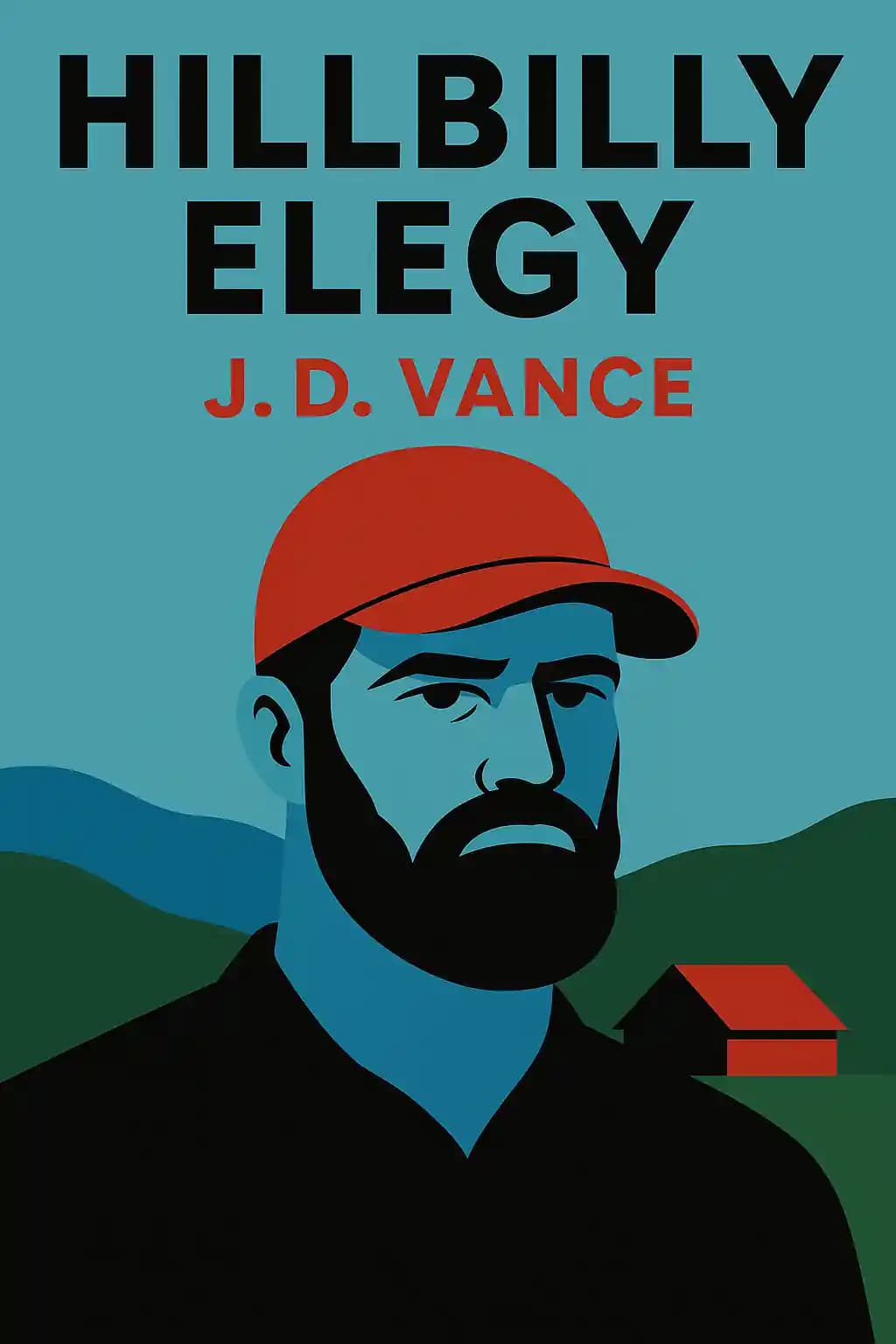
In 2016, an unlikely memoir from an unknown author became a cultural phenomenon that captured America's attention. J.D. Vance's "Hillbilly Elegy" spent 74 weeks on the New York Times bestseller list, was adapted into a Ron Howard film starring Glenn Close and Amy Adams, and sparked national conversations about class, culture, and the American Dream. The book resonated with readers across the political spectrum, from conservative commentator Rod Dreher to liberal senator Elizabeth Warren, who called it "a must-read." What made this deeply personal story of growing up poor in Appalachia and the Rust Belt so universally compelling? Perhaps because it offered something increasingly rare in our polarized society: an authentic voice that bridged America's growing cultural divide, speaking hard truths about both personal responsibility and systemic challenges facing working-class Americans.
第2章
The Hillbilly Highway: From Appalachia to the Rust Belt
The story of J.D. Vance's family begins in Jackson, Kentucky - a small coal town nestled in the Appalachian mountains where people still stand at attention for funeral processions and family feuds are passed down through generations. For young J.D., Jackson represented stability and belonging despite its poverty. While his life in Ohio was marked by his mother's addiction and revolving door of boyfriends, in Jackson he was simply the grandson of the toughest woman and best mechanic in town.
His grandparents, James and Bonnie Vance (known as Papaw and Mamaw), left Jackson in the late 1940s as teenagers. Their hasty departure was prompted by more than economic opportunity - fourteen-year-old Mamaw was pregnant, having lied about her age to marry seventeen-year-old Papaw. Though their first child died shortly after birth, this young couple was part of a massive migration wave that would transform the industrial Midwest.
This "hillbilly highway" transported millions from Kentucky, West Virginia, and Tennessee to manufacturing centers in Ohio, Indiana, and Michigan. Companies like Armco Steel actively recruited in eastern Kentucky, offering steady wages and benefits that seemed like unimaginable wealth to people from single-room schoolhouses and coal mining families. By 1960, one million of Ohio's ten million residents were Appalachian transplants, not counting their children and grandchildren who remained culturally Appalachian.
The migration created distinct cultural enclaves in industrial cities. Middletown, Ohio became "Middletucky" as transplants maintained their dialect, customs, and family networks. These hillbillies disrupted assumptions about how white people should appear, speak, and behave - their "racialness" disturbed northern whites despite ostensibly belonging to the same racial category. When Papaw's friend slaughtered chickens in his backyard to the horror of well-bred Middletown housewives, Mamaw colorfully condemned the "fucking zoning laws" that interfered with their traditional practices.
The move also disrupted traditional family structures. In Jackson, privacy barely existed - family members freely entered homes and offered unsolicited advice on childrearing, marriages, and jobs. But in Middletown, "a man's home was his castle," forcing hillbilly transplants to navigate new boundaries without their traditional support networks. Despite these challenges, Mamaw and Papaw began building a middle-class life, welcoming their son Jimmy in 1951 and showering him with material comforts they never had.
第3章
The Chaos of Home: Violence, Addiction, and Broken Promises
By the mid-1960s, the outward appearance of middle-class success masked a deteriorating home life. Papaw's drinking became habitual, and Mamaw withdrew from the outside world, becoming known as the "evil witch" of McKinley Street. Their explosive relationship reflected hillbilly culture's volatile blend of honor, family devotion, and sexism.
The household operated on a terrifying unpredictability. Young Bev and her sister learned to predict their father's mood by how he parked his car, running to neighbors' homes on bad days. One Christmas Eve, he drunkenly demanded dinner and threw the Christmas tree out the door when refused. Mamaw fought back with creative vengeance - cutting his pants so they'd split later, hiding his wallet in the oven, or serving him plates of garbage. In one horrifying incident, after warning Papaw never to come home drunk again, Mamaw poured gasoline on him while he slept, lit him on fire, and their eleven-year-old daughter had to save his life.
Despite their violent marriage, Mamaw and Papaw maintained optimism about their children's futures, believing that if they could rise from poverty to middle class, their children should easily attend college and achieve the American Dream. This optimism proved naive. All three children were profoundly affected by their tumultuous home life. Jimmy rejected college for immediate employment at Armco to escape the household. Lori struggled in school, experimented with drugs, dropped out at sixteen, and married into another abusive relationship.
Bev - J.D.'s mother - followed the most troubled path. After getting pregnant at eighteen with Lindsay, she abandoned college plans, married, then quickly divorced when her new life developed the same fighting and drama she'd grown up with. This pattern would repeat throughout her life, with J.D. arriving during her second marriage, followed by three more husbands and a deepening addiction to prescription painkillers.
For young J.D., this chaos created a childhood of constant upheaval. He moved repeatedly, cycling through his mother's boyfriends and husbands, witnessing domestic violence, and eventually facing his mother's escalating drug addiction. When his mother threatened to crash their car with him inside, he escaped and found refuge with a stranger. After police intervention, through "hillbilly justice," he could live with his grandparents whenever he wished while his mother officially retained custody.
In this environment, J.D. learned that men were unreliable - they "disappear at the drop of a hat" as his sister Lindsay put it. His biological father had given him up for adoption, and subsequent father figures came and went with devastating regularity. When his stepfather Bob disappeared on his eleventh birthday, it was just another in a series of male abandonments. The only consistent male presence was his grandfather, who despite his flaws, taught J.D. "the things that men needed to know."
第4章
The Protectors: How Family Saved a Child from Chaos
Amid the turmoil of J.D.'s childhood, several figures emerged as crucial protectors who quite literally saved his life. His sister Lindsay, five years older, stepped into a parental role despite being "barely bigger than me." She fed him when hungry, called their grandparents during explosive fights, and served as "my first line of defense, even before Mamaw." Only later did J.D. recognize she was just "a young girl, not yet old enough to drive a car, learning to fend for herself and her little brother at the same time."
But the most transformative presence was Mamaw - a fierce, foul-mouthed hillbilly with unwavering loyalty to family. Despite her own flaws, she provided the stability J.D. desperately needed. When he moved in with her permanently, she established three simple rules: get good grades, get a job, and help around the house. This structure, combined with her fierce protection, created the conditions for him to thrive.
Mamaw's parenting philosophy blended hillbilly toughness with unconditional love. She taught J.D. proper fighting technique - how to stand sideways to present a smaller target and punch with your whole body - while establishing clear moral guidelines: never start a fight but always end one if someone else starts it. She forbade him from seeing neighborhood friends who were using drugs, threatening to run them over with her car if he disobeyed. Yet beneath this toughness was profound love - she wrote to him daily during Marine boot camp and supported his education at every turn.
J.D.'s biological father Don also reemerged during his adolescence, providing a different but equally valuable model. Don had created a serene rural home with fourteen acres, a pond, farm animals, and the freedom to run through fields with his gentle collie - mirroring the peaceful Kentucky life J.D. cherished. His household with his wife Cheryl was strikingly calm compared to his mother's: arguments without screaming, discipline without abuse, and a strong religious foundation. Though family members claimed Don had been "mean" during his marriage to J.D.'s mother, he had clearly changed, crediting his religious faith.
These protective figures offered J.D. something his peers often lacked - a sense that someone cared what happened to him and would fight for his future. They created what researchers call "social capital" - the networks and relationships that connect people to opportunities. Without them, J.D. likely would have followed the downward trajectory so common in his community.
第5章
The Culture of Poverty: Beyond Economic Explanations
As J.D. matured, he began to recognize that his community's struggles went beyond simple economic explanations. While Middletown's decline was real - the once-proud downtown deteriorated into abandoned shops, pawnshops, and payday lenders - the deeper problems were cultural and psychological.
The community lived irrationally - spending beyond their means on TVs and iPads while accumulating debt, living in chaotic homes filled with screaming and sometimes violence, neglecting education, making excuses for unemployment, and developing habits that shortened lifespans. These patterns persisted even when economic opportunities existed. J.D. witnessed this firsthand working at a tile warehouse where good jobs went unfilled because young men couldn't maintain basic work habits.
This culture of poverty manifested in specific ways. Education was simultaneously valorized and undermined - parents spoke about its importance but rarely scolded for bad grades, making excuses like "maybe she's just not good at fractions." The prevailing belief was that success came either from family wealth and connections (which almost no one had) or natural intelligence. Hard work mattered less than raw talent.
Similarly, the rhetoric of industriousness conflicted with reality. People talked endlessly about hard work in a town where 30 percent of young men worked fewer than twenty hours weekly. Studies showing working-class whites worked more hours than college-educated whites were based on self-reporting, proving only that people claimed to work more than they actually did.
These cultural patterns created what psychologists call "learned helplessness" - the belief that one's actions don't matter. When people perceive no benefit to hard work, they stop trying. This creates a cultural movement to blame problems on society or government rather than personal choices. As J.D. observed, "the feeling that our choices don't matter" was perhaps the most destructive aspect of hillbilly culture.
Research confirms this psychological dimension. The Pew Economic Mobility Project revealed that no group in America is more pessimistic than working-class whites. While most blacks, Latinos, and college-educated whites expect their children to fare better economically, only 44% of working-class whites share this expectation. This pessimism becomes self-fulfilling as it undermines the very behaviors that might lead to upward mobility.
第6章
The Trauma Inheritance: How Childhood Adversity Shapes Adult Lives
By his second year of law school, J.D. had seemingly beaten the odds - Senate job under his belt, beautiful girlfriend, and a great law firm position nearly secured. Yet relationship problems with his girlfriend Usha revealed he'd inherited troubling family patterns. When she noted he withdrew like a turtle at the first sign of conflict, she identified his limited emotional toolkit: he could either scream or withdraw completely.
This pattern reflected what psychologists call "adverse childhood experiences" (ACEs) - traumatic events whose consequences reach into adulthood. These include being insulted by parents, witnessing violence, feeling unsupported by family, having divorced parents, or living with substance abusers or depressed individuals. When J.D. administered an ACE assessment, his Aunt Wee scored seven out of ten, while he and his sister each scored six. His girlfriend and her brother - whose families seemed "oddly nice" - scored zero.
Studies show ACEs are far more common in working-class communities, with profound consequences. Children with multiple ACEs struggle more with anxiety, depression, heart disease, obesity, certain cancers, school performance, and relationship instability. Harvard pediatricians found constant stress can actually change a child's brain chemistry, creating adults who are hypervigilant, quick to anger, and prone to fight-or-flight responses in normal situations.
This trauma inheritance explains why many who escape poverty financially still struggle emotionally. The very traits that helped J.D. survive childhood - seeing conflict as requiring fight or flight, hiding money in multiple places, defending his honor aggressively - inhibited his adult success. Even after graduating from Yale Law School, when someone cut him off in traffic, his instinct was confrontation. For the first eighteen years of his life, backing down would have labeled him a "pussy" or a "wimp" - doing the right thing still sometimes felt wrong.
This psychological dimension helps explain why upward mobility is so difficult. It's not just about acquiring money or education - it's about unlearning deeply ingrained survival mechanisms that no longer serve you in professional environments. Without addressing these psychological barriers, economic opportunities alone won't solve generational poverty.
第7章
The Military Transformation: How the Marines Created an Adult
At seventeen, facing poor grades and an uncertain future, J.D. made a decision that would transform his life - he joined the Marine Corps. His family initially scoffed, but he recognized he needed discipline and structure. With the Iraq War beginning, he signed up for four years, terrified but determined.
Boot camp at Parris Island became a crucible that revealed his untapped potential. The constant challenges - from drill instructors screaming to physical tests he thought impossible - helped him overcome the "learned helplessness" of his youth. He discovered he could accomplish far more than he'd ever believed possible, going from fearing a thirty-foot rope climb to mastering it one-armed, from never having run a mile to completing three in nineteen minutes.
Most importantly, the Marine Corps provided practical education on adult life that his family couldn't offer. It assumed maximum ignorance from enlisted personnel and systematically addressed those gaps - teaching everything from physical fitness to personal finances. His superiors ensured he opened a proper bank account, sought medical care when needed, and made sound financial decisions - like avoiding the 21-percent interest rate car loan he nearly accepted.
The military also expanded his worldview. In Iraq, while on a civil affairs mission to an Iraqi school, he experienced a profound shift in perspective when a shy boy's face lit up with joy after receiving a simple eraser. Standing among children in a war-torn country with a school lacking running water, he suddenly appreciated how fortunate he'd been - born in America, with modern conveniences and a family that loved him unconditionally.
Perhaps most significantly, the Marines replaced his self-doubt with a loathing for excuses. Where he once confused lack of effort for inability, he now understood the power of pushing beyond perceived limits. As one drill instructor screamed when he finished a run: "If you're not puking, you're lazy!" This mentality - that giving your all wasn't just a catchphrase but a way of life - fundamentally changed him.
When he was unexpectedly appointed media relations officer for one of the largest East Coast military bases despite being eight pay grades junior, he learned to hold his own with senior officers and earned a commendation medal. This experience taught him that he could handle responsibilities he previously thought impossible. At twenty-three, he left the Marines with clear direction - he would attend college and then law school, a path that once seemed unimaginable.
第8章
Crossing the Class Divide: The Hidden Rules of Mobility
Despite his transformation in the Marines, J.D. discovered that upward mobility involved navigating invisible barriers he hadn't known existed. At Ohio State, he felt increasingly out of place as a 24-year-old sophomore with military experience. During a foreign policy seminar, he listened in disbelief as a 19-year-old claimed soldiers were less intelligent than college students and disrespected Iraqi civilians - comments that revealed the vast experiential gulf between them.
This sense of displacement intensified at Yale Law School, where he encountered a surreal environment of privilege. The beautiful neo-Gothic campus buildings predated the Revolutionary War, earning the nickname "Hogwarts Law School." Tony Blair spoke casually to small groups, and J.D. regularly bumped into political figures. Over 95% of his classmates were upper-middle-class or wealthy, with intact families - making his background an anomaly: mediocre public high school, parents without college degrees, military service.
The stark class differences became apparent in small moments, like when only one other student helped him clean up after a group meal. Initially, he hid aspects of his past, but eventually stopped being ashamed. Yet he struggled with his identity, once lying to a stranger about attending Yale despite her nephew being a student there - a reflection of his discomfort straddling two worlds.
Yale revealed a hidden system of opportunity that had been invisible to him. During the Fall Interview Program, he navigated unfamiliar social territory - from not knowing wine varieties to being baffled by multiple utensils at his place setting (requiring an emergency bathroom call to his girlfriend for guidance). He even embarrassingly spit out sparkling water, not having encountered carbonation before.
While he had previously applied to dozens of jobs after college with no success, now elite firms were offering six-figure salaries after brief interviews. The difference wasn't grades or resumes but social capital - the networks that connect people to opportunities. When he flubbed an interview question, a recommender's behind-the-scenes phone call saved him.
Similarly, he struggled to understand the importance of Yale Law Journal membership until Professor Amy Chua explained its value for certain career paths. Without connections to alumni groups or insider knowledge, he had been navigating crucial career decisions blindly. His experience revealed how much he didn't know about professional success - from wearing appropriate interview attire to understanding that finance was an actual industry.
These knowledge gaps have serious economic consequences. Elite schools can actually be more affordable for low-income students due to generous financial aid, but many don't realize this. True social inclusion requires the upper class to open their hearts to newcomers who don't quite belong, while those seeking mobility must learn the unwritten rules of professional environments.
第9章
Beyond Policy: What Really Matters for Opportunity
When people ask J.D. how to solve his community's problems, they're looking for policy solutions or government programs. But these family, faith, and culture problems aren't like puzzles with neat solutions. As a White House friend once told him, "Maybe you can't fix these things, but you can put your thumb on the scale for people at the margins."
His life story reveals how many variables had to align perfectly to give him a chance - his grandparents' presence, caring men despite the revolving door of father figures, his mother's emphasis on education, his sister's protection, and his aunt and uncle's open home. Remove any one piece, and he likely wouldn't have made it.
Others who've overcome similar odds cite the same interventions - stable family providing a sense of control, and exposure to different possibilities through role models. His cousin Gail, who seems to have a picture-perfect life now, overcame teenage pregnancy, family rejection, and single motherhood through sheer determination and the hillbilly ethos that "we could do anything we wanted."
Raj Chetty's groundbreaking study on opportunity in America confirmed what J.D. already knew - the American Dream isn't equally accessible everywhere. While places like Utah, Oklahoma, and Massachusetts show strong upward mobility, the South, Rust Belt, and Appalachia struggle. Two key factors explain this: prevalence of single parents and income segregation.
Growing up surrounded by single parents and concentrated poverty means lacking examples of what education and hard work can achieve. It's no surprise that Mormon Utah - with strong church community, integrated neighborhoods, and intact families - outperforms Rust Belt Ohio.
Our social services systems often fail families like J.D.'s. When he was twelve and his mother was arrested, caseworkers threatened to separate him from his grandmother because she wasn't a licensed foster parent. He stayed quiet about his living situation out of fear. State laws defining "family" often exclude the extended family networks crucial to hillbilly, Black, and Hispanic communities. Some states require occupational licensing for grandparents to foster their own grandchildren.
Effective policies would recognize that the real problems happen at home. Section 8 vouchers should be administered to prevent segregating poor families into "enclaves of hopelessness." As one teacher noted, "put lower-income kids with those who have a different lifestyle model, and the lower-income kids start to rise up."
Yet the most important lesson from J.D.'s life isn't that society failed to provide opportunities - his schools were adequate, he had financial aid for college, and government benefits helped ensure he never went hungry. His near-failures came from factors beyond government control - the chaos at home, the lack of stable adult figures, and the cultural messages that undermined achievement.
第10章
Hillbilly Reckoning: Taking Responsibility for Our Future
Standing in a Washington D.C. Walmart before Christmas, J.D. found himself shopping for a child he'd "adopted" through the Salvation Army's gift program. He struggled with every item on the list, overthinking each choice through the lens of his own upbringing. Pajamas seemed an elite indulgence; toys might invite punishment from adults; learning aids might appear condescending.
This experience highlighted the stark contrast between his childhood Christmas rituals - defined by financial strain, post-dated checks, payday loans, and desperate searches for trendy toys - and his current life of material comfort. While his family would spend beyond their means for Christmas, wealthier families approached holidays differently, focusing less on expensive gifts and more on meaning.
These cultural differences reflect the increasing separation between America's social classes. Though J.D. sometimes views the elite with scorn, he acknowledges their children are healthier and happier by many measures. The cultural practices that helped his family survive in Appalachian hollows - quick to anger, suspicious of outsiders, resistant to authority - have become maladaptive in a modern economy that rewards cooperation, trust, and long-term planning.
Despite his success, J.D. remains connected to his roots. When his drug-addicted mother called needing help, he found himself at midnight in a sleazy Middletown motel, arranging a room for her. Though he'd sworn never to help her again, his newfound exploration of Christianity, better understanding of her childhood wounds, and recognition of his own unhealed trauma led him to offer assistance.
His plan seemed simple: pay for a hotel room, give her money to get back on her feet, and monitor her finances while she worked toward regaining her nursing license. It reminded him of the "plans" his grandparents used to make for his mother, but he convinced himself this time would be different. Eventually, he reached an uneasy truce with himself - he no longer hides from his mother, but recognizes his limitations, helping when finances and emotional reserves allow.
This personal reckoning mirrors what J.D. believes his community needs - honest self-examination and responsibility. While public policy can help, these problems require hillbillies' own solutions. They created them, and only they can fix them - not by blaming others but by asking what they can do to make things better.
For kids like Brian, a young Appalachian boy J.D. met who reminded him of himself - hungry, dealing with addiction in his family, and facing limited prospects - to succeed, hillbillies must "wake the hell up" and take responsibility. The American Dream remains possible, but only for those willing to confront hard truths about both personal choices and systemic barriers, working to overcome both with clear-eyed determination.