第1章
When Innocence Meets Darkness: A Supernatural Tale of Recovery and Redemption
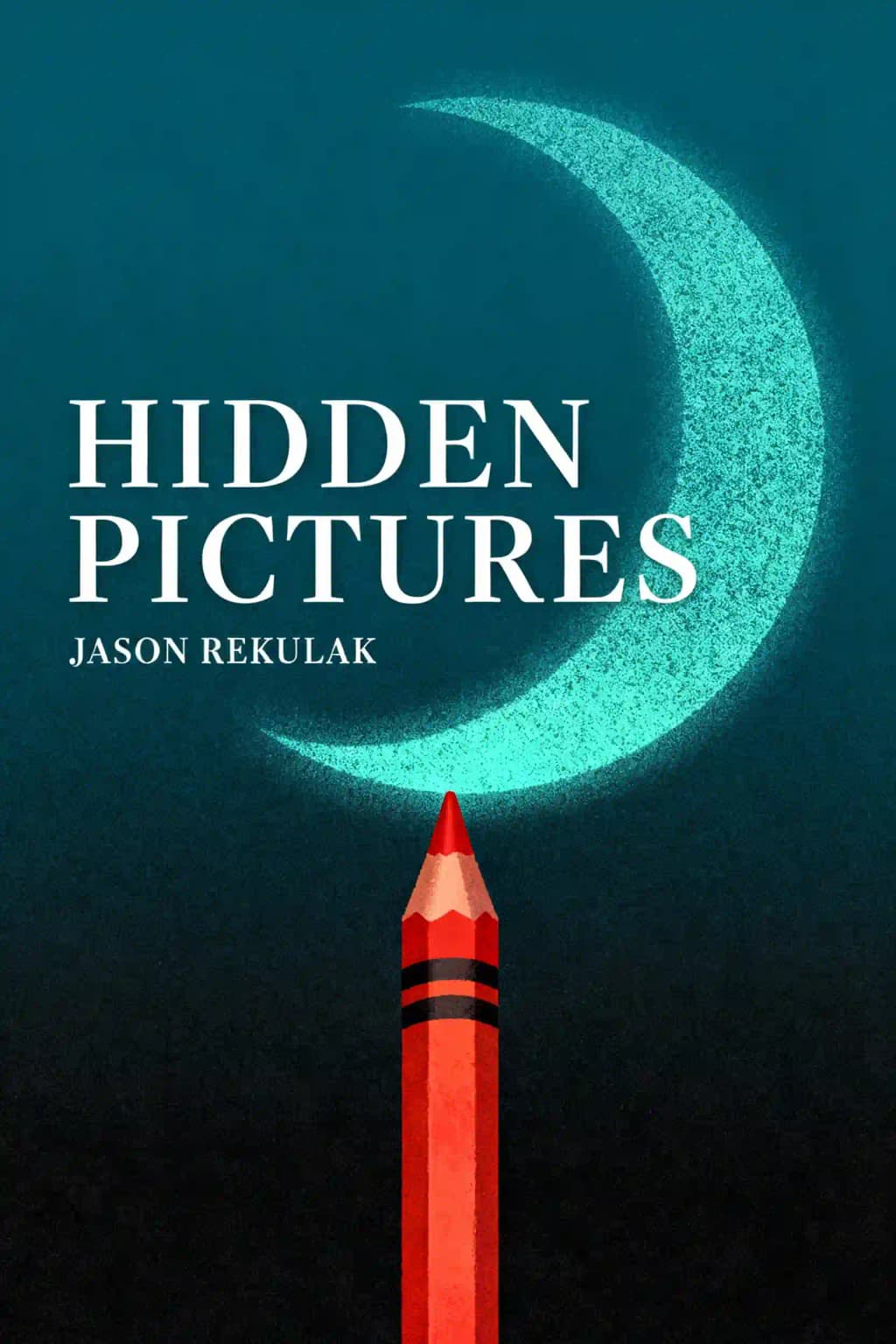
"Hidden Pictures" has become a cultural phenomenon since its release, captivating readers with its unique blend of psychological thriller and supernatural elements. The book shot to the New York Times bestseller list within weeks of publication and has been optioned by Netflix for a limited series. Stephen King praised it as "a masterclass in slow-burning suspense with a twist that will leave you breathless," while Reese Witherspoon selected it for her book club, calling it "impossible to put down." Author Jason Rekulak draws on his extensive publishing background as former publisher of Quirk Books to craft a story that feels both familiar and utterly original. What begins as a redemption narrative quickly transforms into something far more sinister, exploring themes of addiction, recovery, and the supernatural in ways that have resonated deeply with readers seeking stories that defy easy categorization.
第2章
The Road to Recovery: Mallory's Second Chance
Mallory Quinn is twenty-one years old and eighteen months sober when we meet her. A former competitive runner whose life derailed into heroin addiction, she now lives in a three-quarters house in Philadelphia and works at a childcare center. Her recovery journey is guided by Russell, her sponsor and former Olympic track coach who served time for manslaughter. It's Russell who arranges a life-changing job interview for Mallory with Ted and Caroline Maxwell in pristine Spring Brook, New Jersey.
The contrast between Mallory's world and Spring Brook couldn't be starker. As Russell drives her through the immaculate suburban town with its Colonial houses, American flags, and "Children Live Here" signs, Mallory feels like she's on a movie set. The perfection is almost unsettling-yoga studios, cafes, and well-dressed teenagers populating a Starbucks. This pristine setting serves as both promise and warning: a chance at a new beginning, but also a place where Mallory, with her troubled past, might never truly belong.
The Maxwells' three-story Victorian home with yellow siding, white gingerbread trim, and wraparound porch epitomizes suburban perfection. Their five-year-old son Teddy, a shy boy with orange-reddish hair sticking up "like a Troll doll," initially runs away when Mallory introduces herself. Caroline Maxwell, warm and enthusiastic, immediately mentions Mallory's recovery and congratulates her on eighteen months of sobriety-a reminder that her past will always precede her.
The interview reveals the stark class differences between Mallory and her potential employers. The Maxwells' kitchen is "a Food Network set" with multiple refrigerators stocked with organic produce and artisanal foods. Caroline's list of house rules is extensive: no drugs, drinking, smoking, profanity, screens, red meat, junk food, unauthorized visitors, or posting photos of Teddy online. The final handwritten rule says simply: "Have fun!"-a command that feels oddly forced amid so many restrictions.
When Ted Maxwell enters the picture, the interview's tone shifts dramatically. Significantly older than Caroline, he's tall, trim, with gray hair and dark-framed glasses, dressed in expensive casual clothes. He interrogates Mallory about her lack of college education and marks each deficiency with small Xs on her resume. Despite Teddy's obvious attachment to Mallory, Ted clearly prefers someone with better credentials, telling her directly that her addiction history makes her "too much of a gamble."
Despite Ted's objections, Caroline hires Mallory, afraid another family might "steal" her away. Three days later, Mallory packs her meager belongings and leaves Philadelphia to start her new life in Spring Brook, hoping this second chance might be the beginning of something permanent.
第3章
The Perfect Family's Dark Undercurrents
Life with the Maxwells initially seems idyllic but gradually reveals troubling undercurrents. The family maintains strict rules about screen time-Teddy has never seen Star Wars, Toy Story, or even Sesame Street. Their only exception is weekly "Family Movie Night" featuring films with "genuine artistic merit," typically foreign or classic movies. The Wizard of Oz is Teddy's favorite, inspiring elaborate "Land of Oz" games in the swimming pool.
During these innocent play sessions, Teddy begins asking profound questions about death-what happens to "the person inside the body" when someone dies, and whether any part of a person stays alive afterward. Though Mallory's faith gives her strong beliefs about eternal life, she remembers Ted's rule against discussing religion ("teach science") and deflects Teddy's questions.
The Maxwells' neighbor Mitzi introduces the first hint of the property's dark history. Eccentric, marijuana-scented, and dressed in a muumuu with excessive jewelry, she cryptically mentions the guest cottage having a "history" but refuses to elaborate. When pressed, she reveals it was called "Devil House" in her childhood because an artist named Annie Barrett was murdered there after World War Two, though her body was never found.
Caroline dismisses Mitzi's story as paranoia from a "drug-addled mind," explaining that all old houses have horror stories. Despite Caroline's reassurances, Mallory begins experiencing strange phenomena in the cottage-a high-frequency humming, like a mosquito near her ear, and a gray speck in her peripheral vision. For the first time, she feels like someone might be watching her.
The most disturbing development comes when Mallory discovers Teddy has an imaginary friend named Anya who "sleeps under his bed" and sings to him at night. Caroline seems embarrassed by this creation but assures Mallory it's normal. However, Teddy soon begins producing disturbing drawings that he claims Anya "acts out" for him-including one of a man dragging a woman's lifeless body through a starry forest. When Mallory moves to file the drawing with his other artwork, Teddy stops her, saying "Anya says she wants you to have it."
As these strange occurrences multiply, Mallory finds herself increasingly isolated. Her weekends are lonely while the Maxwells enjoy family outings. She cleans obsessively and attends church services where she feels out of place. The perfect family and their perfect home begin to feel like a facade concealing something much darker.
第4章
Anya's Emergence: The Supernatural Takes Hold
Teddy's relationship with his imaginary friend Anya takes a disturbing turn when Mallory overhears him having what sounds like a one-sided conversation with long pauses. Later, Teddy shows her increasingly disturbing drawings-a man dragging a woman's body, someone being buried in a forest hole, a woman being strangled. When questioned, Teddy casually explains these violent scenes as stories Anya tells him to draw.
Concerned about these developments, Mallory begins researching Annie Barrett online but finds nothing relevant. Her sponsor Russell calls to check on her, seeming to sense something's wrong. He questions if she's having memory lapses or "glitches," which Mallory denies. The conversation leaves her unsettled, wondering if her perception of reality might be slipping.
The supernatural elements intensify when Mallory discovers a creature under her cottage. Though Ted later explains it was just a possum that entered through a hole in the lattice, the incident leaves Mallory shaken. That night, the three of them sit on her bed talking and laughing, momentarily bridging the social gap between them.
As Mallory struggles to help Teddy make friends at the playground, he continues producing disturbing drawings. After accidentally falling asleep on the sofa one afternoon, Teddy wakes her and hands her another drawing showing a man burying Anya in a forest hole. When questioned, he cheerfully explains the man "stole Anya's little girl" and buried her so no one would find her, but "she got out."
Desperate for answers, Mallory visits Mitzi to learn more about Annie Barrett. Mitzi reveals that Annie was George Barrett's beautiful cousin who lived in the guest cottage in 1946. Despite attracting many admirers, she kept to herself, sparking rumors she was a witch. One day, George found blood everywhere in the cottage but no body-Annie had vanished without a trace.
The supernatural elements reach their peak when Mallory sets up a baby monitor to observe Teddy during his "Quiet Time." The video feed reveals disturbing anomalies-Teddy speaking to someone unseen, the feed skipping and distorting, and Teddy's face appearing grotesquely distorted as he whispers "Careful. Gently." When Mallory finally gets into his locked room, she detects a powerful ammonia smell and finds Teddy drawing frantically with his right hand (though he's normally left-handed) while his eyes are rolled back in his head.
These increasingly bizarre events force Mallory to consider three possibilities: the Maxwells are planting the drawings, Teddy is somehow creating masterful artwork beyond his abilities, or-most disturbing of all-Anya is real and controlling Teddy. As impossible as it seems, the supernatural explanation begins to feel most plausible.
第5章
Unexpected Allies and Deepening Mystery
As the strange events escalate, Mallory finds an unexpected ally in Adrian, a young landscaper who works on the Maxwells' property. Their relationship begins with Mallory's lies-embarrassed by her lack of education, she claims to be attending Penn State on a cross-country scholarship. Despite this deception, they develop a genuine connection as Adrian helps her investigate the mysterious drawings.
When Mallory shows Adrian the drawings from Teddy's recycling bin, he doesn't dismiss her supernatural theory. Instead, he notices they resemble hidden-picture puzzles from Highlights magazine but believes they're depicting Annie Barrett's murder. Adrian offers to have his librarian mother search for historical photos of Annie Barrett to compare with the drawings.
Their investigation takes a dramatic turn when Mallory conducts a seance with Mitzi using a spirit board. During the session, Mallory feels a presence behind her-something with long hair that applies pressure to her hand, moving the planchette across the board. The letters appear random at first, but later Adrian helps her realize the Xs aren't letters but word separators, translating the Hungarian message: "YES BEWARE THIEF HELP FLOWER."
The mystery deepens when Adrian's mother finds a book titled "The Collected Works of Anne C. Barrett (1927-1948)." George Barrett's introduction reveals Annie was his 19-year-old cousin who came from Europe in 1946 to live with his family. Despite his attempts to integrate her into Spring Brook society, Annie remained solitary, describing herself as an artist who spent time painting or walking barefoot in the forest. George portrays her as irresponsible and immoral, noting she was abducted from their guest cottage in 1948 and presumed dead.
As Mallory and Adrian's investigation progresses, their relationship also deepens. They share personal stories and romantic moments, though Mallory continues her deception about her background. The tension between her growing feelings for Adrian and her fear of revealing her true self adds emotional complexity to the supernatural mystery.
Their partnership is tested when the Maxwells discover Mallory's investigation. After confronting her about the seance and the drawings, they fire her, insisting the drawings represent her own trauma about her friend Beth's death, not Anya's story. Despite the setback, Adrian remains committed to helping Mallory solve the mystery, even when she finally reveals the truth about her addiction history.
第6章
The Shocking Truth Unravels
The investigation takes a dramatic turn when Mitzi is found dead in the woods wearing only a nightgown, without her usual jewelry. Police set up crime scene tape and question Mallory and Adrian separately. Detective Briggs informs Mallory that Caroline had heard Mitzi arguing with someone before following them outside in her nightgown.
Meanwhile, Adrian's mother's research leads them to Dolores Jean Campbell in Akron, Ohio-potentially Annie Barrett's daughter. When they finally speak with Curtis Campbell, Annie's grandson, he reveals the shocking truth: Annie was never murdered. She was a British woman who fell in love with a Black man named Willie in 1948. When she became pregnant, rather than face societal scorn, they eloped to Ohio. Her cousin George staged her "murder" with pig's blood to save face. Annie lived to 81, raising a family near Akron.
This revelation forces Mallory to reconsider everything. If Annie Barrett wasn't murdered, who is Anya? And why is she communicating through Teddy's drawings? The answer comes when Detective Briggs shows Mallory Mitzi's final, unfinished text: "We need to talk. I was wrong about before. Anya isn't a name, it's-"
When Mallory returns to the Maxwells' house, she finally realizes they've been lying to her all along. Examining the drawings more carefully, she notices one showing an angel wielding what looks exactly like Caroline's Vipertek stun gun. Another crucial detail emerges when Mallory points out that Teddy has never been on an airplane despite the Maxwells' claims of flying from Barcelona.
The final piece of the puzzle falls into place when Mallory asks the question that explains everything: "Why didn't you tell me Teddy is a girl?" Though Caroline responds with practiced indignation about gender identity, claiming they're raising Teddy as transgender, Mallory sees through their lies-they've stolen someone's daughter, disguised her as a boy, and isolated her from the world.
The truth is devastating: "Teddy" is actually Flora Baroth, a kidnapped girl. The Maxwells can't provide vaccination records for school registration because they don't have them. When Mallory announces she needs to tell Detective Briggs everything, Caroline smashes a wine bottle against her head, and Ted returns with Caroline's stun gun.
第7章
Sacrifice and Redemption
As Caroline injects Mallory with what she believes is heroin, intending to stage her death as an overdose, Mallory experiences the familiar first chill-"like an ice cube at the injection site." Left alone to die, she pleads with God for forgiveness, feeling herself falling back, weightless and suspended in space. Instead of death, she sees a figure waiting in the shadows-not Anya, but Margit.
Margit appears hovering in a mist, her white dress speckled with dirt, her broken neck tilting her head at an unnatural angle. When she touches Mallory's shoulder, Mallory experiences Margit's overwhelming sorrow-visions of a lakeside scene she recognizes from Teddy's drawings. Their grief mingles until Mallory can't distinguish between them, both haunted by the same regrets.
The situation takes another unexpected turn when Ted enters and reveals he switched Caroline's heroin with baby powder. He begins cutting Mallory's restraints, confessing his plan to escape with her to Washington state with $80,000 from his cashed-in IRAs. He insists they leave Teddy/Flora behind with "his two mommies."
As Mallory pretends to agree, Caroline appears and shoots Ted multiple times. She explains the smoke detector in Mallory's cottage was actually Ted's webcam to spy on her. Caroline forces Mallory at gunpoint to grab a knife, planning to stage her death as self-defense after she "killed" Ted. In a desperate moment, Ted-not quite dead-lunges at Caroline's legs. Mallory flees but, rather than escaping to safety, returns to rescue Teddy/Flora.
The climactic scene unfolds in the Enchanted Forest where Mallory and Teddy/Flora hide in a tree as Caroline pursues them with a flashlight. When Teddy/Flora moves toward Caroline's coaxing voice, his/her eyes suddenly roll back-Margit has taken control. He/she leaps from the tree onto Caroline, knocking away her gun and repeatedly stabbing her neck with a broken arrow.
Understanding instantly what happened, Mallory pulls Teddy/Flora off Caroline's thrashing body. When police surround them, Teddy/Flora returns to himself/herself, terrified and confused. Mallory spots Margit watching from a distance as she confesses to the murder, dropping the arrow as evidence to protect the child.
第8章
Healing and New Beginnings
In the aftermath, Mallory's seemingly improbable story finds confirmation: Teddy is anatomically female, matching Flora Baroth's description from the missing children's registry; property records show the Maxwells owned a cabin near where Flora disappeared; their passports prove they'd never been to Spain; and Jozsef (Flora's father) confirms details about his wife's vehicle that weren't public knowledge.
Rather than accepting Adrian's offer to live with him during his final year at Rutgers, Mallory moves into her sponsor Russell's guest room in Norristown. She finds work at a running store, joins their running club, finds a church with younger members, and resumes NA meetings. Though she can't visit Flora on her sixth birthday due to doctors' concerns about the child's fragility, Jozsef keeps her updated on Flora's progress living with extended family and undergoing various therapies.
The story concludes with a bittersweet reunion. When Mallory visits Flora with gifts-watercolor pencils, star fruits, and a recipe booklet of desserts they made together-the child is polite but distant. Mallory realizes Flora is trying to forget her and Spring Brook, adapting to her new life where Mallory has no place. As Mallory and Adrian prepare to leave for Niagara Falls, Flora runs after them for one final, wordless hug before pressing a folded drawing into Mallory's hands and running back.
The novel ends with Mallory's acknowledgment that someday Flora will have questions about what really happened in Spring Brook, and when that day comes, this book-and Mallory-will be waiting. This conclusion beautifully captures the novel's central themes of sacrifice, redemption, and the painful process of healing from trauma.
第9章
The Supernatural as Metaphor for Trauma and Recovery
Throughout "Hidden Pictures," the supernatural elements serve as powerful metaphors for trauma and recovery. Anya/Margit's possession of Teddy/Flora mirrors how trauma can take control of its victims, forcing them to relive and reenact painful experiences. The disturbing drawings that appear throughout the narrative represent trauma's tendency to emerge in fragmented, symbolic ways when direct communication becomes impossible - much like how children often express their emotional pain through artwork when they lack the vocabulary to articulate their experiences verbally. These drawings evolve from simple sketches to increasingly complex and haunting images, paralleling the gradual unveiling of buried memories and suppressed pain.
Mallory's journey from addiction to recovery parallels her investigation of the supernatural mystery, creating a dual narrative of personal and external discovery. Her struggles with sobriety - the daily battles, the constant temptation, the weight of past mistakes - find their supernatural counterpart in her determination to uncover the truth about Flora. Just as recovery requires peeling back layers of denial and self-deception, Mallory must strip away the carefully constructed veneer of the Maxwells' perfect suburban life. Her willingness to sacrifice herself to save Flora represents the final stage of her recovery - putting someone else's needs before her own and finding redemption through selfless action. This sacrifice echoes the twelve-step program's emphasis on making amends and serving others as crucial components of healing.
The novel's exploration of false memories and perception adds another layer of complexity to its examination of trauma. Mallory's uncertainty about her experience at the University of Pennsylvania research study reflects the unreliability of memory, especially for those with addiction histories. This theme extends to the Maxwells' elaborate deception and Flora's eventual attempt to forget her traumatic past. The narrative suggests that memory itself can be both a sanctuary and a prison - protecting us from unbearable truths while simultaneously trapping us in cycles of pain and denial. The supernatural manifestations in the story often emerge at the intersection of memory and reality, suggesting that our minds can create their own haunted spaces.
In the end, "Hidden Pictures" is not just a supernatural thriller but a profound meditation on the nature of recovery, redemption, and the human capacity for both terrible cruelty and extraordinary sacrifice. Through Mallory's journey, we witness the painful but necessary process of confronting the past, accepting responsibility, and finding the courage to begin again - even when that means letting go of someone we love. The supernatural elements serve not merely as plot devices but as powerful metaphors for the invisible wounds that shape our lives and the ghostly echoes of trauma that continue to influence our present actions. The novel suggests that true healing requires not just acknowledging these ghosts but actively confronting them, even when doing so threatens to unravel everything we believe about ourselves and our world.
第10章
A Story of Sacrifice, Identity, and Second Chances
At its heart, "Hidden Pictures" explores the complex interplay between identity, deception, and redemption. Every character wears masks-Mallory hides her addiction history, Adrian presents himself as more sophisticated than he is, the Maxwells construct an elaborate facade of perfection, and Flora is forced to assume a false identity as Teddy.
The novel asks profound questions about who we really are beneath these masks. Can Mallory truly leave her addiction behind and become someone new? Can Flora recover her true self after being forced to live as someone else? The answers are nuanced-recovery and healing are possible, but they require acknowledging rather than erasing the past.
The theme of sacrifice runs throughout the narrative. Mallory's willingness to confess to a murder she didn't commit represents the ultimate sacrifice-risking her hard-won sobriety and freedom to protect an innocent child. This selfless act completes her redemption arc, transforming her from someone who once hurt others through her addiction to someone willing to sacrifice everything to save another.
The novel's bittersweet ending acknowledges that some wounds never fully heal. Flora may recover her identity, but her relationship with Mallory-the one person who saved her-becomes a casualty of her healing process. This painful reality reflects the novel's unflinching honesty about trauma's lasting impact.
Yet despite this honesty about trauma's cost, "Hidden Pictures" ultimately affirms the possibility of second chances. Mallory finds a new beginning with Adrian, reconnects with her mother, and continues her recovery journey. Flora returns to her father and begins the process of reclaiming her identity. Even in the face of terrible suffering, the novel suggests, healing and new beginnings remain possible-if we have the courage to face the truth and the strength to begin again.