第1章
When Family Secrets Turn Deadly
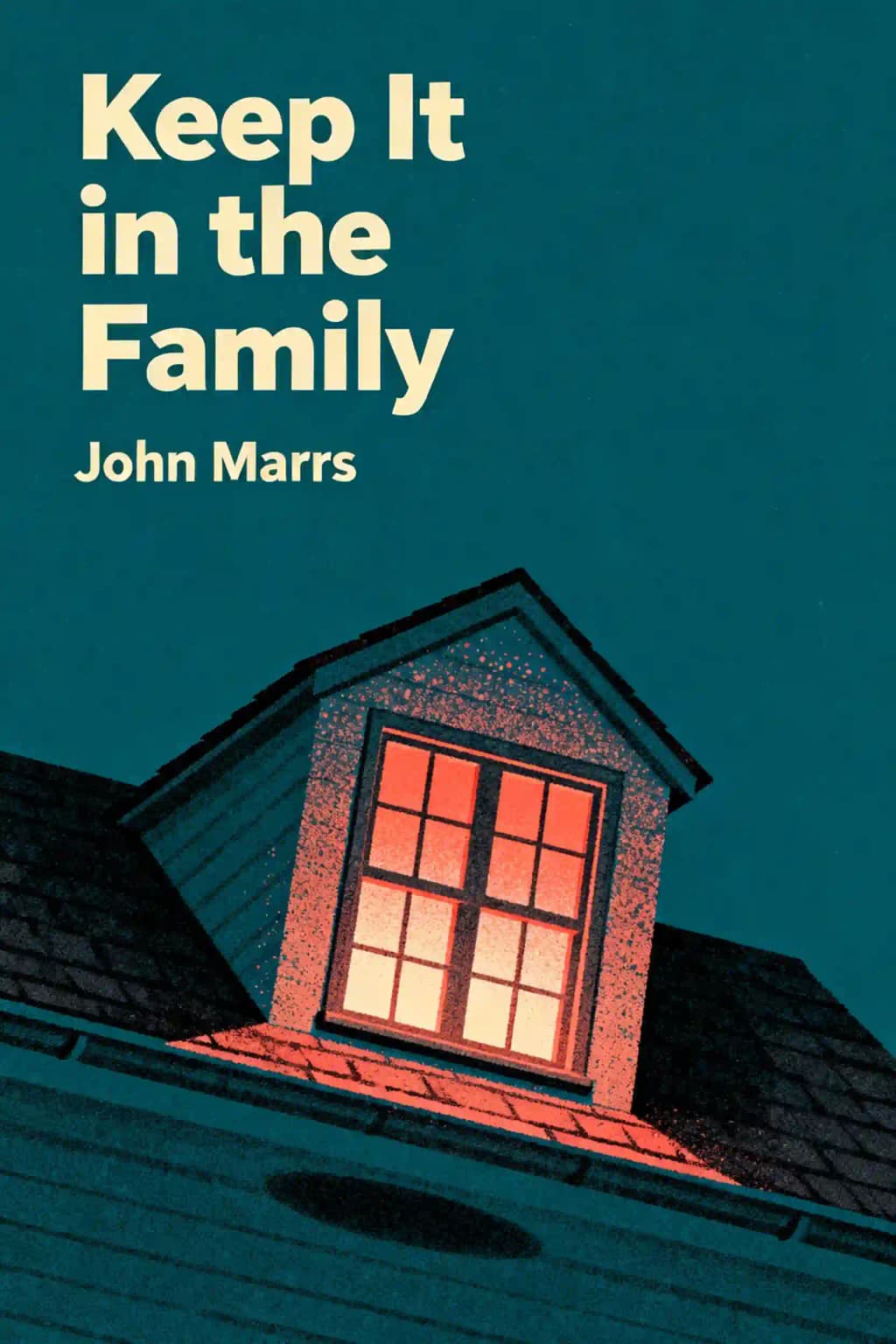
In a quiet village where no one takes notice, a house sits hidden behind overgrown trees and bushes. For decades, it remained vacant after its previous occupants mysteriously vanished overnight. Now, a young couple has purchased this neglected Victorian property, surprising locals who wonder who would take on such a challenging renovation. Little do they know that beneath the peeling wallpaper and rotting floorboards lies a horror beyond imagination-one that will shatter multiple lives and expose generational evil that has thrived in the shadows. John Marrs' psychological thriller "Keep It In The Family" has captivated readers worldwide, earning praise from Stephen King who called it "the most disturbing domestic noir since Gone Girl." This chilling exploration of family secrets and inherited darkness forces us to question: how well do we really know those closest to us?
第2章
A Dream Home Becomes a Nightmare
Mia and Finn Hunter have just purchased a dilapidated Victorian five-bedroom house in the quiet village of Stewkbury. It's their escape plan from living with Finn's overbearing parents, Debbie and Dave. Though they've sunk their life savings into this fixer-upper without even getting a proper survey, they're determined to create their dream country home.
As they stand before their new property for the first time, the reality hits them hard. The house is in far worse condition than they anticipated-metal-sheeted windows, broken glass, massive overgrown wisteria, damaged chimneys, and rotting fascias. Inside, they discover dated wood-paneled walls, ancient cupboards, and dangerously weak floorboards. In one bedroom, they find something particularly unsettling: a ceiling hook with rope attached. Though they try to dismiss it as children playing pranks, neither truly believes this explanation.
The renovation quickly becomes all-consuming. Mia continues her PR job remotely while Finn handles the construction with help from his father Dave, whose own building business recently failed. The project strains their finances and tests their relationship, especially with Finn's mother Debbie constantly interfering. Despite her previous antagonism toward Mia, Debbie suddenly shows interest in their renovation decisions.
Eleven weeks into the renovations, their lives take an unexpected turn when Mia discovers she's pregnant-conceived naturally after failed IVF attempts due to her endometriosis. Though the timing complicates their already stressful situation, they embrace this surprising joy. Debbie's reaction is notably reserved; at fifty-something, she's struggling with her own health issues, later revealed to be Motor Neurone Disease, giving her roughly ten years to live.
As the renovation progresses, strange occurrences begin to unsettle them. Mia discovers disturbing words carved into the nursery's skirting board: "I will save them from the attic." While Dave dismisses it as a child's imagination, Mia insists on investigating the attic space. What they discover there will change their lives forever and expose long-buried secrets that some family members would kill to protect.
第3章
Seven Suitcases, Seven Victims
The discovery in the attic is the turning point that transforms this renovation story into a horrifying nightmare. After noticing an oddly placed wall that doesn't quite reach the roof, Finn investigates and breaks through to find a hidden room. Inside are seven dust-covered suitcases arranged in a V formation, each with a red letter "P" embossed on it. In front of each suitcase is a pile of shrink-wrapped children's clothes.
When they manage to open one case, they're hit by the smell of decay and make a shocking discovery-the mummified remains of a child. The shock causes pregnant Mia to lose her balance and fall backward through the hatch, hitting the floor below and blacking out. The accident forces an emergency cesarean, bringing their son Sonny into the world prematurely at just three pounds eight ounces.
As Mia recovers in the hospital, police swarm their property. Detective Superintendent Okafor confirms that the remains of seven children-three male and four female-have been discovered in their attic. Forensic examination indicates all victims died between the late 1970s and early 1980s. The investigation transforms their home into a crime scene, with floors torn up, walls removed, and evidence markers scattered throughout.
The media descends on the quiet village, turning the Hunters' lives into a public spectacle. Their house becomes known as the "Babes in the Attic" case, with reporters camping outside and true crime enthusiasts following every development. The police investigation expands when two more bodies are found in the garden-headless adult remains later identified as Kenneth and Moira Kilgour, the elderly couple who owned the house before mysteriously disappearing decades earlier.
For Mia, the horror of the discovery becomes an obsession. She attends the funeral of one victim, Abigail Douglas, where she makes a shocking connection-her father-in-law Dave appears in an old school photo alongside two of the victims. When confronted, Dave claims he barely knew them because he rarely attended school, but his nervous reaction suggests he knows more than he's admitting.
As the investigation continues, the family fractures under the pressure. Mia struggles with postnatal depression and PTSD from the discovery, becoming distant from baby Sonny. Finn turns to his ex-girlfriend Emma for comfort, eventually revealed to be maintaining a long-term affair and fathering a child with her during their marriage. Dave self-medicates with alcohol and painkillers, hiding what he believes is terminal cancer. And Debbie watches it all, harboring the darkest secrets of all.
第4章
The Killers Among Us
As the investigation progresses, we're given glimpses into the mind of a killer through chilling flashback chapters. These sections reveal a disturbed individual who methodically selects vulnerable children, lures them away, and murders them before placing their bodies in suitcases. The killer views this as "saving" the children from abusive situations, a twisted mission born from their own traumatic childhood.
The narrative gradually reveals that Dave and Debbie Hunter are not the ordinary couple they appear to be. Both carry dark histories that intertwined decades earlier. Dave, with his distinctive port-wine birthmark, was a troubled youth who fell under Debbie's influence after a tragic accident involving a girl named Precious Johnson.
Precious and her friend Abigail had been kidnapped by Debbie's parents, Samuel and Alice Lewis, who had a pattern of abducting children. When Precious escaped with help from a young Debbie (then known by another name), she was struck by a car while fleeing. Dave was the driver who hit her, and Debbie manipulated this situation to bind him to her forever.
The most shocking revelation comes when Mia discovers evidence linking Dave to the murders. In his garage, she finds paperwork for a storage facility and a Portmanteau suitcase-identical to those found in their attic. Following this lead to an abandoned industrial site, she discovers a warehouse containing over a hundred similar suitcases, forty containing vacuum-packed children's clothes and human remains.
When Dave confronts her there, he appears ready to confess to the murders. After tying Mia up but then cutting her free, he slits his own throat in front of her, seemingly confirming his guilt. The media portrays Dave Hunter as Britain's most prolific child killer, and the family is left to deal with the aftermath of his horrific crimes.
However, as time passes, inconsistencies emerge in the official narrative. Detective Mark Goodwin points out that Dave never specifically admitted guilt, and questions why he would meticulously clean the bodies but not the warehouse. These doubts lead Mia to reexamine everything she thought she knew about the Hunter family.
第5章
The True Monster Emerges
Five months after Dave's suicide, the family is shattered. Finn has moved in with his ex Emma and their daughter, while Mia lives with her parents, sharing custody of Sonny. Debbie has isolated herself, vilified by the community as the wife of a child killer.
When Mia visits Debbie's house to drop off Sonny for a visit with Finn, she's shocked by Debbie's proposition: she offers Mia money to leave town, abandon her marriage, and-most disturbingly-leave Sonny behind. This cruel suggestion reveals Debbie's true nature, but it's only the beginning of the truth.
Through flashback chapters, we learn that Debbie is actually the daughter of Samuel and Alice Lewis, the couple who occupied the house before the Kilgours. Her parents had a pattern of befriending and abducting children, drugging them with spiked drinks before taking them to "that room." Debbie and her brother George were forced to help lure children to their home.
After George disappeared (supposedly killed by their father for threatening to expose their crimes), Debbie eventually escaped to live with her grandparents. Years later, she met Dave, manipulating him into marriage after the accident with Precious. When they couldn't conceive, Dave appeared one day with a stolen baby boy-Finn, who was actually William Brown, a kidnapped child whose sister's body was later found among the victims.
The most horrifying truth emerges: Debbie, not Dave, was the serial killer. She had continued her parents' legacy of abduction and murder, with Dave reluctantly helping dispose of the bodies. The warehouse where the suitcases were stored had belonged to the Kilgours, whom Debbie's grandfather and his friends had murdered after ensuring her parents "could never hurt another child."
When Mia discovers DNA evidence proving neither Dave nor Debbie are Finn's biological parents, the family's foundation crumbles completely. Finn struggles to process that he might be William Brown, a kidnapped baby whose sister was murdered by the woman who raised him.
第6章
A Child Vanishes, A Family Implodes
The climax of the story comes when Debbie, facing rejection from Finn after he learns the truth about his origins, takes her most devastating action yet. While babysitting Sonny, she abducts him and arranges for her long-lost brother George-who had not been killed by their father but sent away-to take the boy to his isolated island in Norway.
When confronted at the cemetery where Dave's ashes are buried, Debbie reveals the empty pushchair and a shrink-wrapped bag of Sonny's clothes, taunting Mia and Finn with the loss of their son. In a rage, Finn attacks his adoptive mother, strangling her until police intervention saves her life.
For two years, Sonny remains missing while Debbie, now in a psychiatric hospital after pleading insanity, maintains her leverage over Finn. She offers him monthly photographs of Sonny in exchange for regular visits, with the promise that he'll get his son back only after her death.
During this time, Sonny lives on George's Norwegian island under the name Andreas, believing George is his father. The boy adjusts well to this peaceful life, attending mainland nursery and developing into a happy child. George believes he's broken his family's cycle of abuse by providing Sonny with a loving home.
However, Finn eventually tracks them down through clues in the photographs. In a confrontation not fully detailed in the narrative, George disappears-presumably killed by Finn-and Sonny is recovered and brought to Oslo. Though physically healthy, the boy is confused, asking for his "pappa" (George) and struggling to recognize Mia and Finn as his parents.
第7章
The Cycle Continues
The epilogue, set in 2023, reveals the most chilling twist of all. As Finn and Mia attempt to rebuild their lives with Sonny, they present a picture of domestic recovery. Their son, now four years old, has begun calling Finn "Daddy" instead of "Pappa" - a seemingly innocent change that masks darker undertones. On the surface, they appear to be healing: family dinners, weekend outings, and therapy sessions paint a portrait of normalcy. Yet beneath this carefully constructed facade lies a horrifying truth.
In a nondescript storage facility on the outskirts of town, Finn maintains his gruesome sanctuary. Three large suitcases, meticulously organized and labeled, contain his darkest secrets. The first holds the remains of the original baby Finn - Debbie and Dave's biological child whose death sparked their descent into murderous adoption schemes. The second contains what's left of Aaliyah Anderson, the determined journalist whose investigation came too close to exposing their family's history. The third houses Lorna's remains - Mia's closest friend who recognized something wasn't quite right about Finn and paid the ultimate price for her intuition.
More disturbing still are the empty shelves Finn has installed - enough space for twelve more suitcases acquired from Dave's warehouse. Each vacant spot represents a future victim in Finn's mind, with detailed plans already forming. Detective Mark Goodwin, who continues to text Mia with concerned check-ins, features prominently in these dark fantasies. Finn meticulously tracks the detective's routines, much as Debbie once taught him.
The most chilling aspect emerges in Finn's interactions with Sonny during their secret visits to the storage unit. With a father's perverted pride, he shows his young son four carefully preserved human skulls, explaining they belonged to "bad people who needed to be stopped." This mirrors Finn's own childhood experiences with Debbie, who never shielded him from the truth about her victims. While Finn tells himself he'll wait until Sonny is "much older and ready" before involving him in the actual killings, his actions echo Debbie's methodical grooming of him as a child.
The novel concludes with this devastating revelation - the cycle of generational violence that began with Debbie's parents hasn't been interrupted by her imprisonment. Instead, it flows through Finn like a poisoned river, as he embraces and extends his adoptive mother's legacy while maintaining an outwardly perfect life with Mia and Sonny. The final scene shows Finn teaching Sonny to organize the storage unit "just like Grandma Debbie would want," suggesting that this dark inheritance will continue into a third generation.
第8章
The House of Horrors
The house at 45 High Street, Stewkbury, serves as more than just a setting - it becomes a character in itself, a physical manifestation of generational evil. Standing three stories tall with Victorian architecture that once spoke of grandeur, the property has devolved into a decrepit shell. From the beginning, the house is described as isolated, set back from the road and hidden behind decades of overgrown vegetation, with an enclosed backyard shielded from neighboring views by towering cypress trees. The property's strategic positioning - on a corner lot where the surrounding houses face away - creates a perfect blind spot for concealing activities from public view. Even local teenagers, despite using the yard for drinking and smoking over the years, never ventured inside, deterred by its inherent creepiness and persistent local legends about strange sounds and shadows in the windows.
As layers of the house are peeled back during renovation, so too are the layers of secrets it contains. Each discovery reveals another horror: the skirting board with its desperately carved message ("I will save them from the attic"), the ceiling hook with attached rope still bearing trace evidence of its grim purpose, the hidden room in the attic carefully concealed behind a false wall, and eventually the bodies buried in precise rows in the garden's clay soil. The house's architecture itself seems designed for concealment - from the basement's multiple chambers to the attic's maze-like configuration of small rooms, each space holds its own dark story.
The house represents the facade that the Hunter family presents to the world - seemingly ordinary on the outside but concealing unimaginable horrors within. The peeling wallpaper mirrors the deteriorating veneer of family normalcy, while the rotting support beams reflect the corrupt foundation of their relationships. Just as Mia and Finn discover extensive water damage and black mold beneath the surface of their renovation project, they gradually uncover the psychological rot within their family relationships - secrets passed down through generations like a toxic inheritance.
The property's layout becomes increasingly significant as the story unfolds. The kitchen, with its heavy door leading to the cellar, served as a gateway between the normal world and the family's dark activities. The garden shed, appearing innocuous to neighbors, concealed tools used for both yard work and far more sinister purposes. Even the placement of windows was strategic - high enough to prevent anyone from seeing in, yet allowing the occupants to monitor approaching visitors.
By the end of the novel, the decision to demolish the house symbolizes society's attempt to erase the physical reminder of these atrocities. Yet as Finn's continued killings demonstrate, destroying the physical structure does nothing to end the cycle of violence that began there. The evil has simply relocated to a new storage unit in an anonymous industrial park, ready to continue with the next generation - proving that the true horror lies not in the building itself but in the hereditary darkness that flows through the Hunter family's bloodline.
第9章
The Inheritance of Evil
At its core, "Keep It In The Family" explores how trauma, abuse, and violence are passed down through generations. The title itself carries a double meaning-referring both to the family's efforts to keep their secrets hidden and the way darkness is inherited from parent to child.
Debbie's parents, Samuel and Alice Lewis, abducted and murdered children, forcing their own children to participate. Debbie continued this legacy, becoming a killer herself while justifying her actions as "saving" vulnerable children-the same rationalization her parents likely used. Dave, though not a killer himself, became complicit in Debbie's crimes, cleaning the bodies and storing them in the warehouse.
Finn, though not their biological child, inherited this darkness through nurture rather than nature. As a child, he was shown the skulls of victims and later accompanied Debbie on what she called "trips" but were actually abductions. By the story's end, he has fully embraced this inheritance, continuing the pattern of murder while maintaining a normal facade.
The novel asks profound questions about the nature of evil: Is it inherited genetically, or is it taught? Can the cycle be broken? George believed he had broken the cycle by raising Sonny in a loving environment, but Finn's actions suggest the darkness has simply skipped a generation, waiting to emerge in Sonny when he's "ready."
Even Mia, despite her efforts to escape the toxic Hunter family, remains connected to them through Sonny. Her decision to reconcile with Finn in the aftermath of their son's recovery suggests she too may be drawn back into the cycle, unwittingly complicit in perpetuating the family's dark legacy.
第10章
The Masks We Wear
Throughout the novel, characters present different faces to the world, hiding their true selves behind carefully constructed personas. This theme of deception and duality runs through every relationship in the story.
Finn maintains the appearance of a devoted husband while carrying on a years-long affair with his ex-girlfriend Emma, even fathering a child with her during Mia's fertility treatments. Dave presents himself as a struggling but honest builder while concealing his role in Debbie's crimes. Debbie herself is perhaps the master of deception, playing the role of the concerned mother-in-law while orchestrating abductions and murders.
Even Mia, positioned as the novel's moral center, keeps secrets from those around her. She investigates Dave's past without telling Finn, attends a victim's funeral against his wishes, and later conducts DNA tests on family members without their knowledge or consent.
The narrative structure reinforces this theme by gradually revealing the characters' true natures through alternating perspectives and flashbacks. What initially appears to be a straightforward story about a house renovation becomes a complex web of deception, with each character revealing new layers of duplicity as the story progresses.
By the novel's end, the most chilling realization is how easily these characters move between their public and private selves. Finn can murder someone and store their body in a suitcase, then return home to play the loving father to Sonny. This ability to compartmentalize-to wear different masks for different situations-is perhaps the most disturbing inheritance passed down through the Hunter family.
第11章
When Justice Fails
The novel presents a bleak view of justice and its limitations. Despite the extensive police investigation, the full truth about the murders is never publicly revealed. Dave takes the blame for Debbie's crimes through his suicide, while Debbie herself escapes murder charges by pleading insanity after Sonny's abduction.
Even when characters face consequences, they're often inadequate or misdirected. Dave dies believing he has terminal cancer, only for the autopsy to reveal it was a treatable stomach ulcer. Debbie is hospitalized rather than imprisoned, maintaining enough control to manipulate Finn with photographs of Sonny. George, who genuinely tried to provide Sonny with a loving home, presumably meets a violent end at Finn's hands-a cruel fate for perhaps the only character who attempted to break the cycle of abuse.
Most disturbing is Finn's complete evasion of justice. Despite likely killing George and continuing to murder others, he successfully reintegrates into society, reuniting with Mia and reclaiming Sonny. The system designed to protect the innocent fails completely, allowing him to continue the family's legacy of violence without consequence.
This failure of justice extends to the victims as well. The children murdered by Debbie receive posthumous identification but no true justice, as their killer is never publicly identified. The Kilgours remain headless corpses, their murderers-Debbie's grandfather and his friends-long dead and beyond the reach of law. Even Sonny, though physically recovered, faces an uncertain future under the influence of a father who plans to eventually initiate him into the family's murderous tradition.
The novel thus presents a world where justice is elusive and incomplete, where evil often goes unpunished, and where the systems designed to protect the vulnerable ultimately fail them. This bleak perspective adds to the story's horror, suggesting that the cycle of violence cannot be broken because the mechanisms that might break it are fundamentally flawed.