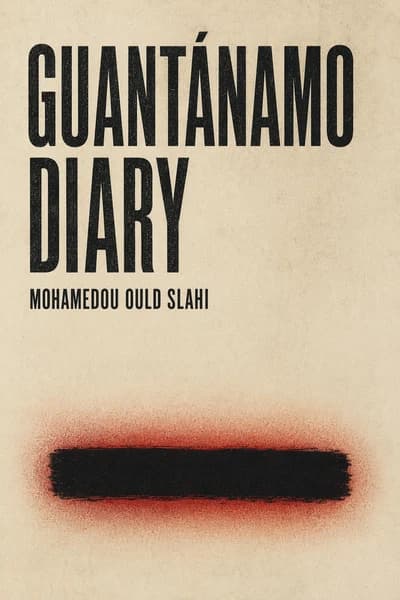
The first memoir written inside Guantanamo Bay, Mohamedou Ould Slahi's shocking account of torture and resilience became a global sensation. Benedict Cumberbatch and Jodie Foster brought his story to millions in "The Mauritanian" - what dark truths did the government try to redact?
Mohamedou Ould Slahi, author of the internationally acclaimed memoir Guantánamo Diary, is a Mauritanian writer and former detainee whose firsthand account of imprisonment became a landmark work in contemporary human rights literature.
Born in 1970, Slahi trained as an electrical engineer in Germany before being detained without charge at Guantánamo Bay from 2002 to 2016. His memoir—written secretly during his incarceration—blends stark documentation of systemic torture with lyrical reflections on resilience, earning recognition as a pivotal testimony on post-9/11 justice. The restored 2017 edition, which replaced U.S. government redactions with Slahi’s original text, amplified its global impact.
A polyglot and advocate for due process, Slahi later authored The Actual True Story of Ahmed and Zarga, a novel exploring Mauritanian nomadic traditions. Guantánamo Diary has been translated into 25 languages, spent three weeks on the New York Times bestseller list, and inspired the 2021 film The Mauritanian. His works bridge personal survival narratives with broader critiques of mass surveillance and indefinite detention.
Guantánamo Diary is a harrowing firsthand account of Mohamedou Ould Slahi’s 14-year detention without charge at Guantánamo Bay, detailing torture, psychological abuse, and Kafkaesque interrogations. Written in English during his imprisonment, the memoir exposes systemic human rights violations and the moral contradictions of the U.S. war on terror. The restored edition (2017) fills in redacted sections, offering a raw, unflinching narrative of resilience under dehumanizing conditions.
This book is essential for readers interested in human rights, modern history, and memoir genres. It resonates with advocates of legal justice, students of post-9/11 policy, and those seeking insights into systemic abuse. Its literary quality—compared to works by Kafka and Dostoevsky—also appeals to audiences valuing nuanced narratives about power and survival.
Key themes include the fragility of justice, the psychological toll of torture, and the resilience of dignity under oppression. Slahi critiques systemic dehumanization in counterterrorism operations while humanizing both detainees and captors. The memoir also explores bureaucracy’s role in perpetuating abuse and the universality of hope amid despair.
Slahi recounts severe torture: mock executions, sexual humiliation, sleep deprivation, and threats to family members. Interrogators used “enhanced techniques” like forced seawater ingestion and Quran desecration. His narrative balances brutal details with dark humor, revealing interrogators’ incompetence and the absurdity of his indefinite detention.
The 2017 restored edition reinstates redacted text, adding Slahi’s post-release reflections and contextual details censored in the original. It clarifies timelines, interrogators’ identities, and his emotional journey, deepening understanding of Guantánamo’s opaque operations. Slahi revised passages to reflect his evolved perspective on forgiveness and accountability.
Slahi penned the manuscript by hand in English (his fourth language) during detention. After a legal battle, the U.S. government released a heavily redacted version in 2013. Published in 2015, it became a global bestseller despite Slahi being barred from reviewing final edits. The restored edition emerged post-release via collaboration with editor Larry Siems.
The book was hailed as a “dark masterpiece” (The New York Times) and “necessary reading” (The Washington Post). Critics praised its literary merit, comparing it to Kafka’s The Trial and Dostoevsky’s The House of the Dead. It remains a seminal work on state-sanctioned torture and its moral consequences.
Slahi exposes systemic flaws: arbitrary detention, fabricated evidence, and accountability gaps. He highlights interrogators’ reliance on coercion over evidence and the complicity of psychologists in designing torture. The memoir underscores how counterterrorism policies eroded legal norms and human rights protections.
Critics debate Slahi’s portrayal of his innocence, though he was never charged. The U.S. government fought to suppress the manuscript, citing national security. Some reviewers question the memoir’s objectivity, while others defend it as a vital counter-narrative to official secrecy.
Guantánamo remains open, with 30 detainees as of 2025. Slahi’s account reminds readers of the human cost of indefinite detention and unchecked executive power. Its themes resonate amid debates on racial profiling, immigration detention, and ethical interrogations.
Unlike detached accounts, Slahi’s narrative blends personal anguish with witty, reflective prose. It uniquely details interactions with guards and interrogators, humanizing all parties. The restored edition’s unredacted insights set it apart as both memoir and historical document.
The book amplified global awareness of Guantánamo’s abuses, influencing legal campaigns and policy debates. It has been cited in human rights reports and academic studies, underscoring the urgency of due process reforms and torture prevention.
著者の声を通じて本を感じる
知識を魅力的で例が豊富な洞察に変換
キーアイデアを瞬時にキャプチャして素早く学習
楽しく魅力的な方法で本を楽しむ
'cooperation' meant telling your interrogators whatever they wanted to hear.
I felt the anger of Uncle Sam thousands of miles away.
They broke me.
I yessed every accusation my interrogators made.
『Guantánamo diary』の核心的なアイデアを分かりやすいポイントに分解し、革新的なチームがどのように創造、協力、成長するかを理解します。
『Guantánamo diary』を素早い記憶のヒントに凝縮し、率直さ、チームワーク、創造的な回復力の主要原則を強調します。

鮮やかなストーリーテリングを通じて『Guantánamo diary』を体験し、イノベーションのレッスンを記憶に残り、応用できる瞬間に変えます。
何でも質問し、声を選び、本当にあなたに響く洞察を一緒に作り出しましょう。

"Instead of endless scrolling, I just hit play on BeFreed. It saves me so much time."
"I never knew where to start with nonfiction—BeFreed’s book lists turned into podcasts gave me a clear path."
"Perfect balance between learning and entertainment. Finished ‘Thinking, Fast and Slow’ on my commute this week."
"Crazy how much I learned while walking the dog. BeFreed = small habits → big gains."
"Reading used to feel like a chore. Now it’s just part of my lifestyle."
"Feels effortless compared to reading. I’ve finished 6 books this month already."
"BeFreed turned my guilty doomscrolling into something that feels productive and inspiring."
"BeFreed turned my commute into learning time. 20-min podcasts are perfect for finishing books I never had time for."
"BeFreed replaced my podcast queue. Imagine Spotify for books — that’s it. 🙌"
"It is great for me to learn something from the book without reading it."
"The themed book list podcasts help me connect ideas across authors—like a guided audio journey."
"Makes me feel smarter every time before going to work"

Guantánamo diaryの要約をPDFまたはEPUBで無料でダウンロード。印刷やオフラインでいつでもお読みいただけます。
In the bleak cells of Guantanamo Bay, Mohamedou Ould Slahi found resistance through an unexpected weapon: words. His "Guantanamo Diary" stands as the first memoir written by a detainee while still imprisoned, later adapted into the film "The Mauritanian" starring Jodie Foster. What makes this account extraordinary isn't just its unprecedented perspective, but Slahi's astonishing capacity for humanity and even humor in the face of systematic torture. Written in English - his fourth language, learned largely from his captors - the diary reveals not just the horrors of America's post-9/11 detention system but the resilience of the human spirit when faced with the most dehumanizing circumstances imaginable. Through his words, we witness how an innocent man navigated a labyrinth of injustice while somehow maintaining his fundamental humanity.