第4章
Survival Among the Tribes: A New Identity Emerges
After their rafts were destroyed in a storm, Mustafa found himself among the few survivors of the Narvaez expedition. Along with his master Dorantes, Castillo, and Cabeza de Vaca, he endured years of hardship and enslavement among various Indian tribes. Their fortunes changed when Castillo successfully treated an Indian patient, establishing their reputation as healers.
Among the Avavares tribe, Mustafa's healing skills flourished. When a boy complained of a headache, he massaged the boy's temples, and by God's mercy, the boy improved, earning Mustafa a turquoise token and acceptance. Later, when the neighboring Susolas requested his healing skills for their ailing cacique, Mustafa remembered his father's cupping treatment from Azemmur. The success of this treatment transformed their status among the tribes.
"Nothing new has ever happened to a son of Adam," Mustafa's mother had told him. "Everything has already been lived and everything has already been told. If only we listened to the stories." Drawing on memories of healers from Azemmur's marketplace, Mustafa and his companions developed elaborate healing rituals that combined European and tribal methods. Their occasional failures were forgotten while successes spread as tales through neighboring camps.
Mustafa's encounter with Oyomasot, the daughter of the Avavare shaman, changed everything. She stood tall and proud with elaborately wound hair knots, regarding him with mocking silence. Despite her fierce independence, Mustafa fell in love with her, and they eventually married. On their wedding night, when Oyomasot traced the scar on his neck and asked its origin, Mustafa told her the whole truth about his past-something he had never done before.
"This night marked the beginning of a time when I was no longer alone," Mustafa reflects. "I had finally stopped struggling against my fate, deciding to embrace the present as all I had. What once seemed a curse had become a blessing-I was free and no longer alone."
The survivors began traveling from tribe to tribe as renowned healers. Their reputation grew until they were called the Children of the Sun, with followers claiming they could raise the dead or restore mobility to the lame. For nearly a year, they traveled this way, acquiring guides who preceded them with tales of their healing powers, transforming from guides into disciples.
This period represents a profound transformation for Mustafa. Among the tribes, he found a new identity, purpose, and even love-experiences that contrasted sharply with his enslavement by the Spanish and would ultimately shape his final decisions.
第5章
Recapture and Return to Spanish Society
After eight years in the wilderness, Mustafa and his companions encountered Spanish soldiers led by Diego de Alcaraz. The moment was surreal-like awakening from a long slumber into an unfamiliar world. Cabeza de Vaca introduced himself formally as "the royal treasurer of the Narvaez expedition, appointed by His Holy Imperial Majesty," immediately reclaiming his Spanish identity and authority.
The return to Spanish society quickly revealed that the bonds formed in the wilderness would not survive. Alcaraz attempted to enslave the Indians who had followed Mustafa and his companions, despite their promises of safety. In Culiacan, the alcalde mayor Melchor Diaz maintained the absurd position that the Indians weren't slaves yet couldn't leave, keeping them penned in a horse run like animals.
The transformation continued as they were shorn of their wild appearance-hair cut, beards trimmed, bodies perfumed-and dressed in the governor's own clothes that made Mustafa's skin itch and restricted his movement. Looking in the mirror, he saw a stranger-an older version of himself without the reserve he'd worn for years.
In Compostela, Governor Nuno de Guzman received them with false hospitality, more interested in metals and maps than in peaceful relations with the tribes. Despite Cabeza de Vaca's impassioned pleas for peaceful conquest, Guzman remained fixated on "pacifying" what he called "savages" and exploiting resources.
The most painful aspect of their return was the separation from their Indian wives. In Compostela, Mustafa was housed separately from Oyomasot, who was placed in a pantry adjacent to the kitchen at the military barracks. When she asked why she couldn't stay with him, Mustafa explained, "The customs are different here," feeling the weight of their changing circumstances. She understood immediately what he had only begun to grasp: in this place, they were no longer respected healers whose words commanded attention, but mere petitioners at the mercy of colonial officials.
As they traveled to Mexico-Tenochtitlan, Mustafa hoped to secure passage across the "Ocean of Fog and Darkness" to return to Azemmur. However, his status remained ambiguous-neither bondsman nor fully free man. When he asked Dorantes about seeing a notary for his freedom papers, his master boasted about refusing the viceroy's 500-peso offer for him, expecting gratitude rather than understanding Mustafa's desire for freedom.
This section powerfully illustrates how quickly the Spanish colonial system reasserted its hierarchies, erasing the equality and respect Mustafa had experienced among the tribes.
第6章
The Joint Report: History Written by the Victors
In Mexico-Tenochtitlan, Viceroy Antonio de Mendoza orchestrated a meticulous documentation of the ill-fated Narvaez expedition, summoning the survivors for official testimony. Over two painstaking months in the autumn of 1536, Mustafa's companions carefully reconstructed their narrative - a deliberate exercise in historical revision. They systematically sanitized their accounts, deflecting blame onto the deceased Narvaez for his catastrophic leadership decisions. The survivors strategically omitted their participation in violent acts against native peoples, justified their desperate thefts as necessary survival measures, and carefully concealed their marriages to indigenous women. Their testimonies amplified their sufferings while emphasizing their gratitude for Spanish rescue, crafting a narrative palatable to colonial authorities.
Mustafa's exclusion from these proceedings was conspicuous yet unsurprising. Though he harbored no bitterness about this omission, recognizing that his status as a former slave made his testimony unwelcome, he observed the process with keen interest. During informal evening gatherings, where the survivors sipped rich chocolatl and reminisced, stark differences emerged in their recollections. Cabeza de Vaca, ever the politician, insisted on his perfect memory of events, while Dorantes focused pragmatically on securing compensation and establishing territorial claims in the newly mapped regions.
The resulting Joint Report emerged as a masterwork of colonial documentation - carefully crafted to satisfy both royal court sensibilities and administrative requirements. Yet beneath its polished surface lay deep omissions. As Mustafa notes in his prologue with characteristic insight: "While they are men of good character, they omitted, exaggerated and invented details under pressure from authorities. I, bound by no such constraints, tell the true story of what happened."
This official chronicle exemplifies the age-old pattern of historical narrative controlled by those in power. The voices of the marginalized - indigenous peoples, slaves, and women - were systematically erased or diminished. Mustafa's secret account serves as a vital counter-narrative, exposing the brutal realities of conquest, highlighting the sophisticated cultures of indigenous peoples, and revealing the complex web of relationships forged in the wilderness.
The aftermath of the testimony revealed how quickly the survivors readjusted to colonial society. Cabeza de Vaca departed for Spain transformed, "looking like a proper Castilian gentleman with doublet, cape, breeches and buckled shoes." Dorantes and Castillo sought rapid social advancement through marriages to wealthy Spanish widows, conveniently forgetting their indigenous wives and shared hardships. The poignant case of Tekotsen, Dorantes' indigenous wife, illuminates this cultural erasure. Though she bore him a daughter - Ximena Maria, commonly known as Maria la Mestiza - Dorantes ultimately sent the child to a Spanish convent north of the city by Easter, effectively erasing her indigenous heritage.
For Mustafa, who had endured profound losses - his homeland, freedom, and basic rights - the power to preserve truth through storytelling emerged as his most valuable possession. His determination to record "the truth behind what my companions have revised or silenced about our journey through the Land of the Indians" stands as a testament to the importance of preserving alternative historical perspectives.
第7章
The Final Expedition and Mustafa's Choice
When Viceroy Mendoza proposed using Mustafa as a guide for Francisco Vasquez de Coronado's expedition to the legendary Seven Cities of Gold, Mustafa saw an opportunity for freedom. Unlike the Narvaez expedition, this venture included no soldiers or settlers-only friars, "Amigos" (Aztecs allied with Spain), and Mustafa as guide.
As they journeyed northward, Oyomasot revealed she was pregnant-a sign that stunned them both. "The baby we'd longed for had chosen this precarious moment to announce itself," Mustafa reflects. This news added urgency to his plan for freedom.
In Culiacan, Coronado instructed the friars to document everything and warned Mustafa that finding the Seven Cities would bring rewards, but betrayal would bring unimaginable punishment. As they traveled through the Land of Corn, Mustafa convinced Father Marco to let him scout ahead, sending signals back about the wealth of settlements with crosses of varying sizes. With each town, he sent back smaller crosses until he dispatched the final Amigos from Hawikuh, finally freeing himself from their company and the empire's control.
Outside Hawikuh, Mustafa lay with his head in Oyomasot's lap, listening to their unborn child's heartbeat, feeling truly free at last. The town's walls reminded him of Azemmur with its blooming fig trees and green fields. Though he would never see his homeland again, perhaps his child might someday travel east to see it.
After meeting with Ahku, the Zuni cacique, Mustafa proposed a strategy: send injured men to tell Father Marco that the Zunis had killed Estebanico. This fiction would discourage further exploration and protect Hawikuh while allowing Mustafa to remain free with his wife among her Avavare people.
As Ahku consulted with tribal elders, Mustafa contemplated the stories he would tell his child-stories that had sustained him across oceans and through years of deprivation. Though the Spanish empire and countless Indians would tell different versions of what happened, perhaps all their experiences together might approach "the blinding light of truth."
Mustafa's final choice represents a reclamation of his agency and identity. By orchestrating his own "death" as Estebanico, he ensures his rebirth as Mustafa-free to live among people who respect him, with the woman he loves and their child on the way. His journey comes full circle as he finds a new home that reminds him of the one he lost, creating space for a future beyond the constraints of colonialism and slavery.
第8章
The Power of Storytelling: Reclaiming History's Silenced Voices
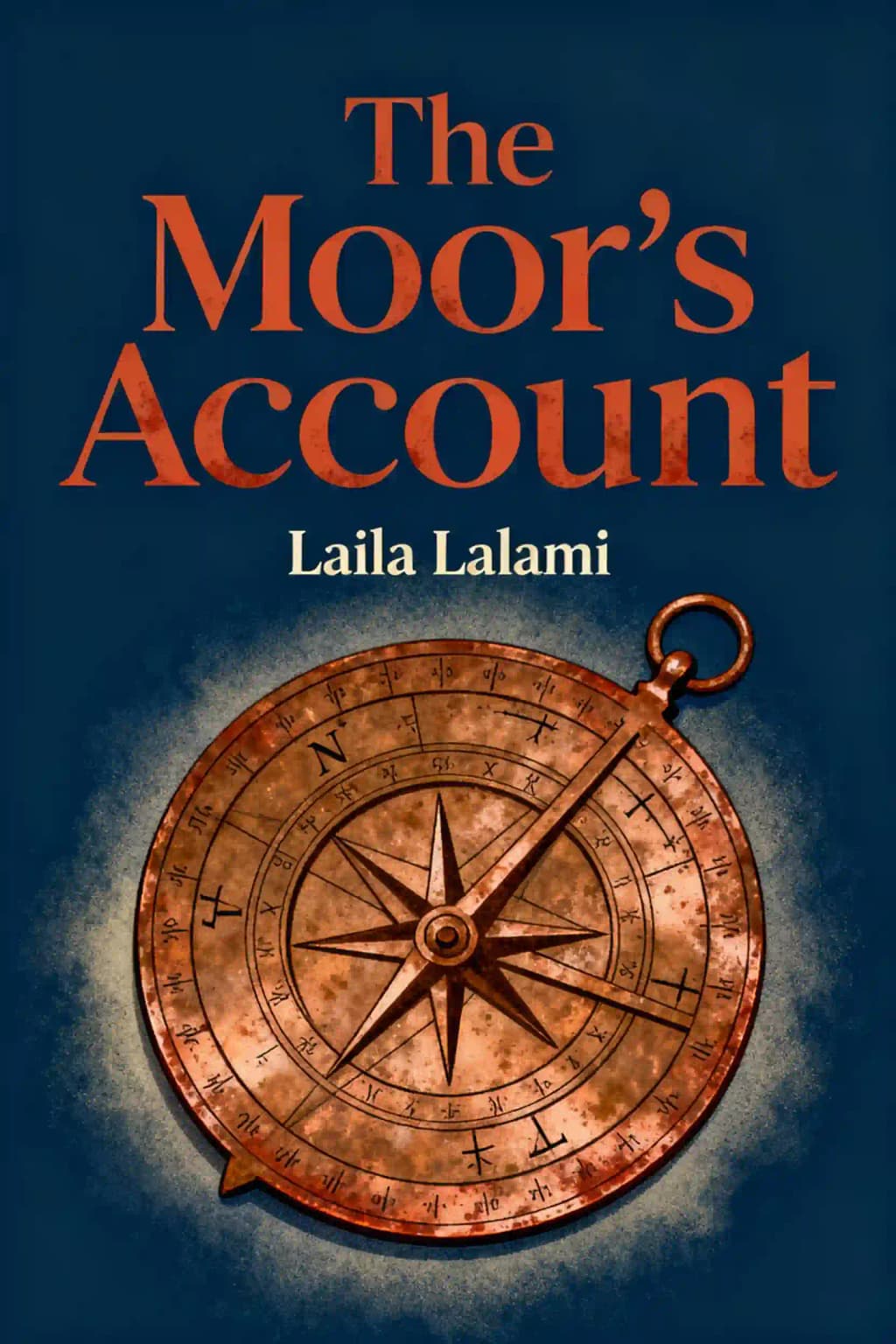
Lalami's novel is fundamentally about the power of storytelling-who gets to tell history and whose voices are silenced. Mustafa begins his account stating: "I, bound by no such constraints [as my Castilian companions], tell the true story of what happened." Like all men, he wishes to be remembered after death and hopes his account might someday reach his countrymen, "offering truth disguised as entertainment."
Throughout his journey, stories sustain Mustafa. His mother's tales prepare him for life's challenges: "Nothing new has ever happened to a son of Adam. Everything has already been lived and everything has already been told. If only we listened to the stories." When healing among the tribes, he draws on memories of the traveling healer from Azemmur's market. Even in his darkest moments of slavery and loss, Mustafa finds comfort in remembering his homeland through stories.
The novel contrasts the official Joint Report-sanitized for Spanish authorities-with Mustafa's raw, honest account. While his companions "omitted, exaggerated and invented details under pressure," Mustafa reveals the expedition's cruelty, the humanity of indigenous peoples, and the complex relationships that developed in the wilderness.
By giving voice to a historical figure known only as "Estebanico" in Spanish chronicles, Lalami reclaims a silenced perspective on colonization. She restores his original name, Mustafa ibn Muhammad, and imagines his inner life, transforming him from a footnote in conquest narratives to a fully realized human being with agency, desires, and moral complexity.
In the novel's final pages, Mustafa contemplates the stories he will tell his unborn child: "Though the Spanish empire and countless Indians would tell different versions of what happened, perhaps all our experiences together might approach the blinding light of truth." This suggests that true history emerges not from a single authoritative account but from the chorus of all voices-especially those traditionally silenced.
Through Mustafa's narrative, Lalami challenges us to reconsider whose stories we privilege and whose we ignore. She reminds us that behind every historical footnote lies a complete human life-with loves, losses, moral choices, and profound insights that deserve to be remembered. In giving voice to Mustafa, she invites us to imagine all the other voices that history has silenced, and to consider how different our understanding of the past might be if we could hear them speak.
第9章
The Legacy of Conquest: A Mirror to Modern Times
"The Moors Account" may be set in the 16th century, but its themes resonate powerfully in our contemporary world. The Spanish conquest of the Americas established patterns of colonization, cultural erasure, and exploitation that continue to shape global power dynamics today. Through Mustafa's eyes, we witness the beginnings of systems whose legacies persist in modern inequalities.
The Requisition read upon landing in La Florida-declaring Spanish ownership of land regardless of its inhabitants' wishes-exemplifies the legal fictions used to justify conquest. As Mustafa observes, "these conquerors believed that merely saying something made it true." This manipulation of language and law to serve power continues in modern geopolitics, where rhetoric often disguises exploitation.
The expedition's obsession with gold reflects the extractive economic model that has dominated colonial and post-colonial relationships. When Governor Narvaez tortures Indians demanding to know where gold is hidden-refusing to believe they simply don't have any-we see the roots of economic systems that value resources over human lives.
Perhaps most relevant is the novel's exploration of whose stories become "official" history. The Joint Report, with its omissions and exaggerations, becomes the accepted narrative while Mustafa's truth remains untold. This pattern persists today, where marginalized voices struggle to be heard against dominant historical narratives.
Mustafa's complex identity-Moroccan Muslim sold into slavery, forced to convert to Christianity, then living among indigenous tribes-makes him uniquely positioned to see beyond cultural boundaries. His perspective challenges the binary thinking that often characterizes discussions of conquest, revealing the humanity in all parties while acknowledging the profound injustices of colonization.
By reclaiming Mustafa's voice, Lalami invites readers to reconsider not just the specific history of the Narvaez expedition, but the broader legacy of conquest and whose perspectives we privilege when telling that story. The novel asks us to listen to voices from the margins-both historical and contemporary-and to recognize how power shapes which truths become "official" and which remain silenced.
In our current moment of global reckoning with historical injustices, "The Moors Account" offers a powerful reminder that history is always more complex than dominant narratives suggest, and that true understanding requires listening to those whose stories have been erased or overlooked. Through Mustafa's eyes, we see not just the past but reflections of our present-and perhaps paths toward a more just future.