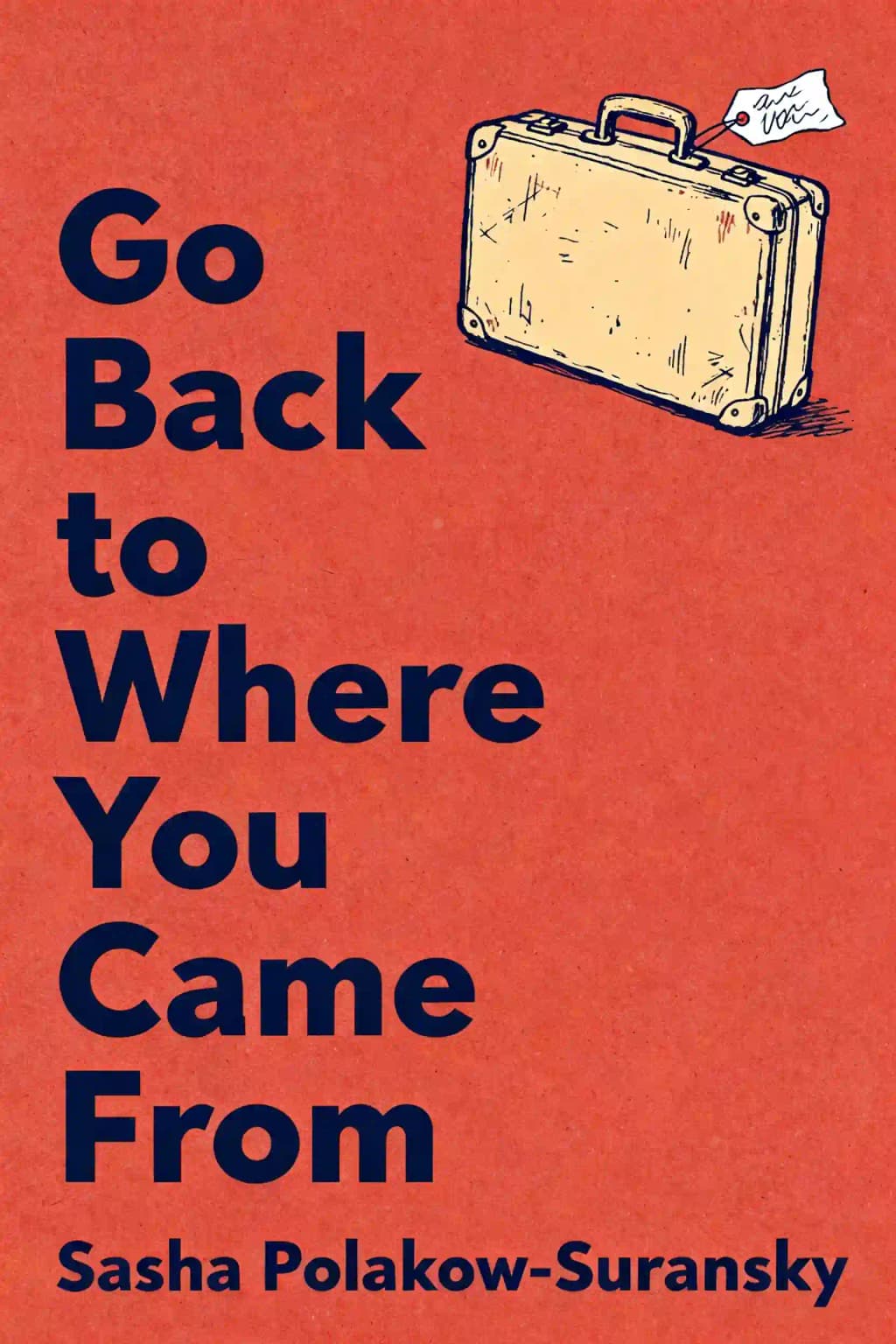
In "Go Back to Where You Came From," Polakow-Suransky delivers a chilling warning about immigration politics reshaping Western democracies. Called "a must-read" by Foreign Affairs editor Gideon Rose, this deeply reported investigation reveals how liberal societies are sleepwalking toward a new fascism.
Sasha Polakow-Suransky, author of Go Back to Where You Came From: The Backlash Against Immigration and the Fate of Western Democracy, is a historian and geopolitical analyst renowned for his incisive examinations of global populism and immigration crises.
A Rhodes Scholar with a doctorate in modern history from Oxford University, he draws on decades of experience as deputy editor at Foreign Policy, op-ed editor at the New York Times, and senior editor at Foreign Affairs.
His expertise in international relations and democratic institutions informs this exploration of right-wing backlash, building on themes from his acclaimed first book, The Unspoken Alliance: Israel’s Secret Relationship With Apartheid South Africa. Polakow-Suransky’s work has been endorsed by figures like Yanis Varoufakis and featured in major outlets including NPR and The New York Review of Books. Go Back to Where You Came From has been praised as a vital analysis of rising extremism, cited in academic and policy discussions on preserving liberal democracy.
Go Back to Where You Came From examines the global backlash against refugees and immigrants, analyzing how anti-immigrant sentiment reshapes political landscapes. The book explores case studies from Europe, South Africa, and the South Pacific, arguing that even democracies risk abandoning their core values by capitulating to fear-driven policies.
This book is essential for readers interested in immigration policy, far-right movements, and the sociopolitical tensions surrounding refugees. Policymakers, activists, and students of political science will gain insights into how nationalism and xenophobia threaten democratic institutions worldwide.
Key themes include the rise of populist anti-immigrant rhetoric, the moral contradictions of democracies, and the human impact of displacement. Polakow-Suransky highlights parallels between historical injustices (e.g., Holocaust trauma) and modern refugee crises to critique systemic hypocrisy.
The book contrasts America’s “melting-pot” tradition with Europe’s sharper ethnic divisions, noting how European far-right movements exploit immigration fears more aggressively. However, it warns that both regions face similar risks of eroding democratic ideals through exclusionary policies.
Polakow-Suransky investigates refugee camps in Calais, post-apartheid South African xenophobia, and Australia’s offshore detention practices. These examples illustrate how governments weaponize immigration policies to appease nationalist voters.
The author advocates for empathy-driven policies and upholding international human rights frameworks. He emphasizes learning from historical mistakes, such as rejecting the dehumanization tactics used against Jewish refugees in the 1930s.
The book traces how far-right groups co-opt economic anxiety to scapegoat immigrants, drawing parallels to pre-WWII fascism. It critiques mainstream politicians for normalizing extremist rhetoric to gain electoral favor.
Polakow-Suransky combines frontline reporting with historical analysis, interviewing refugees, activists, and far-right sympathizers. This multifaceted approach exposes the emotional and ideological roots of anti-immigrant sentiment.
The author argues that democracies often prioritize short-term political wins over moral consistency, risking long-term societal fragmentation. He warns that excluding vulnerable groups undermines the foundational principles of equality and justice.
The book highlights how descendants of Holocaust survivors and apartheid victims sometimes perpetuate similar exclusionary policies, revealing cycles of trauma and hypocrisy. This lens challenges readers to confront historical amnesia.
With ongoing global refugee crises and populist resurgence, the book remains a critical resource for understanding the roots of xenophobia. Its warnings about democratic backsliding are increasingly urgent in today’s polarized climate.
A central argument states: “The greatest threat to democracy comes not from outsiders, but from within”. Another impactful line critiques systemic indifference: “We build walls to keep others out, only to find ourselves imprisoned by them”.
著者の声を通じて本を感じる
知識を魅力的で例が豊富な洞察に変換
キーアイデアを瞬時にキャプチャして素早く学習
楽しく魅力的な方法で本を楽しむ
Shut your doors! Shut them tight, if it's not too late!
By attacking judges...democracies effectively self-destruct.
These political myths never truly vanish but “lurk in the dark waiting for opportunity”
the rhetoric labeling minorities as “scum” carries troubling historical echoes.
Rapid immigration naturally provokes xenophobic reactions
『Go Back to Where You Came From』の核心的なアイデアを分かりやすいポイントに分解し、革新的なチームがどのように創造、協力、成長するかを理解します。
『Go Back to Where You Came From』を素早い記憶のヒントに凝縮し、率直さ、チームワーク、創造的な回復力の主要原則を強調します。

鮮やかなストーリーテリングを通じて『Go Back to Where You Came From』を体験し、イノベーションのレッスンを記憶に残り、応用できる瞬間に変えます。
何でも質問し、声を選び、本当にあなたに響く洞察を一緒に作り出しましょう。

"Instead of endless scrolling, I just hit play on BeFreed. It saves me so much time."
"I never knew where to start with nonfiction—BeFreed’s book lists turned into podcasts gave me a clear path."
"Perfect balance between learning and entertainment. Finished ‘Thinking, Fast and Slow’ on my commute this week."
"Crazy how much I learned while walking the dog. BeFreed = small habits → big gains."
"Reading used to feel like a chore. Now it’s just part of my lifestyle."
"Feels effortless compared to reading. I’ve finished 6 books this month already."
"BeFreed turned my guilty doomscrolling into something that feels productive and inspiring."
"BeFreed turned my commute into learning time. 20-min podcasts are perfect for finishing books I never had time for."
"BeFreed replaced my podcast queue. Imagine Spotify for books — that’s it. 🙌"
"It is great for me to learn something from the book without reading it."
"The themed book list podcasts help me connect ideas across authors—like a guided audio journey."
"Makes me feel smarter every time before going to work"

Go Back to Where You Came Fromの要約をPDFまたはEPUBで無料でダウンロード。印刷やオフラインでいつでもお読みいただけます。
In a Paris cafe not far from the Charlie Hebdo offices, a young woman in hijab serves coffee to patrons reading headlines about Marine Le Pen's latest anti-immigration speech. This everyday scene captures the tension at the heart of modern democracies-where the greatest threat comes not from immigrants themselves but from the fear-driven backlash against them. "Go Back to Where You Came From" reveals how this backlash threatens to destroy the very values Western societies claim to defend. When 15-year-old Jewish refugee Herschel Grynszpan assassinated a German diplomat in 1938, Nazi propagandists immediately weaponized the incident, leading to Kristallnacht. While today's anti-Muslim sentiment hasn't reached such extremes, the rhetoric labeling minorities as "scum" carries troubling historical echoes. By attacking judges, stripping constitutional protections, and targeting minorities, democracies effectively self-destruct from within-a process we're witnessing in real time across the Western world.